

BIOLOGY - DNA REPLICATION
Dna Replication Practice Problems
- 10 questions
- describe the semi-conservative replication of DNA during the S phase of the cell cycle, including: • the roles of DNA polymerase and DNA ligase (knowledge of other enzymes in DNA replication in cells and different types of DNA polymerase is not expected) • the differences between leading strand and lagging strand replication as a consequence of DNA polymerase adding nucleotides only in a 5′ to 3′ direction
- Difficulty: Medium
- Board: CAIE
- Attempt online on the examination portal
Start the 10-question quiz
Free, no sign-up needed. Your score shows instantly.
Here are the first 3 questions. Click “View all questions” to see the complete assessment.
Q1.
Q2.
A section of a parental DNA template has the sequence 3′–AGTC–5′. Which sequence is synthesised alongside this section during replication?
Q3.
DNA polymerase functions normally in a cell, but DNA ligase is inactive. Which outcome is most directly expected during DNA replication?
Q4.
Why is one new DNA strand synthesised continuously towards a replication fork, while the other is synthesised in short sections?
Q5.
A short section of a new lagging strand is being extended by DNA polymerase. Which statement correctly describes its extension?
Q6.
During DNA replication, a free DNA nucleotide pairs with an exposed base on a parental template. Which statement describes the role of DNA polymerase at this stage?
Q7.
A student says, “During S phase, each chromosome becomes two sister chromatids, so each chromatid must contain only one DNA strand.” Which response correctly explains the error?
Q8.
The diagram shows two parental DNA templates at a replication fork moving to the right. Which statement correctly describes synthesis on templates P and Q?
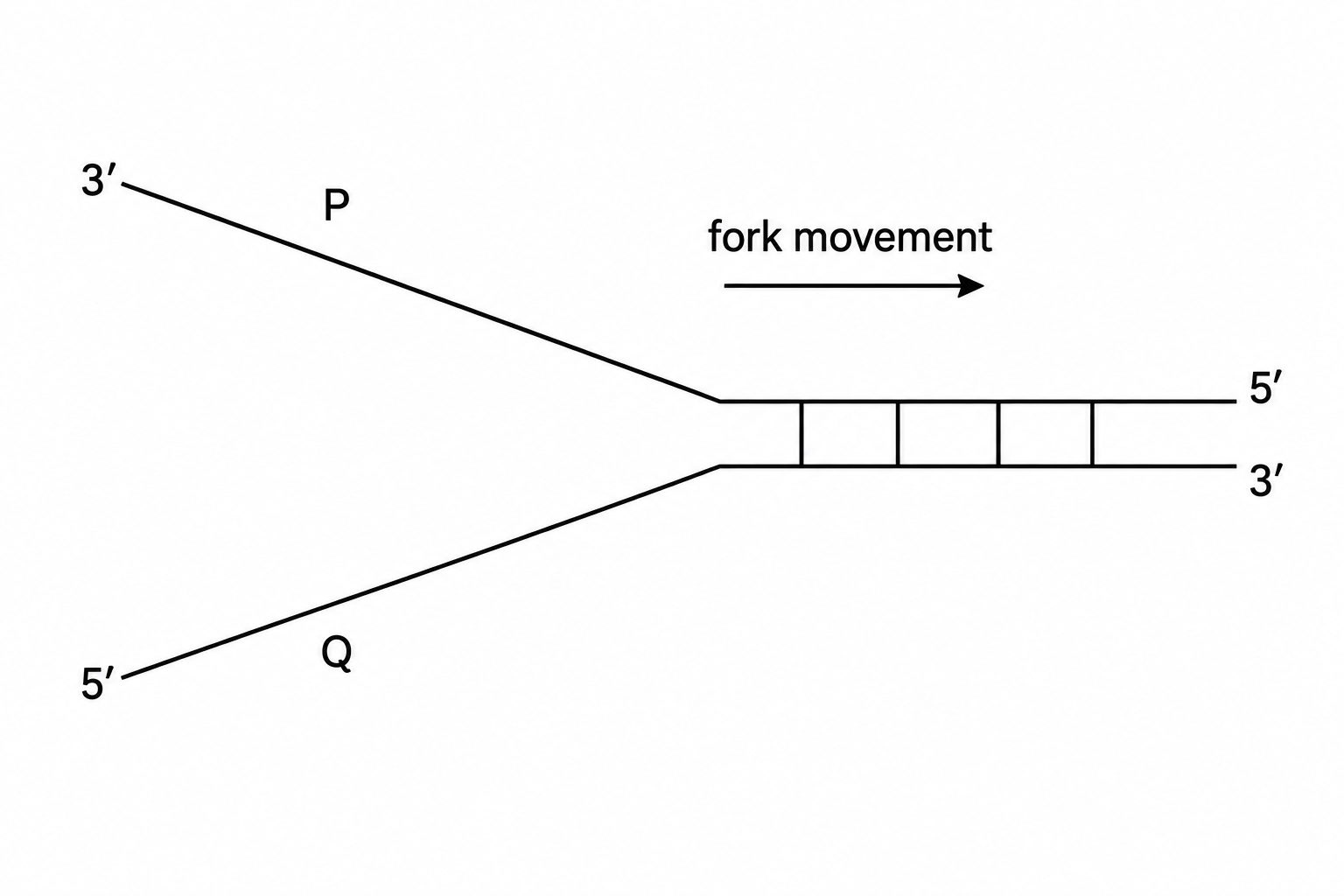
Q9.
The diagram shows part of a lagging strand after adjacent DNA sections have been synthesised. There are no missing nucleotides at X. Which change is needed to complete the new strand?
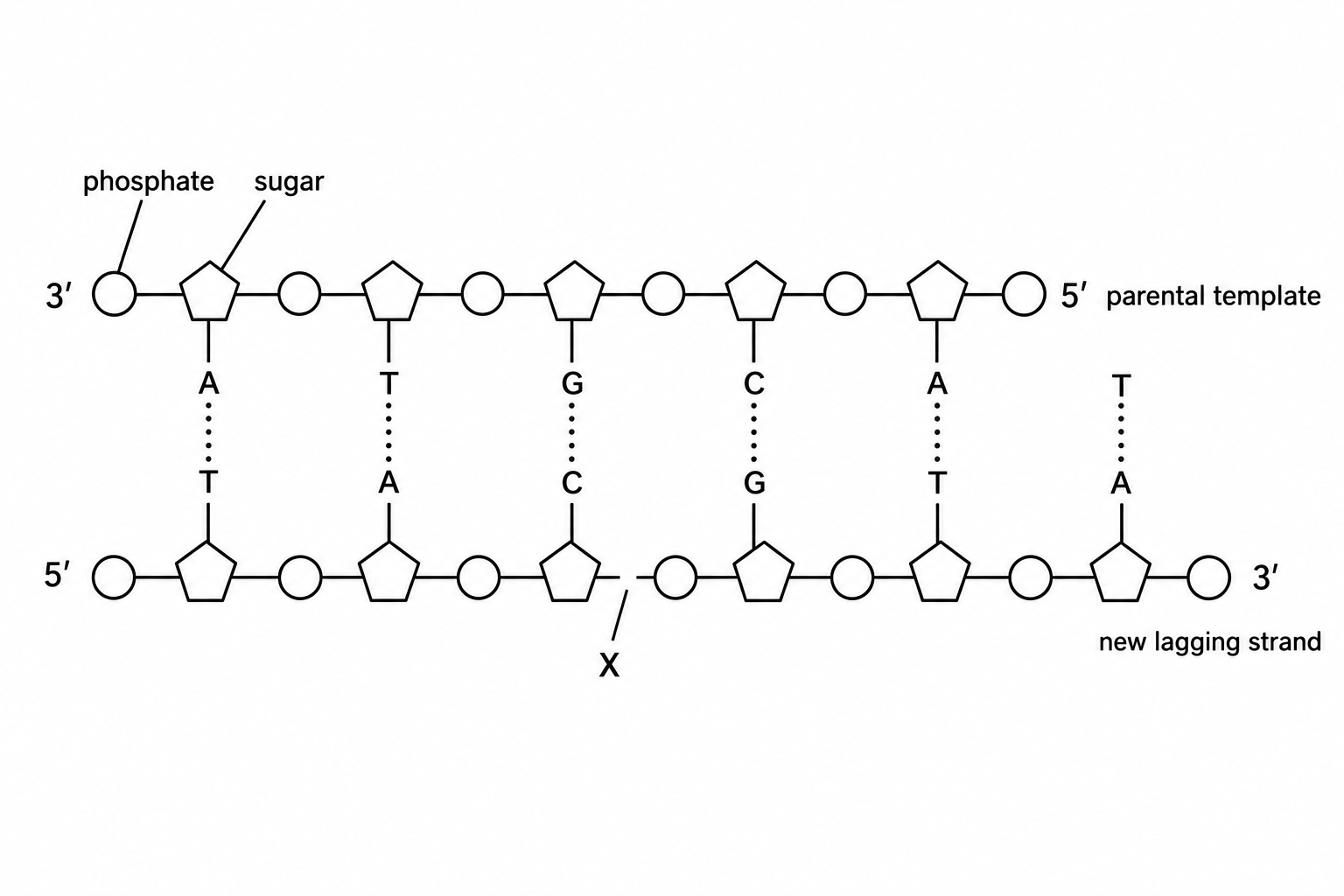
Q10.
The diagram shows short sections of a parental DNA molecule and its two daughter molecules after one S phase. Strand W is the original parental strand P. Which statement correctly describes the origins of the other daughter strands?
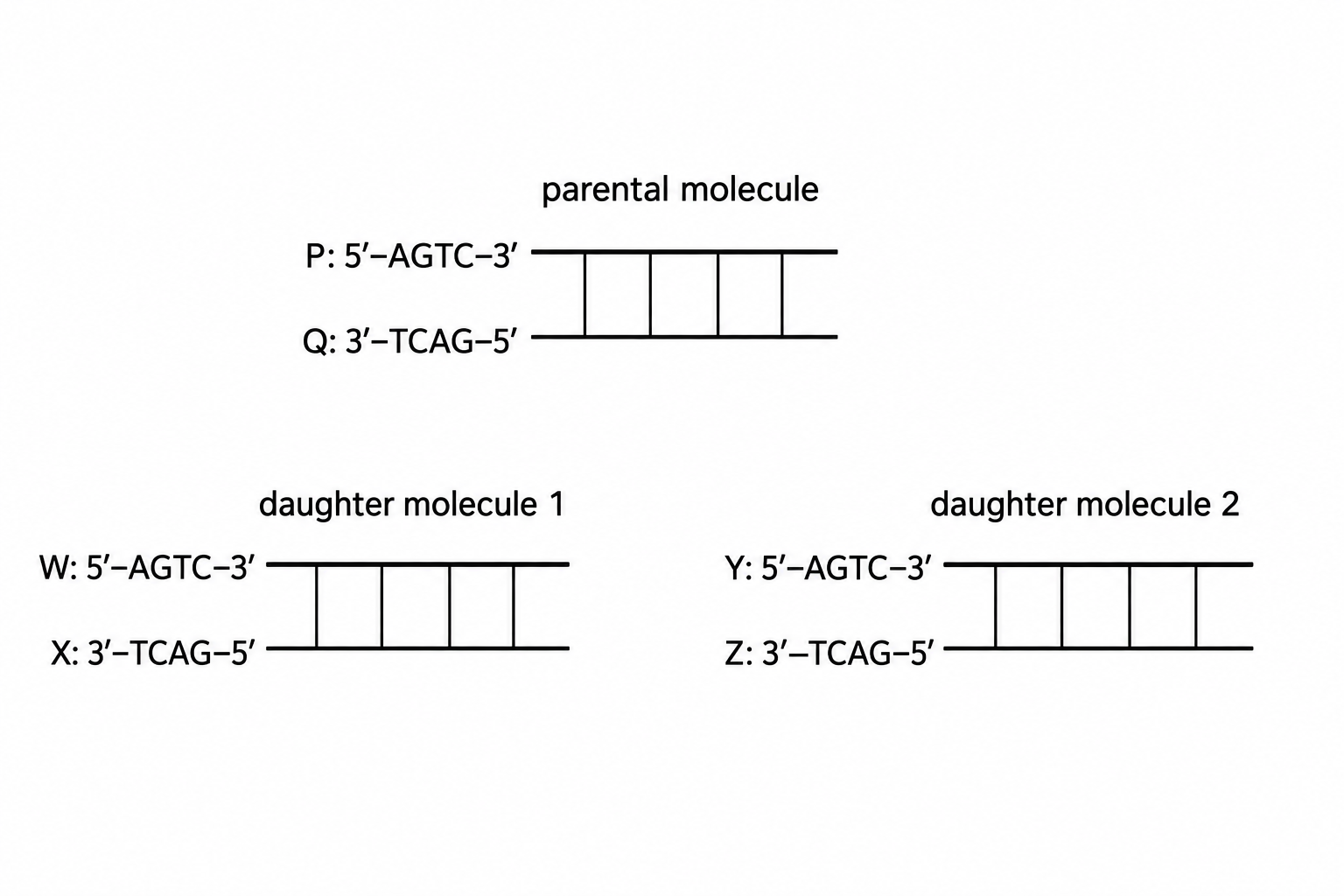
What this assessment covers
Concepts Tested
- DNA Replication
- describe the semi-conservative replication of DNA during the S phase of the cell cycle, including: • the roles of DNA polymerase and DNA ligase (knowledge of other enzymes in DNA replication in cells and different types of DNA polymerase is not expected) • the differences between leading strand and lagging strand replication as a consequence of DNA polymerase adding nucleotides only in a 5′ to 3′ direction
Question Mix
- Medium questions included
Skills you build
- Understand
Related assessments
More practice
Other assessments in this subject
