

BIOLOGY - MEIOSIS

Meiosis Practice Problems

  • 10 questions
  • Describe meiosis as a reduction division in which the chromosome number is halved from diploid to haploid resulting in genetically different cells (details of the stages of meiosis are not required)
  • Difficulty: Hard
  • Board: CAIE
  • Attempt online on the examination portal
Start the 10-question quiz Free, no sign-up needed. Your score shows instantly.

Here are the first 3 questions. Click “View all questions” to see the complete assessment.

Q1.

A diploid cell containing 28 chromosomes undergoes meiosis. A student records the chromosome number and genetic characteristics of the resulting cells. Which record correctly describes the expected outcome?

  1. A) Each resulting cell contains 7 chromosomes, and the cells are genetically different from one another.
  2. B) Each resulting cell contains 14 chromosomes, and the cells are genetically different from one another.
  3. C) Each resulting cell contains 14 chromosomes, and the cells are genetically identical to the diploid cell.
  4. D) Each resulting cell contains 28 chromosomes, and the cells are genetically different from one another.

Q2.

In an animal species, two gametes contribute equal numbers of chromosomes when their nuclei fuse. The resulting diploid cell contains 38 chromosomes. When this animal becomes an adult, one of its diploid cells undergoes meiosis. What should be expected in the cells produced by this meiosis?

  1. A) 19 chromosomes per cell, with all cells genetically identical
  2. B) 38 chromosomes per cell, with genetic differences between the cells
  3. C) 76 chromosomes per cell, with all cells genetically identical
  4. D) 19 chromosomes per cell, with genetic differences between the cells

Q3.

Plant A has a diploid chromosome number of 18. A related plant B has a diploid chromosome number of 36 because its complete chromosome set has been doubled. Both plants can undergo normal meiosis. Which prediction correctly compares their meiotic products?

  1. A) Plant A produces cells with 9 chromosomes and plant B produces cells with 18 chromosomes; the cells produced by each plant are genetically identical.
  2. B) Both plants produce cells with 9 chromosomes because they are related, and each plant produces genetically different cells.
  3. C) Plant A produces cells with 9 chromosomes and plant B produces cells with 18 chromosomes; each plant produces genetically different cells.
  4. D) Plant A produces cells with 18 chromosomes and plant B produces cells with 36 chromosomes; each plant produces genetically different cells.

Q4.

A researcher observes that every cell in a sample of meiotic products contains 27 chromosomes. A student concludes, 'Because their chromosome numbers are equal, these cells must be genetically identical.' Which response correctly applies the meaning of meiosis?

  1. A) The student is correct, because halving chromosome number removes all genetic differences between the products.
  2. B) The student is incorrect: the diploid cell contained 54 chromosomes, so genetically different products must have different chromosome numbers.
  3. C) The student is incorrect: the diploid cell contained 54 chromosomes, and equal chromosome numbers do not mean equal genetic information.
  4. D) The student is correct, and the diploid cell must also have contained 27 chromosomes.

Q5.

Eight haploid cells produced by normal meiosis in one species contain a total of 120 chromosomes. All eight cells have the same chromosome number. Which description of the diploid cells that produced them is correct?

  1. A) They contained 30 chromosomes each, and meiosis produced genetically different cells.
  2. B) They contained 60 chromosomes each, and meiosis produced genetically different cells.
  3. C) They contained 240 chromosomes each, and meiosis preserved identical genetic information in all products.
  4. D) They contained 15 chromosomes each, and meiosis preserved identical genetic information in all products.

Q6.

A laboratory wants evidence that a division both reduces chromosome number and produces genetic differences among its products. Which investigation would provide evidence for both features of meiosis?

  1. A) Compare genetic profiles of two unrelated diploid starting cells, without examining any products.
  2. B) Compare the chromosome number of one diploid starting cell with those of its products, and compare genetic profiles among those products.
  3. C) Compare chromosome numbers among the products only, and assume that equal chromosome numbers mean identical genetic profiles.
  4. D) Count the products formed from one diploid cell, without measuring chromosomes or comparing genetic profiles.

Q7.

Two genetically different animals of the same species each have 32 chromosomes in their diploid cells. Samples of cells produced by meiosis are collected separately from the two animals. Which prediction is justified?

  1. A) Both animals produce cells with 16 chromosomes, so cells from the two animals must have identical genetic information.
  2. B) Both animals produce cells with 16 chromosomes, but matching chromosome numbers do not make their products genetically identical.
  3. C) Both animals produce cells with 32 chromosomes, but the cells within each sample are genetically different.
  4. D) One animal must produce cells with more chromosomes because the animals are genetically different.

Q8.

The diagram shows a diploid body cell from species P and a haploid gamete from species Q. Each separate rod represents one chromosome. Both species produce gametes by meiosis. Which prediction is correct?
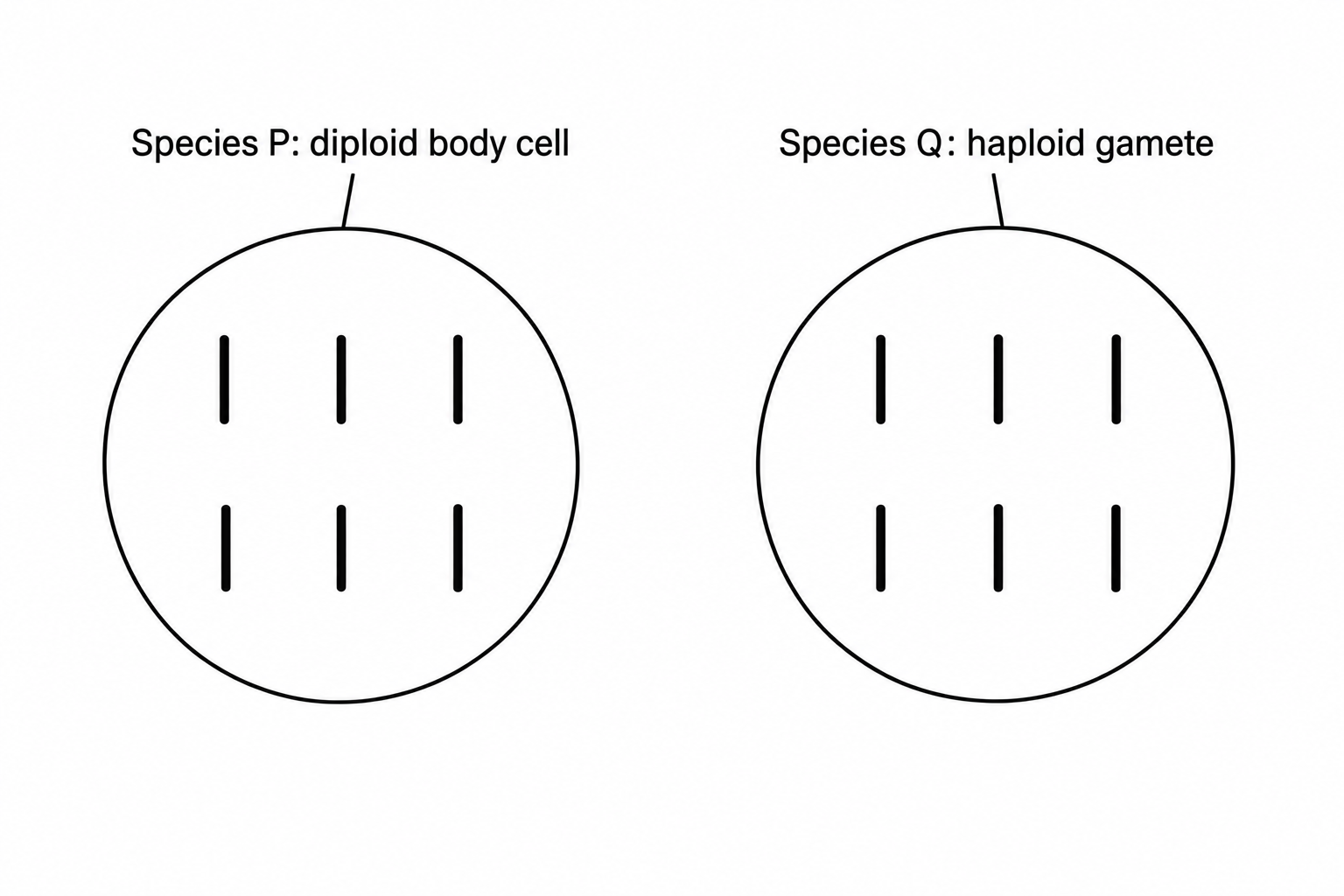
Diagram for question 8: The diagram shows a diploid body cell from species P and a haploid gamete from species Q. Each separate rod…
  1. A) Species P produces gametes with 3 chromosomes; species Q has 6 chromosomes in its diploid cells; each species produces genetically different gametes.
  2. B) Species P produces gametes with 6 chromosomes; species Q has 12 chromosomes in its diploid cells; each species produces genetically different gametes.
  3. C) Species P produces gametes with 3 chromosomes; species Q has 12 chromosomes in its diploid cells; the gametes within each species are genetically identical.
  4. D) Species P produces gametes with 3 chromosomes; species Q has 12 chromosomes in its diploid cells; each species produces genetically different gametes.

Q9.

The diagram shows chromosome numbers during part of an organism's life cycle. Each number is the chromosome number in one cell. Which labelled process represents meiosis, and what additional feature should its products show?
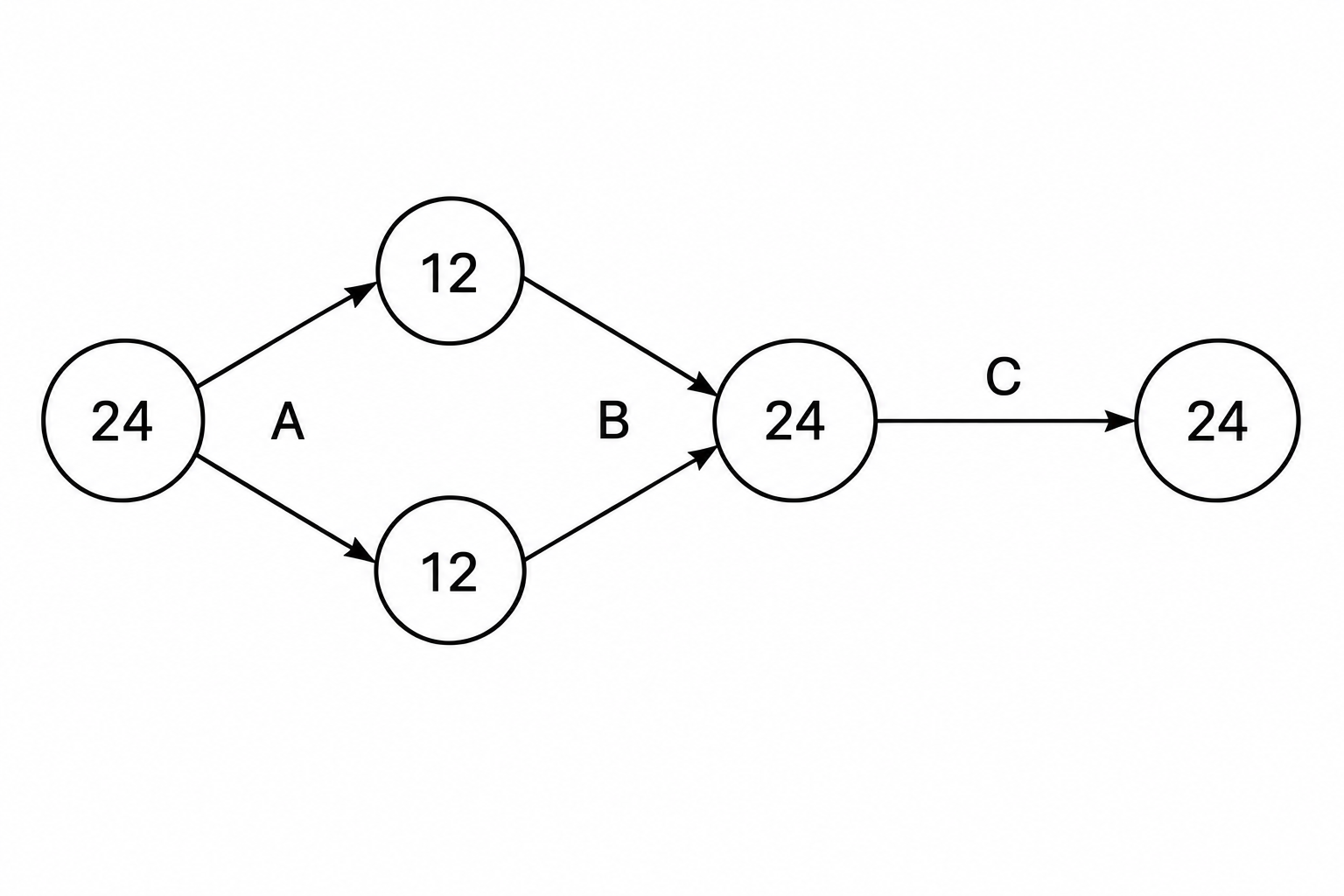
Diagram for question 9: The diagram shows chromosome numbers during part of an organism's life cycle. Each number is the chromosome…
  1. A) Process A; its products should be genetically identical because they have equal chromosome numbers.
  2. B) Process B; its products should be genetically different because two cells contribute chromosomes.
  3. C) Process A; its products should be genetically different despite having equal chromosome numbers.
  4. D) Process C; its products should be genetically different because the chromosome number is maintained.

Q10.

A diploid parent cell contains 16 chromosomes. The table describes four sampled cells. A genetic profile is a test result that distinguishes genetic information; different profile letters mean different genetic information. Which pair is consistent with being genetically different haploid products of meiosis from this parent cell?
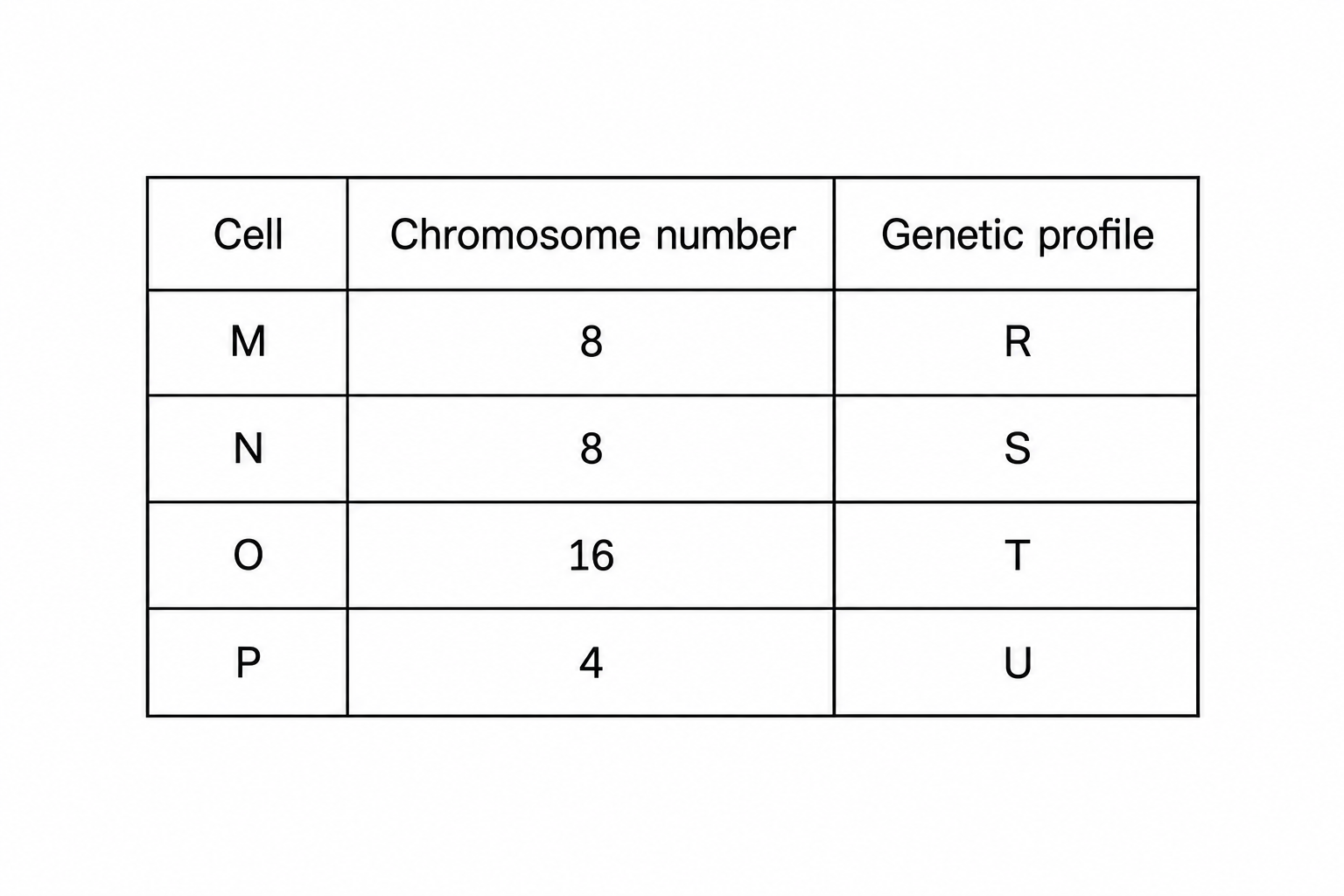
Diagram for question 10: A diploid parent cell contains 16 chromosomes. The table describes four sampled cells. A genetic profile is…
  1. A) Cells M and N
  2. B) Cells M and O
  3. C) Cells N and P
  4. D) Cells O and P

What this assessment covers

Concepts Tested

  • Meiosis
  • Describe meiosis as a reduction division in which the chromosome number is halved from diploid to haploid resulting in genetically different cells (details of the stages of meiosis are not required)

Question Mix

  • Hard questions included

Skills you build

  • Apply