Q1 Question
Points: 1
Choose the correct answer:
A DNA molecule replicates during the S phase of the cell cycle. Which statement explains why this replication is described as semi-conservative?
Showing question 1 of 10
Choose the correct answer:
A section of a parental DNA template has the sequence 3′–AGTC–5′. Which sequence is synthesised alongside this section during replication?
Choose the correct answer:
DNA polymerase functions normally in a cell, but DNA ligase is inactive. Which outcome is most directly expected during DNA replication?
Choose the correct answer:
Why is one new DNA strand synthesised continuously towards a replication fork, while the other is synthesised in short sections?
Choose the correct answer:
A short section of a new lagging strand is being extended by DNA polymerase. Which statement correctly describes its extension?
Choose the correct answer:
During DNA replication, a free DNA nucleotide pairs with an exposed base on a parental template. Which statement describes the role of DNA polymerase at this stage?
Choose the correct answer:
A student says, “During S phase, each chromosome becomes two sister chromatids, so each chromatid must contain only one DNA strand.” Which response correctly explains the error?
Choose the correct answer:
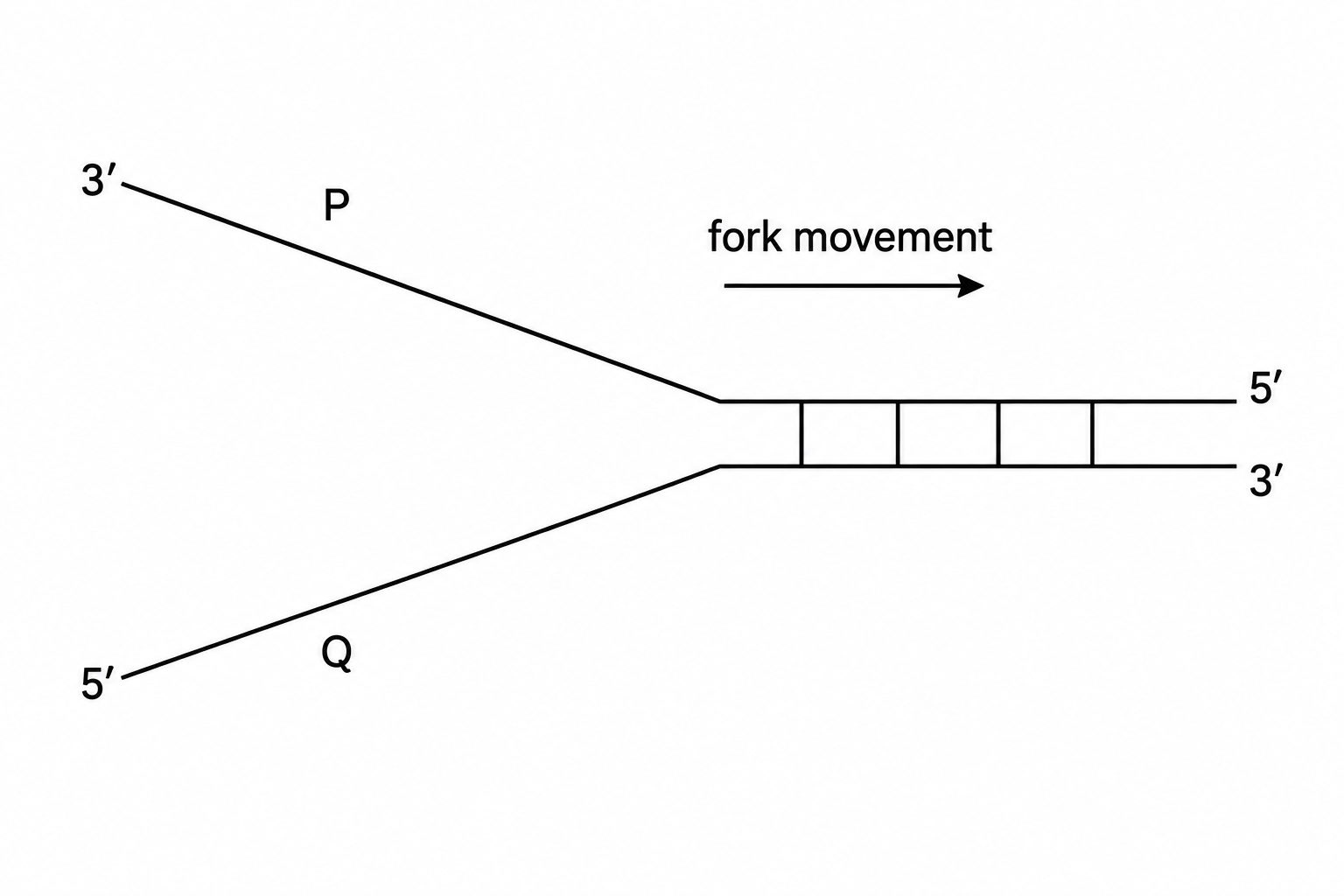
The diagram shows two parental DNA templates at a replication fork moving to the right. Which statement correctly describes synthesis on templates P and Q?
Choose the correct answer:
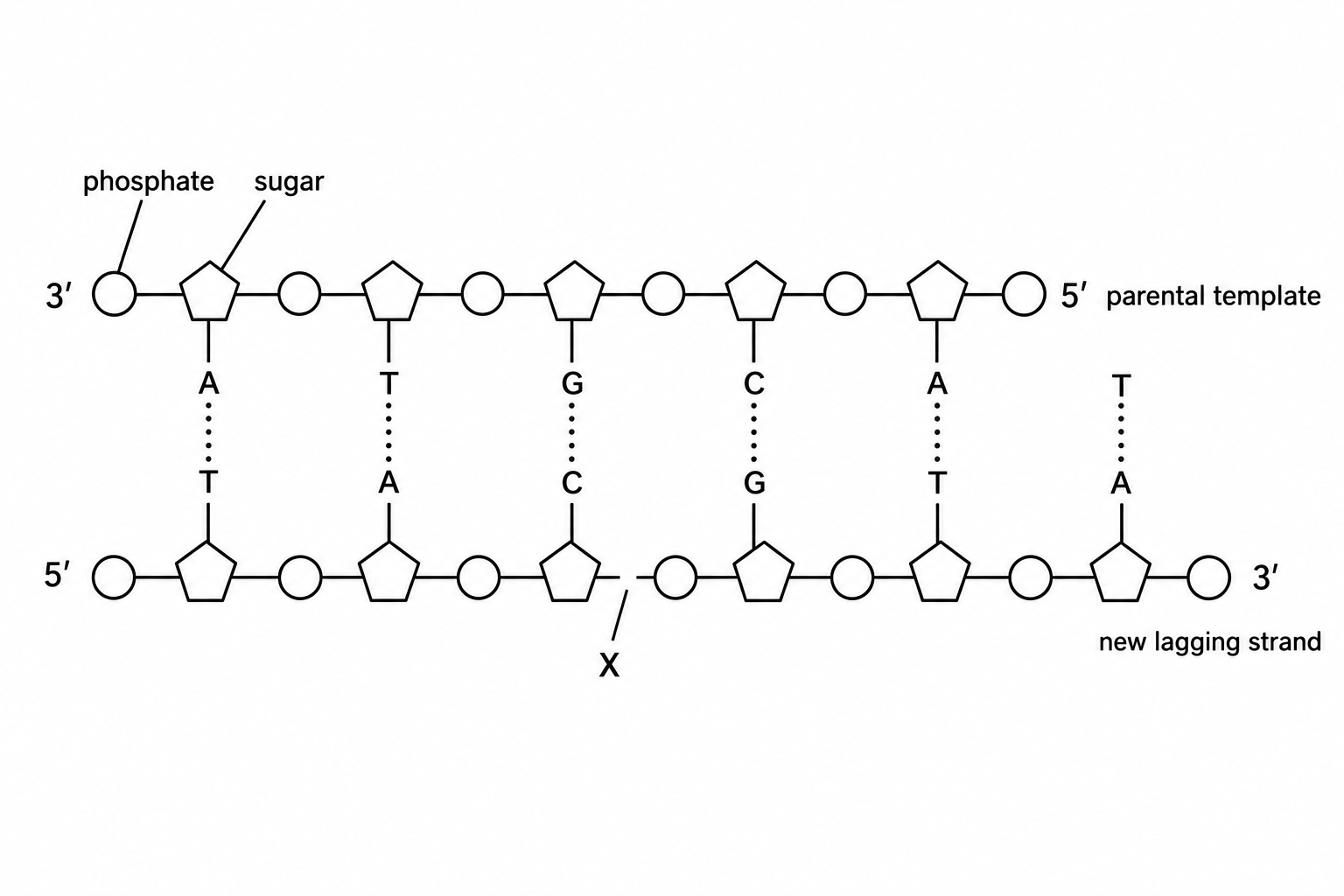
The diagram shows part of a lagging strand after adjacent DNA sections have been synthesised. There are no missing nucleotides at X. Which change is needed to complete the new strand?
Choose the correct answer:
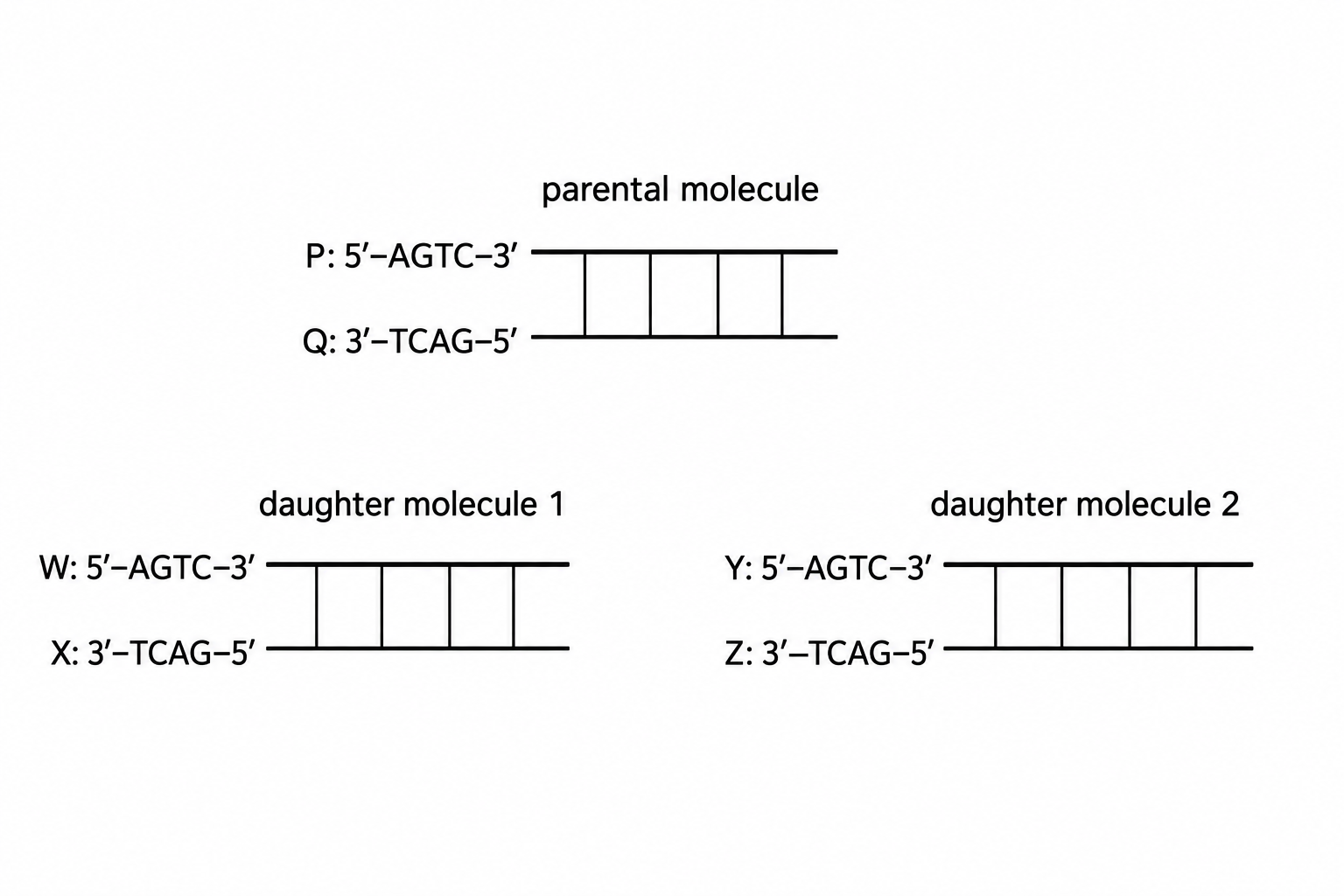
The diagram shows short sections of a parental DNA molecule and its two daughter molecules after one S phase. Strand W is the original parental strand P. Which statement correctly describes the origins of the other daughter strands?