

BIOLOGY - CHARACTERISTICS OF LIVING THINGS

Characteristics of Living Things Worksheet

  • 10 questions
  • Describe the characteristics of living organisms by describing: (a) movement as an action by an organism or part of an organism causing a change of position or place (b) respiration as the chemical reactions in cells that break down nutrient molecules and release energy for metabolism (c) sensitivity as the ability to detect and respond to changes in the internal or external environment (d) growth as a permanent increase in size and dry mass (e) reproduction as the processes that make more of the same kind of organism (f) excretion as the removal of the waste products of metabolism and substances in excess of requirements (g) nutrition as the taking in of materials for energy, growth and development
  • Difficulty: Medium
  • Board: CAIE
  • Attempt online on the examination portal
Start the 10-question quiz Free, no sign-up needed. Your score shows instantly.

Here are the first 3 questions. Click “View all questions” to see the complete assessment.

Q1.

A student says that movement occurs only when a whole organism travels from one place to another. Which observation shows why this description is incomplete?

  1. A) A flower closes its petals while the plant remains rooted in the soil.
  2. B) A leaf contains substances that were absorbed from the soil.
  3. C) A plant loses water to the surrounding air.
  4. D) A seed is carried away from its parent plant by the wind.

Q2.

Yeast cells break down sugar in chemical reactions that release energy. Why is this an example of respiration?

  1. A) Respiration is the movement of gases into and out of an organism.
  2. B) Respiration is any process that increases the size of a cell.
  3. C) Respiration is the taking in of nutrients from the surroundings.
  4. D) Respiration releases energy from nutrient molecules through chemical reactions in cells.

Q3.

When the water content of a person's blood falls, the person detects this change and feels thirsty. Why does this demonstrate sensitivity?

  1. A) The person permanently increases in size and dry mass.
  2. B) The person releases energy by breaking down water molecules.
  3. C) The person detects and responds to a change in the internal environment.
  4. D) The person removes waste products made by chemical reactions.

Q4.

A student compares similar groups of young plants at the beginning and end of a week. Which finding provides the strongest evidence that growth has occurred?

  1. A) The roots take in water and become temporarily swollen.
  2. B) The stems bend towards a window without increasing in size.
  3. C) The leaves become heavier immediately after being sprayed with water.
  4. D) The plants show a lasting increase in size and an increase in dry mass.

Q5.

A single-celled organism divides to form two separate organisms of the same kind. Which explanation identifies this as reproduction rather than growth?

  1. A) The original organism changes its position.
  2. B) The process increases the amount of water inside one organism.
  3. C) The process increases the number of organisms of the same kind.
  4. D) The original organism takes in materials from its surroundings.

Q6.

Which description explains why removing urea from the body is excretion, whereas removing undigested food is not?

  1. A) Urea contains water, whereas undigested food never contains water.
  2. B) Urea leaves the body, whereas undigested food remains inside the body.
  3. C) Urea is needed for growth, whereas undigested food is needed for respiration.
  4. D) Urea is a waste product of metabolism, whereas undigested food has not been produced by metabolism.

Q7.

A green plant takes in carbon dioxide through its leaves and mineral ions through its roots. Why can both processes be included in nutrition?

  1. A) Both processes produce new plants of the same kind.
  2. B) Both processes remove substances that the plant no longer needs.
  3. C) Both processes release energy by breaking down nutrients in cells.
  4. D) Both processes supply materials used for growth and development.

Q8.

An animal takes in food and later breaks down nutrient molecules inside its cells. Which statement correctly explains the relationship between nutrition and respiration?

  1. A) Nutrition releases energy in cells, while respiration brings food into the animal.
  2. B) Nutrition removes metabolic waste, and respiration produces more organisms.
  3. C) Nutrition supplies materials, and respiration releases energy from nutrient molecules for metabolism.
  4. D) Nutrition and respiration are different names for the same chemical reactions.

Q9.

The diagram shows the same plant leaf before and shortly after it is gently touched. Which explanation best describes how the observations demonstrate both movement and sensitivity?
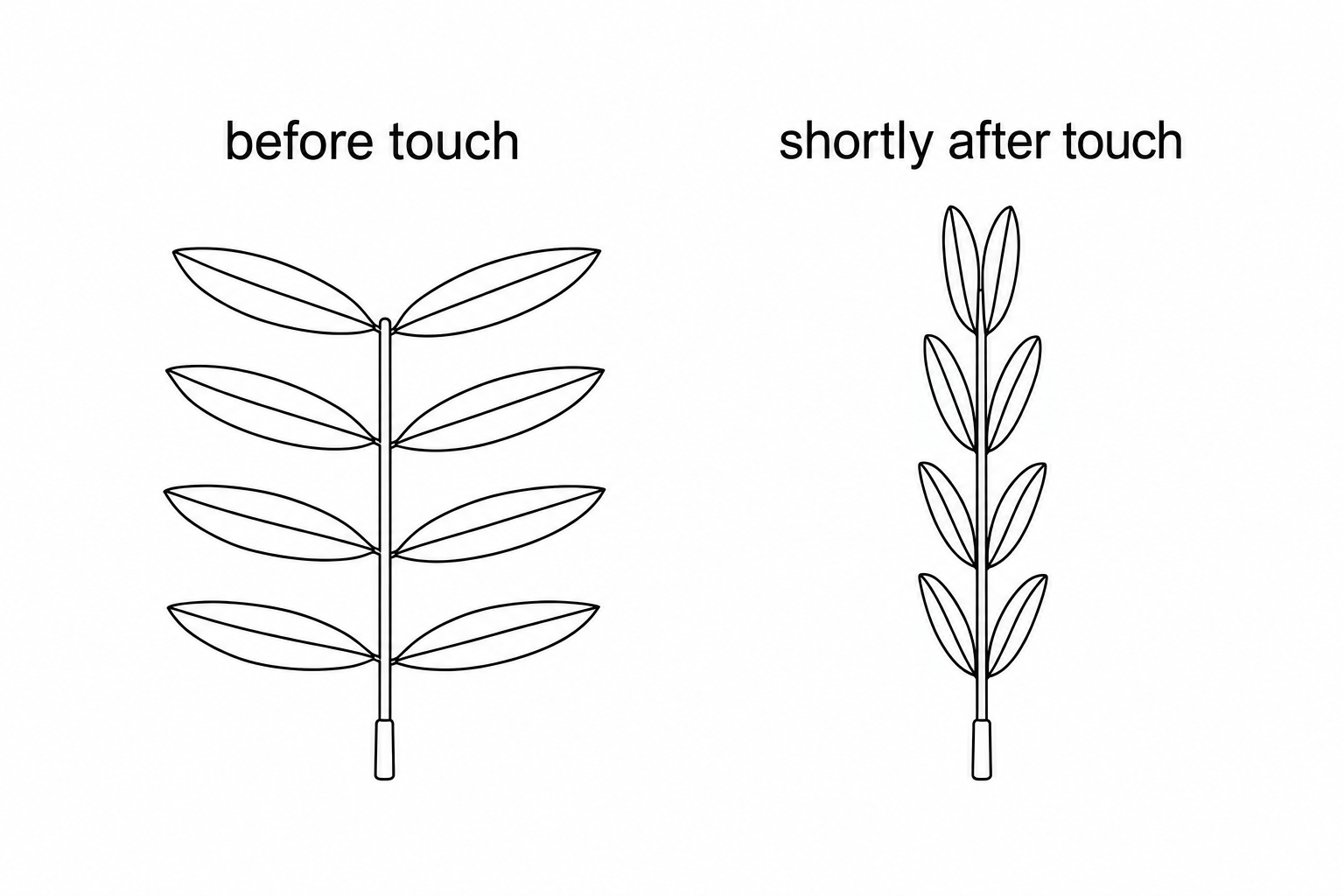
Diagram for question 9: The diagram shows the same plant leaf before and shortly after it is gently touched. Which explanation best…
  1. A) The leaf shows movement because the whole plant changes place, and sensitivity because it takes in nutrients.
  2. B) The leaf shows movement because it makes more cells, and sensitivity because it increases in dry mass.
  3. C) The leaf shows movement because it removes waste, and sensitivity because it releases energy.
  4. D) The leaf shows movement because its parts change position, and sensitivity because it responds to touch.

Q10.

The diagram represents materials entering and leaving a single-celled organism. Which characteristics are represented by arrows P and Q, respectively?
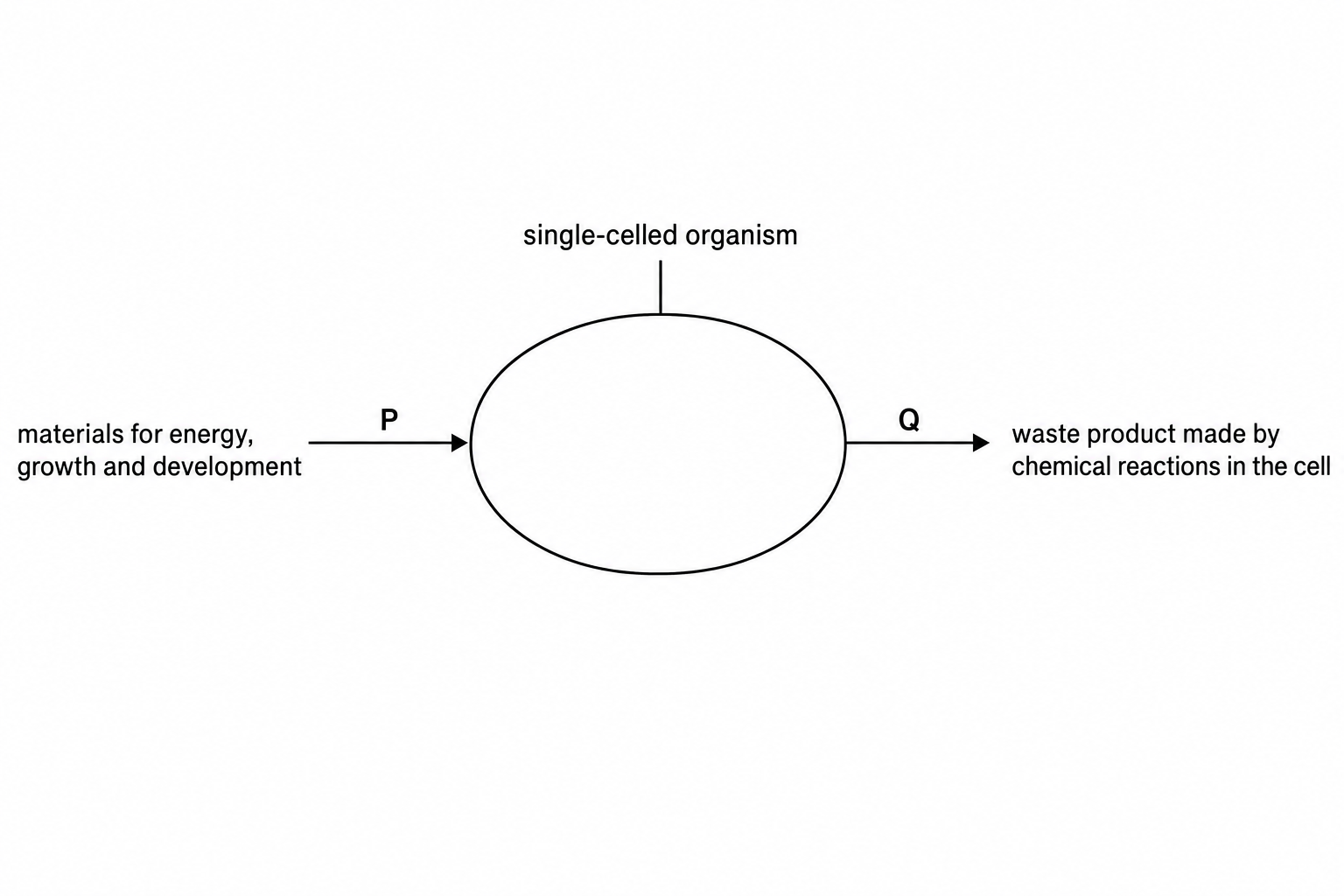
Diagram for question 10: The diagram represents materials entering and leaving a single-celled organism. Which characteristics are…
  1. A) P: sensitivity; Q: respiration
  2. B) P: respiration; Q: nutrition
  3. C) P: nutrition; Q: excretion
  4. D) P: excretion; Q: movement

What this assessment covers

Concepts Tested

  • Characteristics of Living Things
  • Describe the characteristics of living organisms by describing: (a) movement as an action by an organism or part of an organism causing a change of position or place (b) respiration as the chemical reactions in cells that break down nutrient molecules and release energy for metabolism (c) sensitivity as the ability to detect and respond to changes in the internal or external environment (d) growth as a permanent increase in size and dry mass (e) reproduction as the processes that make more of the same kind of organism (f) excretion as the removal of the waste products of metabolism and substances in excess of requirements (g) nutrition as the taking in of materials for energy, growth and development

Question Mix

  • Medium questions included

Skills you build

  • Understand