Choose the correct answer:
A student says that movement occurs only when a whole organism travels from one place to another. Which observation shows why this description is incomplete?
Choose the correct answer:
A student says that movement occurs only when a whole organism travels from one place to another. Which observation shows why this description is incomplete?
Choose the correct answer:
Yeast cells break down sugar in chemical reactions that release energy. Why is this an example of respiration?
Choose the correct answer:
When the water content of a person's blood falls, the person detects this change and feels thirsty. Why does this demonstrate sensitivity?
Choose the correct answer:
A student compares similar groups of young plants at the beginning and end of a week. Which finding provides the strongest evidence that growth has occurred?
Choose the correct answer:
A single-celled organism divides to form two separate organisms of the same kind. Which explanation identifies this as reproduction rather than growth?
Choose the correct answer:
Which description explains why removing urea from the body is excretion, whereas removing undigested food is not?
Choose the correct answer:
A green plant takes in carbon dioxide through its leaves and mineral ions through its roots. Why can both processes be included in nutrition?
Choose the correct answer:
An animal takes in food and later breaks down nutrient molecules inside its cells. Which statement correctly explains the relationship between nutrition and respiration?
Choose the correct answer:
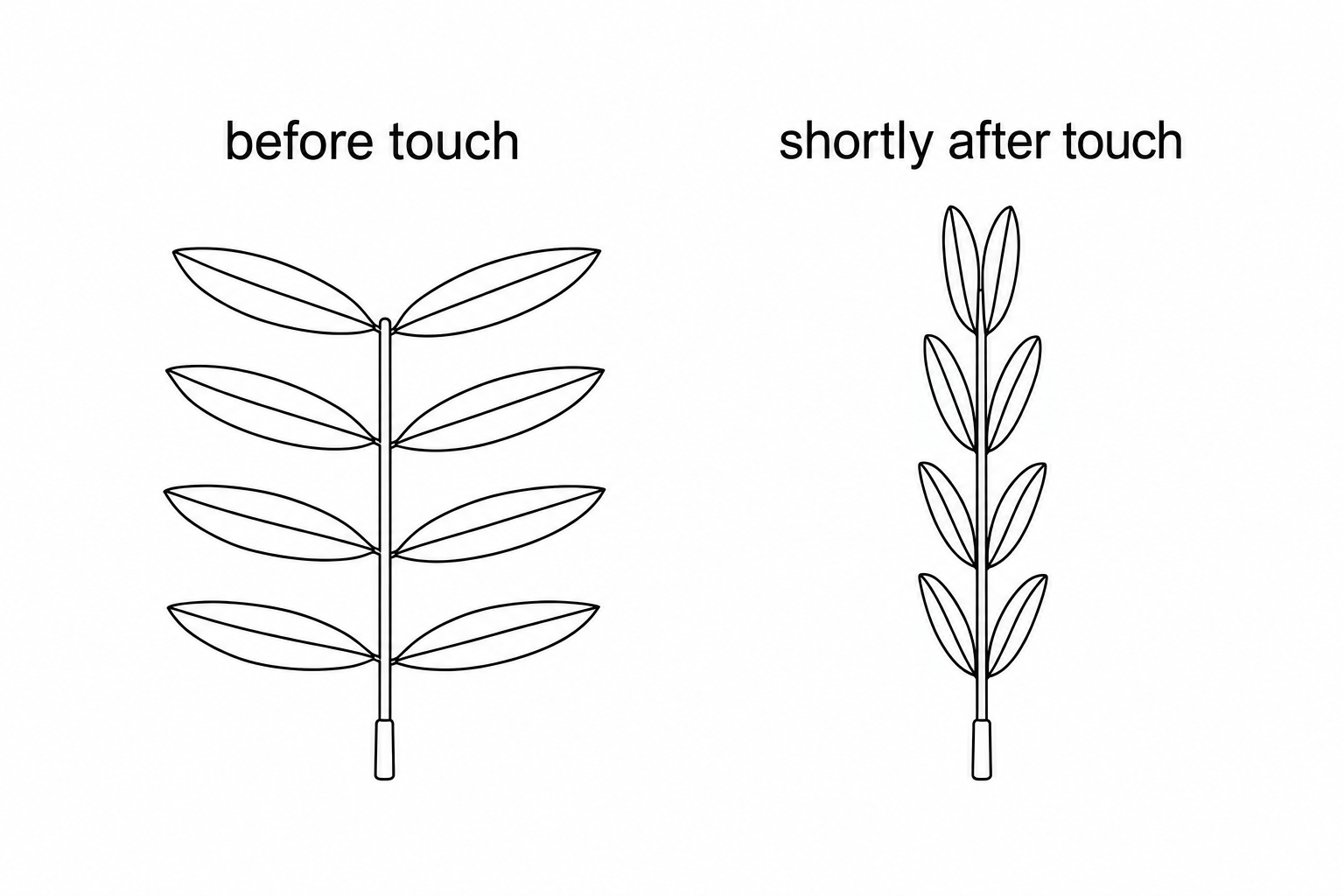
The diagram shows the same plant leaf before and shortly after it is gently touched. Which explanation best describes how the observations demonstrate both movement and sensitivity?
Choose the correct answer:
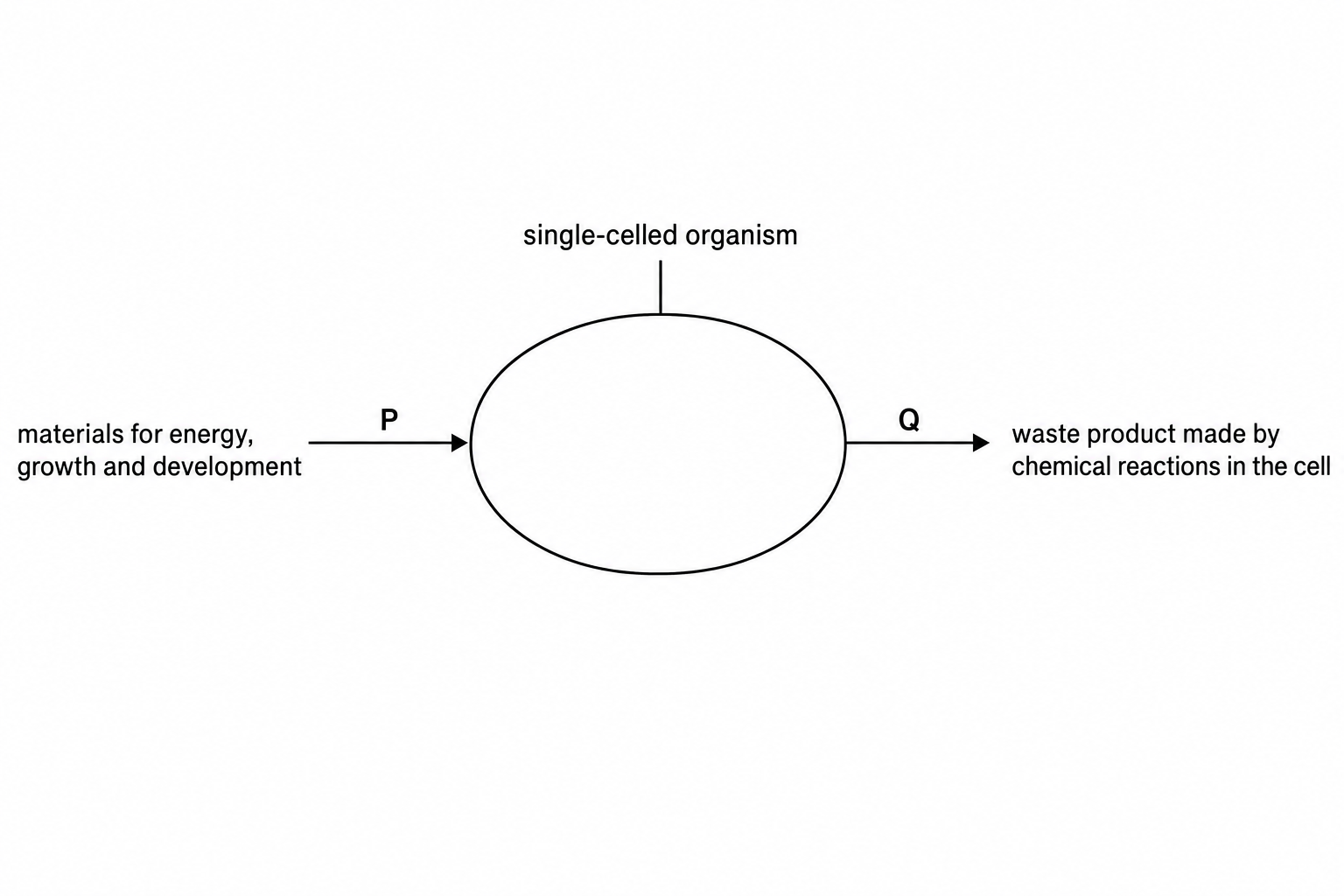
The diagram represents materials entering and leaving a single-celled organism. Which characteristics are represented by arrows P and Q, respectively?