

BIOLOGY - CELL STRUCTURE

Cell Organelles Worksheet

  • 10 questions
  • Describe the functions of the structures listed in 2.1.1 and 2.1.2 in plant, animal and bacterial cells
  • Difficulty: Medium
  • Board: CAIE
  • Attempt online on the examination portal
Start the 10-question quiz Free, no sign-up needed. Your score shows instantly.

Here are the first 3 questions. Click “View all questions” to see the complete assessment.

Q1.

A muscle cell contains many mitochondria. How do these structures help the cell carry out repeated contractions?

  1. A) They store the genetic information that controls contraction.
  2. B) They make the proteins needed for contraction.
  3. C) They control which substances enter the cell.
  4. D) They release energy through aerobic respiration.

Q2.

Both bacterial cells and animal cells contain ribosomes. Which shared activity does this explain?

  1. A) Both can maintain their shape using a cellulose wall.
  2. B) Both can store cell sap.
  3. C) Both can make proteins from amino acids.
  4. D) Both can absorb light for photosynthesis.

Q3.

A living cell takes in useful substances and releases waste substances while keeping its contents separate from its surroundings. Which statement explains the role of its cell membrane?

  1. A) It provides the main site for chemical reactions in the cell.
  2. B) It forms a rigid support that prevents the cell from changing shape.
  3. C) It stores the instructions for making all the cell's proteins.
  4. D) It controls the movement of substances into and out of the cell.

Q4.

When water enters a plant cell, the cell becomes firm rather than bursting. Which function of the cell wall helps explain this?

  1. A) It provides a strong outer layer that resists expansion.
  2. B) It actively pumps excess water out of the cell.
  3. C) It stores incoming water in the cytoplasm.
  4. D) It releases energy to keep water outside the cell.

Q5.

Which statement best explains how a large permanent vacuole helps support a soft plant stem?

  1. A) It produces proteins that hold neighbouring cells together.
  2. B) It absorbs light so that the stem can make glucose.
  3. C) It makes cellulose that forms a rigid layer outside each cell.
  4. D) It contains cell sap and helps maintain pressure against the cell wall.

Q6.

Some bacteria contain plasmids carrying genes for antibiotic resistance. What does this show about the function of plasmids?

  1. A) They form a protective barrier around the bacterial cell.
  2. B) They supply energy for the bacterium to survive treatment.
  3. C) They break down all antibiotics that enter the cytoplasm.
  4. D) They carry additional genetic information that can give the bacterium an advantage.

Q7.

A bacterial cell has no mitochondria or chloroplasts, but many reactions needed for life still occur inside it. Which description of the cytoplasm explains this?

  1. A) It is a rigid layer that protects the cell from bursting.
  2. B) It is the site of many chemical reactions controlled by enzymes.
  3. C) It is a collection of genes that controls inherited features.
  4. D) It is a selectively permeable boundary around the cell.

Q8.

The diagram shows a plant cell. Which statement explains how the structures labelled X help the cell make food?
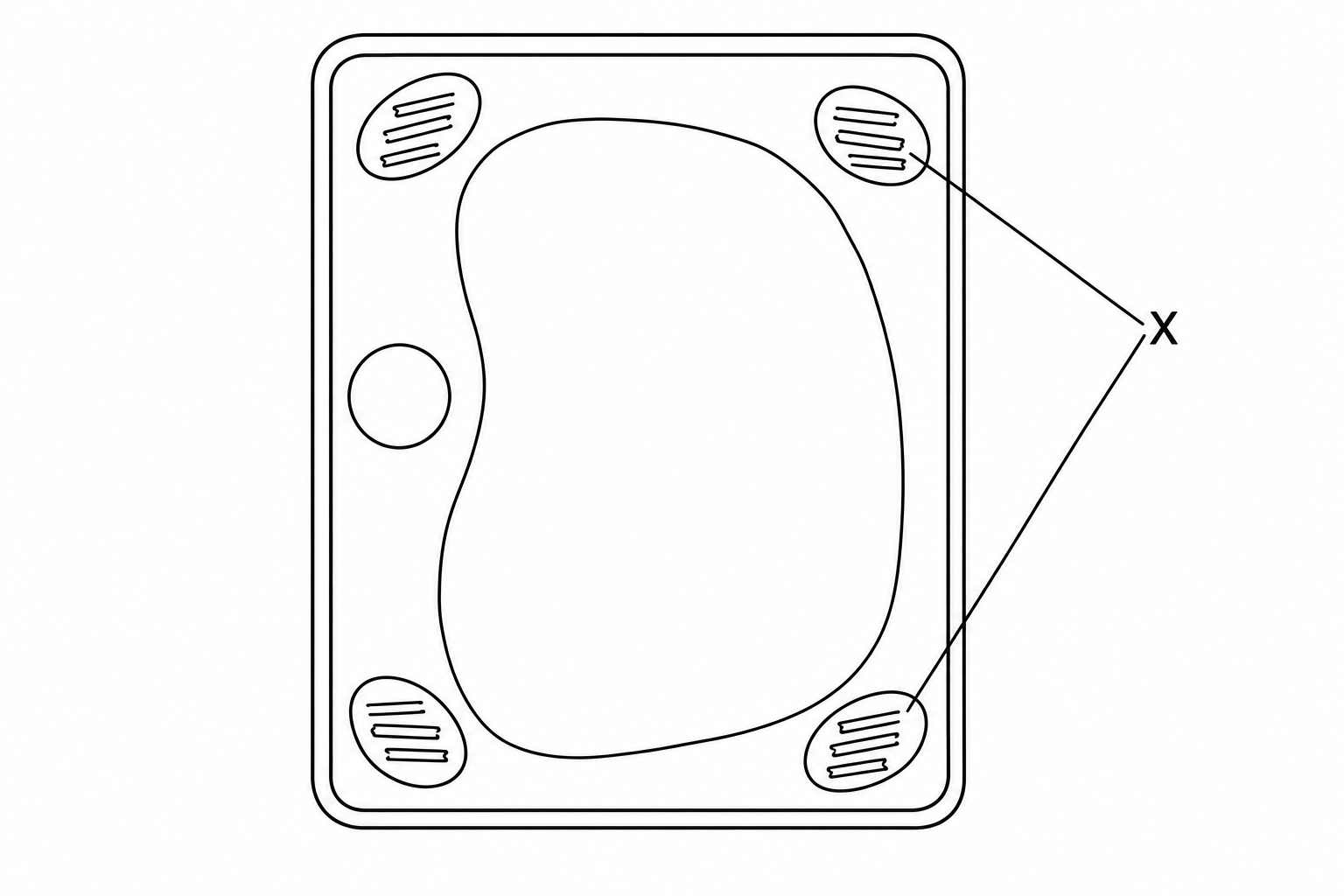
Diagram for question 8: The diagram shows a plant cell. Which statement explains how the structures labelled X help the cell make…
  1. A) They contain chlorophyll that absorbs light energy for photosynthesis.
  2. B) They take up water and maintain pressure against the cell wall.
  3. C) They release energy from glucose during aerobic respiration.
  4. D) They join amino acids together to make enzymes.

Q9.

The diagram shows an animal cell with structure Y labelled. Which description best explains the role of Y in coordinating the cell's activities?
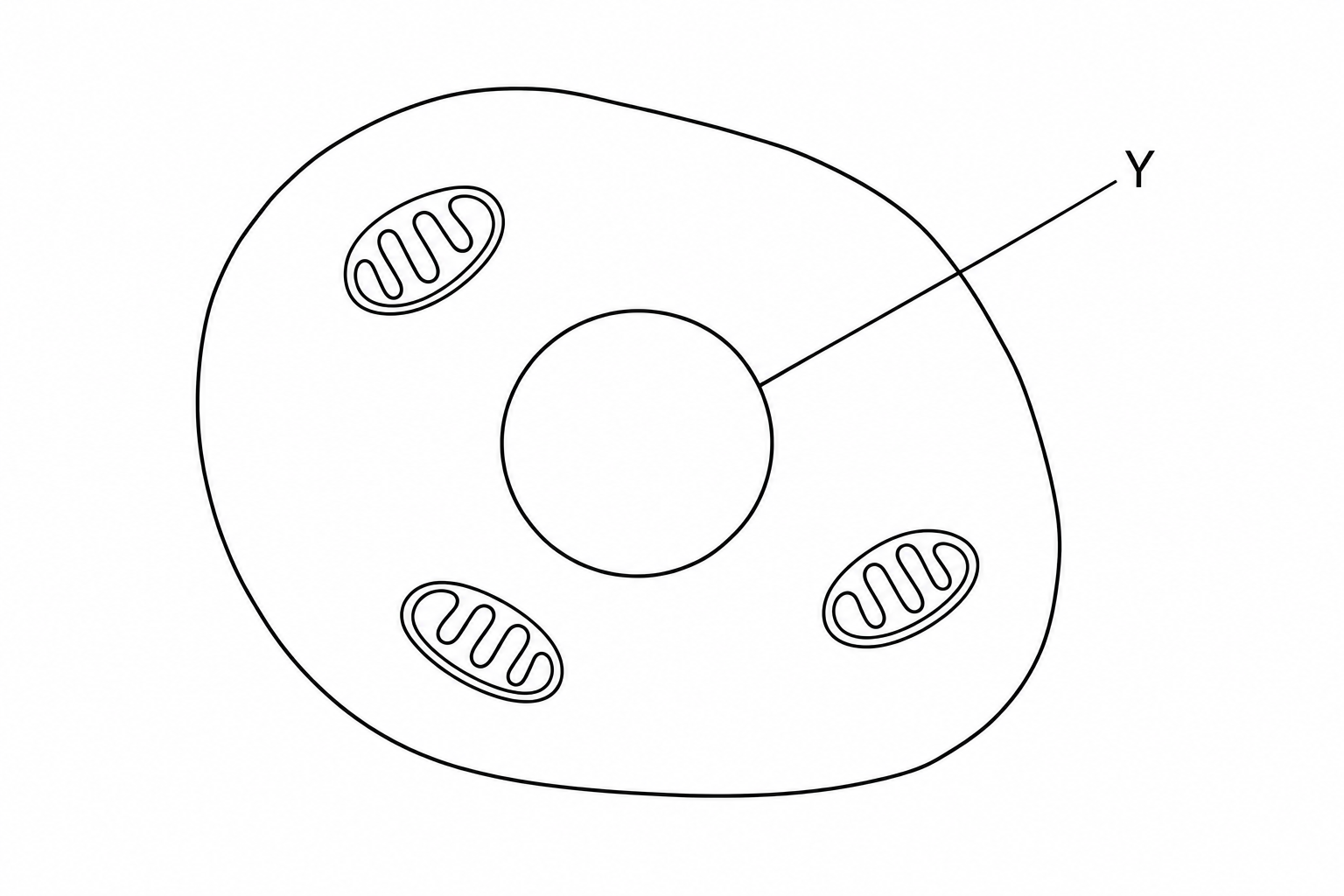
Diagram for question 9: The diagram shows an animal cell with structure Y labelled. Which description best explains the role of Y in…
  1. A) It directly joins amino acids to produce proteins.
  2. B) It contains genetic information that controls the cell's activities.
  3. C) It selects which substances can cross the cell surface.
  4. D) It releases energy needed for all chemical reactions.

Q10.

The diagram shows a bacterial cell. Which statement describes a function of the structure labelled Z?
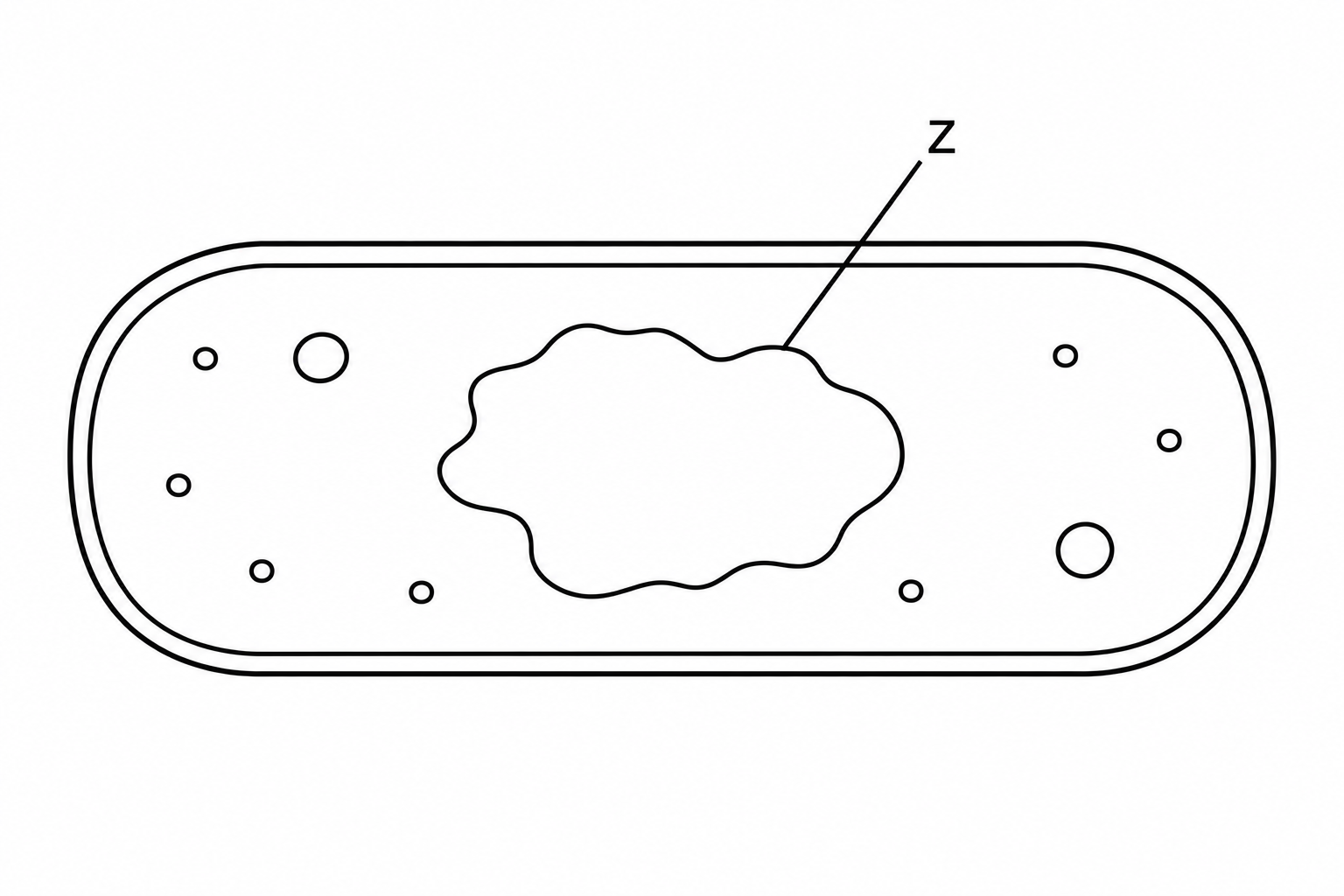
Diagram for question 10: The diagram shows a bacterial cell. Which statement describes a function of the structure labelled Z?
  1. A) It carries genetic instructions that can be passed to daughter cells.
  2. B) It supports the cell and prevents excessive expansion.
  3. C) It makes proteins by joining amino acids together.
  4. D) It controls the movement of substances across the cell surface.

What this assessment covers

Concepts Tested

  • Cell Structure
  • Describe the functions of the structures listed in 2.1.1 and 2.1.2 in plant, animal and bacterial cells

Question Mix

  • Medium questions included

Skills you build

  • Understand