

PHYSICS - FORCES
Free Body Diagrams Worksheet Answers
- Focuses on calculating resultant forces from multiple force vectors.
- Includes scenarios with both horizontal and vertical force components.
- Challenges students with complex force combinations and directions.
Start the 10-question quiz
Free, no sign-up needed. Your score shows instantly.
Here are the first 3 questions. Click “View all questions” to see the complete assessment.
Q1.
Q2.
Forces of 1250 N and 340 N act upward on a lift. Forces of 980 N, 415 N and 75 N act downward along the same vertical line. What is the resultant force?
Q3.
Several collinear forces act on a small trolley. Forces of 4.80 N, 2.35 N and 0.95 N act east. Forces of 3.60 N, 1.75 N and 0.40 N act west. Determine the resultant force.
Q4.
Two forces of 7.20 N and 4.65 N act to the right on an object. Three forces of 5.80 N, 3.15 N and 1.40 N act to the left along the same line. What is the resultant force?
Q5.
A train has forward forces of 1.80 kN, 750 N and 0.45 kN. Opposing forces of 1.25 kN, 980 N and 320 N act along the track. What is the resultant force?
Q6.
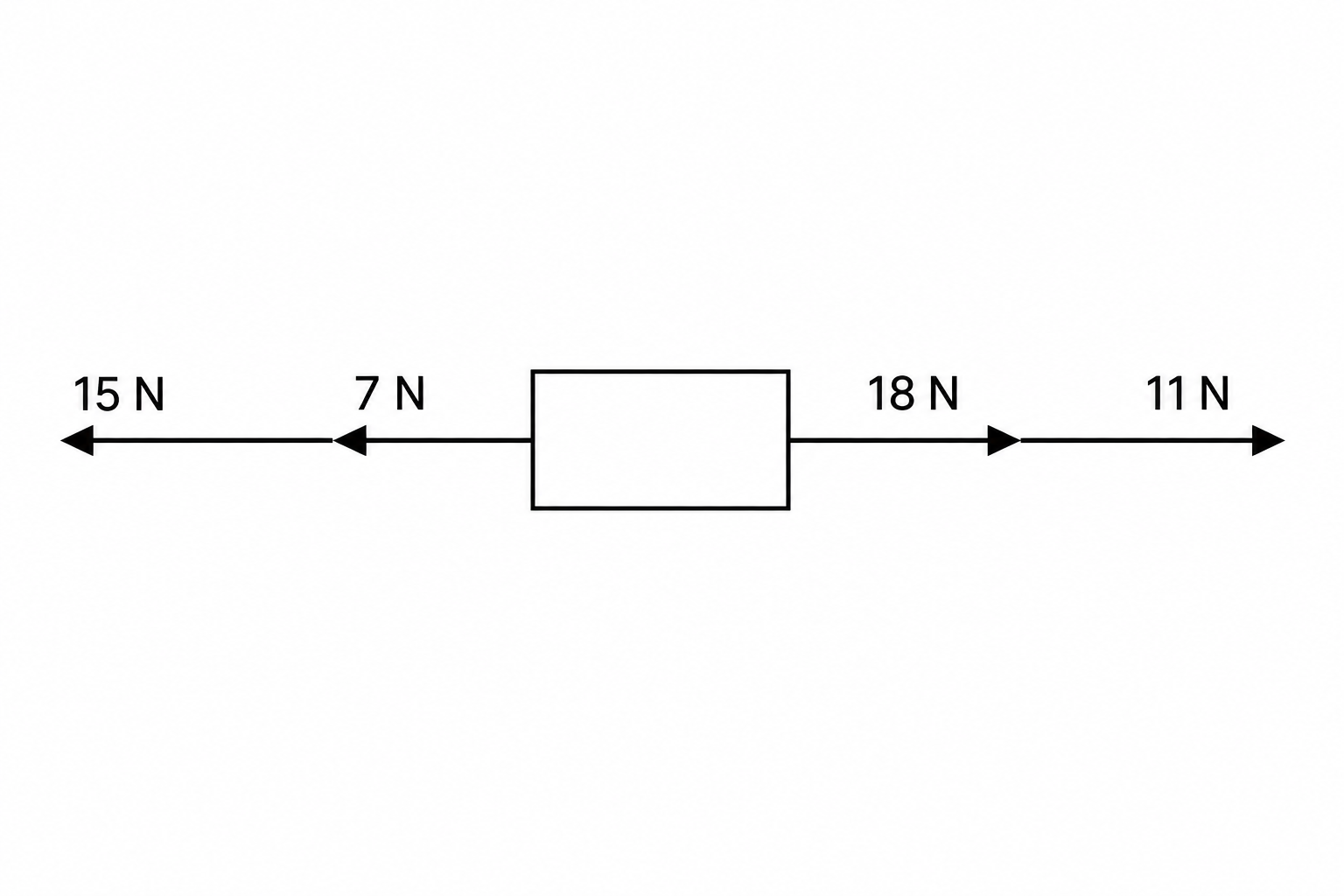
The diagram shows horizontal forces acting on a block. What is the resultant force on the block?
Q7.
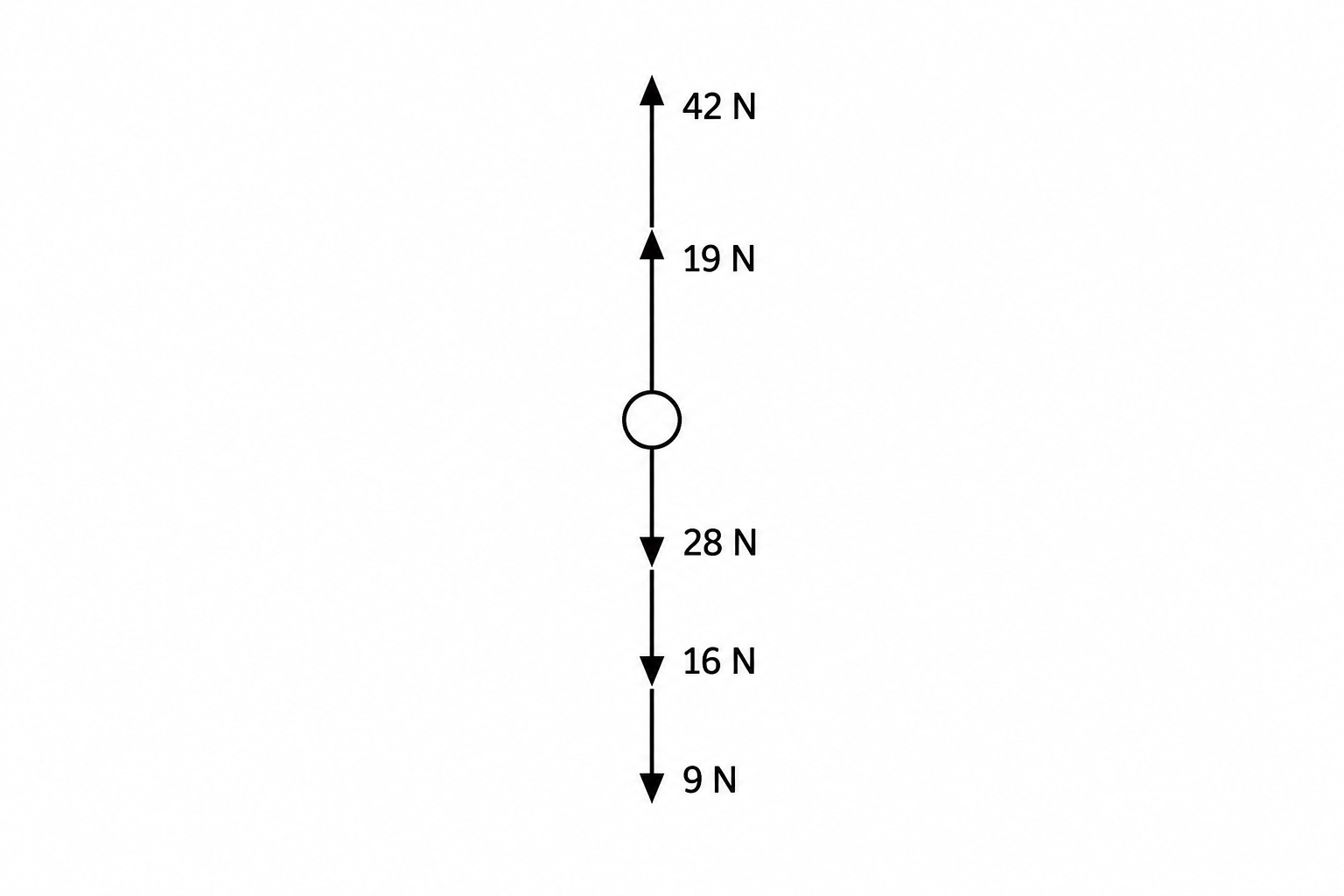
The diagram shows vertical forces acting on an object. Determine the resultant force.
Q8.
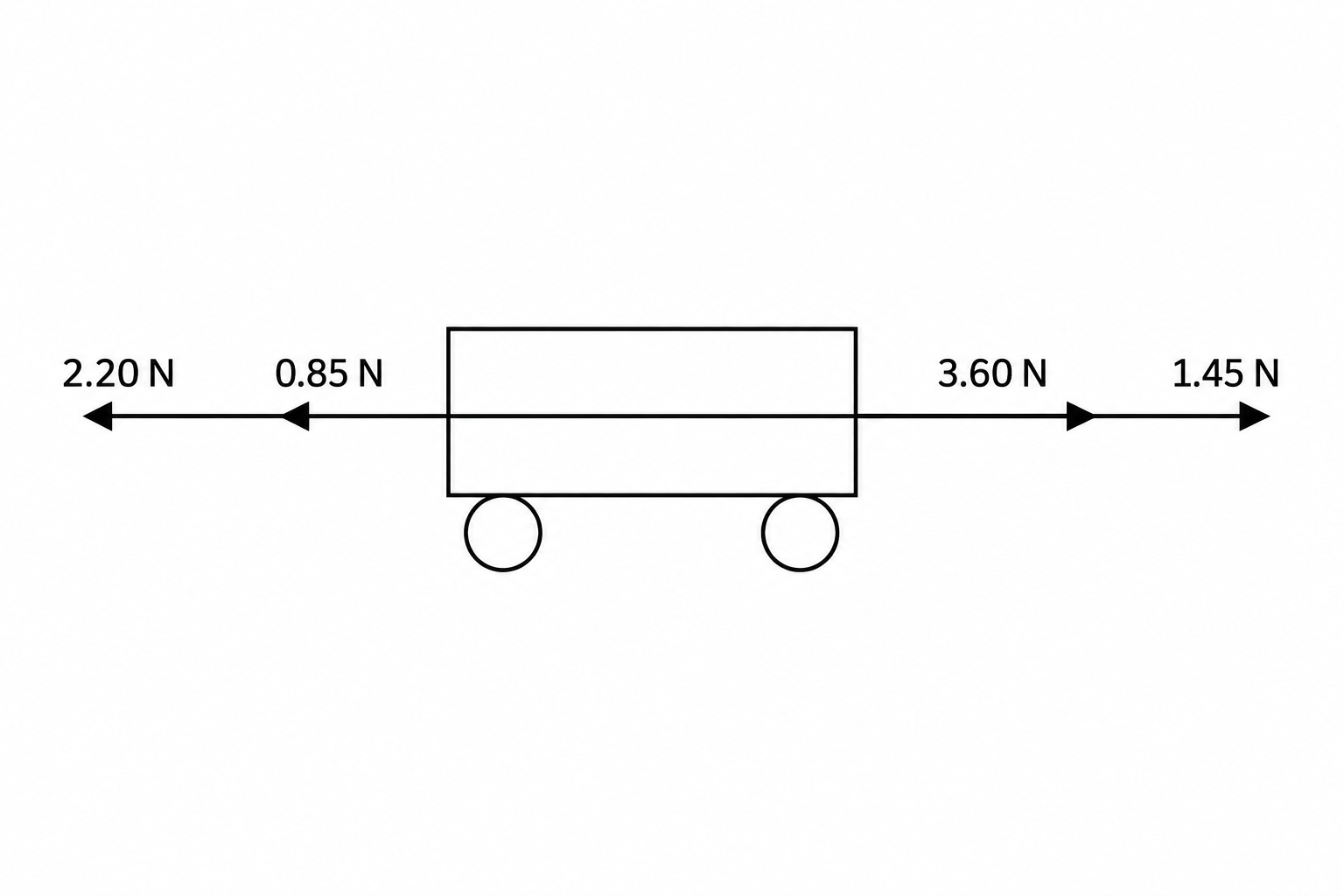
The diagram shows collinear forces on a trolley. What is the resultant force?
Q9.
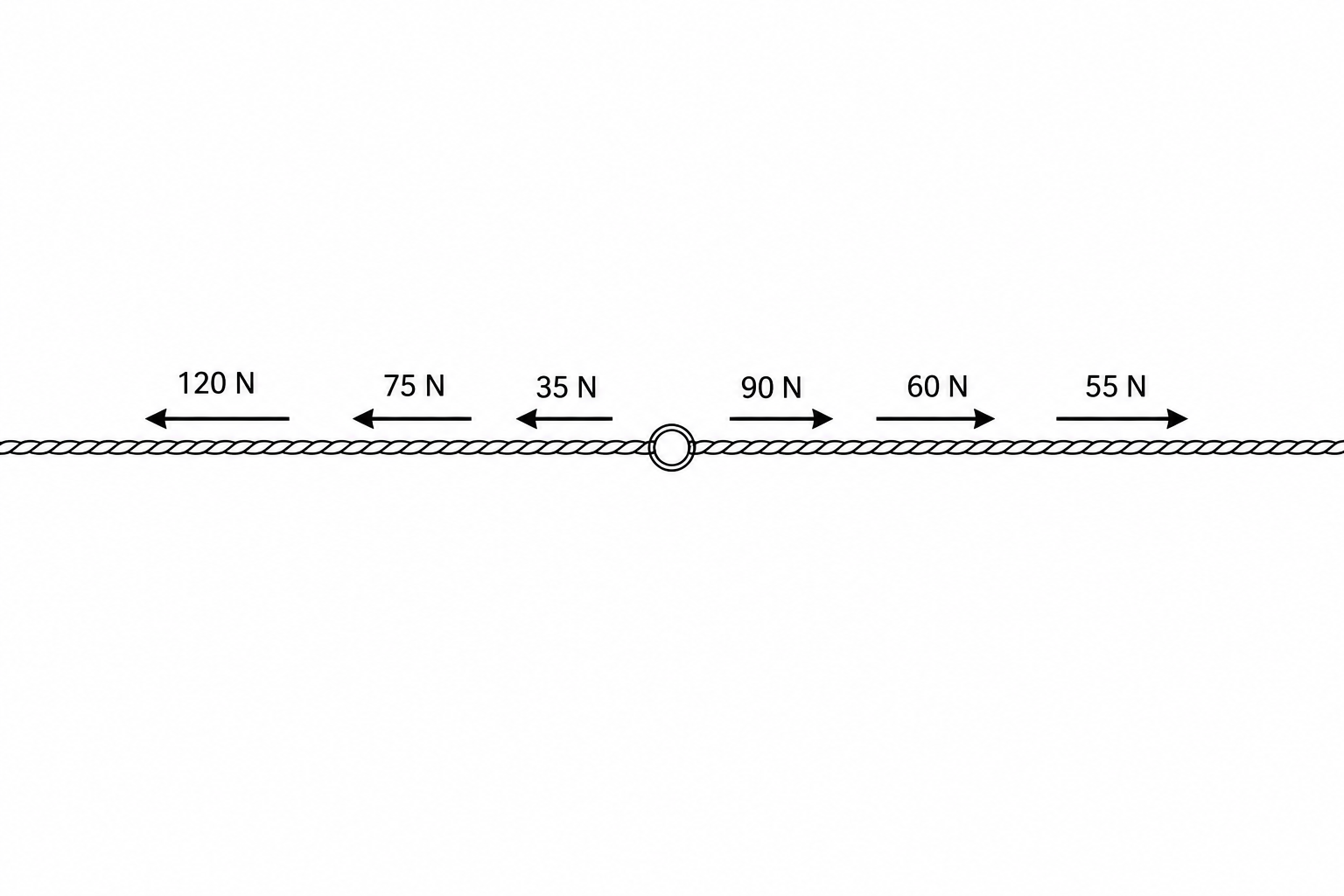
The diagram shows forces acting along a straight rope through a ring. What is the resultant force on the ring?
Q10.
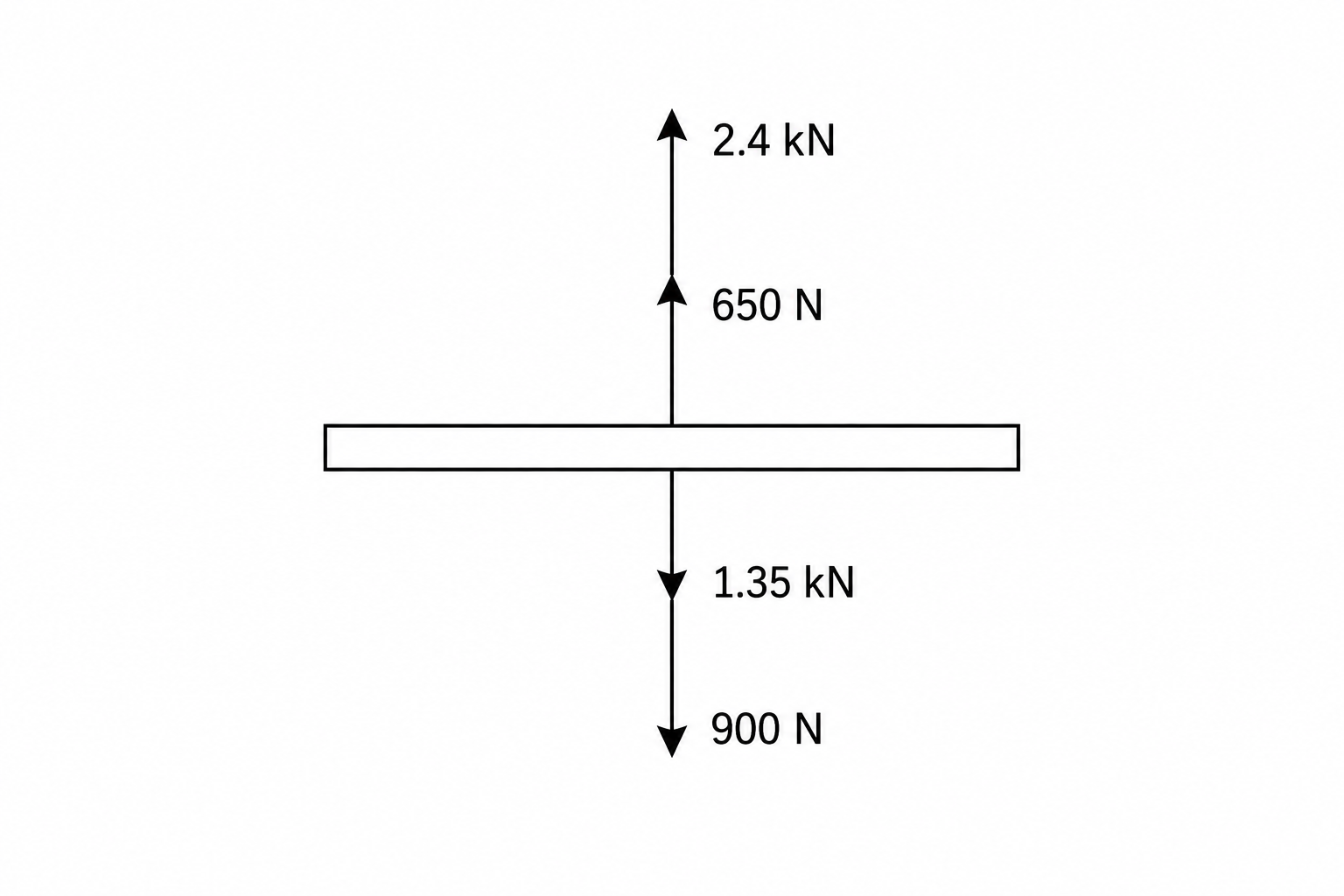
The diagram shows forces acting vertically on a platform. What is the resultant force?
What this assessment covers
Concepts tested
- Resultant force calculation
- Vector addition of forces
- Understanding of collinear forces
- Application of Newton's laws of motion
- Force balance in equilibrium scenarios
Question Mix
- Hard questions included
Skills you build
- Calculate net force from multiple vectors
- Interpret force diagrams accurately
- Apply vector addition principles
- Analyze force interactions in real-world contexts
- Develop problem-solving strategies for physics challenges
Related assessments
More practice
Other assessments in this subject
