

MATHEMATICS - LINEAR INEQUALITIES
One Step Inequalities Worksheet
- 10 questions
- Understand that a situation can be represented either in words or as an inequality. Move between the two representations and solve linear inequalities.
- Difficulty: Hard
- Board: CAIE
- Attempt online on the examination portal
Start the 10-question quiz
Free, no sign-up needed. Your score shows instantly.
Here are the first 3 questions. Click “View all questions” to see the complete assessment.
Q1.
Q2.
A diver starts at sea level. After t minutes, the diver's height relative to sea level is −0.8t m. The diver must remain strictly above a height of −6 m. Given that time cannot be negative, which range of times is permitted?
Q3.
A mass of flour, m kg, is shared equally among 8 containers. Each container may hold no more than 1.65 kg of flour. What is the greatest total mass of flour that can be shared this way?
Q4.
A number x is subtracted from −3.6. The result is no greater than −8.1. Which inequality describes all possible values of the number?
Q5.
A machine divides an input number x by −3. It accepts an input only when the output is at least 2.4. What is the greatest input the machine accepts?
Q6.
A whole-number setting n is reduced by 2/3. The result must be strictly less than −1/6. What is the largest possible setting?
Q7.
During a sale, a customer pays 85% of an item's original price, p dollars. The customer can spend at most 51 dollars. Which inequality describes the original prices the customer can afford?
Q8.
A cable must be longer than 2350 mm. A supplier records cable lengths as c metres. Which inequality should the supplier use to identify suitable cables?
Q9.
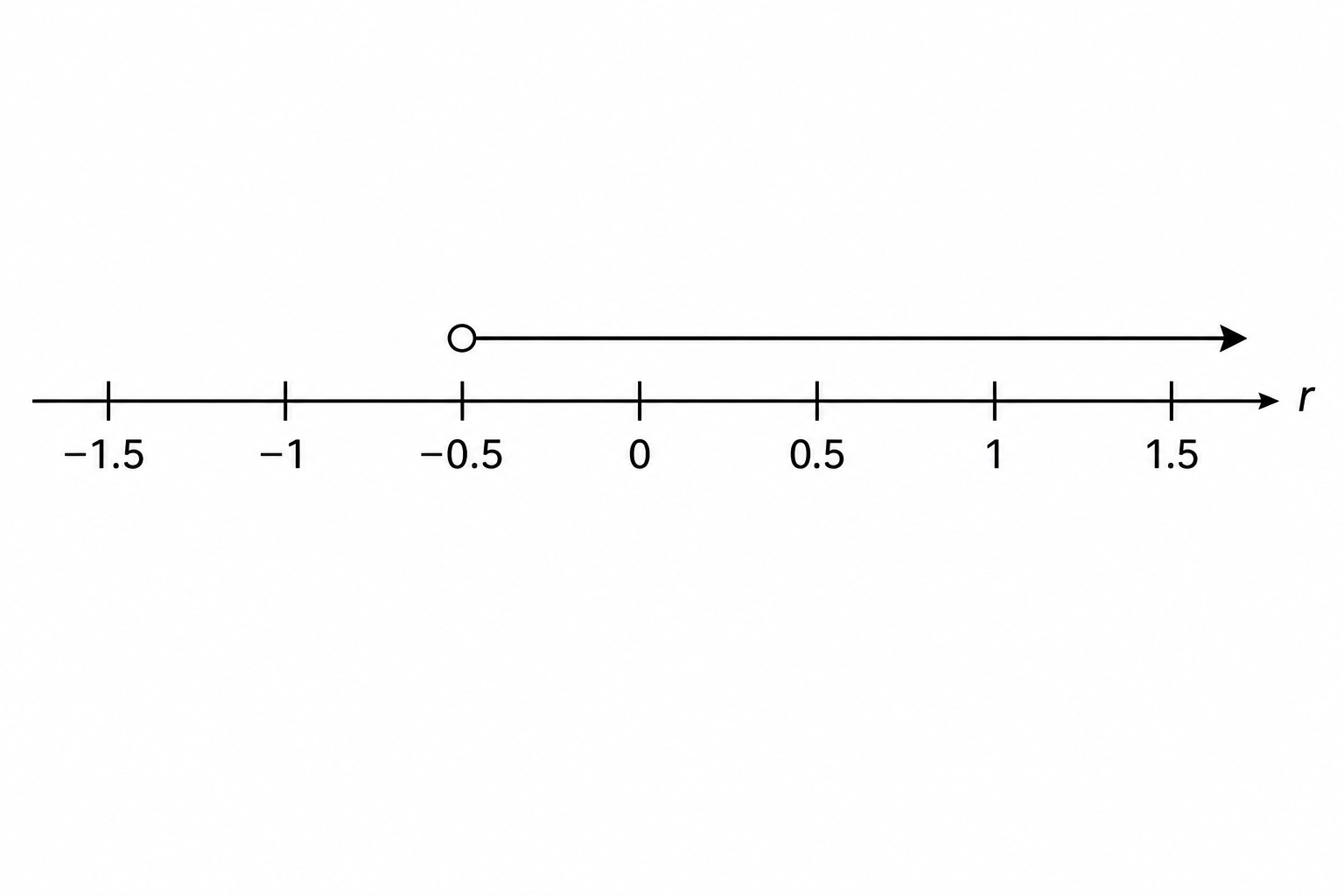
The number line shows all permitted values of a sensor reading r. The sensor calculates its reading using r = x − 1.25, where x is the input. Which inequality describes all permitted inputs?
Q10.
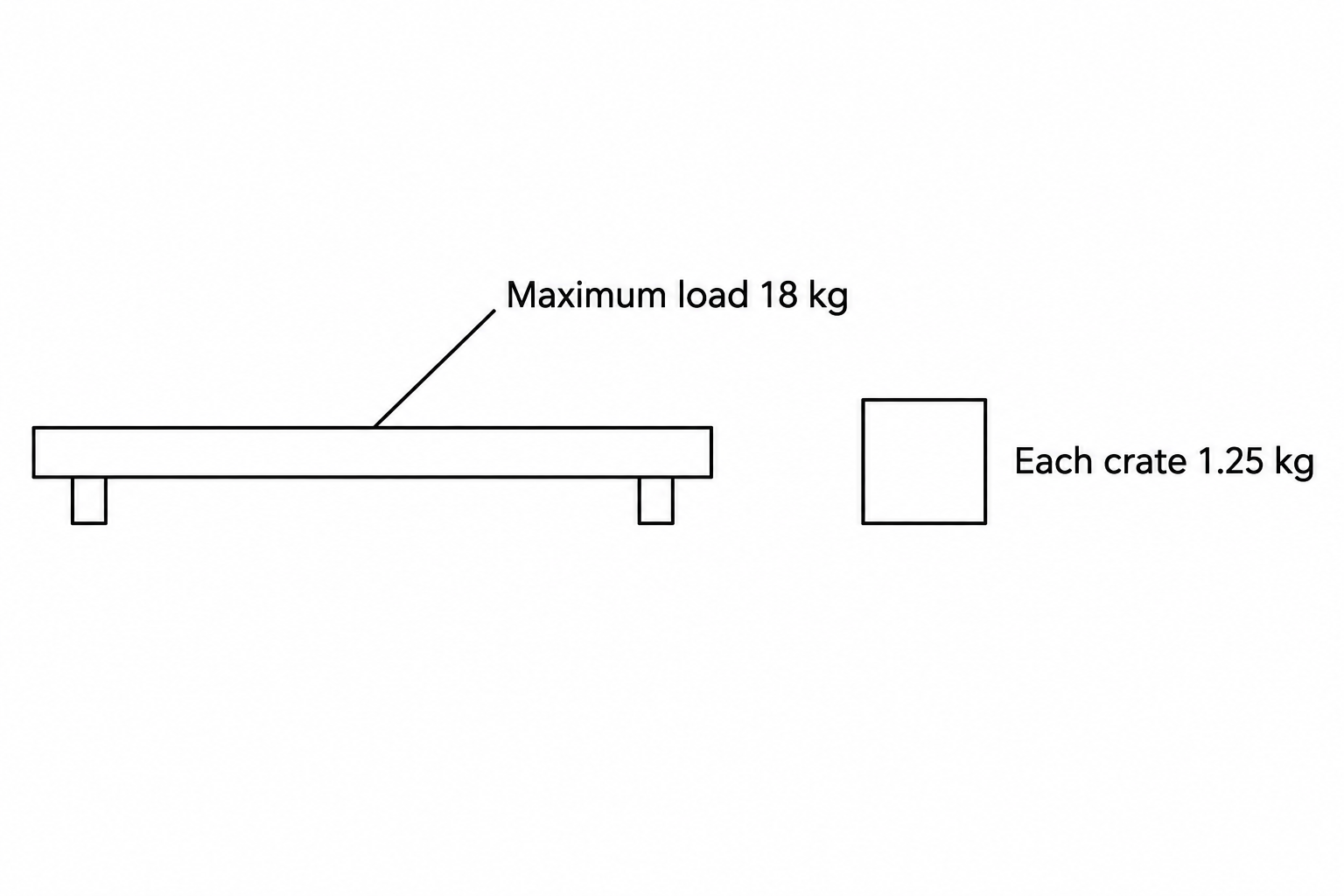
The diagram gives a loading platform's limit and the mass of each identical crate. Only crates are placed on the platform. What is the greatest number of whole crates that can be loaded without exceeding the limit?
What this assessment covers
Concepts Tested
- Linear Inequalities
- Understand that a situation can be represented either in words or as an inequality. Move between the two representations and solve linear inequalities.
Question Mix
- Hard questions included
Skills you build
- Apply
Related assessments
More practice
Other assessments in this subject
