

BIOLOGY - SKELETAL SYSTEM

Skeletal System Worksheet

  • 10 questions
  • Difficulty: Medium
  • Board: US
  • Attempt online on the examination portal
Start the 10-question quiz Free, no sign-up needed. Your score shows instantly.

Here are the first 3 questions. Click “View all questions” to see the complete assessment.

Q1.

A student models how a person bends an arm at the elbow. Which explanation best describes the interaction between the skeletal and muscular systems that the model should show?

  1. A) The upper-arm bone shortens and pulls the relaxed muscle toward the shoulder.
  2. B) A muscle contracts and pulls through a tendon, moving a bone at the elbow joint.
  3. C) The elbow joint produces a pulling force that causes the attached muscle to shorten.
  4. D) A tendon contracts and pushes the bones apart while the muscle supports the joint.

Q2.

A disease damages red bone marrow and greatly reduces red blood cell production. Why could this make a person's leg muscles tire more quickly during exercise?

  1. A) Fewer red blood cells cause the leg bones to stop providing attachment points for muscles.
  2. B) Fewer red blood cells prevent tendons from transferring pulling forces to bones.
  3. C) Fewer red blood cells reduce the amount of oxygen delivered to working muscle cells.
  4. D) Fewer red blood cells prevent the lungs from expanding during each breath.

Q3.

A model shows calcium moving from bone tissue into the blood when blood calcium becomes too low. Muscle cells need calcium to function normally. What relationship does this model illustrate?

  1. A) The circulatory system uses calcium to replace the need for muscle contractions.
  2. B) The skeletal system releases whole bone cells that become new muscle cells.
  3. C) The muscular system makes calcium that the circulatory system changes into bone.
  4. D) The skeletal system stores a mineral that can help maintain normal muscular function.

Q4.

An athlete tears a ligament in the knee. The leg muscles can still contract, but the knee becomes unstable. Which explanation best connects the damaged tissue to the change in movement?

  1. A) Ligaments connect bones to other bones, so the tear reduces support that normally limits unwanted joint movement.
  2. B) Ligaments produce joint fluid, so the tear immediately removes all cushioning between bones.
  3. C) Ligaments carry nerve signals, so the tear prevents all communication with the leg muscles.
  4. D) Ligaments attach muscles to bones, so the tear prevents every muscle from pulling on the knee.

Q5.

Two similar bone fractures receive the same support, but one has a much poorer blood supply. Why would the fracture with poorer blood flow usually heal more slowly?

  1. A) Blood supplies the pulling force that moves the broken pieces back into position.
  2. B) Blood normally hardens into replacement bone without the activity of living cells.
  3. C) Blood supplies oxygen and nutrients needed by living cells that rebuild bone tissue.
  4. D) Blood normally holds the broken bone pieces together until the muscles reconnect them.

Q6.

A model of the back shows the spinal cord running through a canal formed by the vertebrae. Which explanation best connects this skeletal arrangement to coordinated leg movement?

  1. A) The vertebrae protect a pathway that carries signals between the brain and leg muscles.
  2. B) The vertebrae produce the nerve signals that tell the leg muscles when to contract.
  3. C) The vertebrae squeeze the spinal cord to push nerve signals toward the legs.
  4. D) The vertebrae convert nerve tissue into muscle tissue whenever the legs move.

Q7.

During inhalation, muscles between the ribs contract and help lift the rib cage, increasing the volume of the chest cavity. What does this example show about the skeletal system?

  1. A) It causes the lungs to contract by sending nerve signals through the ribs.
  2. B) It replaces the respiratory system when working muscles need more oxygen.
  3. C) It works with muscles to change chest volume and support airflow into the lungs.
  4. D) It pulls oxygen directly from inhaled air and transfers it into the blood.

Q8.

The figure models levels of organization in the skeletal system. Which explanation best describes how the levels shown work together to support the body?
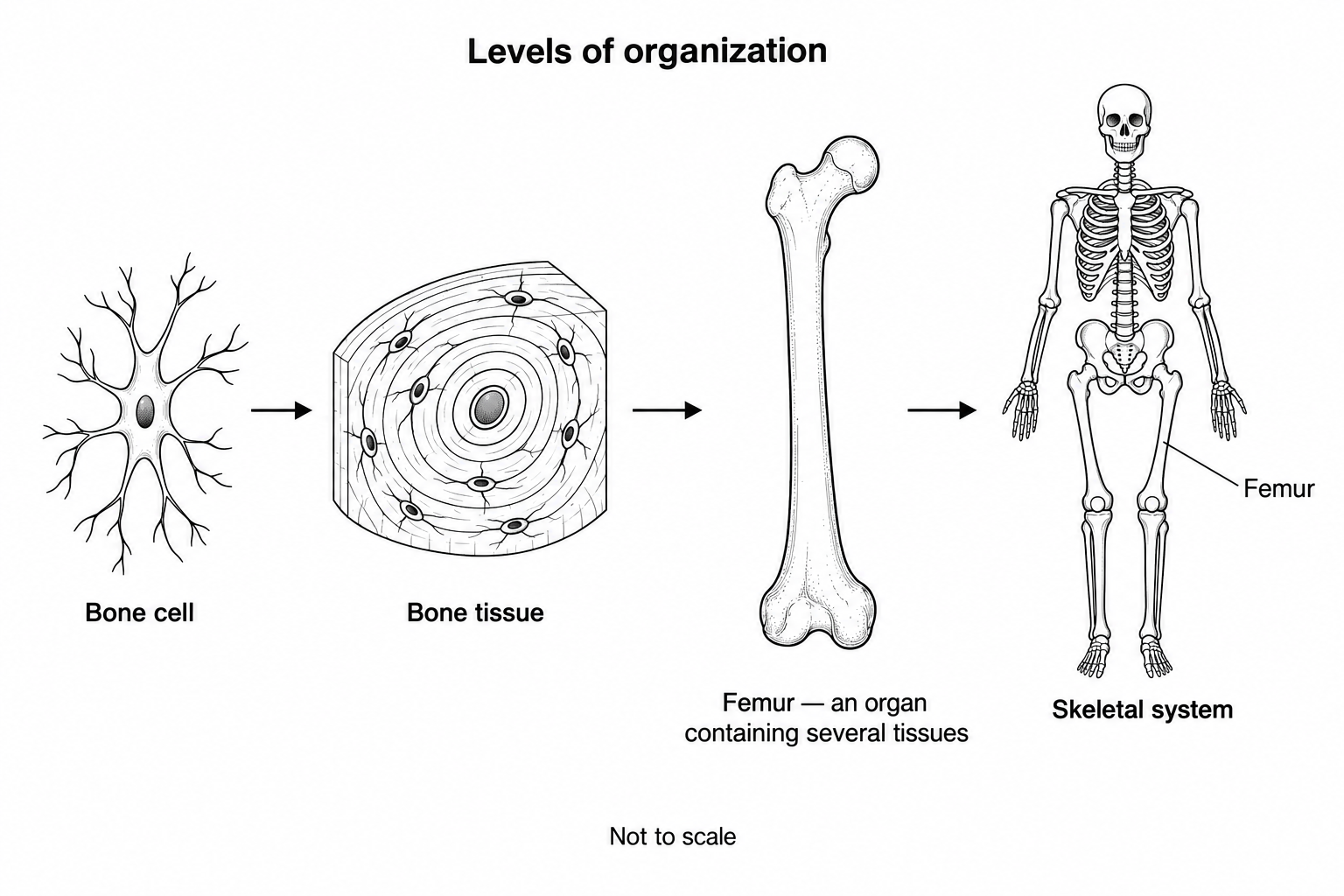
Diagram for question 8: The figure models levels of organization in the skeletal system. Which explanation best describes how the…
  1. A) The femur produces independent cells that support body weight without forming tissues.
  2. B) The skeleton is a single tissue that separates into organs whenever a person moves.
  3. C) Bone cells maintain bone tissue, which is one of the tissues forming organs that work together in the skeleton.
  4. D) Each bone cell functions as a complete skeleton, so the larger structures only store extra cells.

Q9.

The model shows a route taken by calcium from food. If the small intestine absorbs much less calcium over a long period, which explanation best describes a possible effect on the skeletal system?
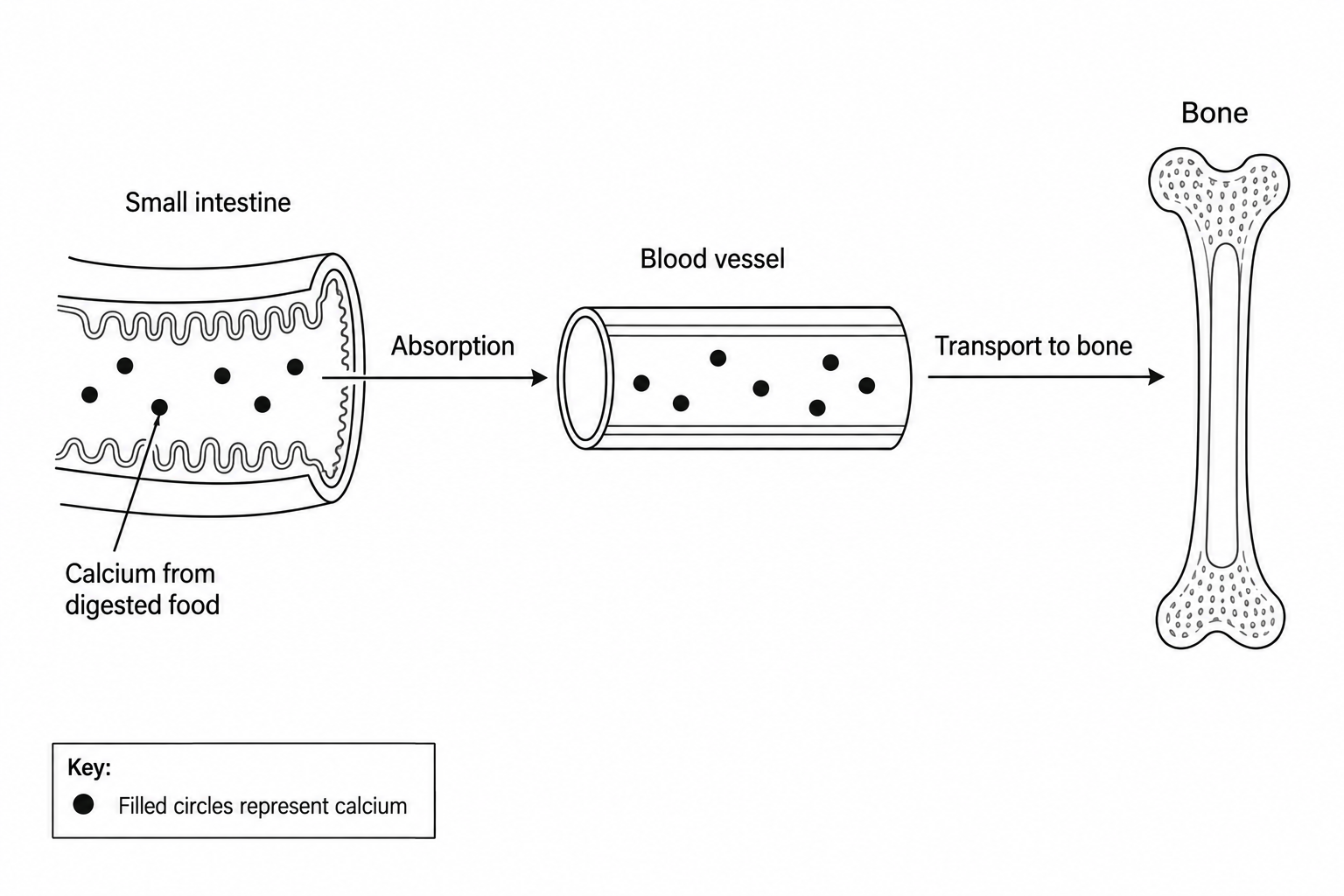
Diagram for question 9: The model shows a route taken by calcium from food. If the small intestine absorbs much less calcium over a…
  1. A) Bones would absorb food directly, removing their dependence on the small intestine.
  2. B) Bone cells would receive more calcium because less of it enters the blood.
  3. C) Less calcium would reach the bones through the blood, which could reduce bone mineralization.
  4. D) Blood vessels would replace bone tissue, allowing the skeleton to remain unchanged.

Q10.

The figure compares a healthy knee joint with a knee joint that has lost much of its articular cartilage. Which explanation best connects the tissue change to difficulty walking?
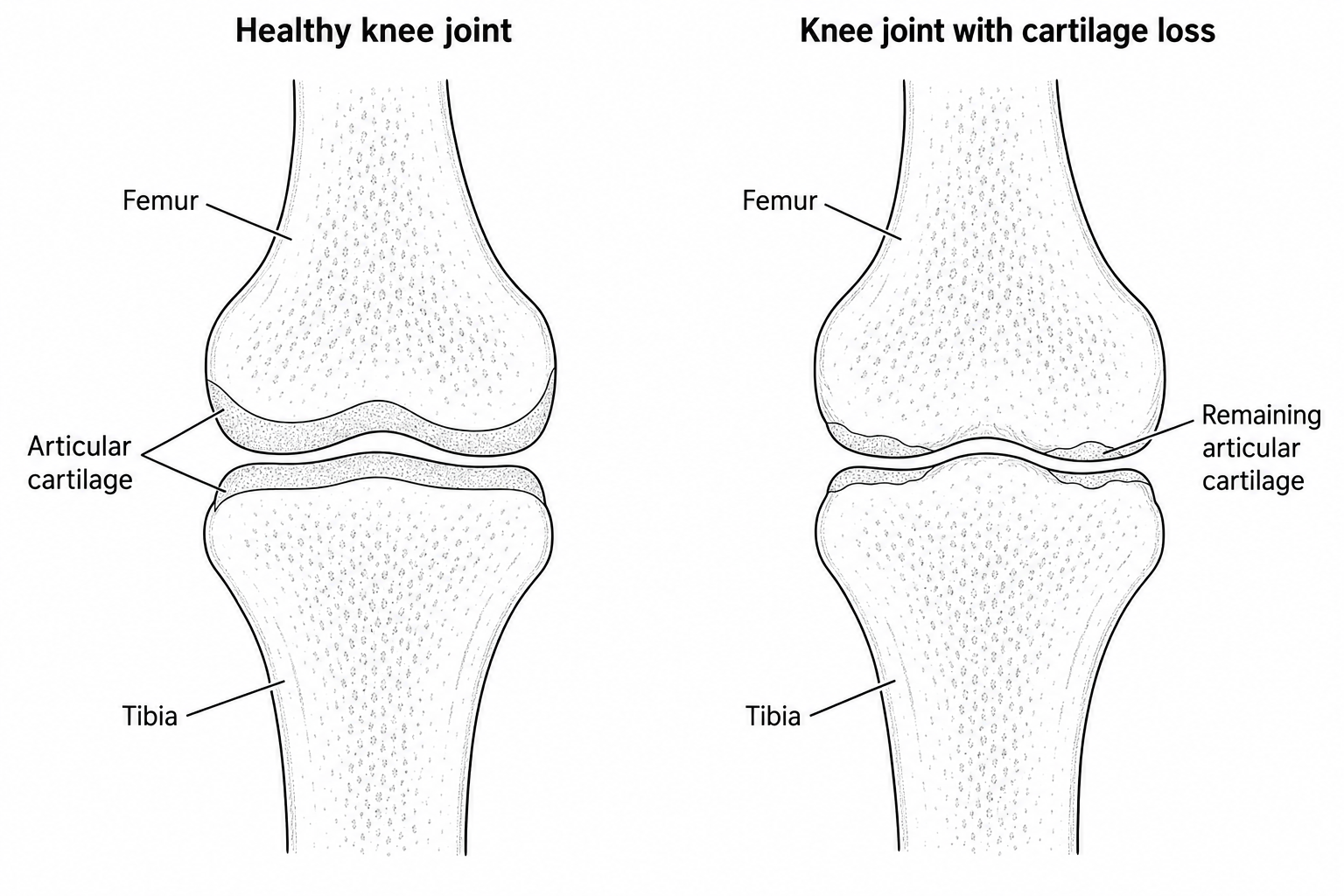
Diagram for question 10: The figure compares a healthy knee joint with a knee joint that has lost much of its articular cartilage.…
  1. A) Cartilage normally attaches muscles to the kneecap, so losing it detaches every muscle crossing the knee.
  2. B) Cartilage normally contracts to bend the knee, so losing it removes the main source of movement.
  3. C) Cartilage normally provides smooth, cushioning surfaces, so losing it can make muscle-driven joint movement painful.
  4. D) Cartilage normally carries signals from the brain, so losing it disconnects the leg muscles.

What this assessment covers

Concepts Tested

  • Skeletal System

Question Mix

  • Medium questions included

Skills you build

  • Understand