BIOLOGY - SKELETAL SYSTEM

Skeletal System Quiz

  • 10 questions
  • Describe the functions of the organs of the digestive system listed in 7.2.1, in relation to: (a) ingestion – the taking of substances, e.g. food and drink, into the body (b) digestion – the breakdown of food (c) absorption – the movement of nutrients from the intestines into the blood (d) assimilation – uptake and use of nutrients by cells (e) egestion – the removal of undigested food from the body as faeces
  • Difficulty: Medium
  • Board: CAIE
  • Attempt online on the examination portal

Here are the first 3 questions. Click “View all questions” to see the complete assessment.

Q1.

Which statement best describes how the mouth carries out ingestion and begins digestion?

  1. A) It removes undigested food from the body as faeces.
  2. B) It converts absorbed glucose into glycogen for storage.
  3. C) It absorbs digested nutrients directly into the blood.
  4. D) It takes food into the body, and the teeth break it into smaller pieces.

Q2.

A person eats a piece of bread containing starch. What is the function of the salivary glands in the digestion of this food?

  1. A) They store the undigested starch before egestion.
  2. B) They release saliva containing an enzyme that begins starch digestion.
  3. C) They absorb the products of starch digestion into the blood.
  4. D) They release bile that breaks large fat droplets into smaller droplets.

Q3.

After food is swallowed, how does the oesophagus help it reach the stomach?

  1. A) It produces digestive enzymes that break down fats and proteins.
  2. B) Its muscles contract in waves to push the food towards the stomach.
  3. C) It stores the food until it leaves the body as faeces.
  4. D) Its cells absorb most digested nutrients into the blood.

Q4.

Which description correctly links the stomach to digestion?

  1. A) It compacts undigested material and carries out egestion.
  2. B) It churns food and mixes it with acid and protease to digest protein.
  3. C) It absorbs most soluble nutrients through villi into the blood.
  4. D) It produces bile and stores excess glucose as glycogen.

Q5.

The pancreas contributes to digestion even though food does not pass through it. How does it perform this function?

  1. A) It releases digestive enzymes into the small intestine.
  2. B) It absorbs amino acids and glucose into blood capillaries.
  3. C) It pushes swallowed food into the stomach by peristalsis.
  4. D) It temporarily stores faeces before they leave the body.

Q6.

Why is the small intestine well suited to its main role after digestion has produced small, soluble molecules?

  1. A) It has a large surface with villi through which nutrients move into the blood.
  2. B) It holds undigested material until it is removed by egestion.
  3. C) It stores bile until fatty food enters the digestive system.
  4. D) It has thick muscular walls that grind food into large insoluble pieces.

Q7.

Which statement correctly describes the role of the anus in egestion?

  1. A) It digests undigested food by releasing enzymes into the rectum.
  2. B) It controls the removal of undigested food from the body as faeces.
  3. C) It absorbs digested nutrients and transports them to body cells.
  4. D) It removes urea from the blood and releases it as urine.

Q8.

The diagram shows an accessory organ labelled X. What is the function of X in digestion?
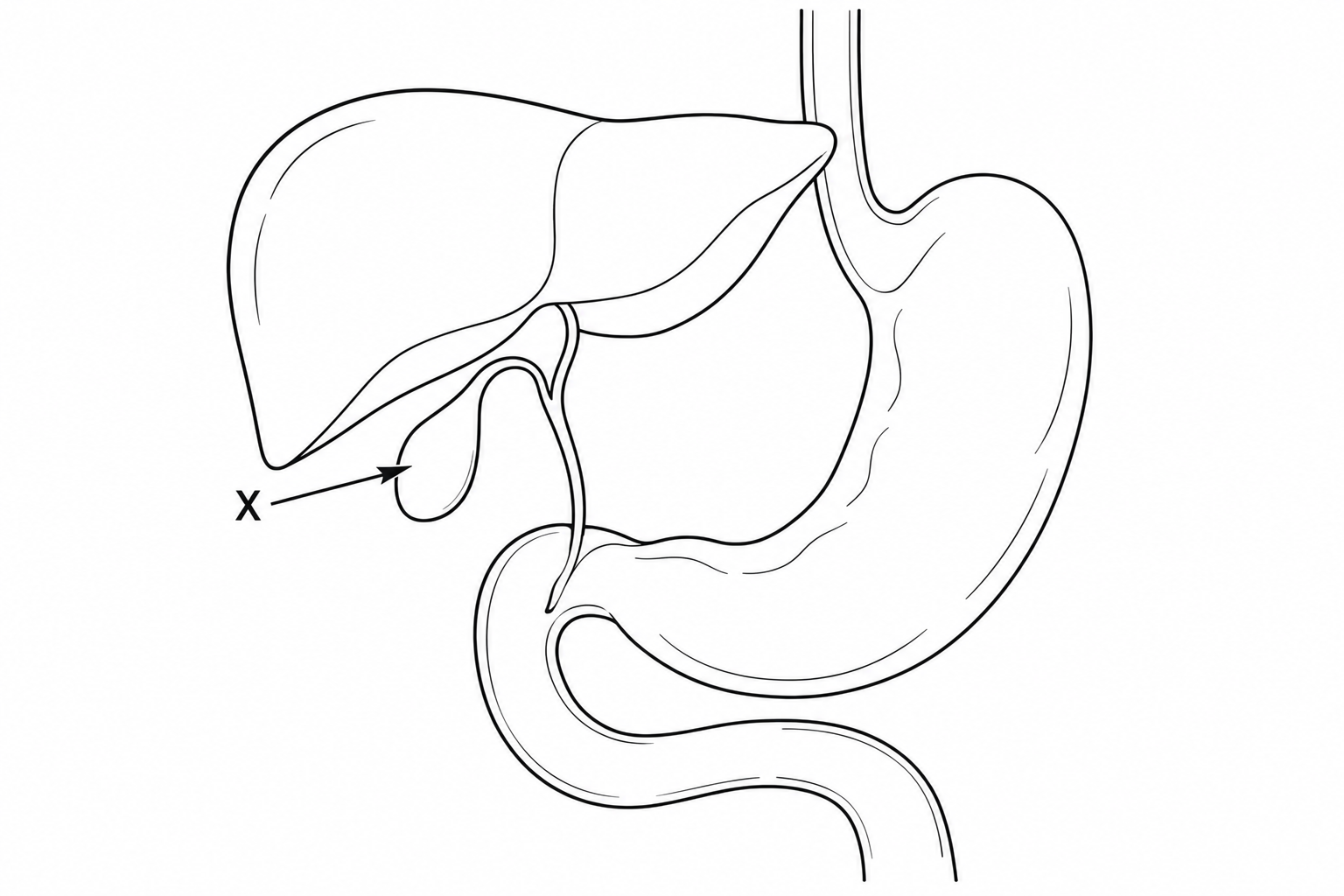
Diagram for question 8: The diagram shows an accessory organ labelled X. What is the function of X in digestion?
  1. A) It secretes acid and protease onto food.
  2. B) It absorbs glucose and amino acids into the blood.
  3. C) It stores bile and releases it into the small intestine.
  4. D) It produces saliva that begins the digestion of starch.

Q9.

The diagram shows blood carrying absorbed nutrients from the small intestine to organ Y. Which activity of organ Y is an example of assimilation?
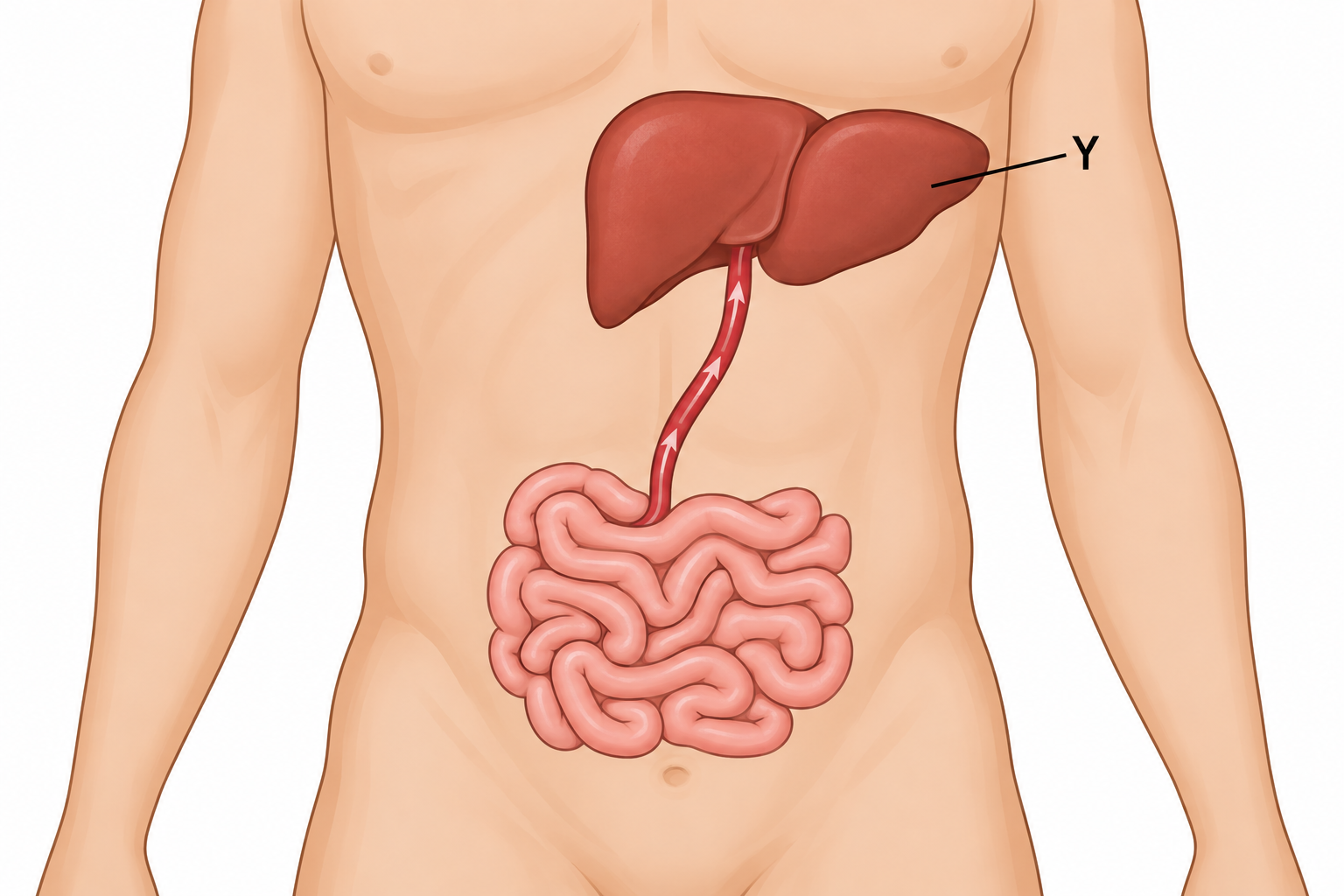
Diagram for question 9: The diagram shows blood carrying absorbed nutrients from the small intestine to organ Y. Which activity of…
  1. A) Its cells take up glucose and convert some of it into glycogen.
  2. B) It moves undigested food out of the body as faeces.
  3. C) It uses muscular contractions to push food into the stomach.
  4. D) It absorbs water from material passing through the large intestine.

Q10.

The organ labelled Z receives material that has passed through the small intestine. Which statement describes an important function of Z?
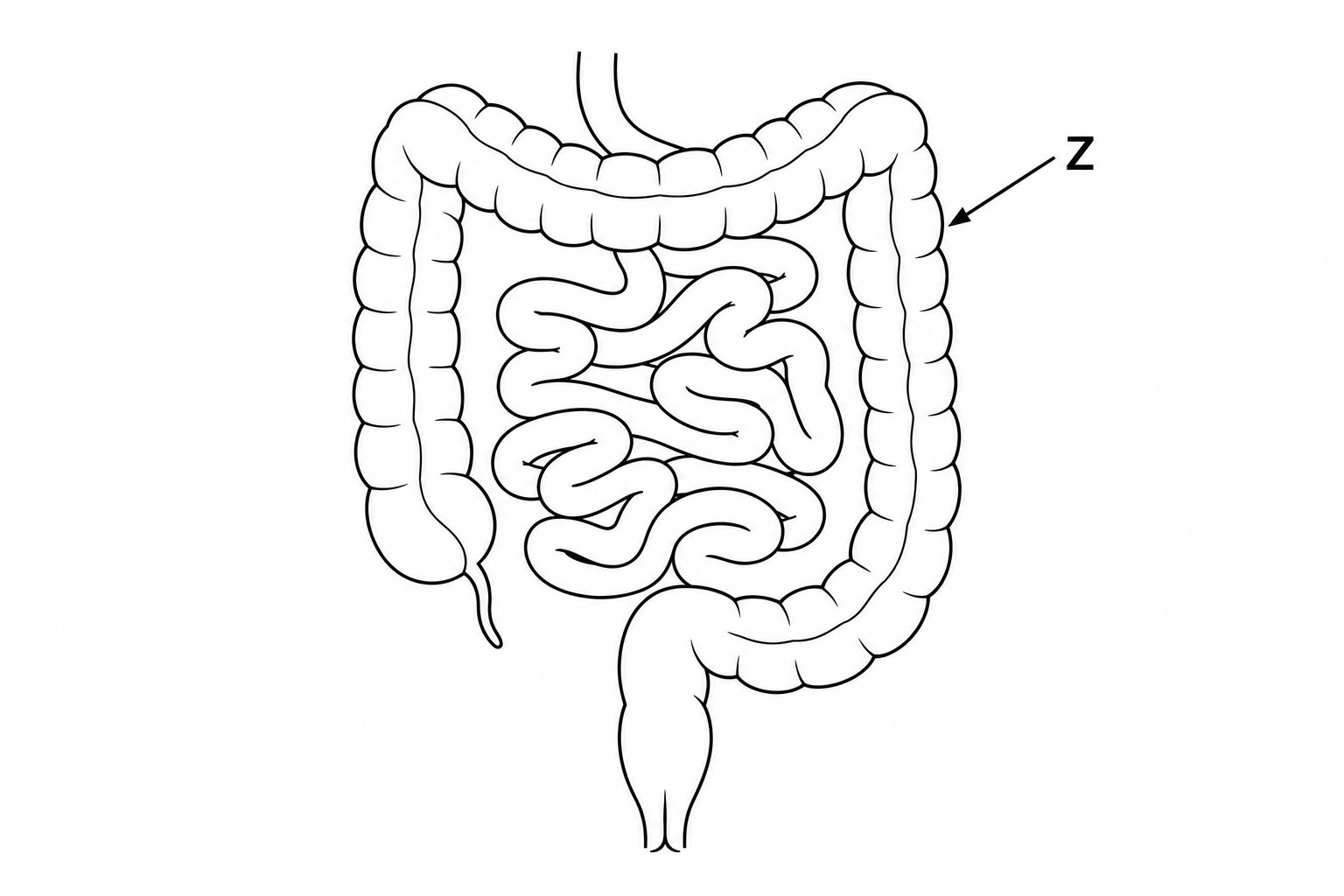
Diagram for question 10: The organ labelled Z receives material that has passed through the small intestine. Which statement…
  1. A) It absorbs most glucose and amino acids through villi.
  2. B) It releases pancreatic enzymes that complete chemical digestion.
  3. C) It takes food and drink into the body during ingestion.
  4. D) It absorbs water from the remaining material and helps form faeces.

What this assessment covers

Concepts Tested

  • skeletal system
  • Describe the functions of the organs of the digestive system listed in 7.2.1, in relation to: (a) ingestion – the taking of substances, e.g. food and drink, into the body (b) digestion – the breakdown of food (c) absorption – the movement of nutrients from the intestines into the blood (d) assimilation – uptake and use of nutrients by cells (e) egestion – the removal of undigested food from the body as faeces

Question Mix

  • Medium questions included

Skills you build

  • Understand