

BIOLOGY - INHERITANCE

Genotype Phenotype Worksheet

  • 10 questions
  • Describe phenotype as the observable features of an organism
  • Difficulty: Medium
  • Board: CAIE
  • Attempt online on the examination portal
Start the 10-question quiz Free, no sign-up needed. Your score shows instantly.

Here are the first 3 questions. Click “View all questions” to see the complete assessment.

Q1.

A student describes a pea plant as tall, with purple flowers and wrinkled seeds. Why is this a description of the plant's phenotype?

  1. A) It lists the alleles carried by the plant.
  2. B) It lists observable features of the plant.
  3. C) It identifies which features are dominant.
  4. D) It identifies the features of the plant's parents.

Q2.

A researcher records information about a mouse. Which pair of records describes only features of its phenotype?

  1. A) Its fur colour and its body mass
  2. B) Its fur colour and the alleles it carries
  3. C) Its DNA base sequence and its body mass
  4. D) Its allele combination and its DNA base sequence

Q3.

A student says, 'An animal's phenotype includes only features that can be seen without equipment.' Which observation best shows why this statement is incomplete?

  1. A) An animal receives genetic information from its parents.
  2. B) An animal's cells contain DNA.
  3. C) An animal's alleles can be represented using letters.
  4. D) An animal's heart rate can be measured and described as a feature.

Q4.

Two bean plants have the same flower colour and leaf shape, but one is taller than the other. Which statement correctly describes their phenotypes?

  1. A) Their phenotypes are identical because their flowers have the same colour.
  2. B) Their phenotypes cannot be compared without knowing their alleles.
  3. C) Their phenotypes differ in height but share the recorded flower colour and leaf shape.
  4. D) Their phenotypes differ in every feature because their heights are different.

Q5.

Grass growing in a shaded area has longer leaves than grass growing in a nearby sunny area. A student says that leaf length cannot be part of the phenotype because growing conditions may affect it. Which response is correct?

  1. A) Leaf length is part of the phenotype only if it is unaffected by growing conditions.
  2. B) Leaf length is not part of the phenotype because only colours are phenotypic features.
  3. C) Leaf length is not part of the phenotype unless the grass plants have identical alleles.
  4. D) Leaf length is part of the phenotype because it is an observable feature, even if growing conditions affect it.

Q6.

A rabbit is described as having white fur. A student then writes, 'This tells us its complete phenotype.' What is the best correction?

  1. A) A phenotype description must contain allele symbols instead of words.
  2. B) White fur describes the rabbit's genotype rather than its phenotype.
  3. C) Fur colour is a phenotype only when rabbits of other colours are present.
  4. D) White fur describes one phenotypic feature, but the rabbit has other observable features.

Q7.

A young insect has no wings. After developing into an adult, it has wings. Which statement correctly describes these observations?

  1. A) Only the adult has a phenotype because wings are visible.
  2. B) The insect's observable features, and therefore its phenotype, have changed during development.
  3. C) Wing presence describes genetic information rather than an observable feature.
  4. D) The insect has the same phenotype at both stages because it is the same individual.

Q8.

A gardener wants to group tomato plants using a feature of their phenotype. Which method would meet this aim?

  1. A) Group the plants according to the dates on their seed packets.
  2. B) Group the plants according to the shop that supplied their seeds.
  3. C) Group the plants according to the numbers printed on their pots.
  4. D) Group the plants according to the shapes of their fruits.

Q9.

The diagram shows leaves from two plants of the same species. Which statement correctly describes the phenotypic difference shown?
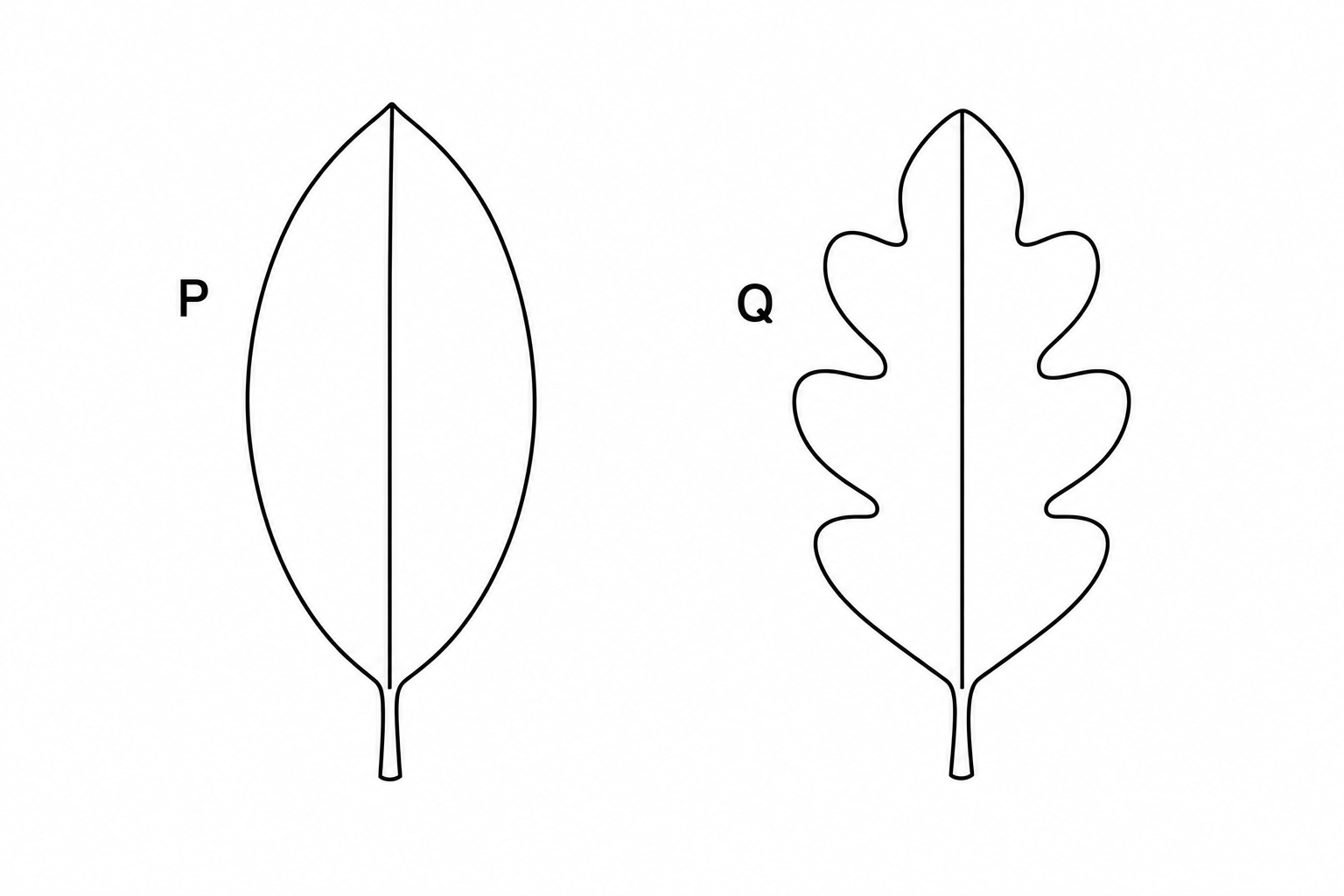
Diagram for question 9: The diagram shows leaves from two plants of the same species. Which statement correctly describes the…
  1. A) Plant P has a lobed leaf edge, while plant Q has a smooth leaf edge.
  2. B) Plant P and plant Q must carry different alleles for every feature.
  3. C) Plant P has a smooth leaf edge, while plant Q has a lobed leaf edge.
  4. D) Plant P and plant Q have identical phenotypes because both have leaves.

Q10.

The diagram shows flowers from plants R and S. A student records the number of petals on each flower. Which statement best describes these records?
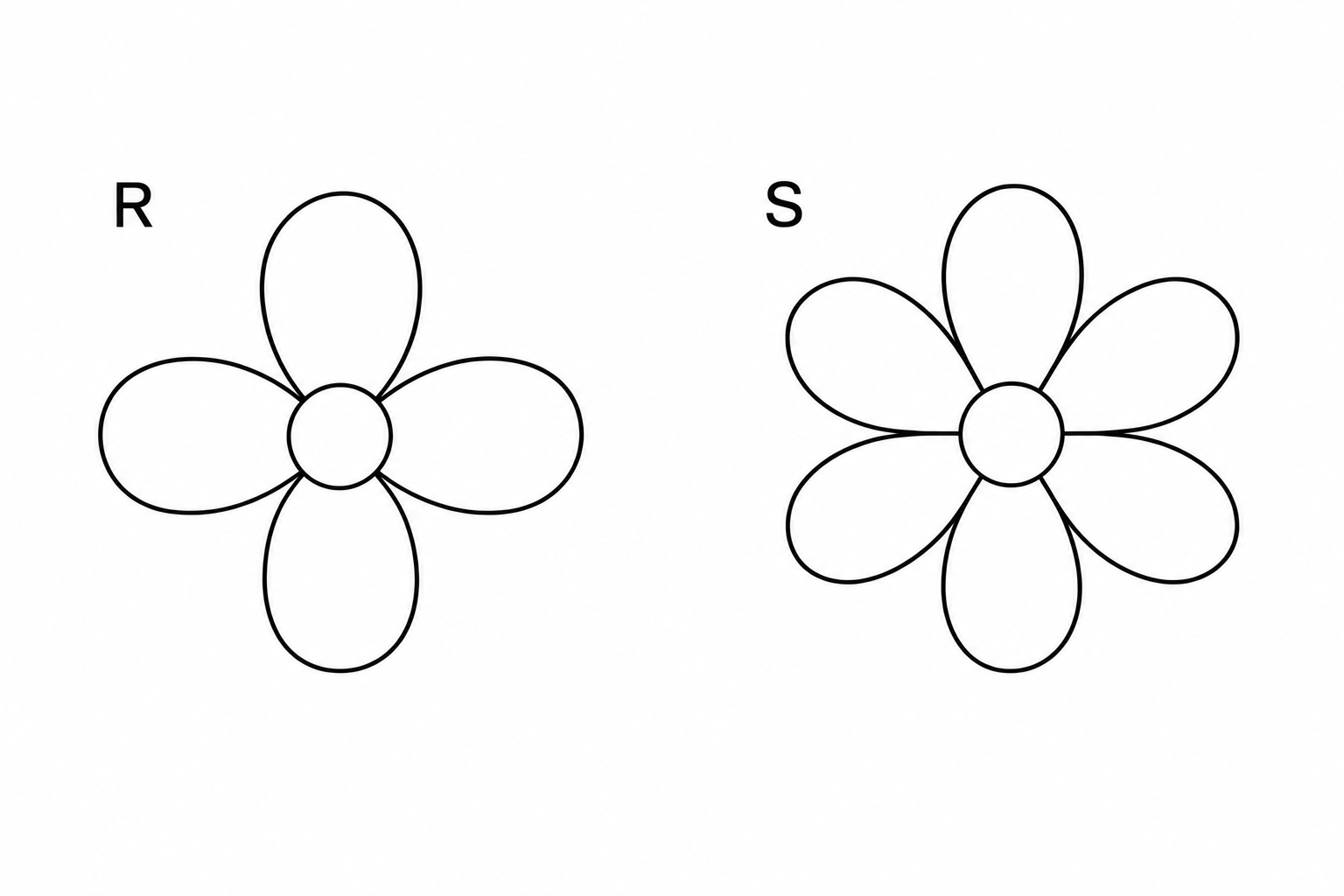
Diagram for question 10: The diagram shows flowers from plants R and S. A student records the number of petals on each flower. Which…
  1. A) They show that only plant S has an observable phenotype.
  2. B) They describe a phenotypic feature, with four petals in R and six petals in S.
  3. C) They describe a phenotypic feature, with six petals in R and four petals in S.
  4. D) They give the allele combinations of the two plants.

What this assessment covers

Concepts Tested

  • Inheritance
  • Describe phenotype as the observable features of an organism

Question Mix

  • Medium questions included

Skills you build

  • Understand