

BIOLOGY - INHERITANCE
Genotype and Phenotype Worksheet
- 10 questions
- Describe genotype as the genetic make-up of an organism and in terms of the alleles present
- Difficulty: Hard
- Board: CAIE
- Attempt online on the examination portal
Start the 10-question quiz
Free, no sign-up needed. Your score shows instantly.
Here are the first 3 questions. Click “View all questions” to see the complete assessment.
Q1.
Q2.
DNA testing shows that a plant cell contains one allele H and one allele h of a gene. In this cell, only allele H is being used to make its protein. A student records the genotype as HH because only the product of H is detected. Which correction should be made?
Q3.
DNA tests establish that plant P has genotype DD and plant Q has genotype dd for a gene affecting leaf colour. Initially, their leaf colours differ. After a change in growing conditions, both plants develop the same leaf colour. No changes occur in their DNA. Which statement correctly describes their genotypes after the change?
Q4.
A gene has three possible alleles in a population: J, K and L. Each organism has exactly two copies of this gene. Testing an organism shows that allele J is absent and that its two copies are different alleles. Which genotype should be recorded?
Q5.
Two laboratories record the alleles of the same diploid organism at two genes. Laboratory 1 lists the copies of the first gene as a then A, and the copies of the second gene as B then B. Laboratory 2 groups each allele pair into a conventional genotype record. Which record describes the same genetic make-up?
Q6.
A diploid cell initially has genotype Tt. A DNA change alters its T allele so that its sequence becomes identical to the existing t allele. No other change occurs. The cell's appearance has not yet changed. Which entry correctly describes its genotype immediately after the DNA change?
Q7.
In a plant species, both GG and Gg plants produce green seeds, while gg plants produce yellow seeds. A researcher finds a green-seeded plant and wants to record its genotype for this gene without using a breeding experiment. Which additional finding would allow an exact genotype to be recorded?
Q8.
A diploid cell has genotype Bb. Before cell division, each chromosome is copied exactly. The cell now contains two identical DNA copies carrying B and two identical DNA copies carrying b, but division has not occurred. A student changes its genotype record to BBbb. Which explanation best corrects this record?
Q9.
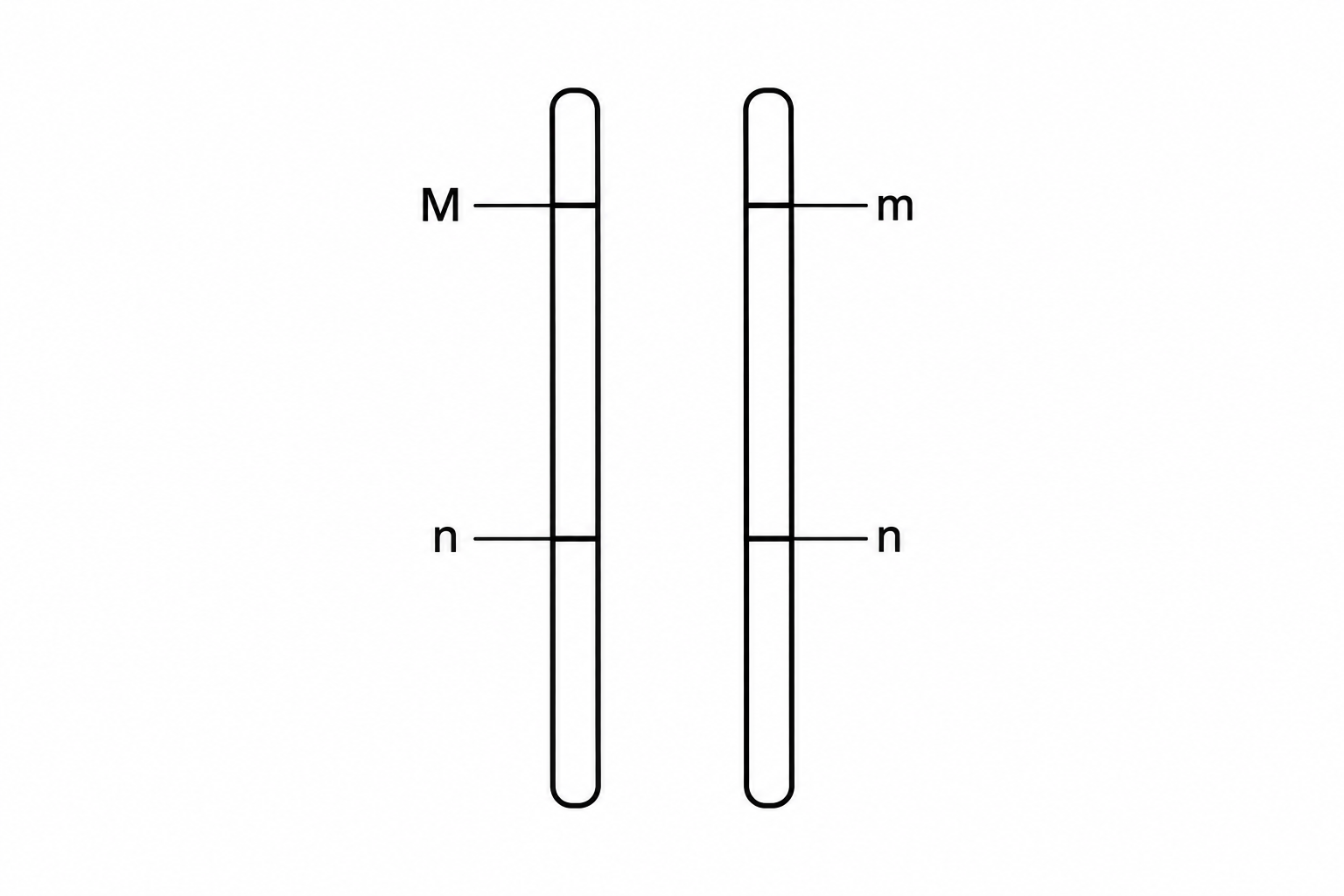
The diagram shows one homologous chromosome pair from a diploid organism. The marked positions are two different genes. Which genotype correctly records the alleles shown for both genes?
Q10.
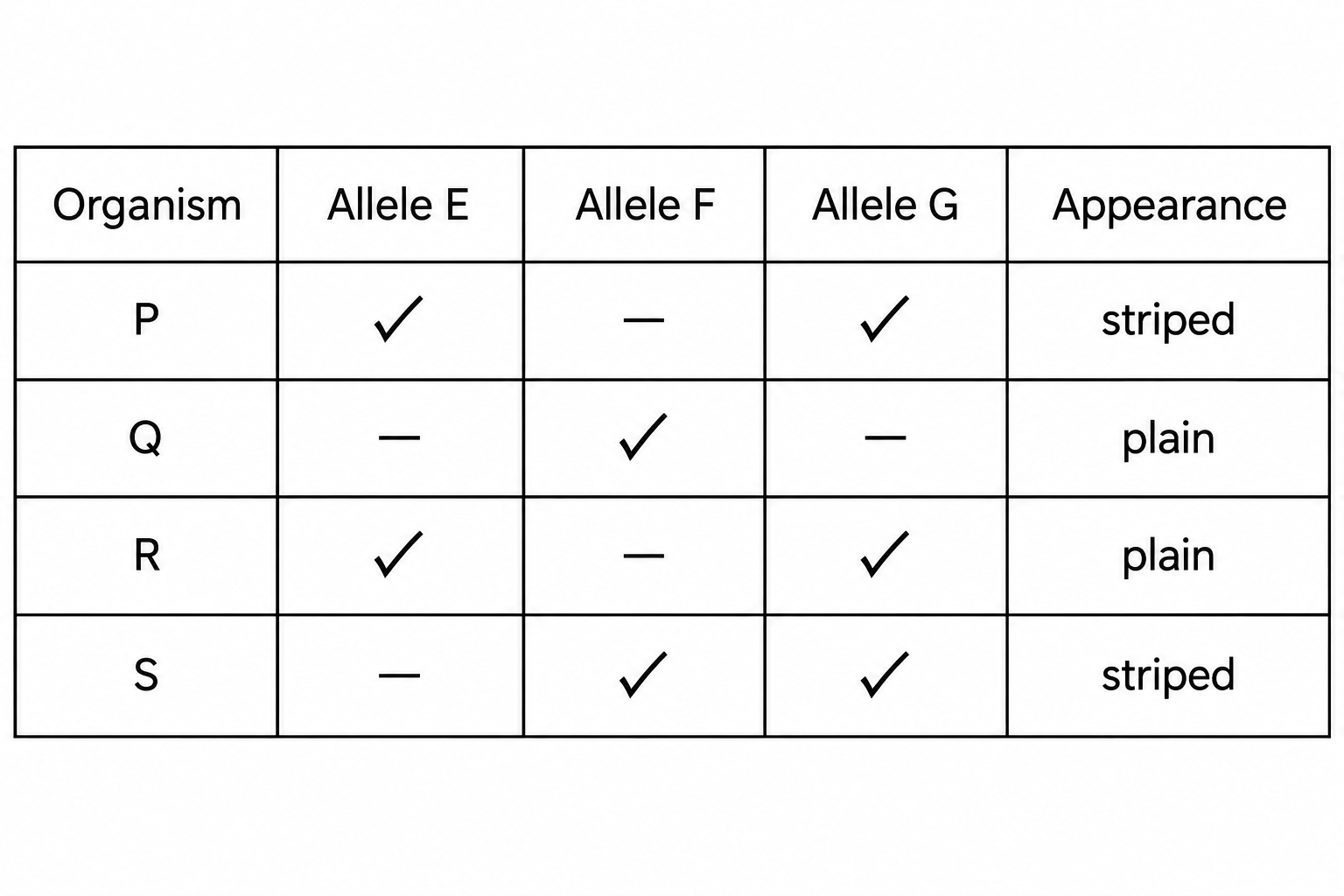
The table gives complete DNA-test results for a gene with three possible alleles, E, F and G. Each organism has exactly two copies of the gene. A tick means that the allele is present; a dash means that it is absent. Which statement correctly compares the genetic make-up of the organisms?
What this assessment covers
Concepts Tested
- Inheritance
- Describe genotype as the genetic make-up of an organism and in terms of the alleles present
Question Mix
- Hard questions included
Skills you build
- Apply
Related assessments
More practice
Other assessments in this subject
