Q1 Question
Points: 1
Choose the correct answer:
A student describes a pea plant as tall, with purple flowers and wrinkled seeds. Why is this a description of the plant's phenotype?
Showing question 1 of 10
Choose the correct answer:
A researcher records information about a mouse. Which pair of records describes only features of its phenotype?
Choose the correct answer:
A student says, 'An animal's phenotype includes only features that can be seen without equipment.' Which observation best shows why this statement is incomplete?
Choose the correct answer:
Two bean plants have the same flower colour and leaf shape, but one is taller than the other. Which statement correctly describes their phenotypes?
Choose the correct answer:
Grass growing in a shaded area has longer leaves than grass growing in a nearby sunny area. A student says that leaf length cannot be part of the phenotype because growing conditions may affect it. Which response is correct?
Choose the correct answer:
A rabbit is described as having white fur. A student then writes, 'This tells us its complete phenotype.' What is the best correction?
Choose the correct answer:
A young insect has no wings. After developing into an adult, it has wings. Which statement correctly describes these observations?
Choose the correct answer:
A gardener wants to group tomato plants using a feature of their phenotype. Which method would meet this aim?
Choose the correct answer:
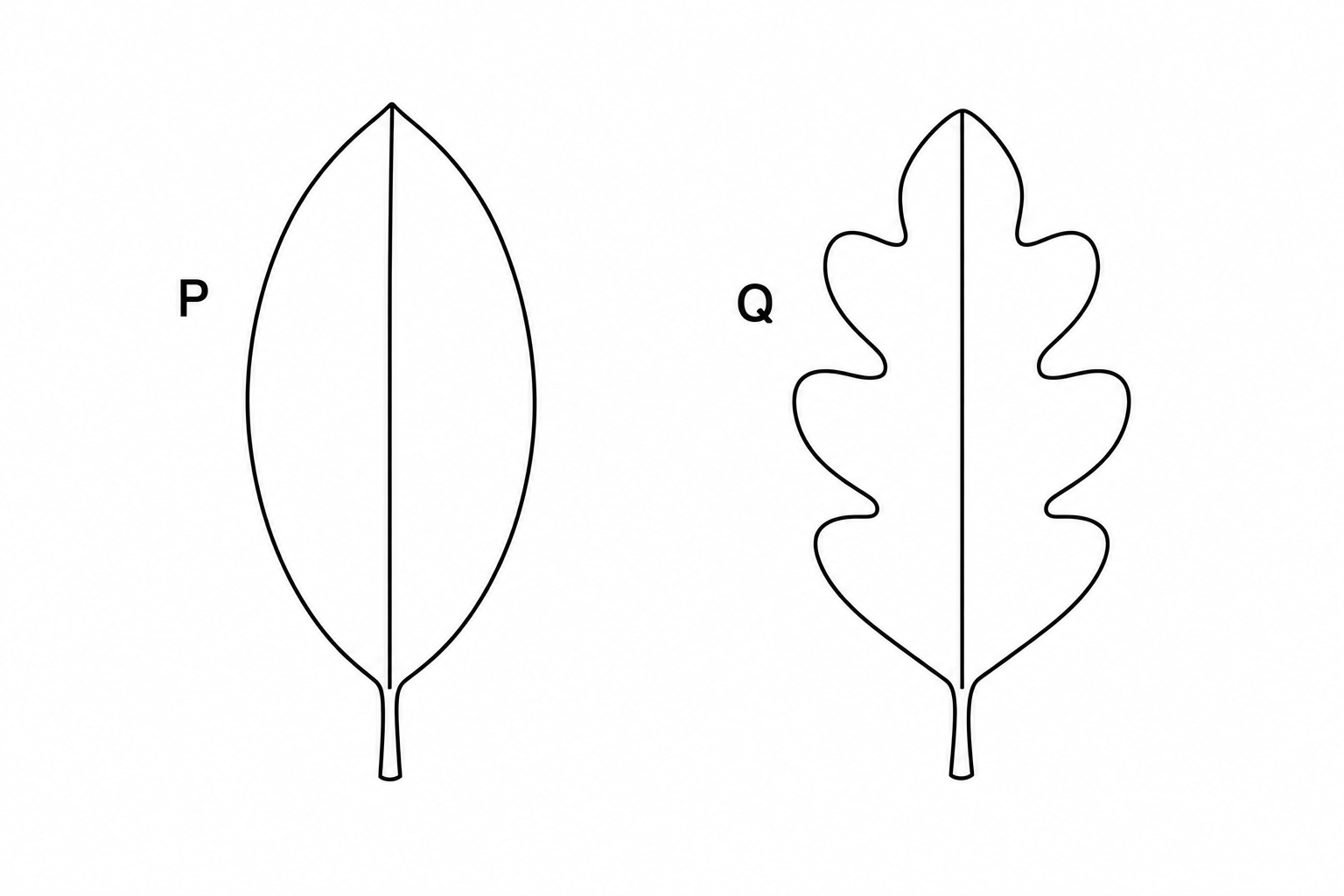
The diagram shows leaves from two plants of the same species. Which statement correctly describes the phenotypic difference shown?
Choose the correct answer:
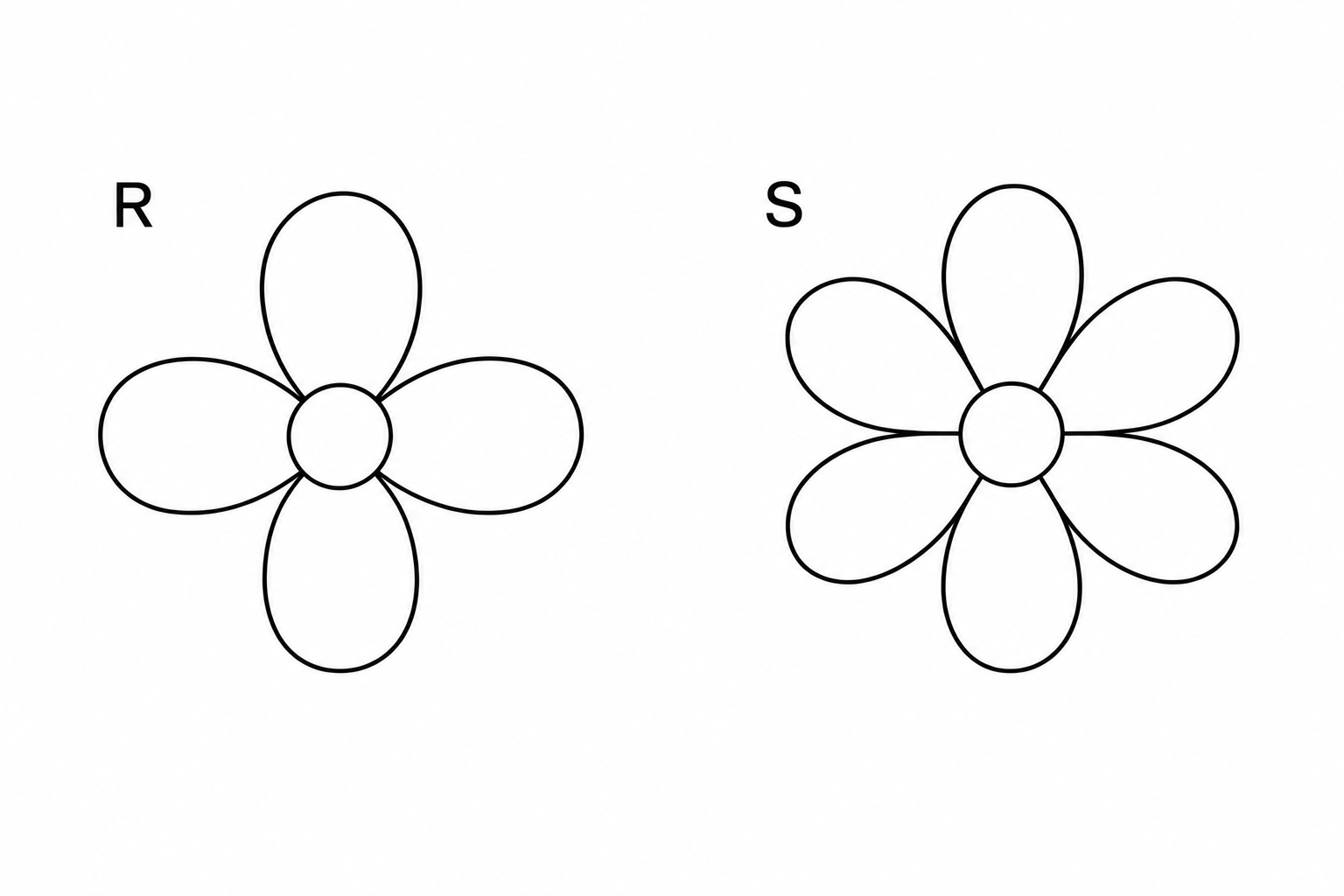
The diagram shows flowers from plants R and S. A student records the number of petals on each flower. Which statement best describes these records?