

BIOLOGY - ECOSYSTEMS
Symbiosis Worksheet
- 10 questions
- Difficulty: Hard
- Board: US
- Attempt online on the examination portal
Start the 10-question quiz
Free, no sign-up needed. Your score shows instantly.
Here are the first 3 questions. Click “View all questions” to see the complete assessment.
Q1.
Q2.
Cleaner shrimp eat parasites attached to reef fish. They cannot remove parasites living inside a fish's organs. In a controlled study, shrimp improve fish growth only when external parasites are present. Researchers introduce the shrimp into two otherwise similar tanks: one containing fish with only external parasites and another containing fish with only internal parasites. Which prediction is best supported?
Q3.
An orchid grows on tree branches without taking water or nutrients from the tree. Its position above the ground prevents its roots from being covered during seasonal floods. Removing the orchids does not change tree growth or survival. A conservation team must move orchids before several host trees are cut down. Which relocation plan best preserves the benefit of this symbiosis without assuming an unsupported benefit to the tree?
Q4.
A brood-parasitic bird lays eggs in another bird species' nests. Host parents feed any chick that hatches, leaving less food for their own chicks. Hosts reject eggs with unfamiliar shell patterns but do not distinguish among chicks after hatching. A conservation team develops a harmless coating that makes parasite eggs look unfamiliar without changing their smell, size, or survival. If applied only to parasite eggs before hosts inspect them, what outcome is most likely?
Q5.
A mammal's gut bacteria receive food and shelter and produce a vitamin that the mammal cannot make. Antibiotics remove these bacteria, causing poor growth on a vitamin-free diet. Researchers can give the vitamin directly to the mammal, but the supplement does not restore the bacteria. Which result would best support the proposed explanation for this mutualism?
Q6.
Acacia trees provide ants with nectar and shelter. The ants attack leaf-eating insects but also chase away insects that pollinate acacia flowers. At one site, leaf-eating insects become rare, while seed production still depends on insect pollination. Nectar production continues at the same cost to the tree. Compared with similar trees without ants, which outcome is now most likely?
Q7.
Algae living in coral tissues receive shelter and nutrients and transfer sugars to the coral. After heat stress, some corals lose most of their algae. Researchers return these corals to normal temperature but prevent new algae from entering their tissues. The corals can still capture small animals for food. Which treatment would most directly compensate for the lost benefit from the algae?
Q8.
Bacteria living in a squid's light organ receive nutrients and produce light that makes the squid harder for predators below it to see at night. Squid without these bacteria are caught more often. Researchers fit bacteria-free squid with tiny lamps that precisely reproduce the normal light pattern. The lamps do not affect swimming or feeding. Which result would best support camouflage as the benefit provided by the bacteria?
Q9.
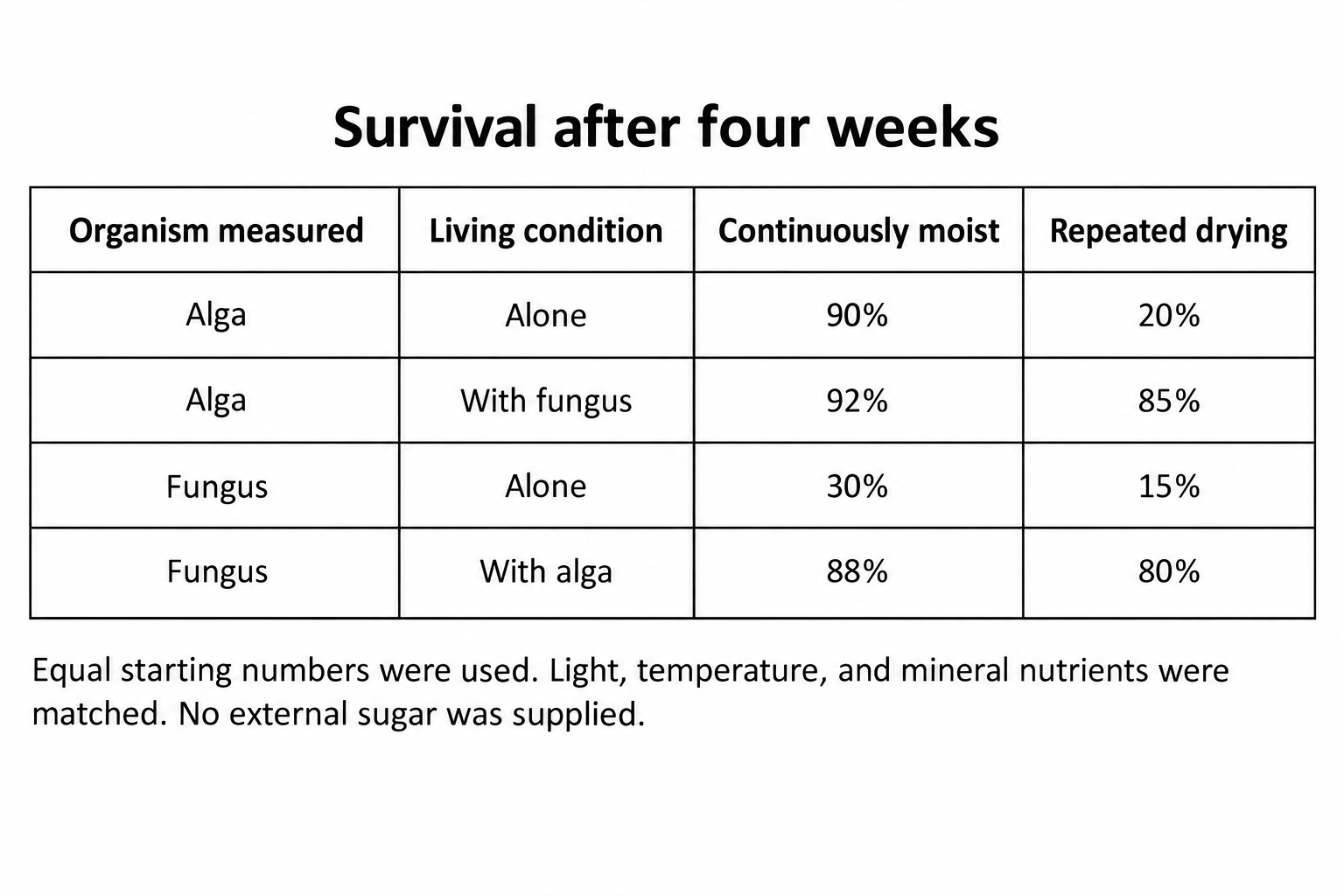
The figure shows an experiment on a fungus and an alga that can live together as a lichen. In the partnership, the fungus retains water and the alga supplies sugars made by photosynthesis. A new treatment keeps both organisms continuously moist but does not supply sugar. Based on the experimental pattern, which prediction is best supported?
Q10.
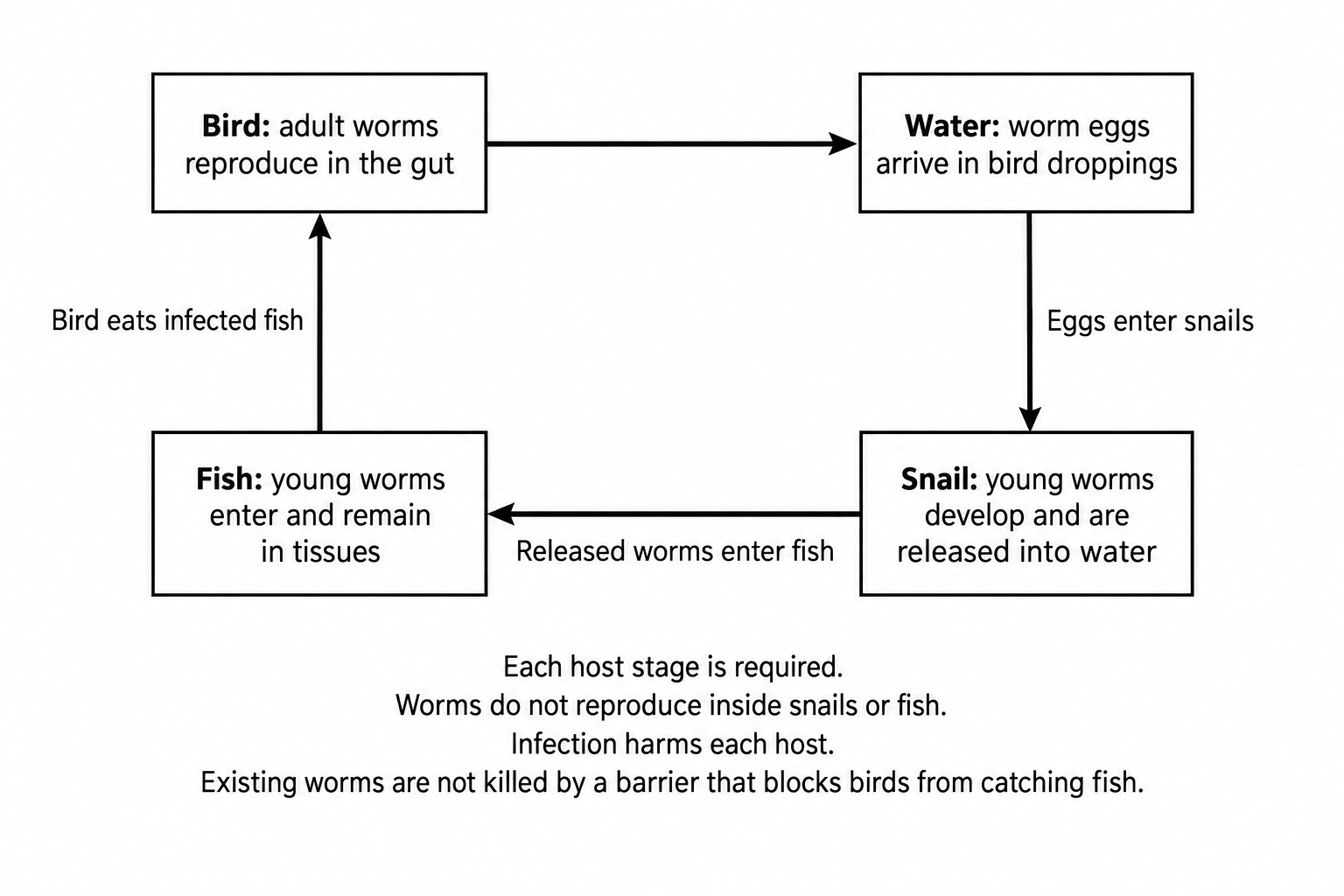
The diagram shows the life cycle of a parasitic worm. Managers install a barrier that prevents birds from catching fish in one pond but does not affect snails, fish, or parasite stages already present. Assume no infected animals enter the pond and no parasite eggs arrive from elsewhere. Which prediction best follows from the life cycle?
What this assessment covers
Concepts Tested
- Ecosystems
Question Mix
- Hard questions included
Skills you build
- Apply
Related assessments
More practice
Other assessments in this subject
