

BIOLOGY - CIRCULATORY SYSTEM

Circulatory System Quiz

  • 10 questions
  • Describe the circulatory system as a system of blood vessels with a pump and valves to ensure one-way flow of blood
  • Difficulty: Medium
  • Board: CAIE
  • Attempt online on the examination portal
Start the 10-question quiz Free, no sign-up needed. Your score shows instantly.

Here are the first 3 questions. Click “View all questions” to see the complete assessment.

Q1.

Which description best explains how the main parts of the circulatory system work together?

  1. A) Valves pump blood through the heart, and blood vessels prevent all changes in pressure.
  2. B) Blood vessels pump blood, the heart stores it, and valves control its temperature.
  3. C) The heart produces blood, blood vessels absorb it, and valves replace lost blood.
  4. D) The heart pumps blood through blood vessels, and valves help prevent backward flow.

Q2.

A student says, ‘Valves move blood around the body because they act as small pumps.’ Which correction should be made?

  1. A) Valves create the pumping force, but only in vessels returning blood to the heart.
  2. B) Valves open and close in response to pressure differences; the heart provides the pumping force.
  3. C) Valves produce blood pressure by contracting at the same time as the heart.
  4. D) Valves squeeze blood vessels, while the heart prevents backward flow.

Q3.

A simplified description follows blood from the heart to a body tissue. Which continuation correctly describes circulation?

  1. A) Blood passes through connected vessels in the tissue and returns towards the heart through other vessels.
  2. B) Blood remains in the tissue, so the heart must make replacement blood for each heartbeat.
  3. C) Blood normally reverses along the same route after every heartbeat, passing backwards through valves.
  4. D) Blood leaves the vessels at the tissue and travels freely through the body back to the heart.

Q4.

A model of circulation consists of a squeezable bulb joined to a complete loop of tubing filled with liquid. Squeezing and releasing the bulb makes the liquid move backwards and forwards. Which addition would best represent how the circulatory system maintains one-way flow?

  1. A) One-way valves arranged to allow flow around the loop in one direction
  2. B) A permanent blockage that prevents liquid from entering the bulb
  3. C) A second loop of tubing with no connection to the bulb
  4. D) A wider section of tubing that can store more liquid

Q5.

A heart valve becomes damaged and cannot close completely. The heart muscle can still contract. Why can this make circulation less effective?

  1. A) Some blood can flow backwards instead of continuing in the intended direction.
  2. B) The damaged valve makes all blood vessels carry blood away from the heart.
  3. C) The valve stops the heart muscle from producing any pumping force.
  4. D) Blood can no longer travel through any vessel that does not contain a valve.

Q6.

Suppose the heart stops contracting, but the blood vessels and valves remain undamaged. Which statement explains why normal circulation cannot continue?

  1. A) The valves must start pumping blood in the opposite direction.
  2. B) The valves can prevent reverse flow, but they cannot replace the pumping action of the heart.
  3. C) The blood can move only if every valve remains permanently closed.
  4. D) The blood vessels become disconnected as soon as the heart stops contracting.

Q7.

The circulatory system is described as a network of blood vessels rather than a collection of separate tubes. What does this description mean?

  1. A) Each blood vessel contains its own heart and circulates blood independently.
  2. B) Blood vessels connect to form routes that carry blood away from and back towards the heart.
  3. C) Blood vessels end at tissues, where blood leaves the circulatory system permanently.
  4. D) All blood vessels carry blood directly away from the heart without returning it.

Q8.

The diagrams show the same valve in a blood vessel under two different pressure conditions. Which statement explains the difference between the diagrams?
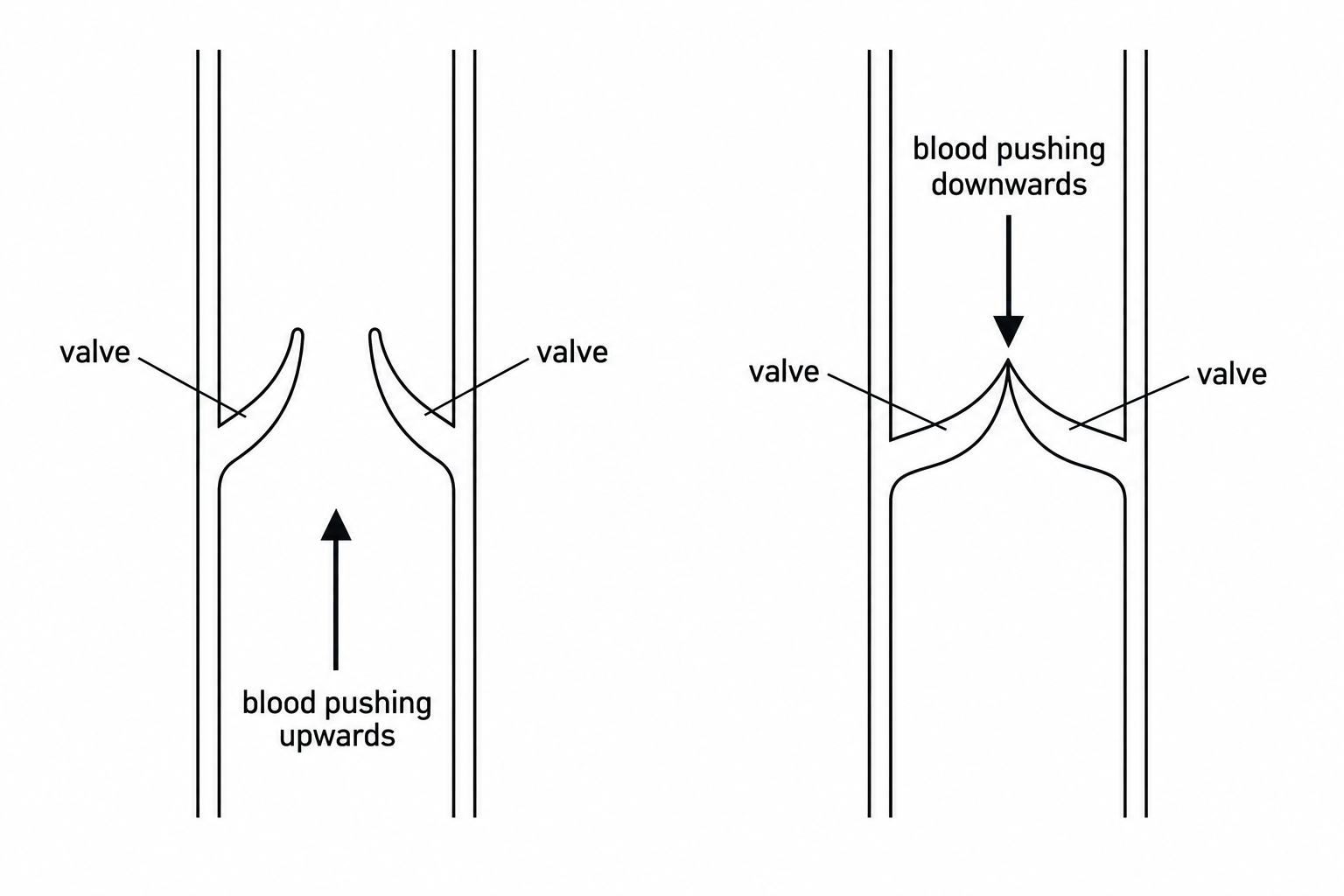
Diagram for question 8: The diagrams show the same valve in a blood vessel under two different pressure conditions. Which statement…
  1. A) The valve opens whenever the heart relaxes, regardless of the direction of pressure.
  2. B) The vessel changes its connections so blood can travel along a different route.
  3. C) The valve contracts in the first diagram and relaxes in the second to pump blood.
  4. D) Pressure in one direction pushes the valve open, while pressure in the opposite direction pushes it closed.

Q9.

The diagram shows a model of circulation. The arrows show the intended direction of liquid flow. Which valve arrangement is needed while the pump is squeezed?
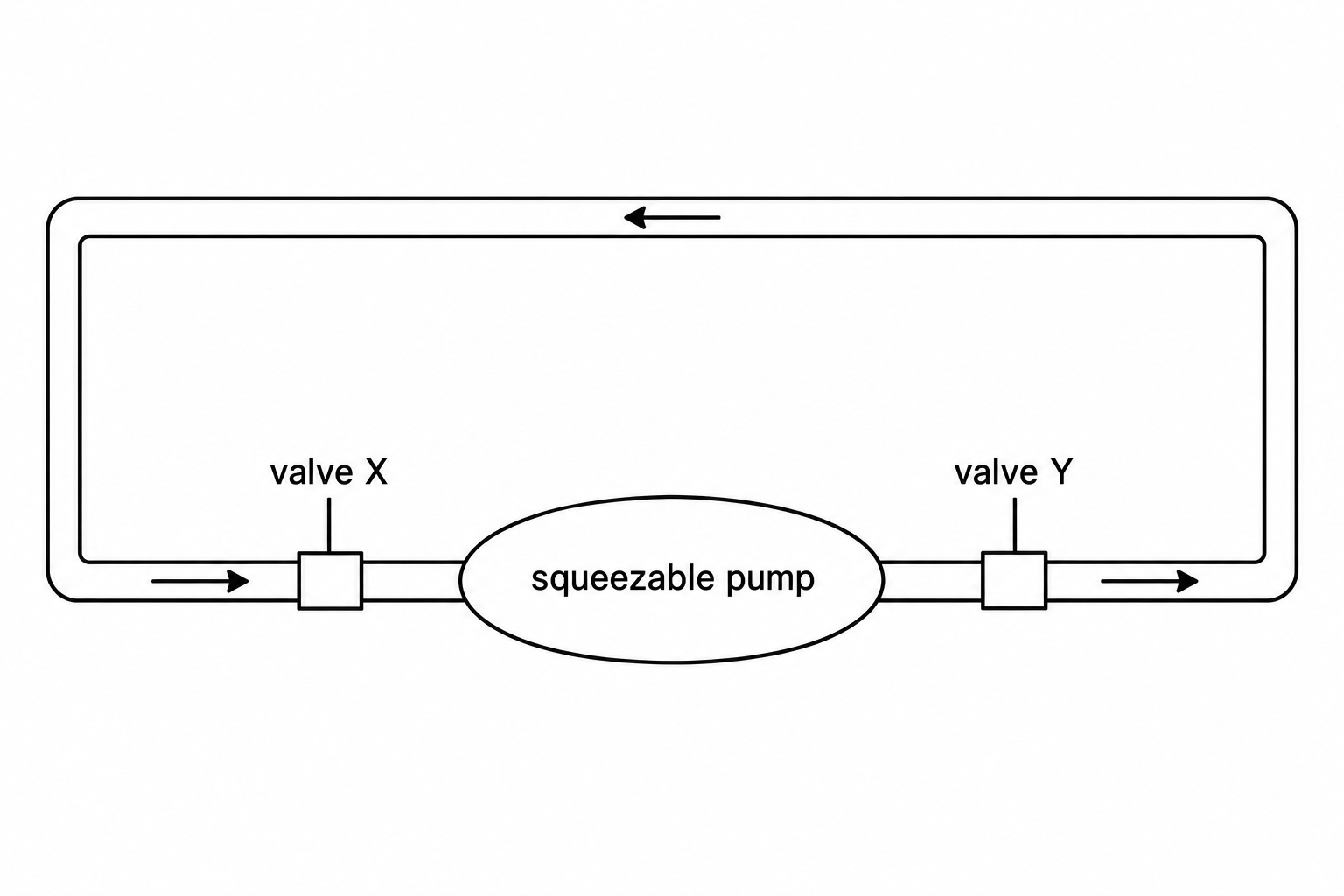
Diagram for question 9: The diagram shows a model of circulation. The arrows show the intended direction of liquid flow. Which valve…
  1. A) Valve X closed; valve Y open
  2. B) Valve X open; valve Y closed
  3. C) Valve X open; valve Y open
  4. D) Valve X closed; valve Y closed

Q10.

The diagram is a simplified representation of circulation through two body tissues. Which description correctly relates the labelled parts to the movement of blood?
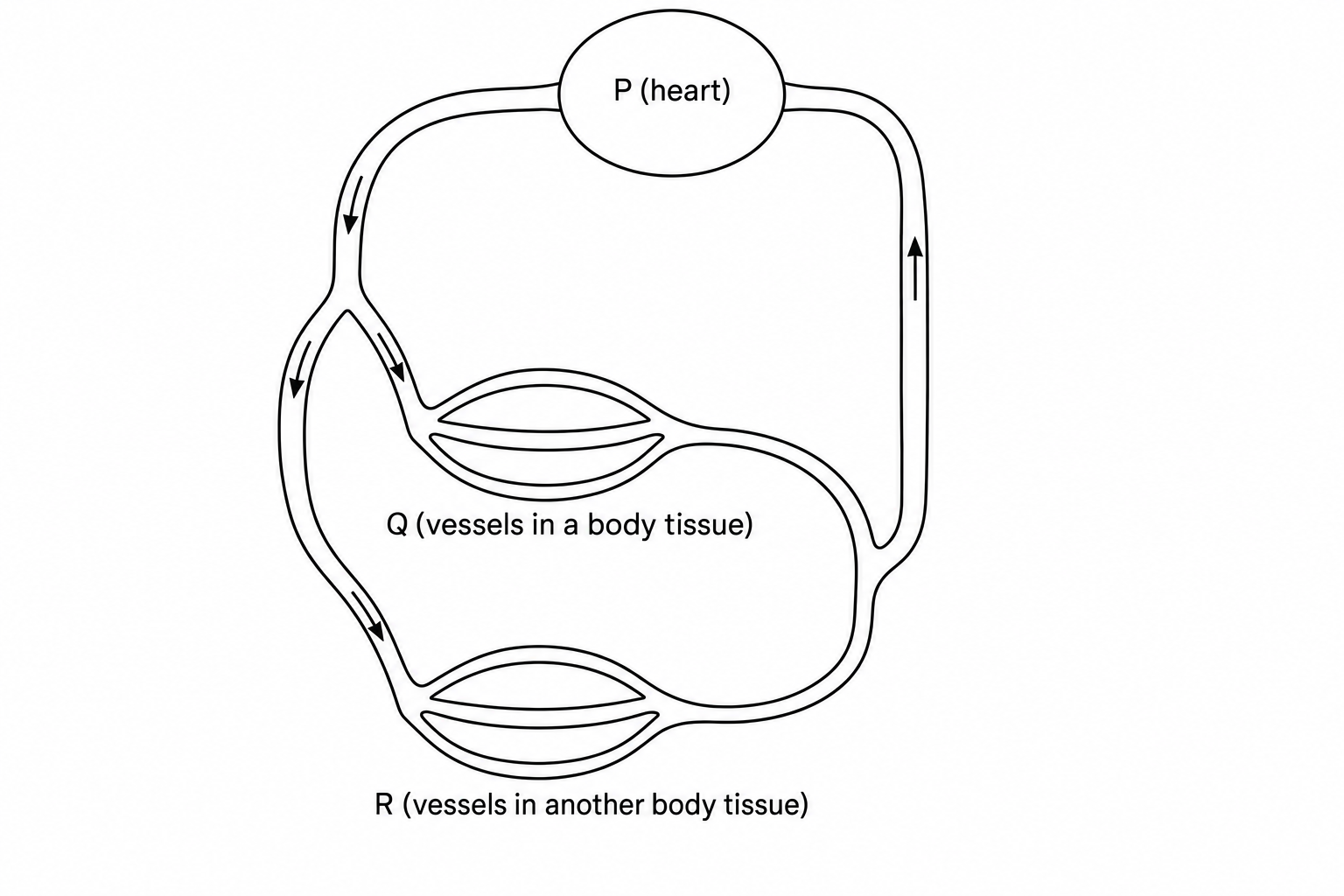
Diagram for question 10: The diagram is a simplified representation of circulation through two body tissues. Which description…
  1. A) P pumps blood only to Q, while R receives blood without being connected to the pump.
  2. B) P prevents backward flow, while Q and R each pump blood independently.
  3. C) Q and R pump blood towards P, which acts only as a connecting vessel.
  4. D) P provides the pumping force, while the connected vessels carry blood through Q or R and back to P.

What this assessment covers

Concepts Tested

  • Circulatory System
  • Describe the circulatory system as a system of blood vessels with a pump and valves to ensure one-way flow of blood

Question Mix

  • Medium questions included

Skills you build

  • Understand