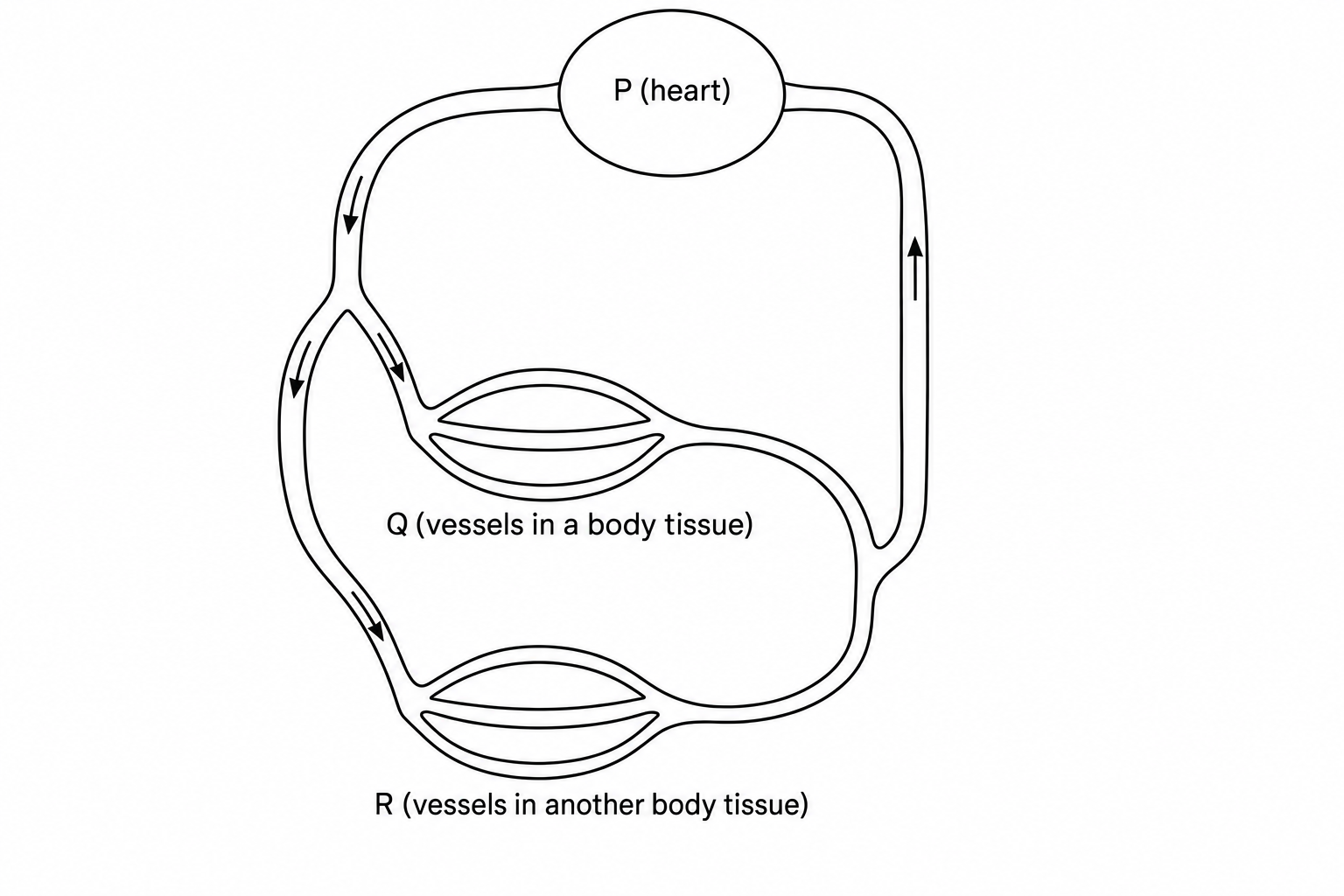
Q1 Question
Points: 1
Choose the correct answer:
Which description best explains how the main parts of the circulatory system work together?
Showing question 1 of 10
Choose the correct answer:
A student says, ‘Valves move blood around the body because they act as small pumps.’ Which correction should be made?
Choose the correct answer:
A simplified description follows blood from the heart to a body tissue. Which continuation correctly describes circulation?
Choose the correct answer:
A model of circulation consists of a squeezable bulb joined to a complete loop of tubing filled with liquid. Squeezing and releasing the bulb makes the liquid move backwards and forwards. Which addition would best represent how the circulatory system maintains one-way flow?
Choose the correct answer:
A heart valve becomes damaged and cannot close completely. The heart muscle can still contract. Why can this make circulation less effective?
Choose the correct answer:
Suppose the heart stops contracting, but the blood vessels and valves remain undamaged. Which statement explains why normal circulation cannot continue?
Choose the correct answer:
The circulatory system is described as a network of blood vessels rather than a collection of separate tubes. What does this description mean?
Choose the correct answer:
The diagrams show the same valve in a blood vessel under two different pressure conditions. Which statement explains the difference between the diagrams?
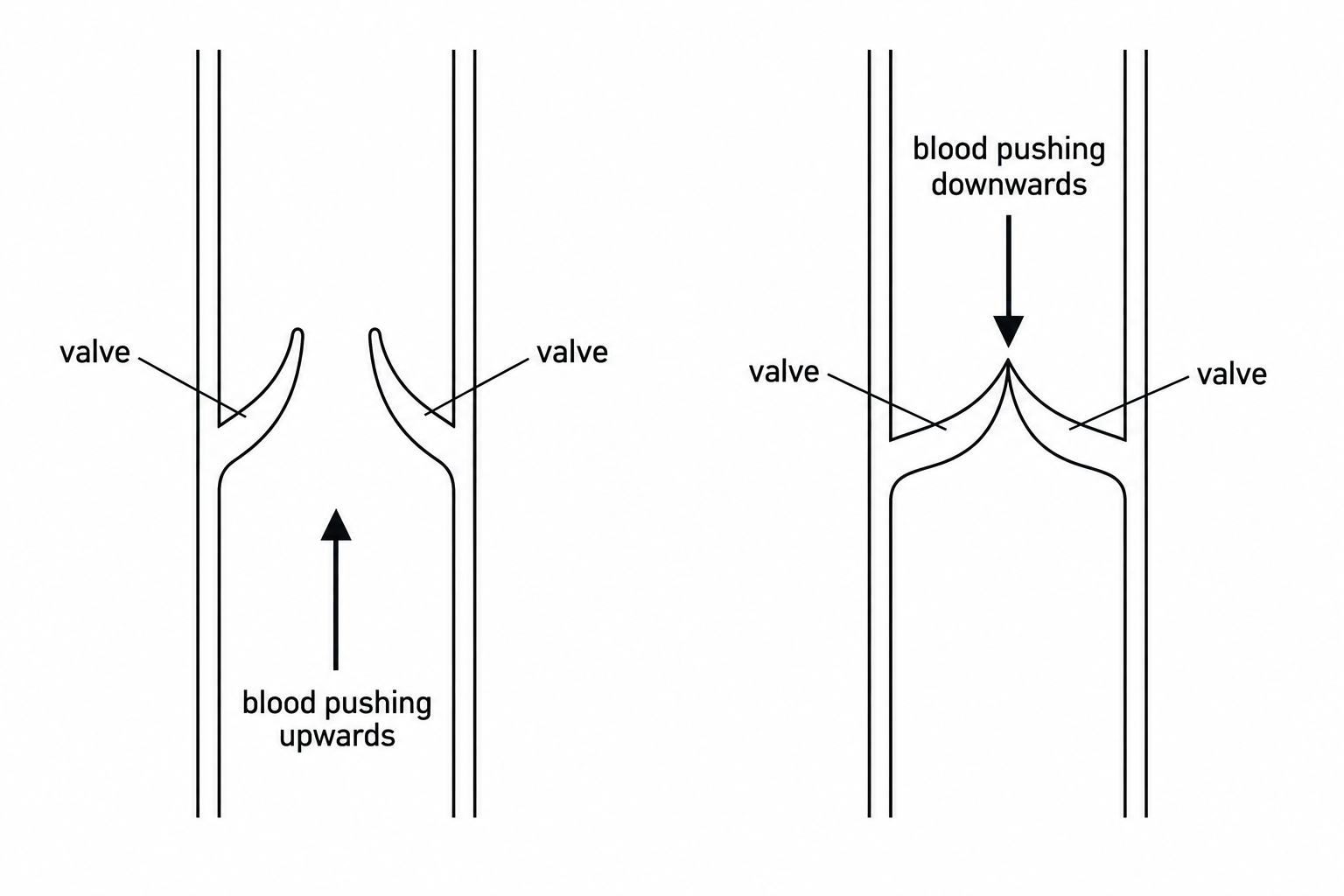
Choose the correct answer:
The diagram shows a model of circulation. The arrows show the intended direction of liquid flow. Which valve arrangement is needed while the pump is squeezed?
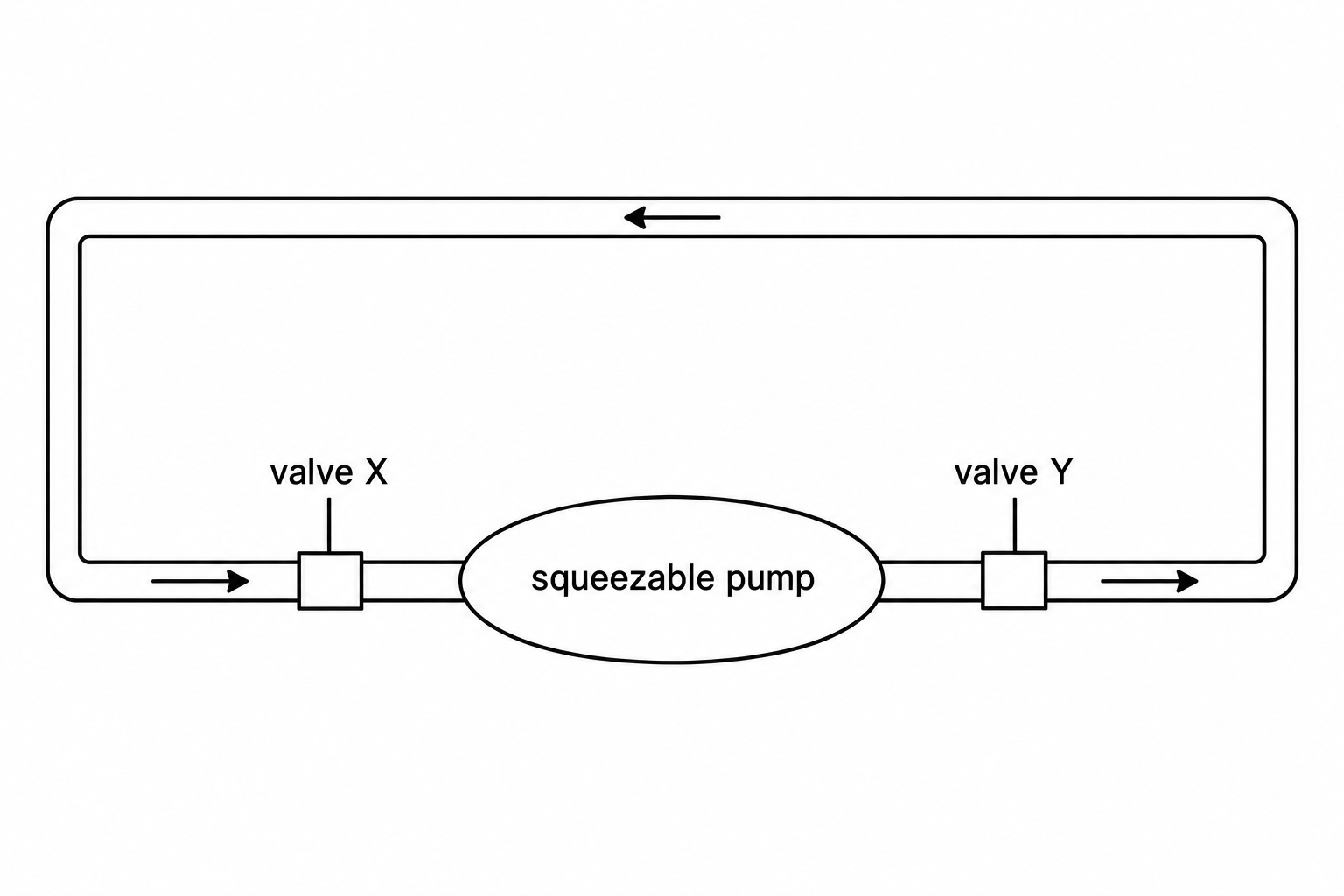
Choose the correct answer:
The diagram is a simplified representation of circulation through two body tissues. Which description correctly relates the labelled parts to the movement of blood?