

BIOLOGY - CELL CYCLE
Mitosis vs Meiosis Worksheet Answers
- Focuses on understanding the differences between mitosis and meiosis
- Emphasizes the role of meiosis in genetic variation
- Challenges students to interpret diagrams related to cell division
Start the 10-question quiz
Free, no sign-up needed. Your score shows instantly.
Here are the first 3 questions. Click “View all questions” to see the complete assessment.
Q1.
Q2.
A diploid precursor cell contains 20 chromosomes. Process P produces cells that each have 20 chromosomes and the same genetic information. Process Q produces cells that each have 10 chromosomes and different genetic information. Which conclusion is correct?
Q3.
An animal has a diploid chromosome number of 24. An abnormal division produces reproductive cells that each contain 12 chromosomes, but genetic testing shows that all the cells are identical. Which feature of normal meiosis occurred, and which did not?
Q4.
The cells in the leaf of a plant contain 16 chromosomes. A researcher examines four cells produced from a diploid cell in a pollen-producing organ. Which observation is most consistent with meiosis?
Q5.
A student claims that any division producing cells with fewer chromosomes must be meiosis. Which additional evidence is needed to support the claim that a diploid cell has completed normal meiosis?
Q6.
Two types of cell division are investigated in an organism whose diploid number is 18. Process U produces cells with 9 chromosomes and varied genetic profiles. Process V produces cells with 18 chromosomes and matching genetic profiles. How should the processes be classified?
Q7.
A chemical affects cell division in an organism with 26 chromosomes in its diploid cells. After treatment, reproductive cells contain different genetic information from one another, but each still has 26 chromosomes. Why are these cells not products of normal meiosis?
Q8.
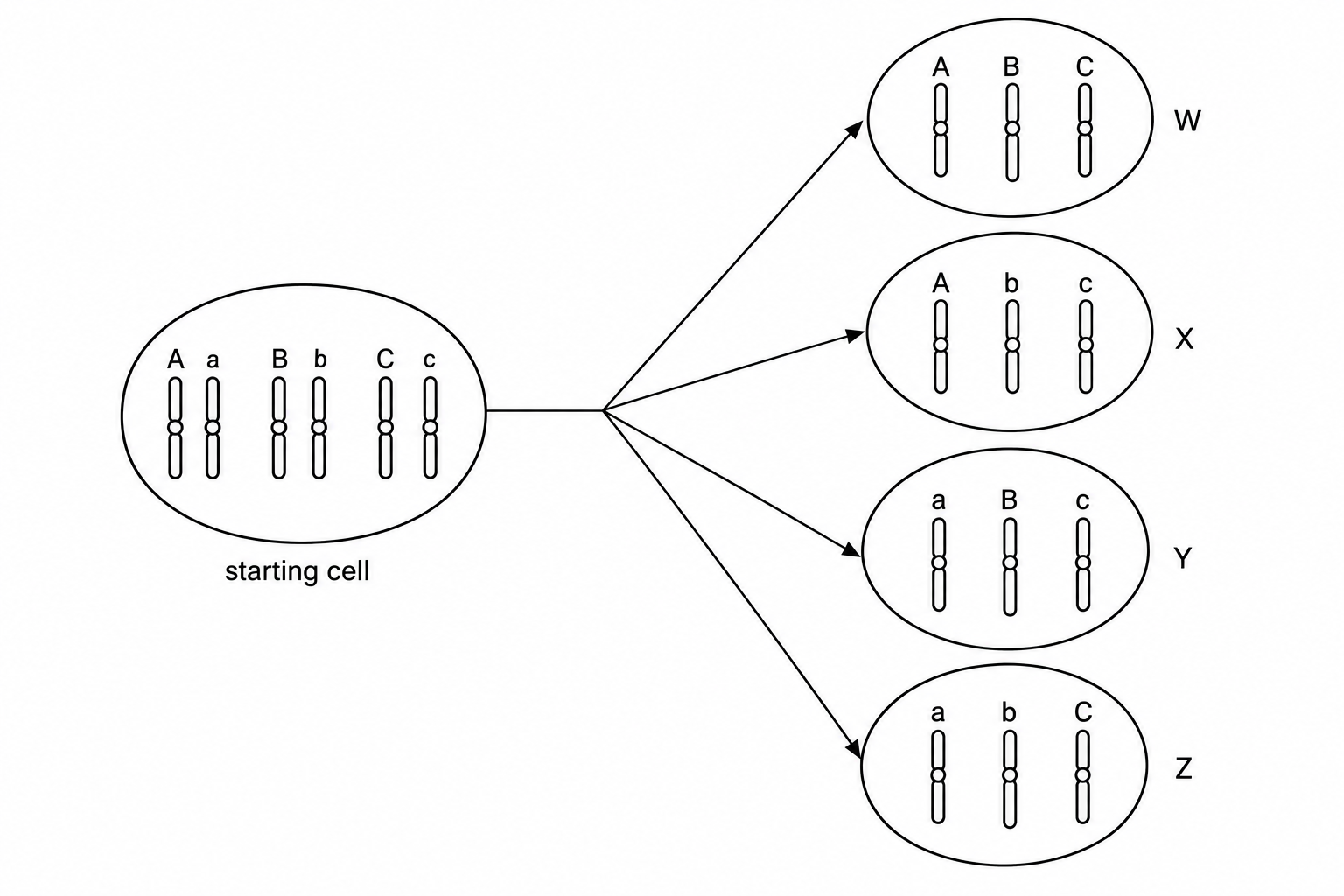
The diagram shows a starting cell and four cells produced from it. Each letter represents one chromosome carrying a particular form of genetic information. Which interpretation of the diagram is correct?
Q9.
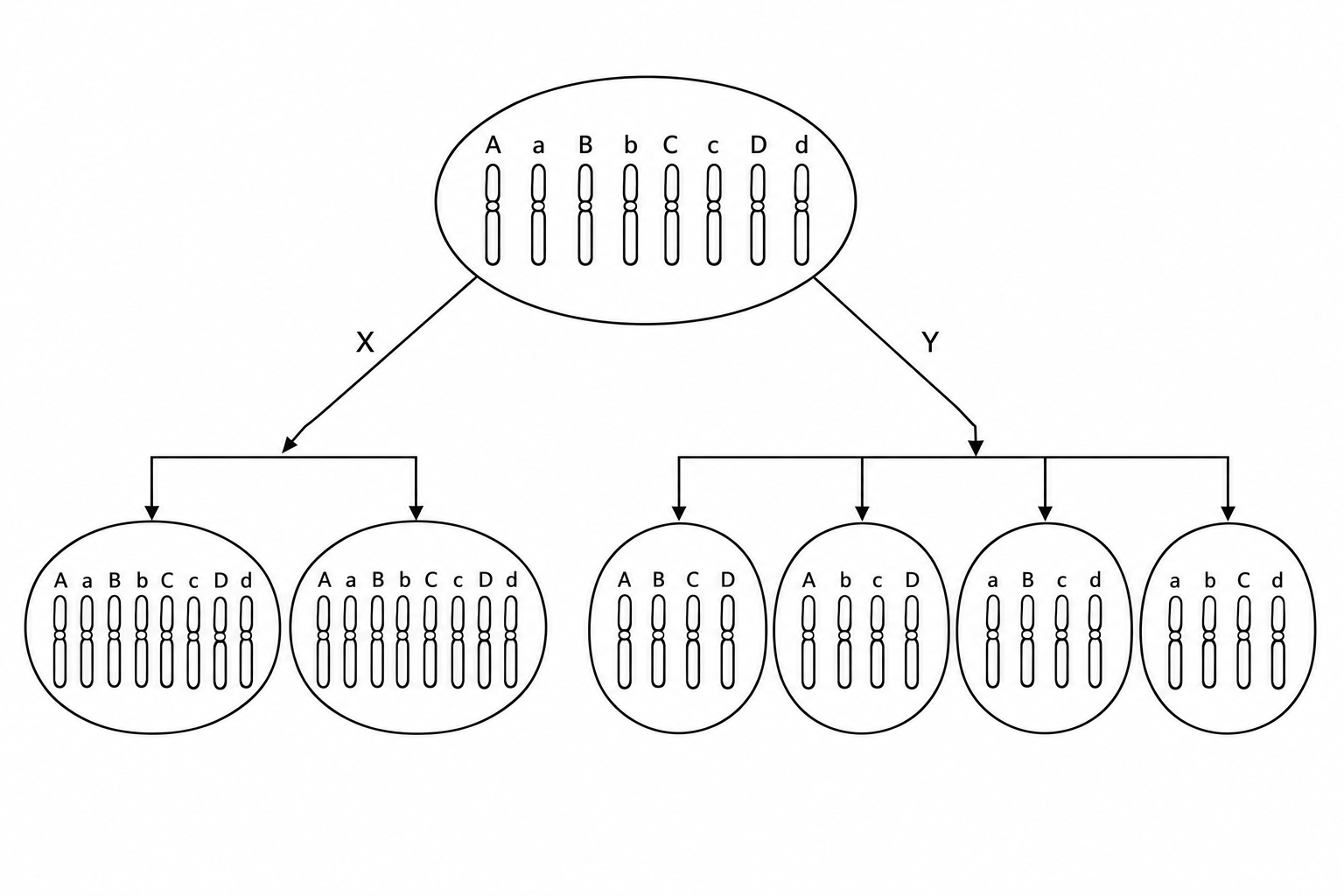
The diagram compares pathways X and Y from the same type of diploid cell. A researcher needs a pathway that produces haploid cells with genetic differences. Which choice correctly identifies and explains the required pathway?
Q10.
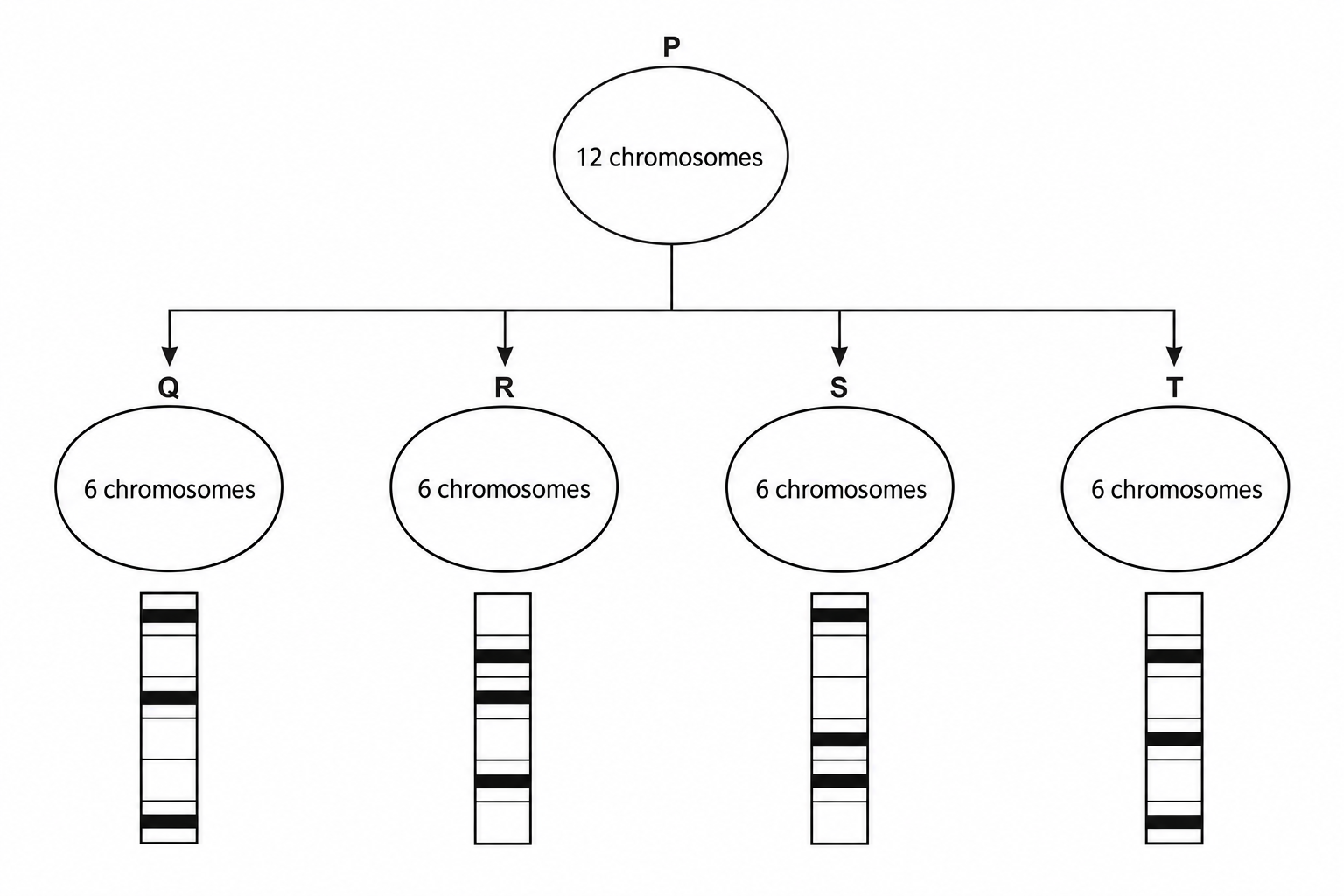
The diagram summarises chromosome counts and genetic-marker patterns for cells produced from cell P. Which conclusion is best supported by the evidence?
What this assessment covers
Concepts tested
- Chromosome number changes during meiosis
- Genetic variation resulting from meiosis
- Differences between mitosis and meiosis
- Identification of meiosis stages through diagrams
- Role of meiosis in sexual reproduction
Question Mix
- Hard questions included
Skills you build
- Analyzing chromosome number changes
- Interpreting genetic variation outcomes
- Comparing mitosis and meiosis processes
- Evaluating evidence from cell division diagrams
- Drawing conclusions from genetic data
Related assessments
More practice
Other assessments in this subject
