

BIOLOGY - CELL CYCLE
Cell Cycle Worksheet
- Focuses on understanding the process and outcomes of mitosis
- Challenges students to interpret diagrams related to cell division
- Emphasizes the genetic consistency of daughter cells post-mitosis
- Explores scenarios involving mutations and their propagation through mitosis
Start the 10-question quiz
Free, no sign-up needed. Your score shows instantly.
Here are the first 3 questions. Click “View all questions” to see the complete assessment.
Q1.
Q2.
Cells at the edge of a skin wound divide to replace damaged tissue. Which observation provides the best evidence that mitosis produced the replacement cells?
Q3.
A species has 12 chromosomes in each body-cell nucleus. One of its body cells completes mitosis without mutation. What should be present in each daughter nucleus?
Q4.
A chemical prevents the cytoplasm of an animal cell from dividing but does not prevent nuclear division. After treatment, one cell contains two nuclei with identical DNA. Which conclusion is most appropriate?
Q5.
A mutation occurs in one body cell before that cell undergoes several mitotic divisions. All the resulting cells contain the mutation. Which explanation is correct?
Q6.
Two genetically identical cells produced by mitosis later develop different structures and perform different functions. Which statement best explains why this does not contradict the description of mitosis?
Q7.
Two daughter cells produced from one body cell differ slightly in size because the cytoplasm was divided unequally. Their nuclei contain the same DNA. What can be concluded?
Q8.
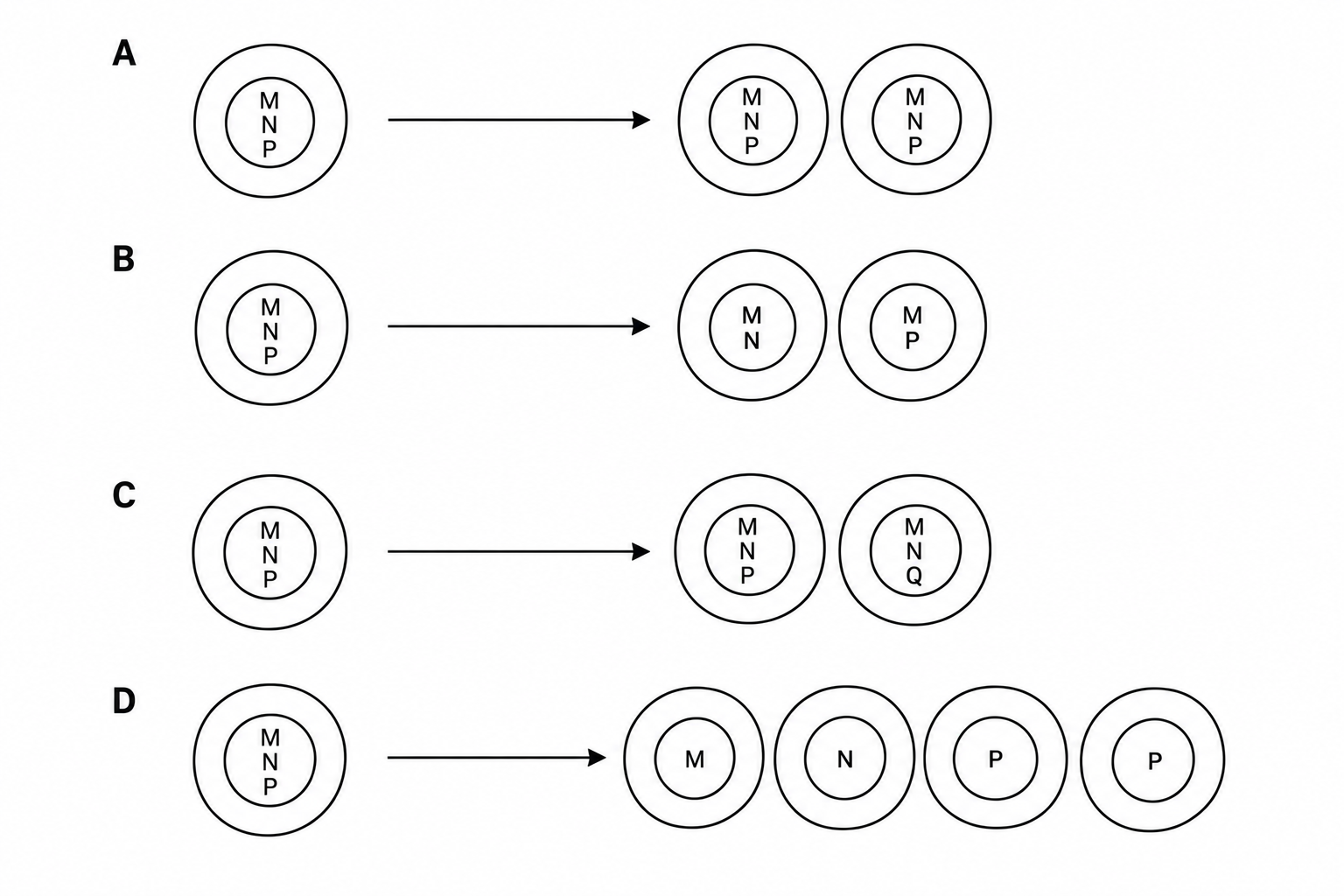
The diagram shows four possible outcomes when a body cell containing nuclear genetic markers M, N and P divides. Which panel best represents mitosis followed by division into daughter cells?
Q9.
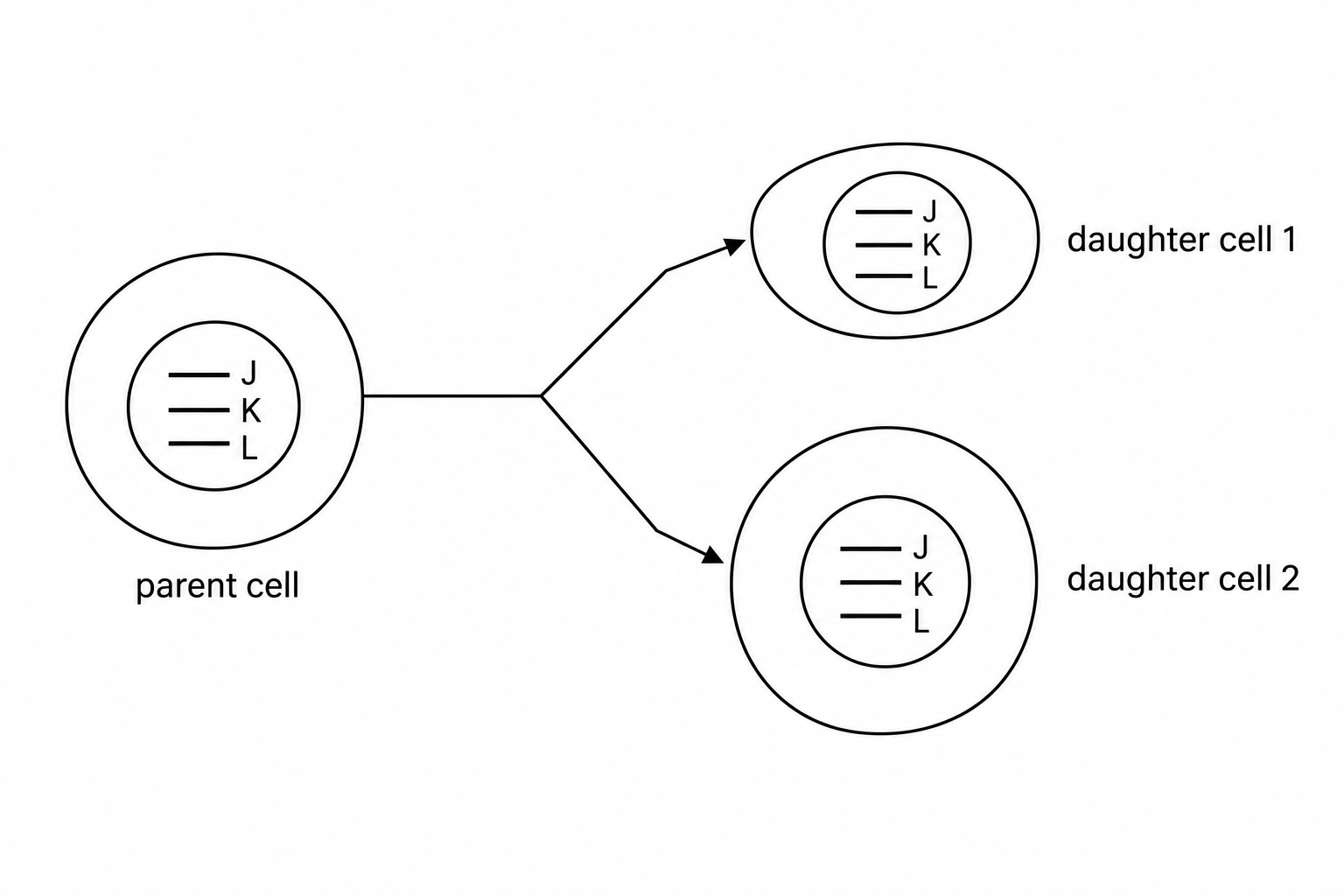
The diagram shows a parent cell and the two cells produced from it. Which interpretation of the diagram is correct?
Q10.
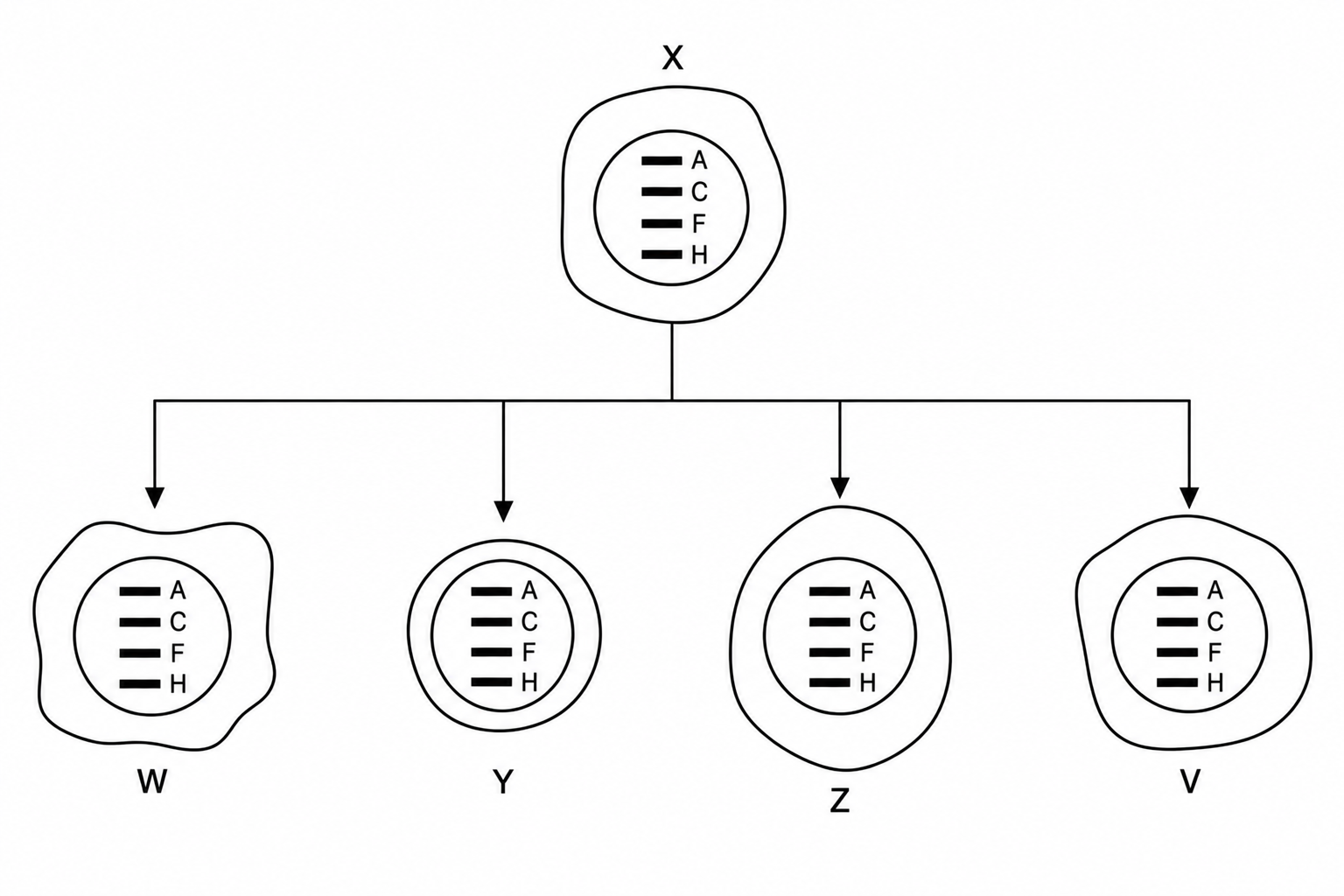
The diagram records nuclear DNA markers in one original cell and in four cells found later in the same growing tissue. No mutation occurred. Which process best explains the pattern?
What this assessment covers
Concepts tested
- Mitosis and its role in cell division
- Genetic consistency in daughter cells
- Effects of mutations during mitosis
- Cytoplasmic division and its impact
- Interpretation of cell division diagrams
Question Mix
- Hard questions included
Skills you build
- Analyzing genetic outcomes of cell division
- Interpreting biological diagrams
- Understanding the implications of mutations
- Comparing cellular processes
- Applying knowledge of mitosis to real-world scenarios
Related assessments
More practice
Other assessments in this subject
