

MATHEMATICS - SURFACE AREA AND VOLUME
Surface Area Practice Problems
- 10 questions
- Use knowledge of area, and properties of cubes, cuboids, triangular prisms, pyramids and cylinders to calculate their surface area.
- Difficulty: Hard
- Board: CAIE
- Attempt online on the examination portal
Start the 10-question quiz
Free, no sign-up needed. Your score shows instantly.
Here are the first 3 questions. Click “View all questions” to see the complete assessment.
Q1.
Q2.
A closed cylinder has a base circumference of 44 cm and a height of 9 cm. Calculate its total surface area. Use π = 22/7.
Q3.
A solid triangular prism is 20 cm long. Each triangular end is right-angled, with perpendicular sides of 9 cm and 12 cm. What is the total surface area of the prism?
Q4.
A square-based pyramid has base side length 10 cm. Its apex is vertically above the centre of the base, at a perpendicular height of 12 cm. Calculate the total surface area of the pyramid, including its base.
Q5.
A solid cube of side length 18 cm is cut into 27 identical smaller cubes, with no material lost. The smaller cubes are separated. What is the sum of their total surface areas?
Q6.
A rectangular sheet measures 46 cm by 34 cm. A square of side length 7 cm is removed from each corner. The remaining sheet is folded to make an open cuboid box. Ignoring the thickness of the sheet, calculate the area of the base and four outer walls of the box.
Q7.
A cuboid measures 16 cm by 10 cm by 6 cm. A cube of side length 4 cm is fixed on its top face, with one whole face of the cube in contact with the cuboid. What is the total exposed surface area of the combined solid, including its underside?
Q8.
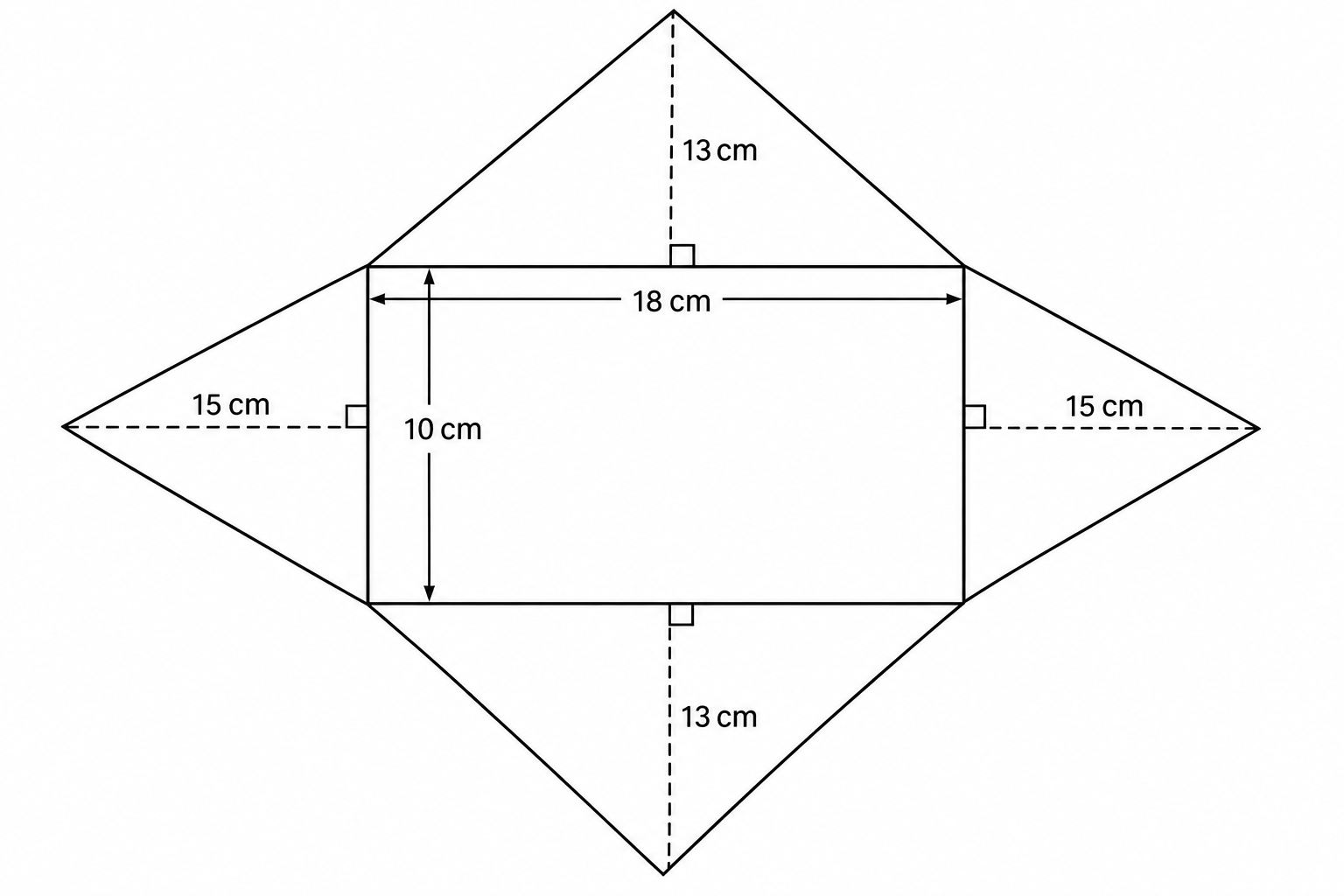
The diagram shows the net of a rectangular-based pyramid. The marked heights of the triangular faces are perpendicular to their base edges. Calculate the total surface area of the pyramid.
Q9.
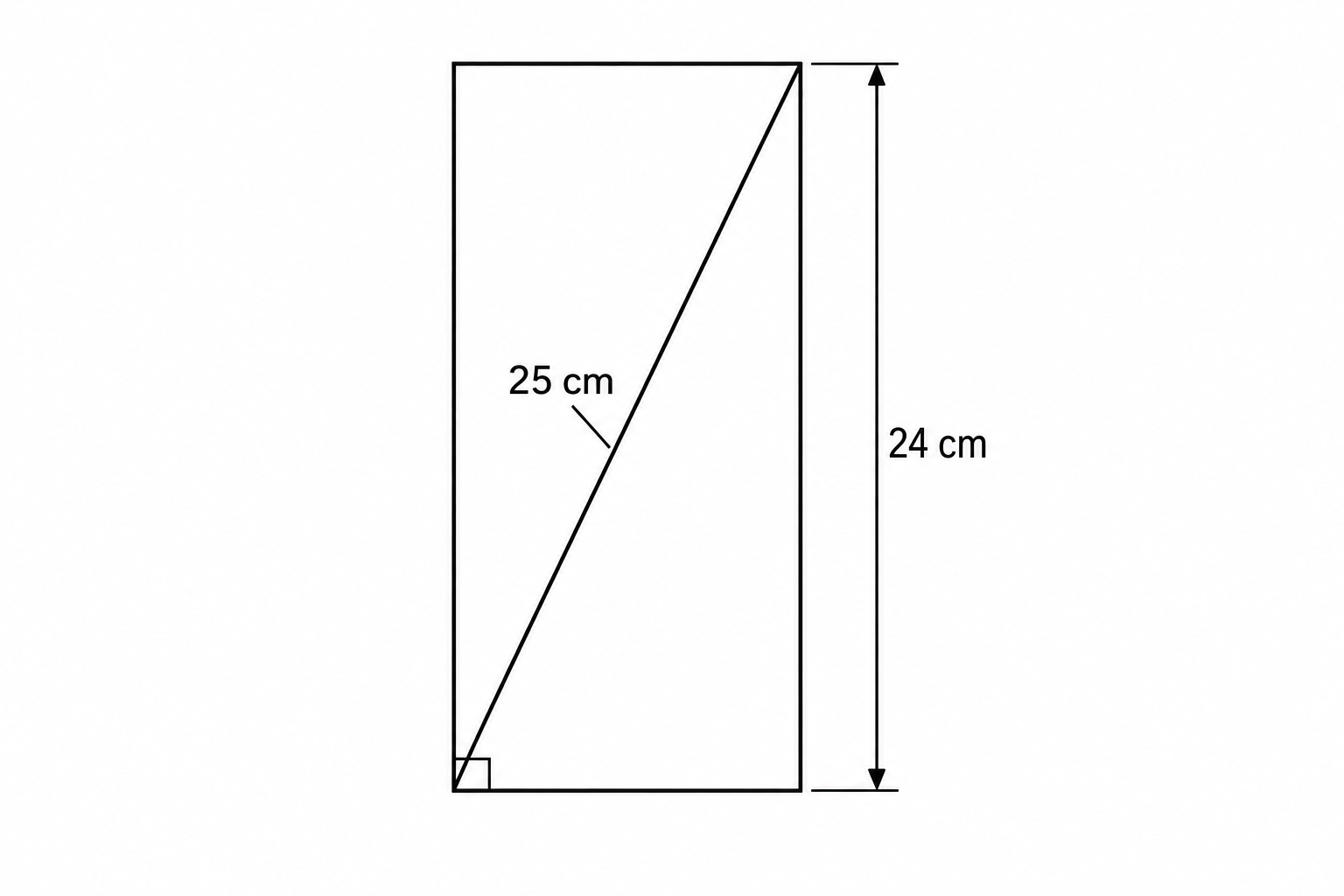
The rectangle shown is a cross-section through the axis of a closed cylinder. Calculate the total surface area of the cylinder. Use π = 22/7.
Q10.
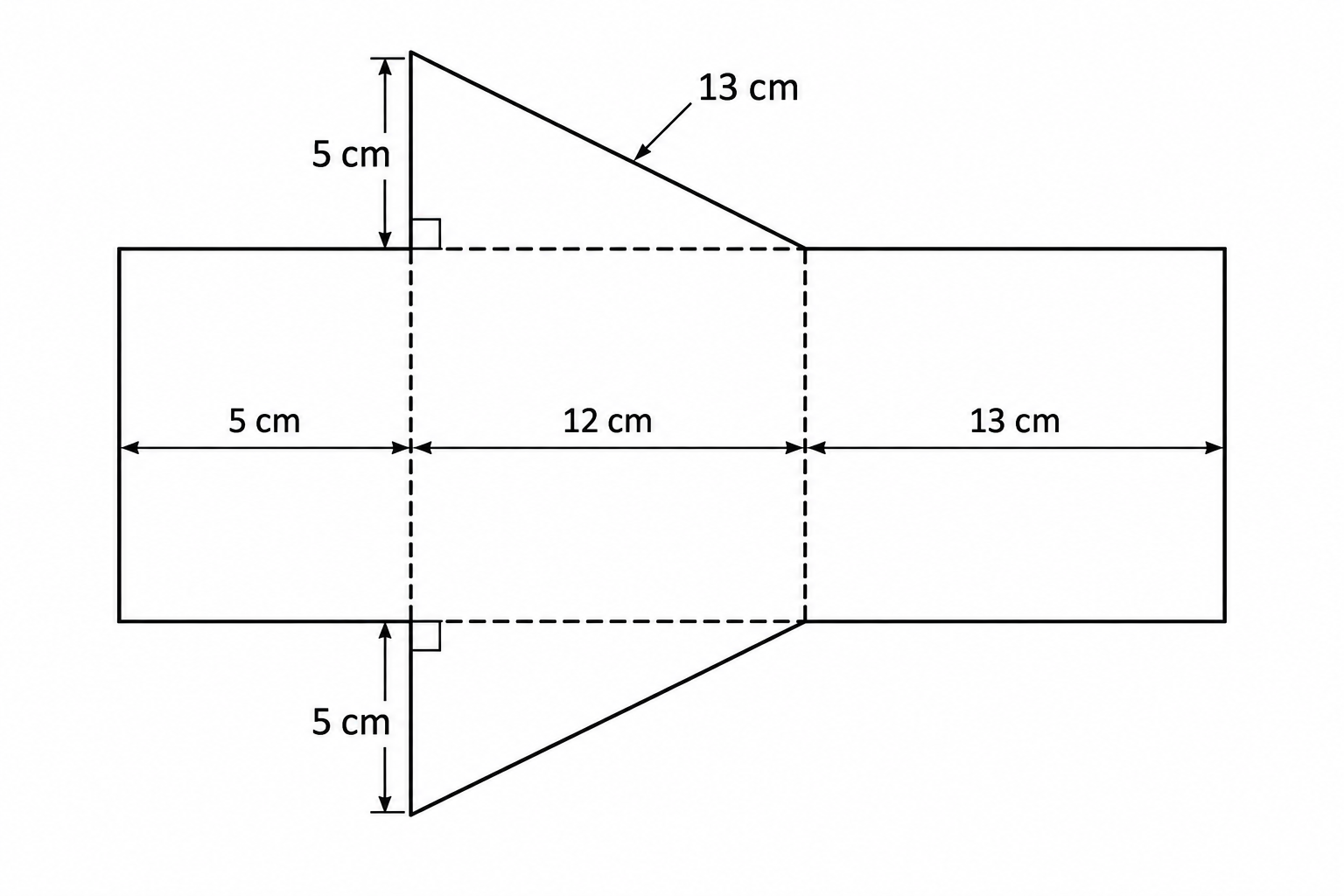
The diagram shows a net of a closed triangular prism. Its two triangular ends are congruent. The perimeter around the outside boundary of the complete net is 110 cm. Calculate the total surface area of the prism.
What this assessment covers
Concepts Tested
- Surface Area and Volume
- Use knowledge of area, and properties of cubes, cuboids, triangular prisms, pyramids and cylinders to calculate their surface area.
Question Mix
- Hard questions included
Skills you build
- Apply
Related assessments
More practice
Other assessments in this subject
