

MATHEMATICS - PROPORTION
Proportions Worksheet
- 10 questions
- Understand and use the unitary method to solve problems involving ratio and direct proportion in a range of contexts.
- Difficulty: Easy
- Board: CAIE
- Attempt online on the examination portal
Start the 10-question quiz
Free, no sign-up needed. Your score shows instantly.
Here are the first 3 questions. Click “View all questions” to see the complete assessment.
Q1.
Q2.
Four identical notebooks cost $12. Which calculation finds the cost of one notebook using the unitary method?
Q3.
A recipe uses 40 g of flour for one portion. Which calculation is the unitary-method step for finding the flour needed for six portions?
Q4.
The ratio of red beads to blue beads is 3:2. There are 12 red beads. Which calculation finds the number of beads represented by one ratio part?
Q5.
A shop charges a fixed price per kilogram of rice. Which fact allows the unitary method to be used to find the cost of any mass of rice?
Q6.
Five tickets of the same price cost $20. Complete the unitary-method statement: the cost of one ticket is ____.
Q7.
Three identical taps together deliver 18 L of water each minute. In a unitary-method solution, what does the calculation 18 ÷ 3 = 6 tell you?
Q8.
Ribbon costs $21 for 7 m, with a fixed price per metre. Which pair of calculations follows the unitary method to find the cost of 4 m?
Q9.
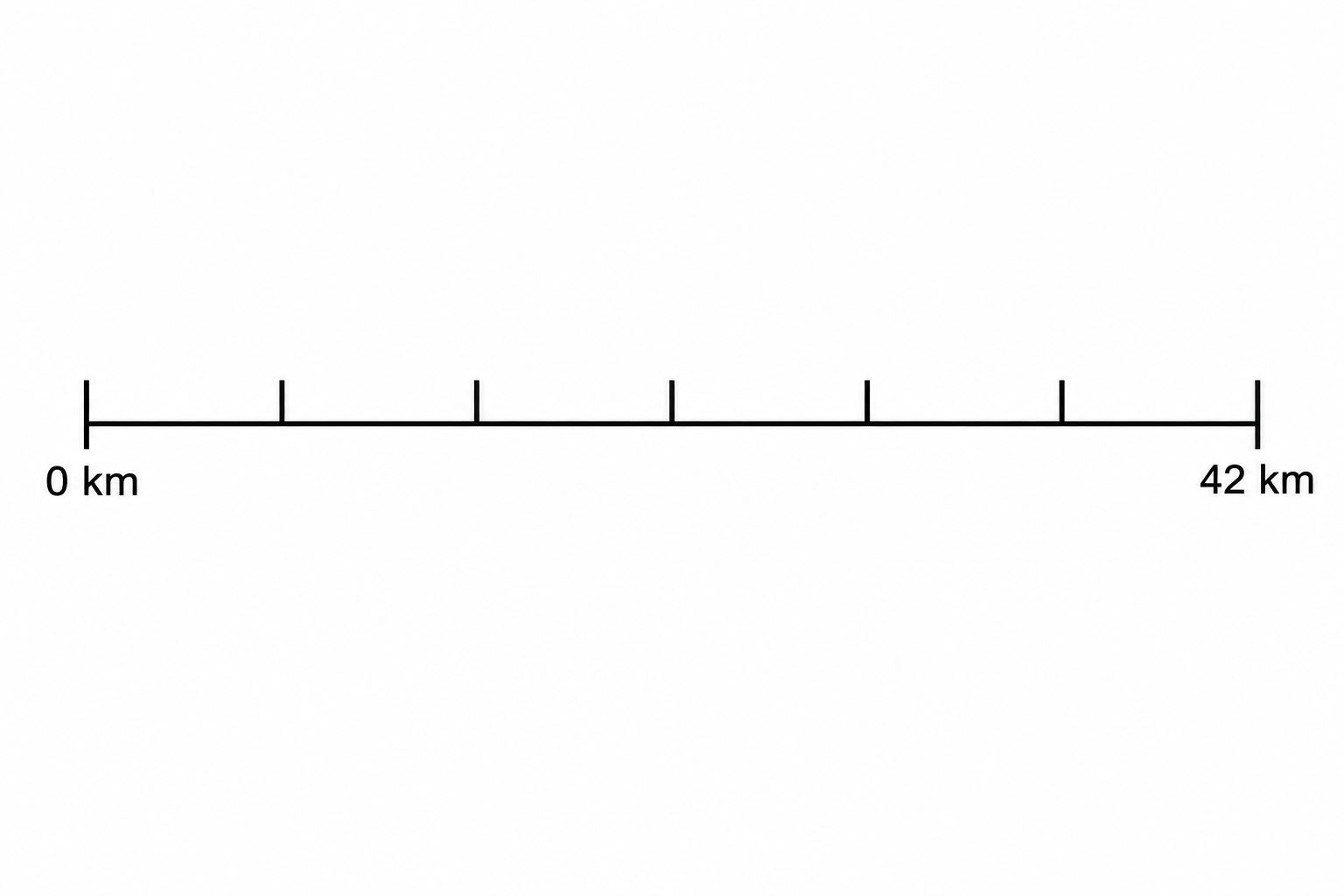
The map scale bar is divided into equal intervals. For the unitary method, first find the distance represented by one interval. What is this distance?
Q10.
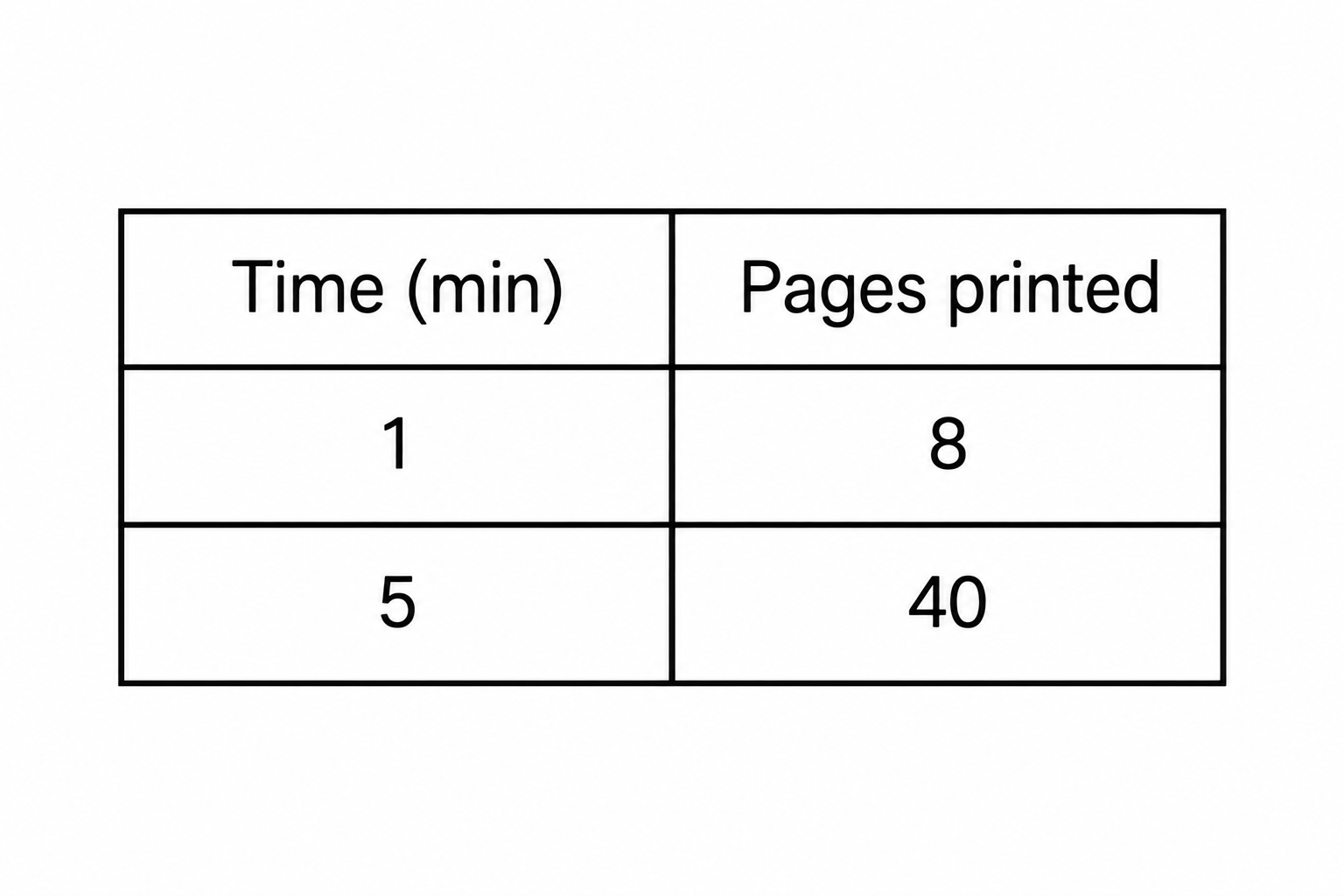
The table shows a printer working at a constant rate. Which rule uses its unit rate to find the number of pages printed for any whole number of minutes?
What this assessment covers
Concepts Tested
- Proportion
- Understand and use the unitary method to solve problems involving ratio and direct proportion in a range of contexts.
Question Mix
- Easy questions included
Skills you build
- Remember
Related assessments
More practice
Other assessments in this topic
