

MATHEMATICS - PROPORTION
Proportional Relationships Worksheet
- Focuses on proportional reasoning and unit rates
- Covers practical applications like cost and measurement conversions
- Includes real-world scenarios such as recipes and travel distances
Start the 10-question quiz
Free, no sign-up needed. Your score shows instantly.
Here are the first 3 questions. Click “View all questions” to see the complete assessment.
Q1.
Q2.
6 m of ribbon costs £30. At the same rate, how much does 9 m cost?
Q3.
5 identical crates hold a total of 60 bottles. How many bottles does each crate hold?
Q4.
A recipe for 3 servings uses 450 g of rice. How much rice is needed for 8 servings?
Q5.
A tap fills 24 L in 4 min. It continues at the same rate. How much water does it fill in 7 min?
Q6.
The ratio of red beads to blue beads is 2:5. If there are 20 blue beads, how many red beads are there?
Q7.
12 identical exercise books have a total mass of 3 kg. What is the total mass of 20 such books?
Q8.
A car travels 180 km using 15 L of fuel. At the same rate, how far will it travel using 6 L?
Q9.
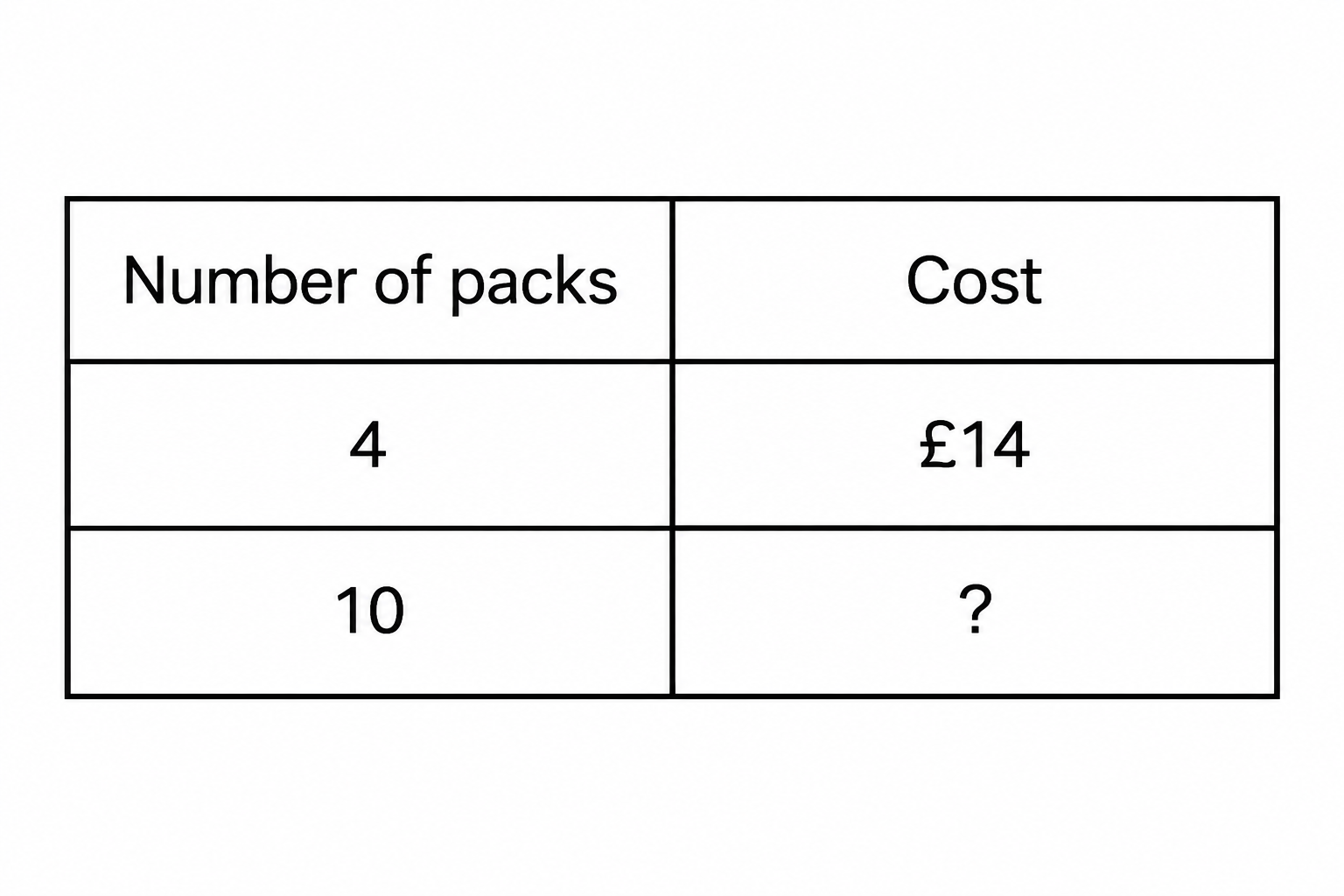
The table shows the cost of identical packs of cards. What cost should replace the question mark?
Q10.
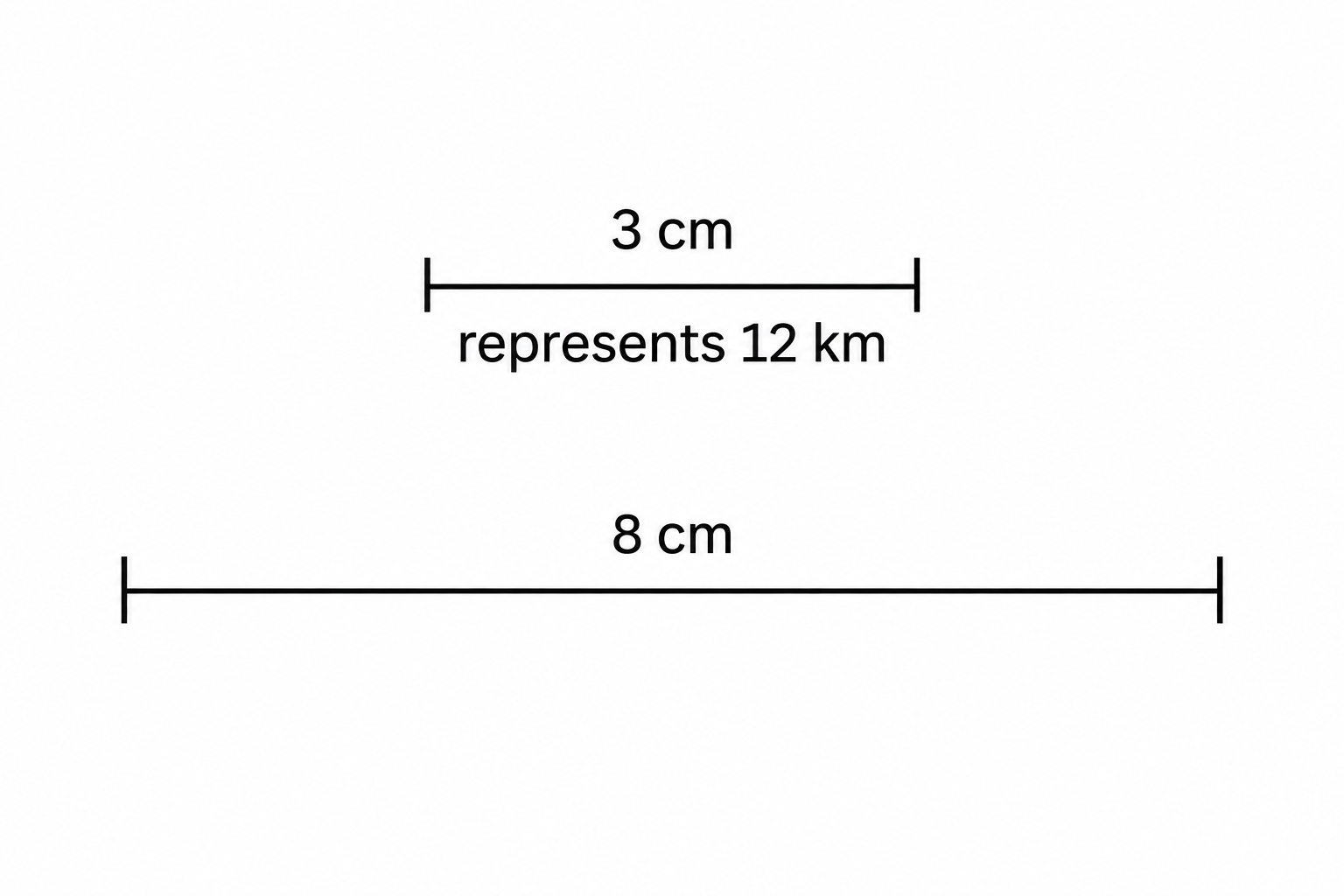
The diagram gives the scale of a map and the map length of a route. What actual distance does the route represent?
What this assessment covers
Concepts tested
- Understanding and calculating unit rates
- Applying proportional relationships in various contexts
- Converting measurements using given ratios
- Interpreting and solving ratio problems
- Using scale factors to determine actual distances
Question Mix
- Easy questions included
Skills you build
- Calculate unit costs and rates
- Solve real-world proportion problems
- Apply ratios to find unknown quantities
- Interpret data from tables and diagrams
- Use proportional reasoning in practical situations
Related assessments
More practice
Other assessments in this topic
