

MATHEMATICS - CIRCLES

Circumference Worksheet

  • 10 questions
  • Understand π as the ratio between a circumference and a diameter. Know and use the formula for the circumference of a circle.
  • Difficulty: Medium
  • Board: CAIE
  • Attempt online on the examination portal
Start the 10-question quiz Free, no sign-up needed. Your score shows instantly.

Here are the first 3 questions. Click “View all questions” to see the complete assessment.

Q1.

A circular lid has circumference 37.68 cm and diameter 12 cm. Which calculation uses these measurements to estimate π?

  1. A) 37.68 ÷ 6
  2. B) 37.68 × 12
  3. C) 12 ÷ 37.68
  4. D) 37.68 ÷ 12

Q2.

The diameter of a circular design is increased by 50%. Which statement explains what happens to its circumference?

  1. A) It stays unchanged because the value of π stays unchanged.
  2. B) It increases by 100% because a diameter contains two radii.
  3. C) It increases by 50% because circumference is proportional to diameter.
  4. D) It increases by 25% because the radius is half the diameter.

Q3.

A circle has diameter 16 cm. A student writes its circumference as 2 × π × 16 cm. Which explanation correctly identifies the error?

  1. A) The student should have squared the diameter before multiplying.
  2. B) The student used the diameter as the radius, so the result is twice the correct circumference.
  3. C) The student used the radius as the diameter, so the result is half the correct circumference.
  4. D) The student should have divided the diameter by π.

Q4.

The circumference of a circle is 18π cm. Which statement correctly identifies its radius?

  1. A) The radius is 9π cm because the radius is half the circumference.
  2. B) The radius is 36 cm because the coefficient of π must be doubled.
  3. C) The radius is 18 cm because circumference divided by π gives the radius.
  4. D) The radius is 9 cm because circumference divided by 2π gives the radius.

Q5.

Circle A has diameter 75 mm. Circle B has radius 4 cm. Which statement correctly compares their circumferences?

  1. A) Circle A has the greater circumference because Circle B's diameter is 40 mm.
  2. B) The circumferences are equal because both measurements describe the size of a circle.
  3. C) Circle B has the greater circumference because its diameter is 80 mm.
  4. D) Circle A has the greater circumference because 75>4.

Q6.

A circle has an exact diameter of 20 cm. Using π ≈ 3.14 gives a circumference of 62.8 cm. Why is this circumference only approximate?

  1. A) The value 3.14 is only an approximation to π.
  2. B) The diameter must always be rounded before the formula is used.
  3. C) The circumference formula works only for circles with a diameter of one unit.
  4. D) Multiplication can never give an exact circumference.

Q7.

Two circular wire hoops have diameters 8 cm and 12 cm. Their wires are joined and reshaped into one circle without any overlap or waste. Which statement explains the diameter of the new circle?

  1. A) It is 4 cm, because the original diameters must be subtracted.
  2. B) It is 10 cm, because the two original diameters must be averaged.
  3. C) It is 24 cm, because the larger diameter must be doubled.
  4. D) It is 20 cm, because the total circumference is π(8 + 12) cm.

Q8.

A wheel of diameter 0.7 m rolls without slipping through 10 complete turns. Which expression represents the distance travelled?

  1. A) 10 × 2π × 0.7 m
  2. B) 10 × 0.7 m
  3. C) 10 × π × 0.7 m
  4. D) (π × 0.7)/(10) m

Q9.

The diagram shows two circles with the same centre. Which statement correctly compares their circumferences?
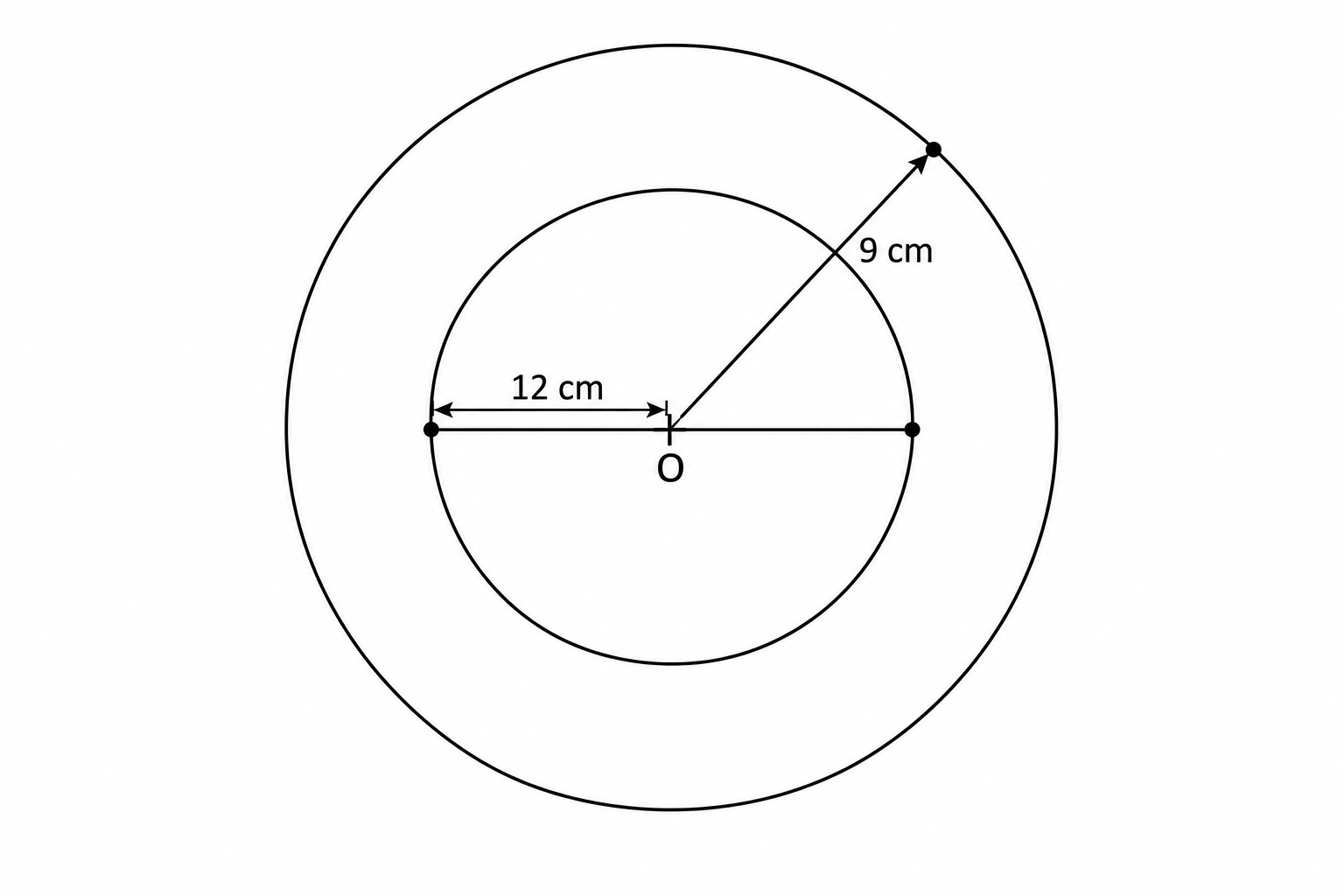
Diagram for question 9: The diagram shows two circles with the same centre. Which statement correctly compares their circumferences?
  1. A) The outer circumference is 12π cm longer because both given lengths must be doubled.
  2. B) The outer circumference is 3π cm shorter because its radius is smaller than the inner diameter.
  3. C) The circumferences are equal because the circles have the same centre.
  4. D) The outer circumference is 6π cm longer because the diameters differ by 6 cm.

Q10.

A circle fits exactly inside the square shown, touching all four sides. Which statement correctly gives the circle's circumference?
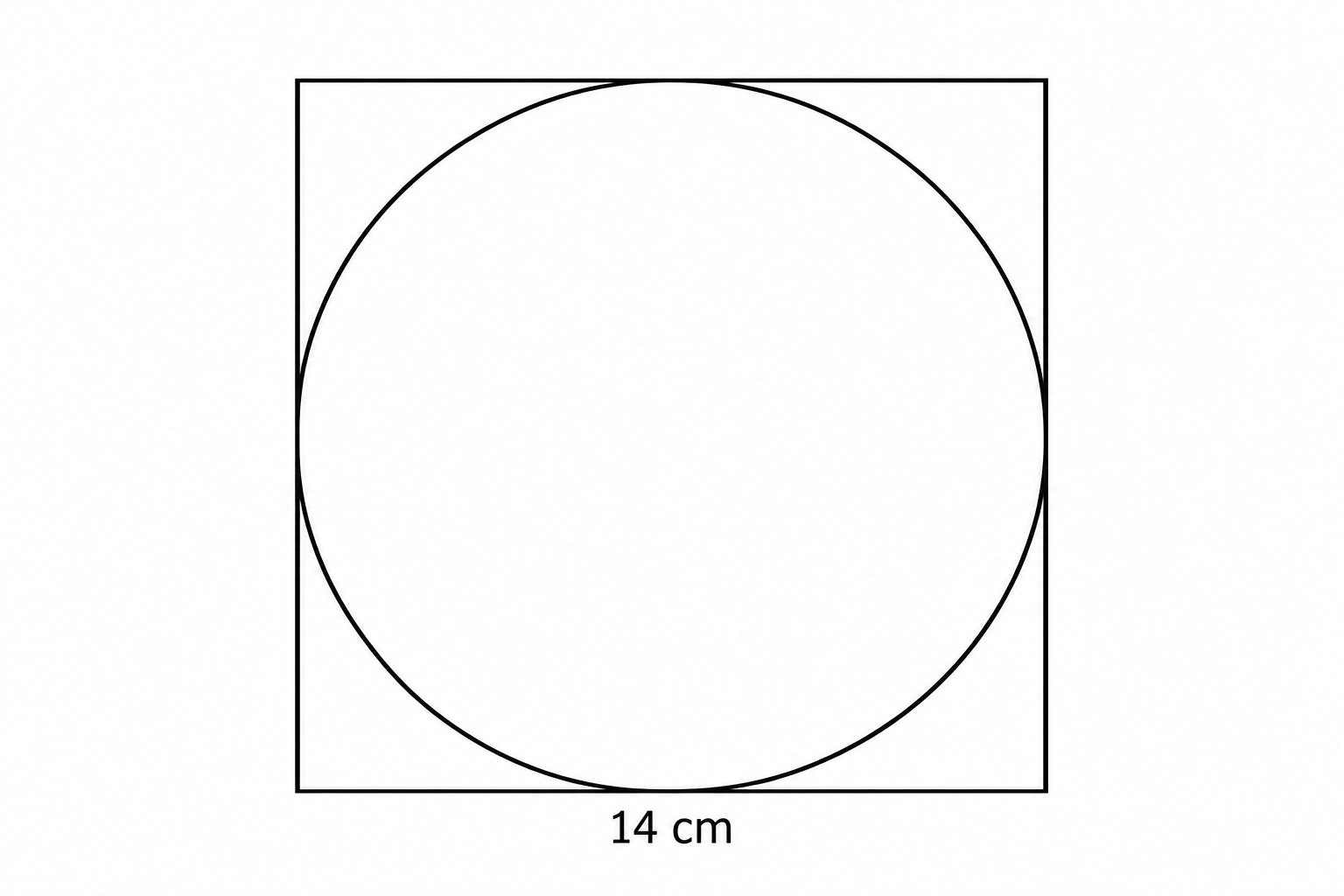
Diagram for question 10: A circle fits exactly inside the square shown, touching all four sides. Which statement correctly gives the…
  1. A) It is 56 cm because the circle and the square have equal perimeters.
  2. B) It is 7π cm because the circle's diameter is half the square's side length.
  3. C) It is 14π cm because the circle's diameter equals the square's side length.
  4. D) It is 28π cm because the square's side length is the circle's radius.

What this assessment covers

Concepts Tested

  • Circles
  • Understand π as the ratio between a circumference and a diameter. Know and use the formula for the circumference of a circle.

Question Mix

  • Medium questions included

Skills you build

  • Understand