

MATHEMATICS - CIRCLES

Circumference Practice Problems

  • 10 questions
  • Understand π as the ratio between a circumference and a diameter. Know and use the formula for the circumference of a circle.
  • Difficulty: Medium
  • Board: CAIE
  • Attempt online on the examination portal
Start the 10-question quiz Free, no sign-up needed. Your score shows instantly.

Here are the first 3 questions. Click “View all questions” to see the complete assessment.

Q1.

A circular lid has a circumference of approximately 75.4 cm and a diameter of 24 cm. Which calculation estimates the ratio represented by π?

  1. A) 75.4 − 24 = 51.4
  2. B) 75.4 ÷ 12 ≈ 6.28
  3. C) 75.4 ÷ 24 ≈ 3.14
  4. D) 24 ÷ 75.4 ≈ 0.318

Q2.

A circular pond has a radius of 7 m. Which expression gives its circumference, and why?

  1. A) 14 m, because the circumference is twice the radius.
  2. B) 7π m, because the circumference is the radius multiplied by pi.
  3. C) 49π m, because the radius must be squared.
  4. D) 14π m, because the diameter is twice the radius.

Q3.

A designer increases the diameter of a circular badge by 20%. What happens to its circumference?

  1. A) It increases by 40%.
  2. B) It increases by 20%.
  3. C) It stays the same.
  4. D) It increases by 10%.

Q4.

The circumference of a circle is 18π cm. Which statement correctly identifies its diameter?

  1. A) The diameter is 9 cm, because the circumference must be divided by twice pi.
  2. B) The diameter is 36 cm, because the coefficient of pi must be doubled.
  3. C) The diameter is 18π² cm, because the circumference must be multiplied by pi.
  4. D) The diameter is 18 cm, because the circumference must be divided by pi.

Q5.

A student estimates the circumference of a circle of diameter 20 cm using π ≈ 3.1. The estimate is 62 cm. Which statement explains how this compares with the exact circumference?

  1. A) The estimate is half the exact circumference because the formula uses the radius.
  2. B) The estimate is too large because the value used for pi is too small.
  3. C) The estimate is exact because the diameter is a whole number.
  4. D) The estimate is too small because the value used for pi is too small.

Q6.

A circular tabletop has a diameter of 0.6 m. Which expression gives its circumference in centimetres?

  1. A) 120π cm
  2. B) 6π cm
  3. C) 60π cm
  4. D) 0.6π cm

Q7.

Two students measure different circular plates. They divide each measured circumference by its measured diameter and obtain 3.12 and 3.17. Which is the best explanation for the different results?

  1. A) The exact ratio is the same for both plates, but measurement errors can give different results.
  2. B) The exact ratio depends on the units used to measure each plate.
  3. C) The exact ratio is different for every circle, even when measurements are perfect.
  4. D) The exact ratio is larger for a plate with a larger diameter.

Q8.

Two circular wire loops have diameters of 8 cm and 12 cm. A single circular loop has a diameter of 20 cm. Ignoring joins, how does the total wire length in the two smaller loops compare with the wire length in the single loop?

  1. A) The two smaller loops use twice as much wire.
  2. B) The two smaller loops use half as much wire.
  3. C) The two smaller loops use less wire, but not half as much.
  4. D) The two smaller loops use exactly the same length of wire.

Q9.

The diagram shows a wheel touching a straight surface. The wheel rolls without slipping until the marked point next touches the surface. Which expression gives the distance travelled?
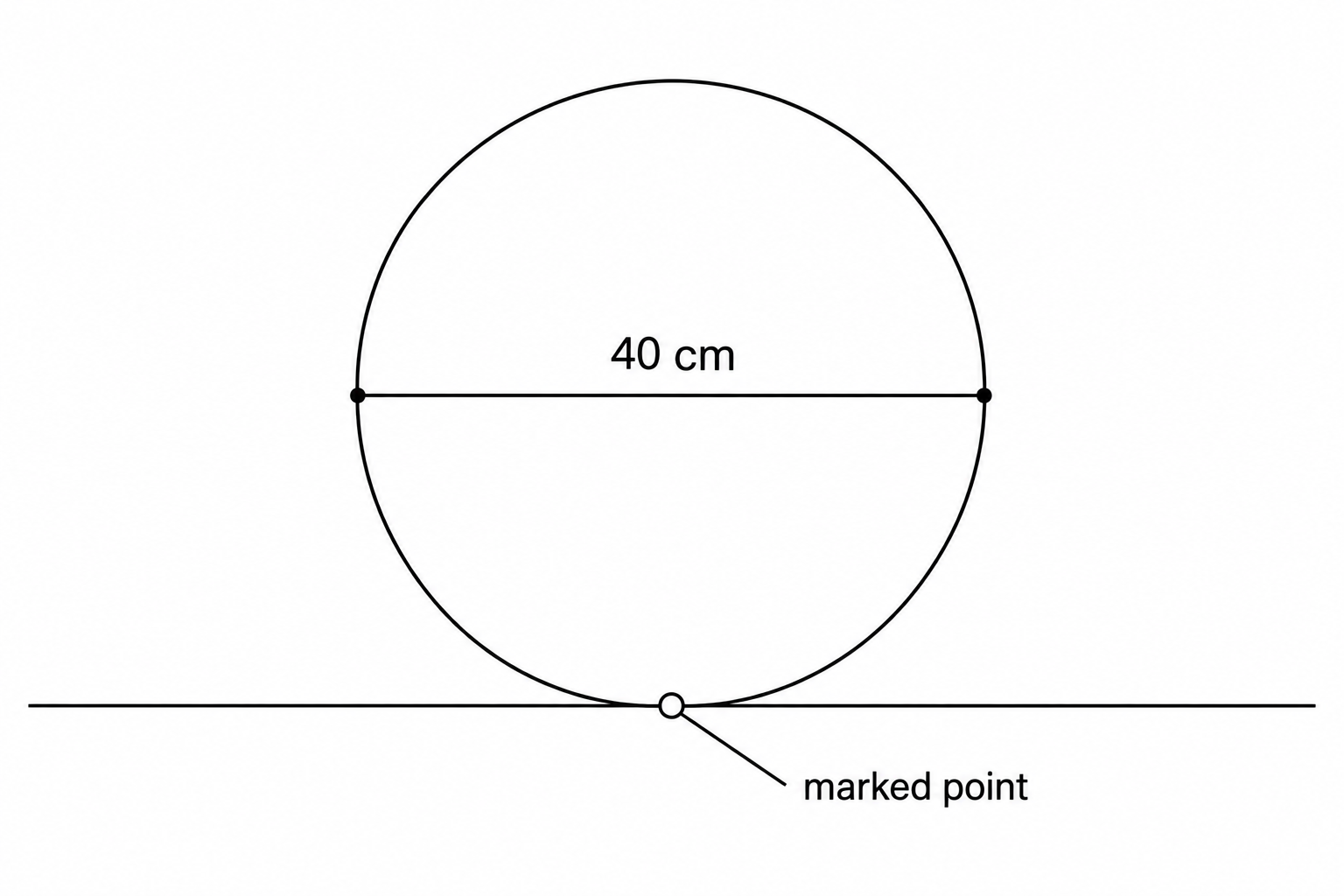
Diagram for question 9: The diagram shows a wheel touching a straight surface. The wheel rolls without slipping until the marked…
  1. A) 20π cm
  2. B) 40π cm
  3. C) 40 cm
  4. D) 80π cm

Q10.

The diagram shows two circles with the same centre. How much greater is the circumference of the outer circle than the circumference of the inner circle?
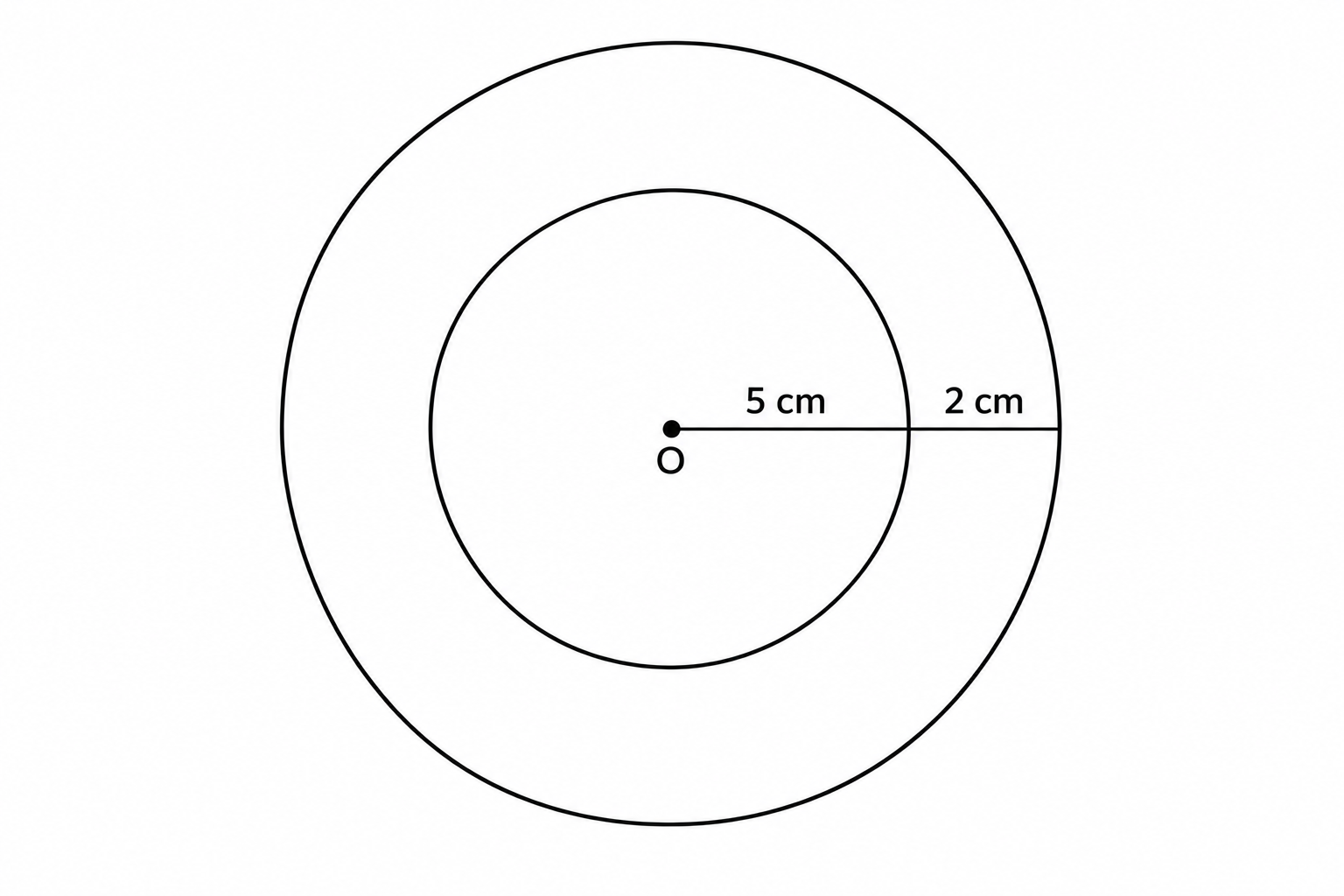
Diagram for question 10: The diagram shows two circles with the same centre. How much greater is the circumference of the outer…
  1. A) 4π cm
  2. B) 14π cm
  3. C) 2π cm
  4. D) 24π cm

What this assessment covers

Concepts Tested

  • Circles
  • Understand π as the ratio between a circumference and a diameter. Know and use the formula for the circumference of a circle.

Question Mix

  • Medium questions included

Skills you build

  • Understand