Q1 Question
Points: 1
Choose the correct answer:
A circular lid has circumference 37.68 cm and diameter 12 cm. Which calculation uses these measurements to estimate π?
Showing question 1 of 10
Choose the correct answer:
The diameter of a circular design is increased by 50%. Which statement explains what happens to its circumference?
Choose the correct answer:
A circle has diameter 16 cm. A student writes its circumference as 2 × π × 16 cm. Which explanation correctly identifies the error?
Choose the correct answer:
The circumference of a circle is 18π cm. Which statement correctly identifies its radius?
Choose the correct answer:
Circle A has diameter 75 mm. Circle B has radius 4 cm. Which statement correctly compares their circumferences?
Choose the correct answer:
A circle has an exact diameter of 20 cm. Using π ≈ 3.14 gives a circumference of 62.8 cm. Why is this circumference only approximate?
Choose the correct answer:
Two circular wire hoops have diameters 8 cm and 12 cm. Their wires are joined and reshaped into one circle without any overlap or waste. Which statement explains the diameter of the new circle?
Choose the correct answer:
A wheel of diameter 0.7 m rolls without slipping through 10 complete turns. Which expression represents the distance travelled?
Choose the correct answer:
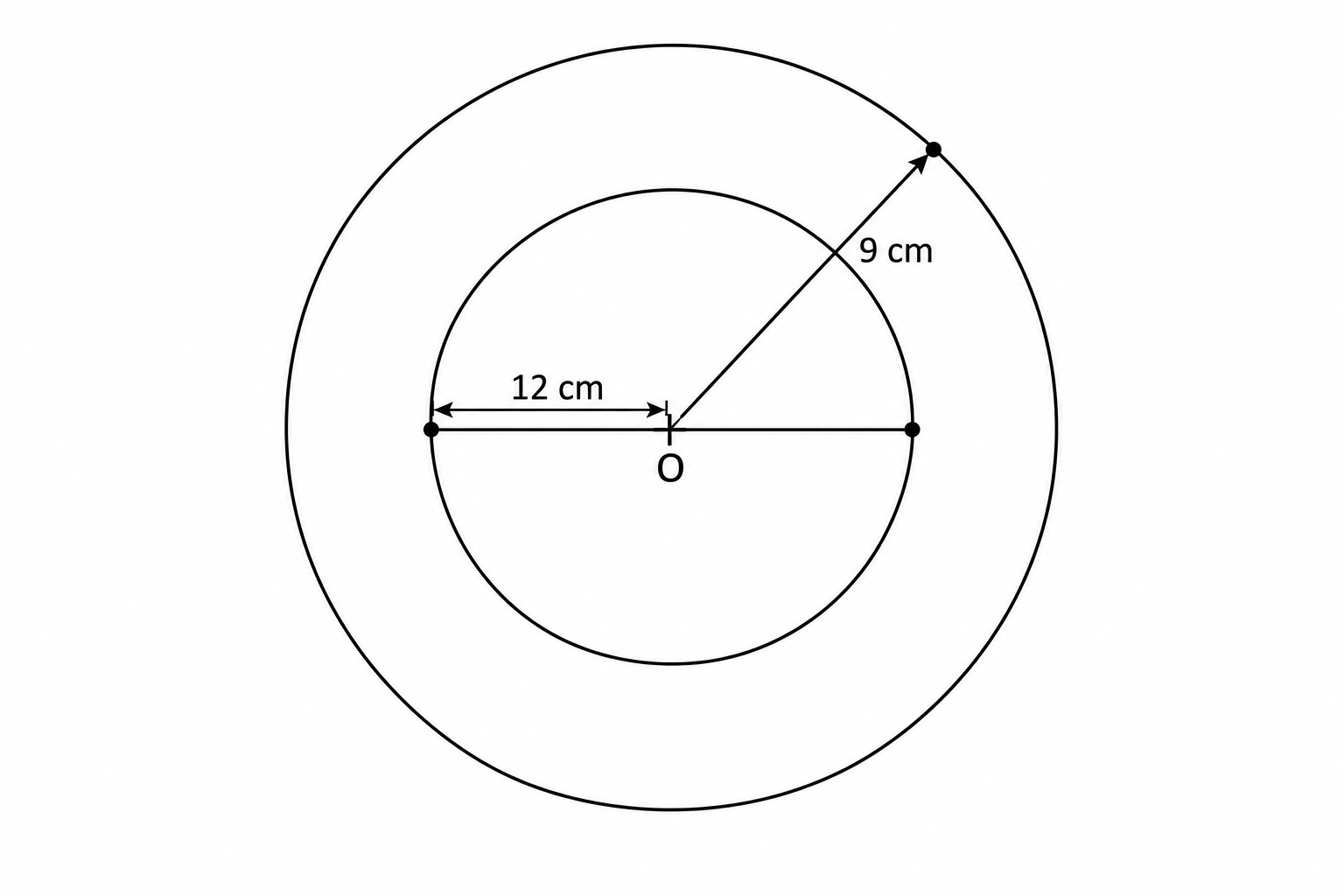
The diagram shows two circles with the same centre. Which statement correctly compares their circumferences?
Choose the correct answer:
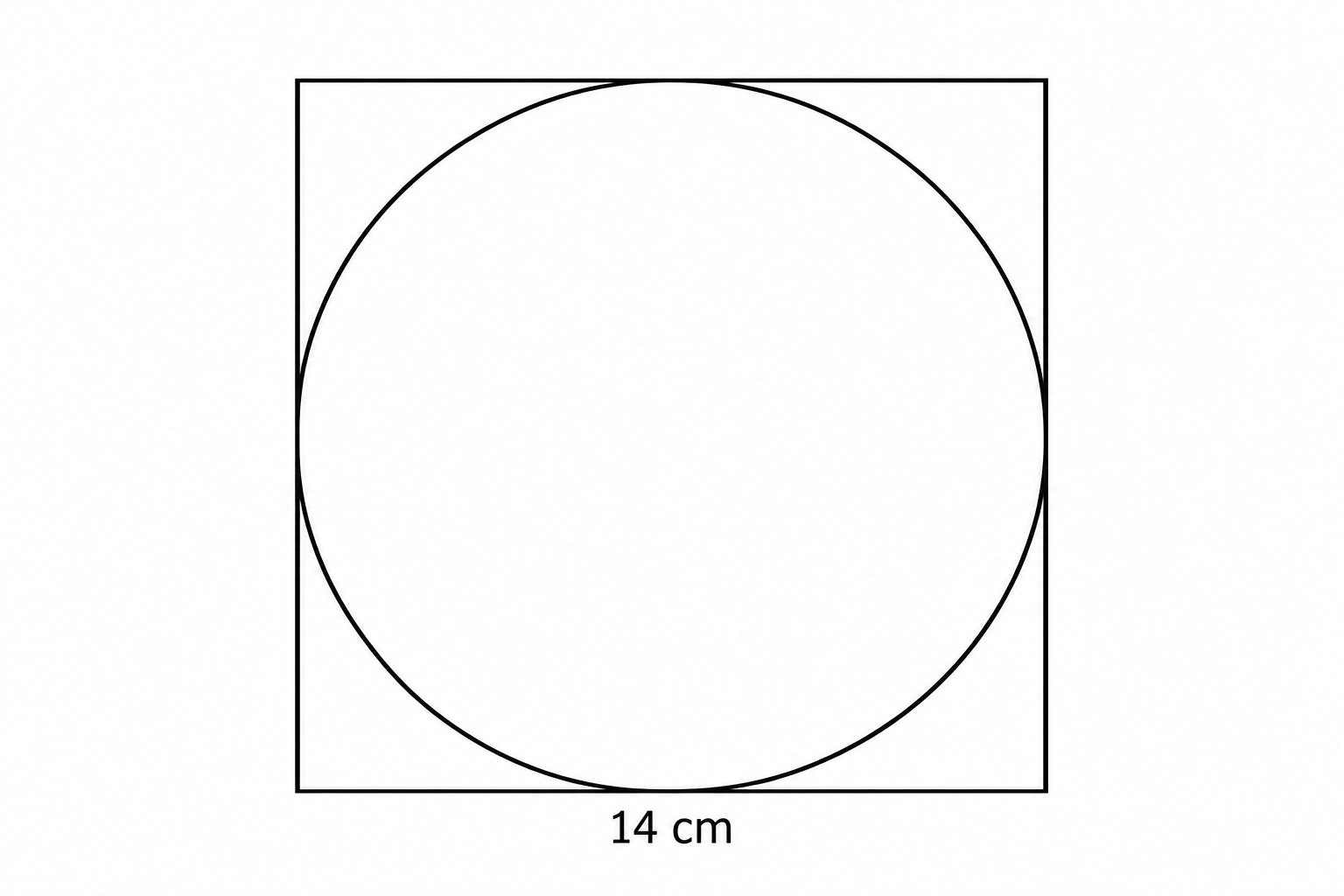
A circle fits exactly inside the square shown, touching all four sides. Which statement correctly gives the circle's circumference?