

MATHEMATICS - CIRCLES

Circumference and Area of Circles Worksheet

  • 10 questions
  • Know and use the formulae for the area and circumference of a circle.
  • Difficulty: Medium
  • Board: CAIE
  • Attempt online on the examination portal
Start the 10-question quiz Free, no sign-up needed. Your score shows instantly.

Here are the first 3 questions. Click “View all questions” to see the complete assessment.

Q1.

A circle has diameter 14 cm. Which expression gives its area?

  1. A) 14π cm²
  2. B) 49π cm²
  3. C) 28π cm²
  4. D) 196π cm²

Q2.

A circular wheel has radius 7 cm. It rolls along a straight surface without slipping and makes 5 complete turns. Which expression gives the distance travelled?

  1. A) 245π cm
  2. B) 14π cm
  3. C) 35π cm
  4. D) 70π cm

Q3.

The radius of a circle is multiplied by 3. What happens to its circumference and its area?

  1. A) The circumference is multiplied by 9 and the area by 3.
  2. B) The circumference is multiplied by 3 and the area by 9.
  3. C) The circumference is multiplied by 3 and the area by 3.
  4. D) The circumference is multiplied by 9 and the area by 9.

Q4.

A circle has area 81π m². What is its circumference?

  1. A) 81π m
  2. B) 162π m
  3. C) 9π m
  4. D) 18π m

Q5.

A circular pond has radius 4 m. A rope goes once around its edge, and a cover fits its surface exactly. Which option correctly gives the rope length and the cover area?

  1. A) Rope length: 8π m²; cover area: 16π m.
  2. B) Rope length: 8π m; cover area: 16π m².
  3. C) Rope length: 4π m; cover area: 8π m².
  4. D) Rope length: 16π m; cover area: 8π m².

Q6.

A circle has diameter 12 cm. Using 3<π<4, which interval must contain its circumference?

  1. A) Between 48 cm and 60 cm.
  2. B) Between 24 cm and 36 cm.
  3. C) Between 36 cm and 48 cm.
  4. D) Between 12 cm and 24 cm.

Q7.

Two circles have equal areas. Which statement about their circumferences is correct?

  1. A) Their circumferences must be equal because equal circle areas give equal radii.
  2. B) Their circumferences can differ because the circles may be drawn in different positions.
  3. C) Their circumferences can differ because the area formula uses the square of the radius.
  4. D) Their circumferences must be equal because a circle's circumference is always twice its area.

Q8.

The diagram shows a semicircle with diameter 12 cm. Which expression gives the total perimeter of the semicircle, including its straight edge?
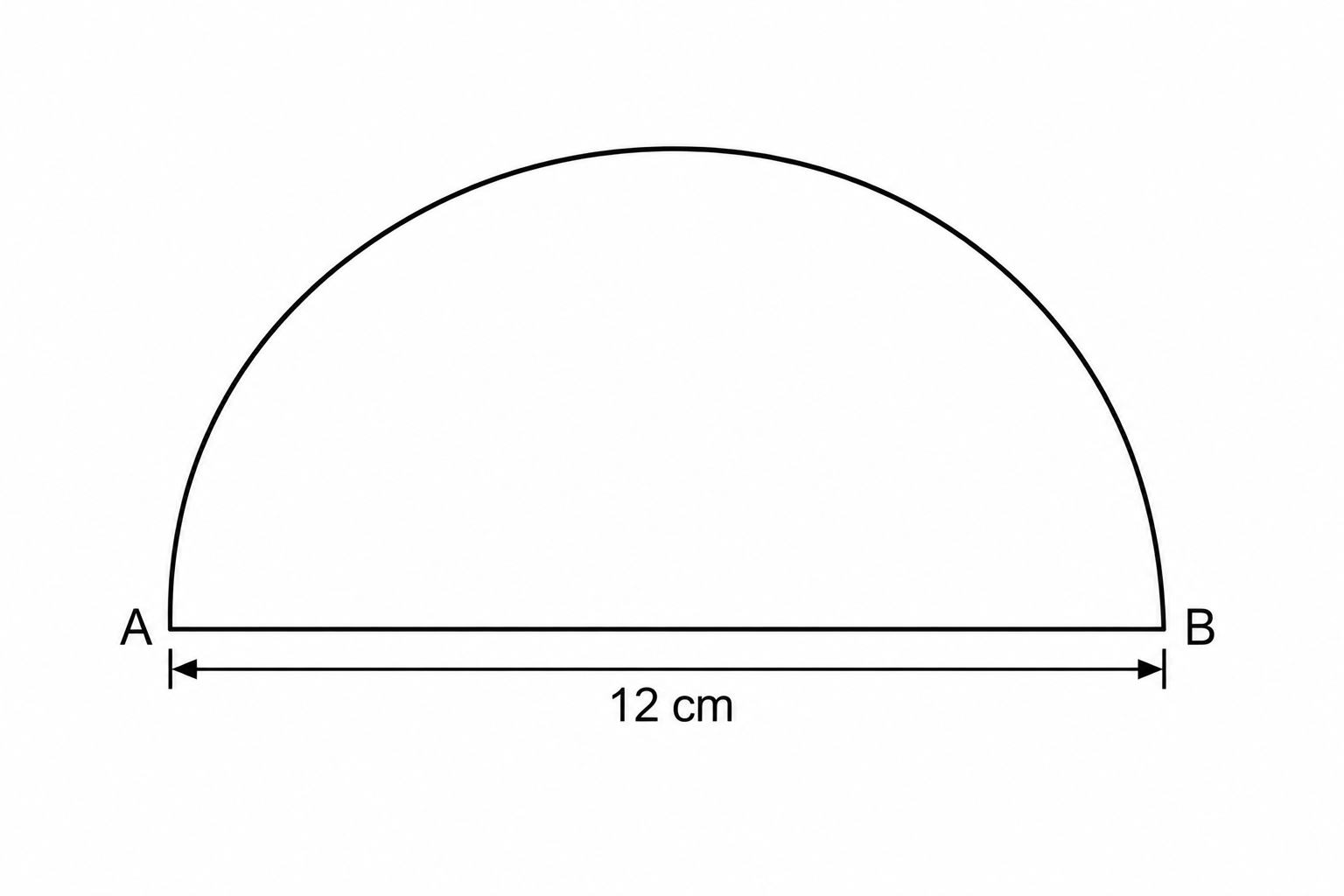
Diagram for question 8: The diagram shows a semicircle with diameter 12 cm. Which expression gives the total perimeter of the…
  1. A) (6π + 12) cm
  2. B) (12π + 12) cm
  3. C) (6π + 6) cm
  4. D) 6π cm

Q9.

The diagram shows two circles with the same centre. Which expression gives the area of the region inside the larger circle but outside the smaller circle?
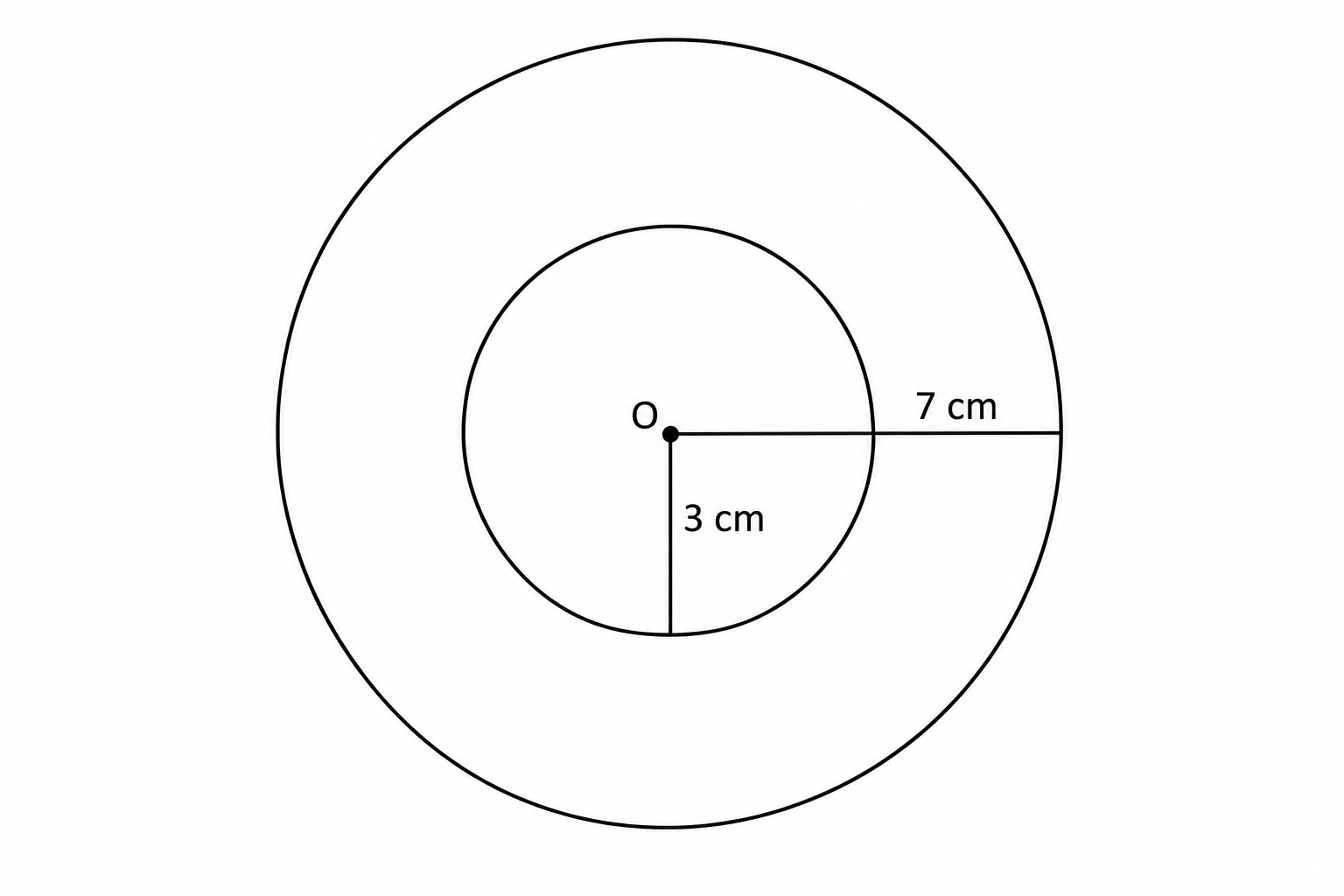
Diagram for question 9: The diagram shows two circles with the same centre. Which expression gives the area of the region inside the…
  1. A) 16π cm²
  2. B) 58π cm²
  3. C) 40π cm²
  4. D) 8π cm²

Q10.

The circle touches all four sides of the square shown. What fraction of the square's area is inside the circle?
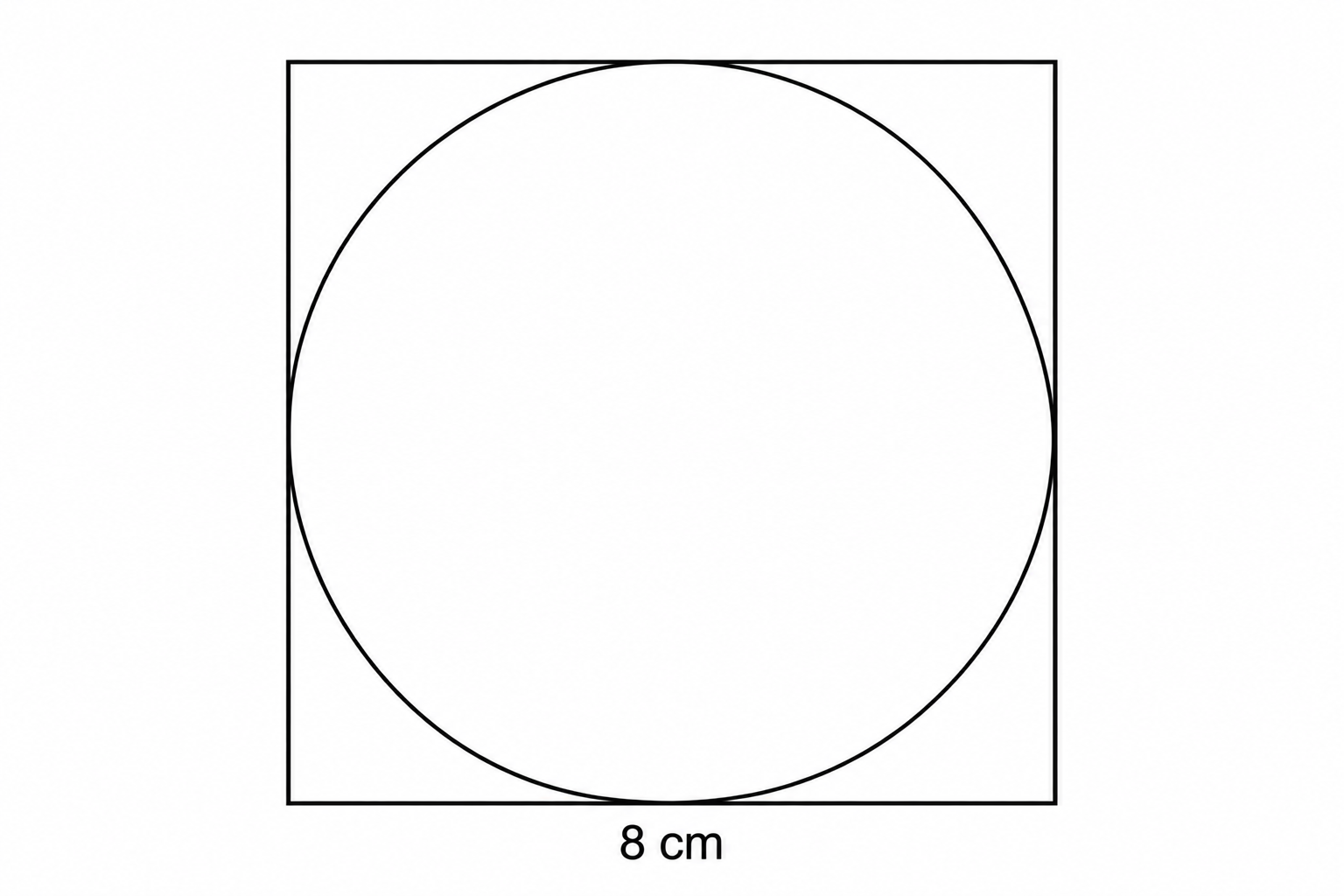
Diagram for question 10: The circle touches all four sides of the square shown. What fraction of the square's area is inside the…
  1. A) (π)/(2)
  2. B) (π)/(4)
  3. C) (4)/(π)
  4. D) 1/4

What this assessment covers

Concepts Tested

  • Circles
  • Know and use the formulae for the area and circumference of a circle.

Question Mix

  • Medium questions included

Skills you build

  • Understand