Q1 Question
Points: 1
Choose the correct answer:
A circular lid has a circumference of approximately 75.4 cm and a diameter of 24 cm. Which calculation estimates the ratio represented by π?
Showing question 1 of 10
Choose the correct answer:
A circular pond has a radius of 7 m. Which expression gives its circumference, and why?
Choose the correct answer:
A designer increases the diameter of a circular badge by 20%. What happens to its circumference?
Choose the correct answer:
The circumference of a circle is 18π cm. Which statement correctly identifies its diameter?
Choose the correct answer:
A student estimates the circumference of a circle of diameter 20 cm using π ≈ 3.1. The estimate is 62 cm. Which statement explains how this compares with the exact circumference?
Choose the correct answer:
A circular tabletop has a diameter of 0.6 m. Which expression gives its circumference in centimetres?
Choose the correct answer:
Two students measure different circular plates. They divide each measured circumference by its measured diameter and obtain 3.12 and 3.17. Which is the best explanation for the different results?
Choose the correct answer:
Two circular wire loops have diameters of 8 cm and 12 cm. A single circular loop has a diameter of 20 cm. Ignoring joins, how does the total wire length in the two smaller loops compare with the wire length in the single loop?
Choose the correct answer:
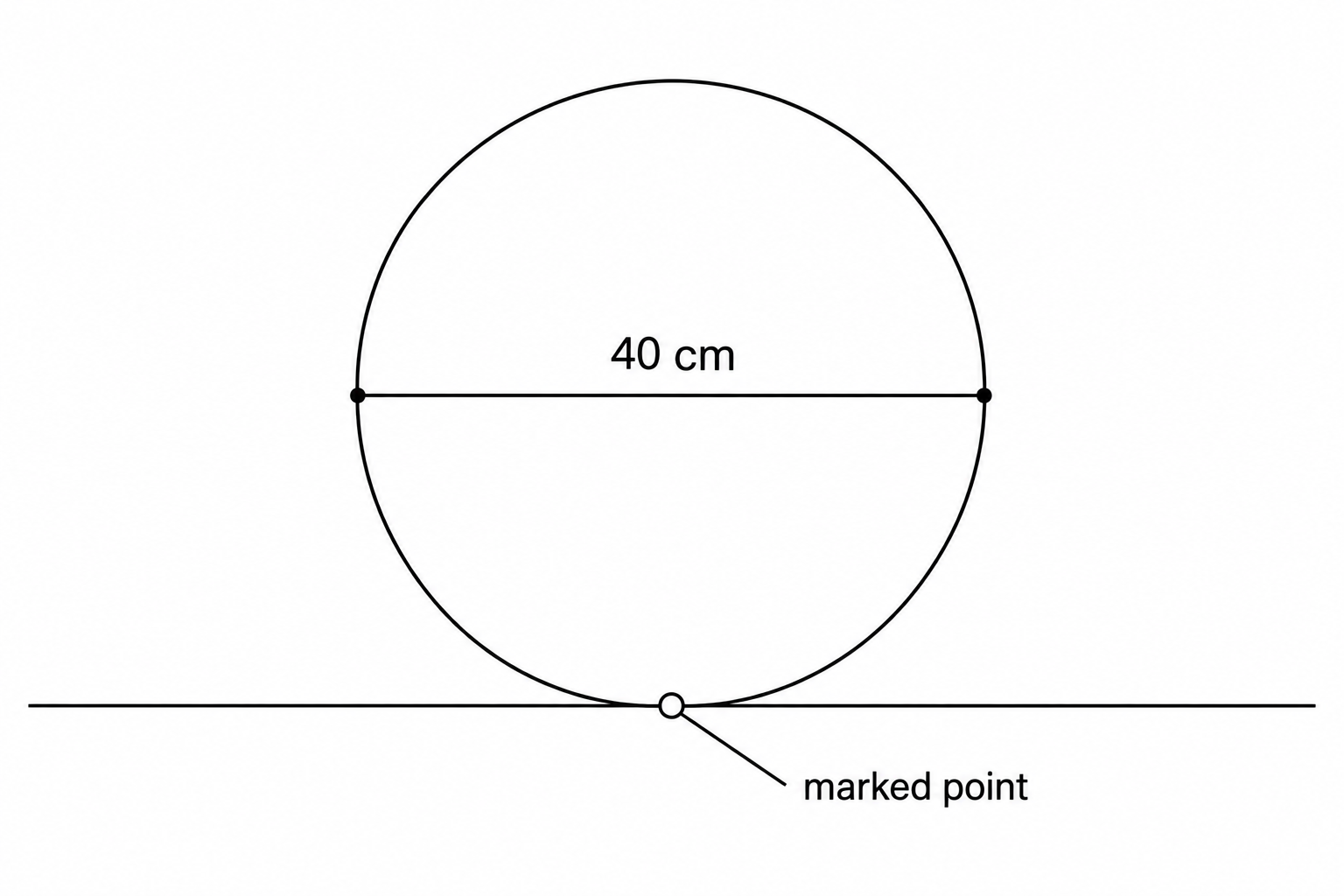
The diagram shows a wheel touching a straight surface. The wheel rolls without slipping until the marked point next touches the surface. Which expression gives the distance travelled?
Choose the correct answer:
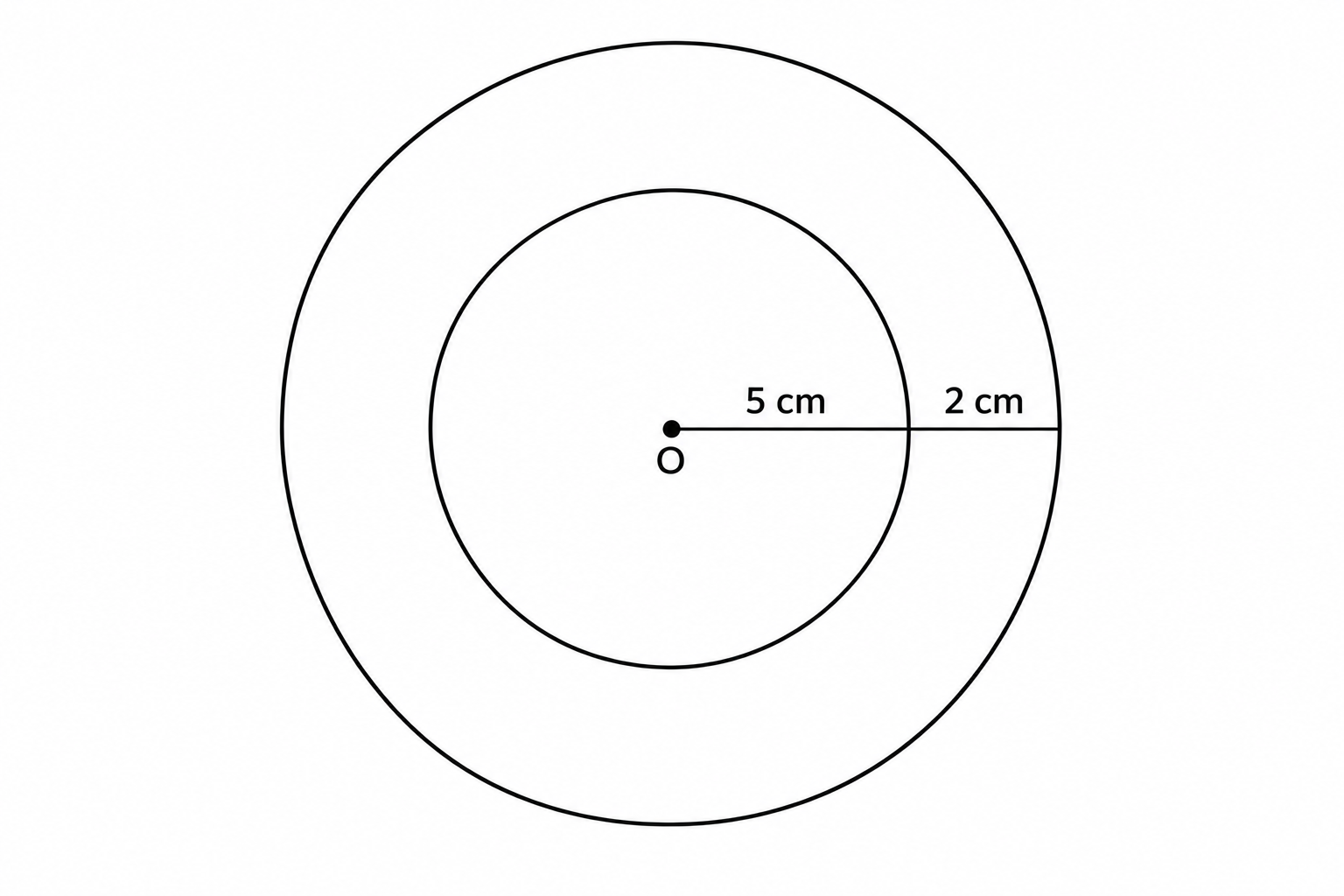
The diagram shows two circles with the same centre. How much greater is the circumference of the outer circle than the circumference of the inner circle?