

EARTH & ENVIRONMENTAL SCIENCE - WATER CYCLE
Water Cycle Quiz
- 10 questions
- Describe the water cycle (limited to evaporation, condensation, precipitation, water run-off, open water and groundwater).
- Difficulty: Hard
- Board: CAIE
- Attempt online on the examination portal
Start the 10-question quiz
Free, no sign-up needed. Your score shows instantly.
Here are the first 3 questions. Click “View all questions” to see the complete assessment.
Q1.
Q2.
A sealed transparent bag contains a shallow pool of water. Its upper inside surface is initially dry and does not touch the pool. After the lower part is warmed and the upper part is cooled, droplets appear on the upper inside surface. Which explanation accounts for both the movement of water and the formation of these droplets?
Q3.
Two similar sloping areas receive the same rainfall. One remains bare soil. The other is covered with a waterproof surface that drains towards a stream. Assume evaporation is the same in both areas. Which pair of changes is most likely in the covered area compared with the bare-soil area?
Q4.
After rain, water remains in a shallow outdoor tray with a waterproof base and sides. The tray does not leak or overflow. During a dry afternoon, its water level falls, although no droplets are seen leaving it. Which explanation best describes where the missing water has gone?
Q5.
A hillside stream continues flowing during several weeks without rain. Water can be seen emerging from the ground near the top of the stream. There is no lake or reservoir uphill. Which explanation best connects the earlier rainfall to the present stream flow?
Q6.
Two portions of rainwater reach a lake by different routes. The first flows directly down a rocky slope into the lake. The second collects in a puddle, enters the air, forms cloud droplets and later falls directly into the lake. Which comparison correctly describes these routes?
Q7.
On a clear night with no rain, a sloping metal roof cools. Water droplets form on its previously dry upper surface. The droplets join together and flow down the roof into a gutter. Which explanation correctly describes the formation of the water and its later movement?
Q8.
The cross-section shows possible water routes through a hillside. A portion of rainwater enters the ground at P, follows the underground route to Q and then reaches the lake. Which description correctly follows this portion of water from P to the lake?
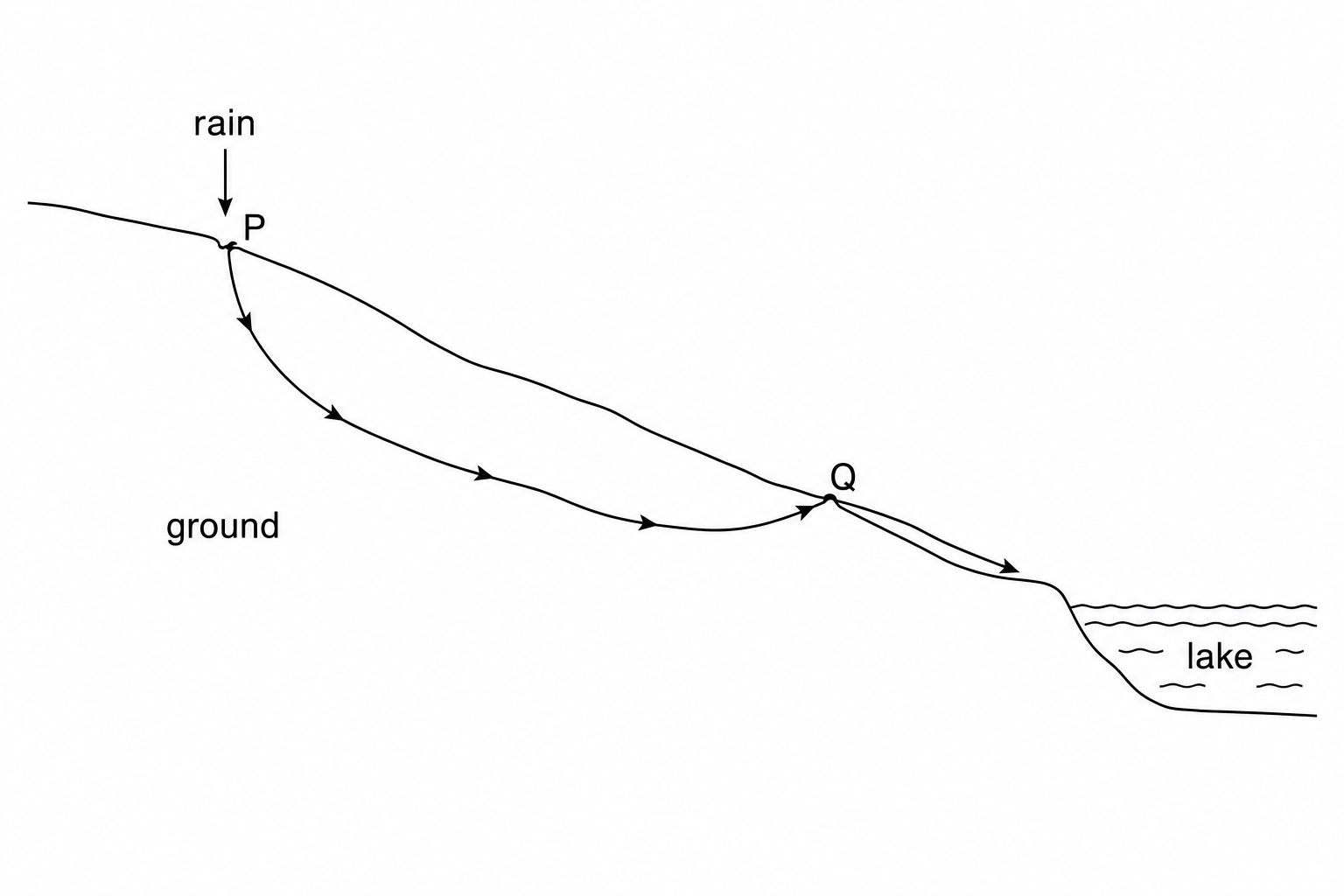
Q9.
The diagram represents water moving between a lake, the air and a cloud. A student writes: 'Water remains liquid during both A and B, and C changes water vapour directly into lake water.' Which replacement correctly describes the changes and movement shown?
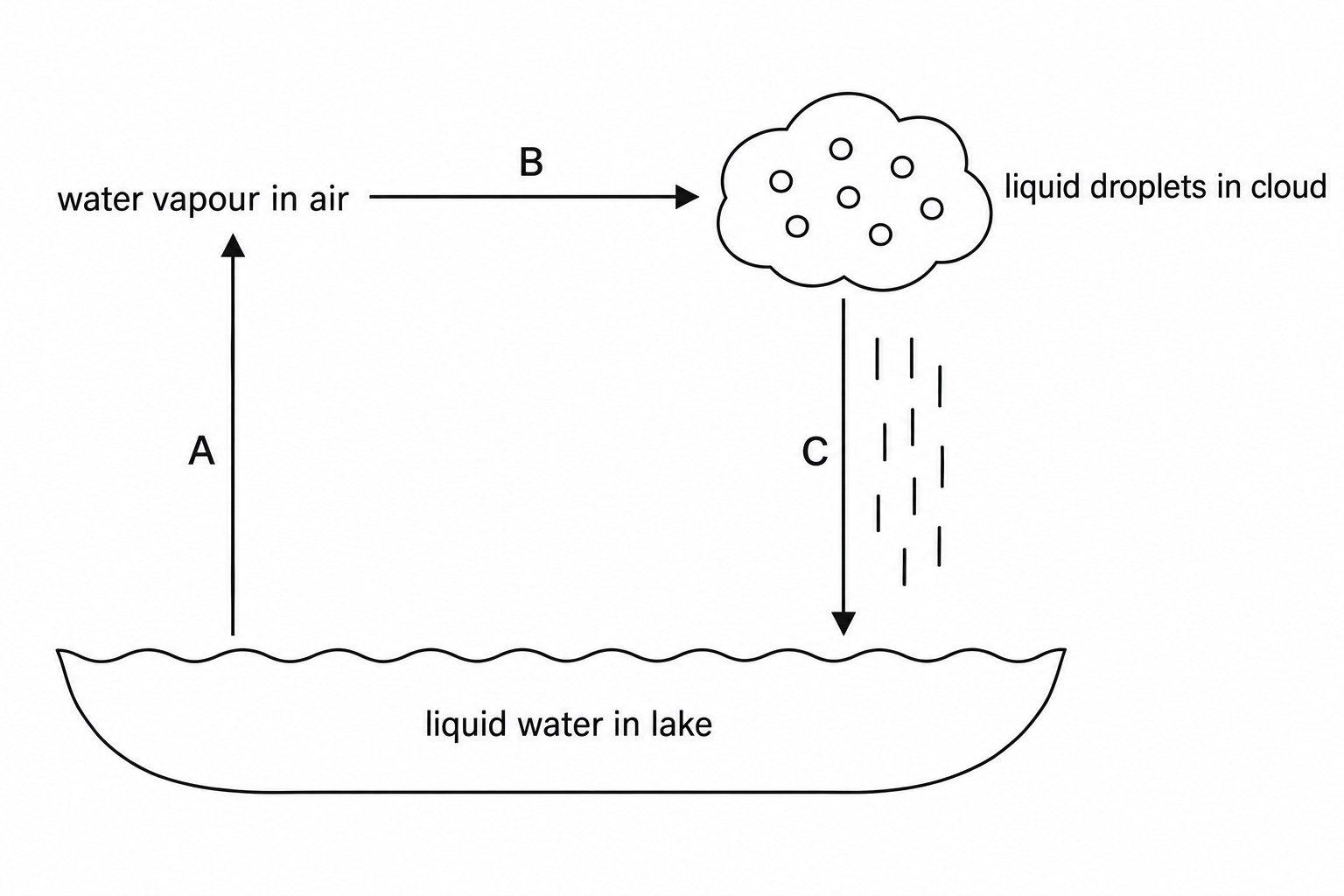
Q10.
The diagram shows a covered model of part of the water cycle. Water from the warmed dish later collects in the initially empty cup. The dish does not splash or overflow, and the cup does not touch its water. Which explanation accounts for how water reaches the cup?
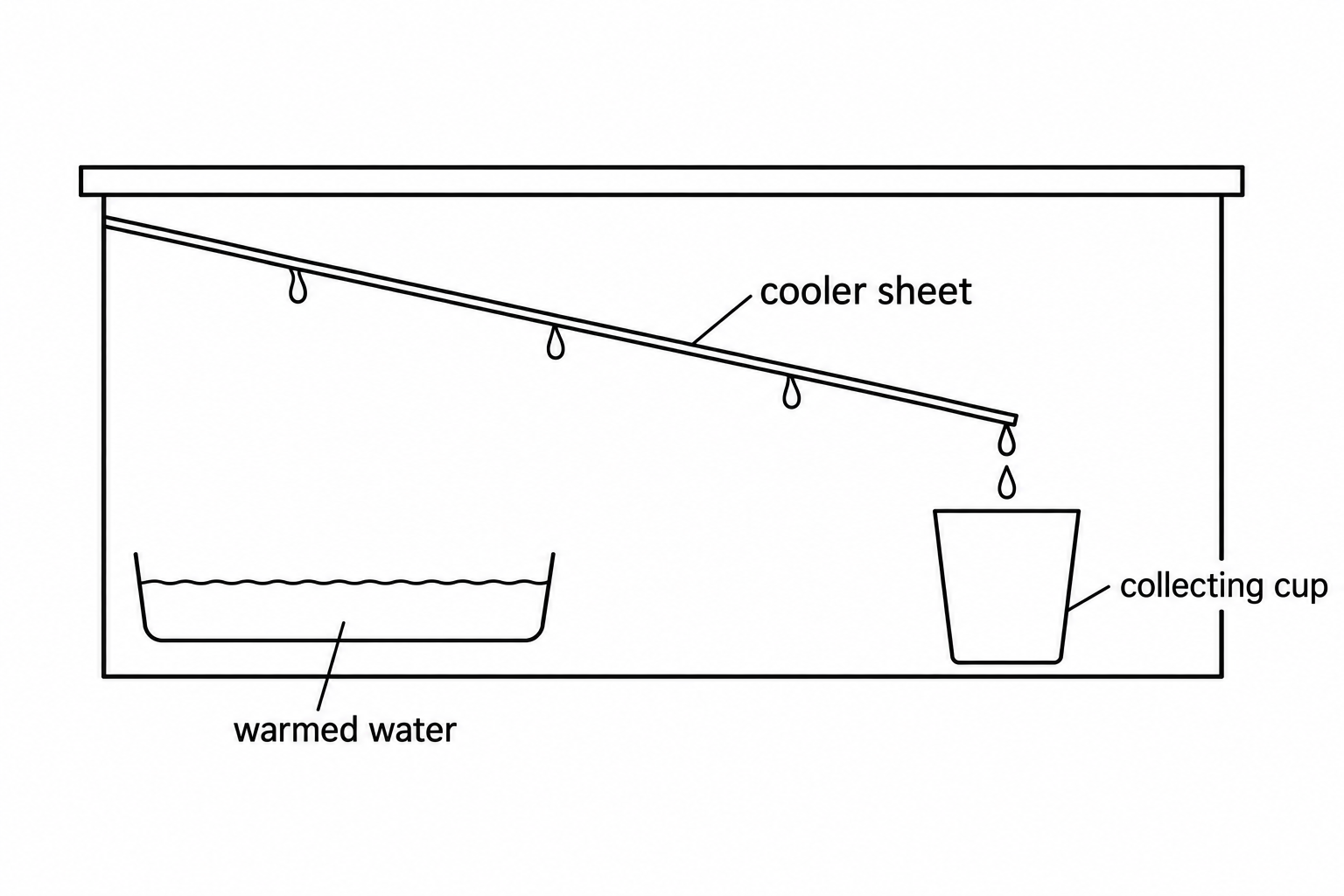
What this assessment covers
Concepts Tested
- Water Cycle
- Describe the water cycle (limited to evaporation, condensation, precipitation, water run-off, open water and groundwater).
Question Mix
- Hard questions included
Skills you build
- Apply
Related assessments
More practice
Other assessments in this subject
