

EARTH & ENVIRONMENTAL SCIENCE - WATER CYCLE
6th Grade Water Cycle Worksheet
- 10 questions
- Describe the water cycle (limited to evaporation, condensation, precipitation, water run-off, open water and groundwater).
- Difficulty: Hard
- Board: CAIE
- Attempt online on the examination portal
Start the 10-question quiz
Free, no sign-up needed. Your score shows instantly.
Here are the first 3 questions. Click “View all questions” to see the complete assessment.
Q1.
Q2.
Two similar sloping areas receive the same rainfall. One has soil that allows water to enter the ground. The other has been covered with waterproof paving that directs surface water into a river. Compared with the soil-covered area, what is most likely to happen in the paved area?
Q3.
Rain falls on a hillside and flows over the surface into a reservoir. Later, some reservoir water becomes water vapour. That vapour cools to form cloud droplets, which eventually return to the ground as rain. Which sequence correctly follows this water, starting with its movement down the hillside?
Q4.
A stream continues flowing during several weeks without rain. There are no lakes upstream and no water is being released by people. Water is seen entering the stream through its banks below the ground surface. Which explanation best accounts for the continued flow?
Q5.
Moist air moves from above a warm sea towards cooler land. Clouds develop over the land, but no rain reaches the ground. Which description accounts for both the sea supplying water to the air and the clouds forming without rainfall?
Q6.
Two identical containers hold equal amounts of water outdoors during a dry week. One is open. The other has a sealed transparent lid, and droplets forming beneath the lid fall back into its water. Neither container leaks. Why is the covered container likely to lose less water to the surroundings?
Q7.
During a storm, a pond's water level rises. Later, during a warm, rain-free period, its level falls even though no water flows out over the ground. A student says, 'The rise must be caused only by run-off, and the fall must mean water has left the water cycle.' Which correction is most accurate?
Q8.
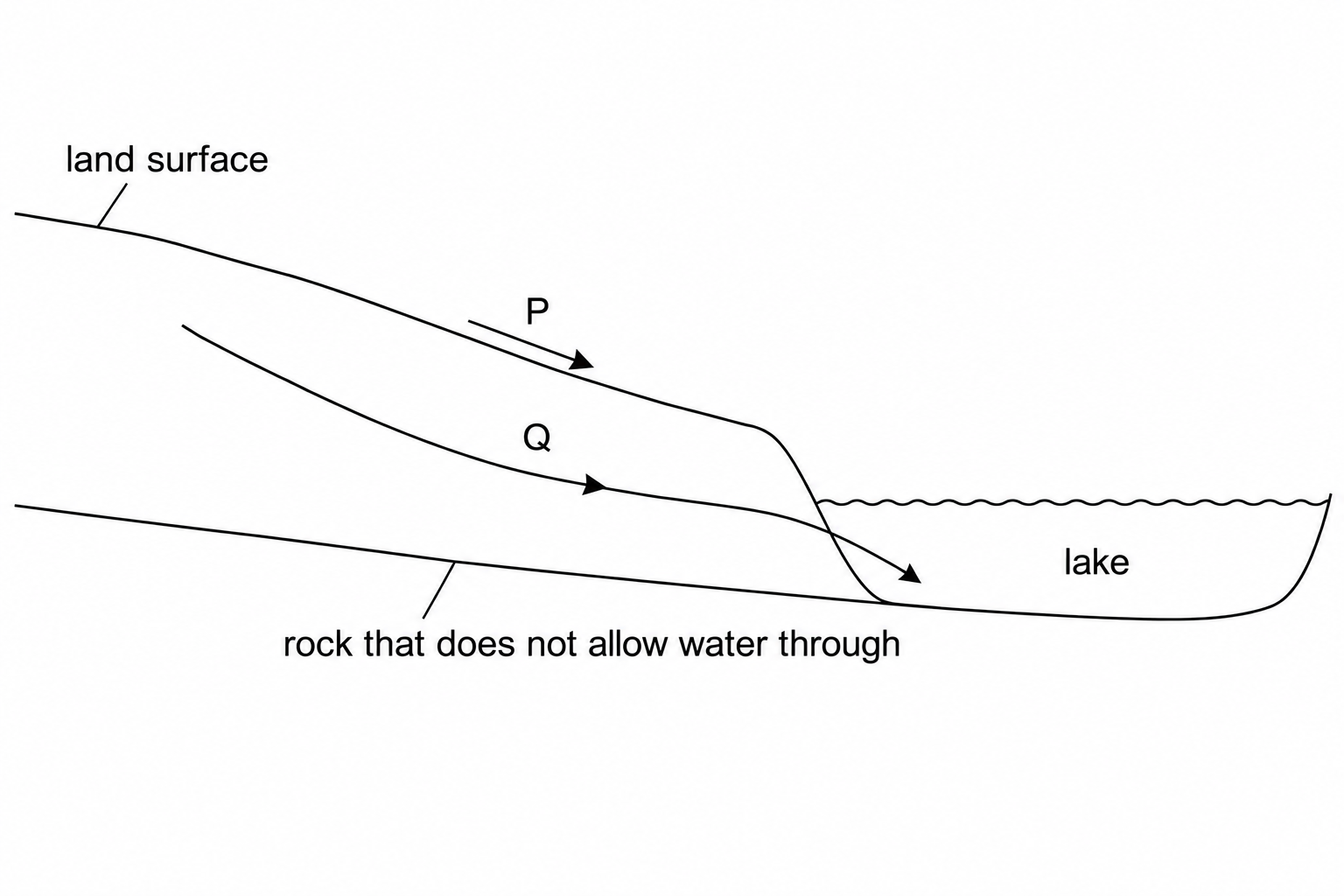
The cross-section shows two routes by which water can reach a lake. After a long period without rain, the land surface is dry, but water is still observed moving along route Q. Which conclusion is supported?
Q9.
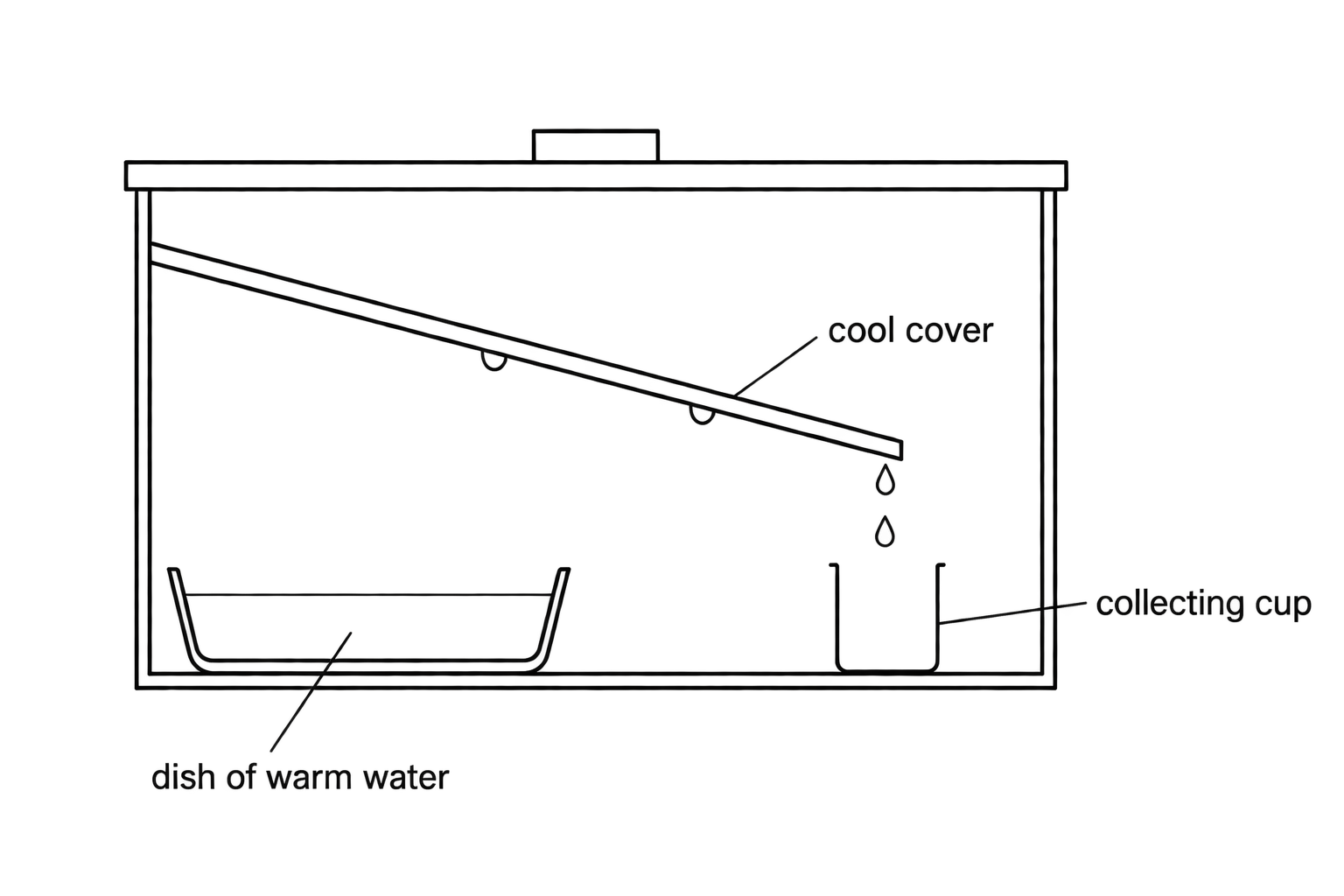
The apparatus models parts of the water cycle. The water in the dish is warmed, while the underside of the sloping cover is kept cool. No water is poured onto the cover. Water later collects in the cup. Which explanation correctly connects the model to the water cycle?
Q10.
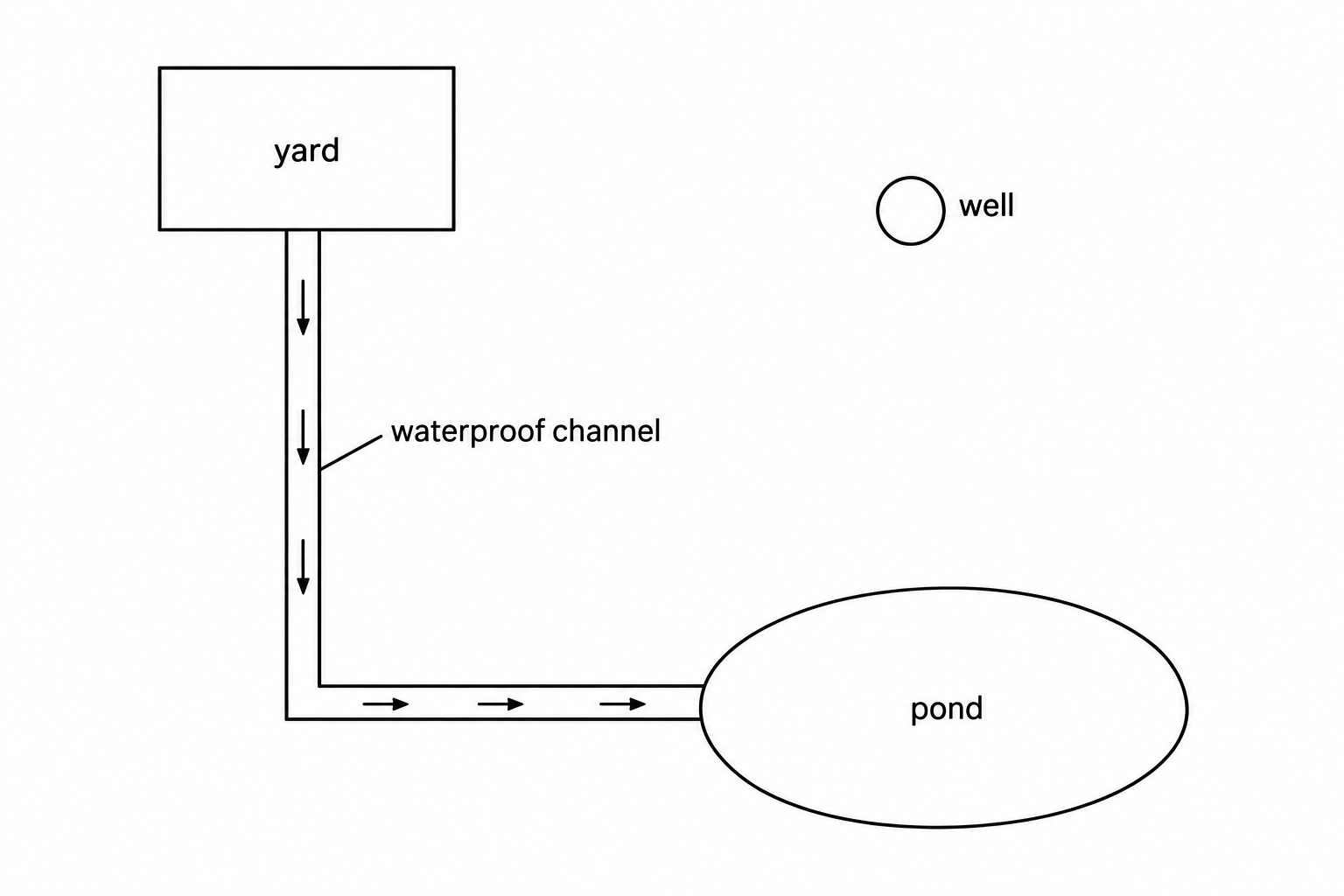
Rain falls on the area shown in the plan. A waterproof channel catches all surface run-off from the yard and carries it along the arrows without leaking. It ends at the pond. Which statement correctly describes the route taken by this captured water before it enters the pond?
What this assessment covers
Concepts Tested
- Water Cycle
- Describe the water cycle (limited to evaporation, condensation, precipitation, water run-off, open water and groundwater).
Question Mix
- Hard questions included
Skills you build
- Apply
Related assessments
More practice
Other assessments in this subject
