

CHEMISTRY - STATES OF MATTER
States of Matter Worksheet
- Explores particle behavior in solids, liquids, and gases
- Focuses on real-world examples of state changes
- Emphasizes understanding of diffusion and expansion
Start the 10-question quiz
Free, no sign-up needed. Your score shows instantly.
Here are the first 3 questions. Click “View all questions” to see the complete assessment.
Q1.
Q2.
Water is poured from a narrow bottle into a wide bowl. It changes shape but its volume remains almost unchanged. What does this indicate about liquid particles?
Q3.
A small amount of air entering an empty balloon spreads throughout the balloon rather than collecting at its bottom. Which statement best explains this observation?
Q4.
The smell of cooking spreads through a kitchen faster than a drop of food colouring spreads through still water. What is the best explanation?
Q5.
A tightly fitting metal jar lid becomes slightly easier to remove after warm water is poured over it. Which change in the metal particles explains this?
Q6.
Water vapour forms liquid droplets on the outside of a cold glass. What happens to the water particles during this change?
Q7.
A solid air freshener gradually becomes smaller while its particles spread through the air, but no liquid is observed. Which description best explains this change?
Q8.
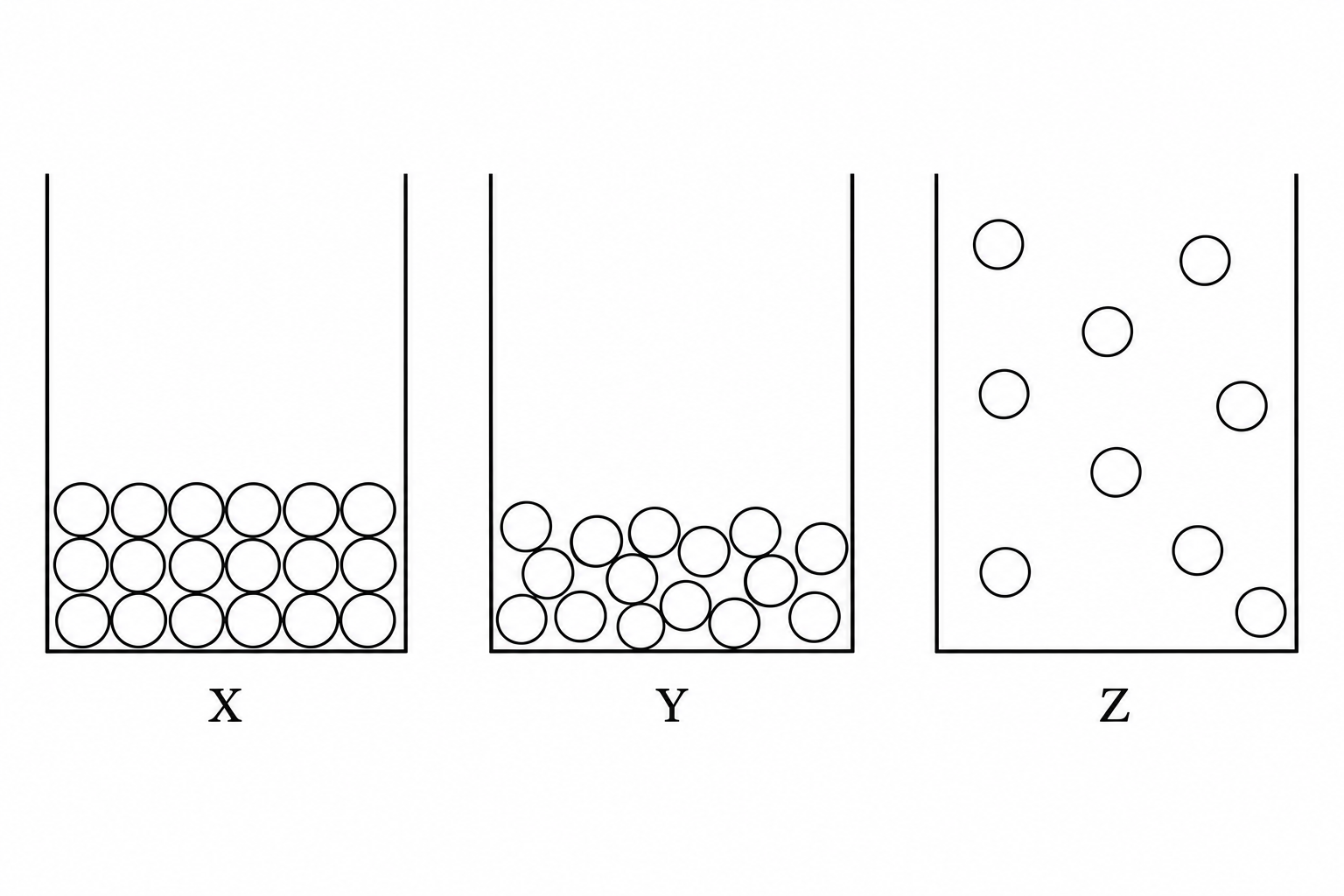
The figure shows particle arrangements in three samples. Which description of sample Y is most consistent with its particle arrangement?
Q9.
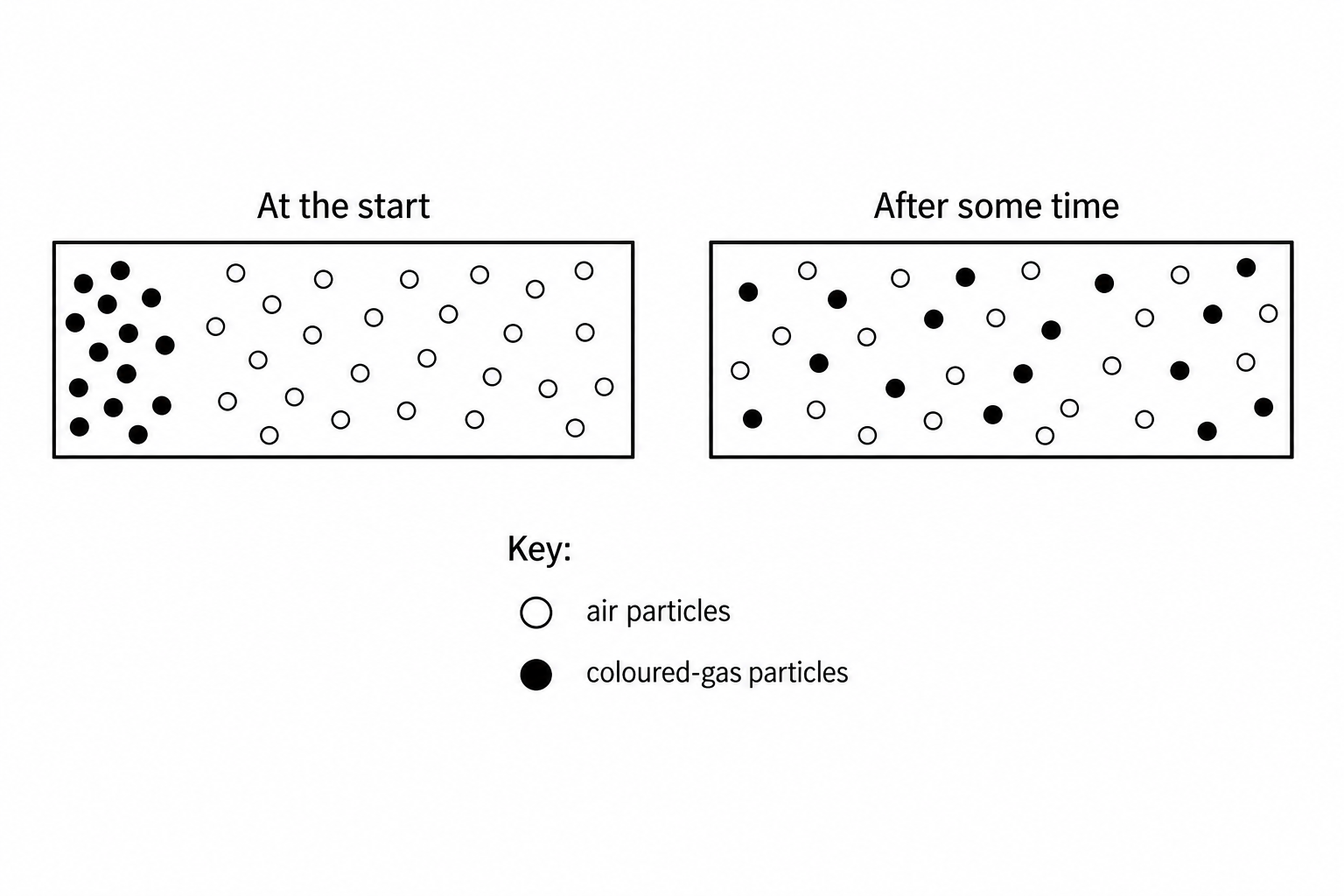
The two panels show the same sealed container at different times after a coloured gas was released at one end. Which explanation best accounts for the change shown?
Q10.
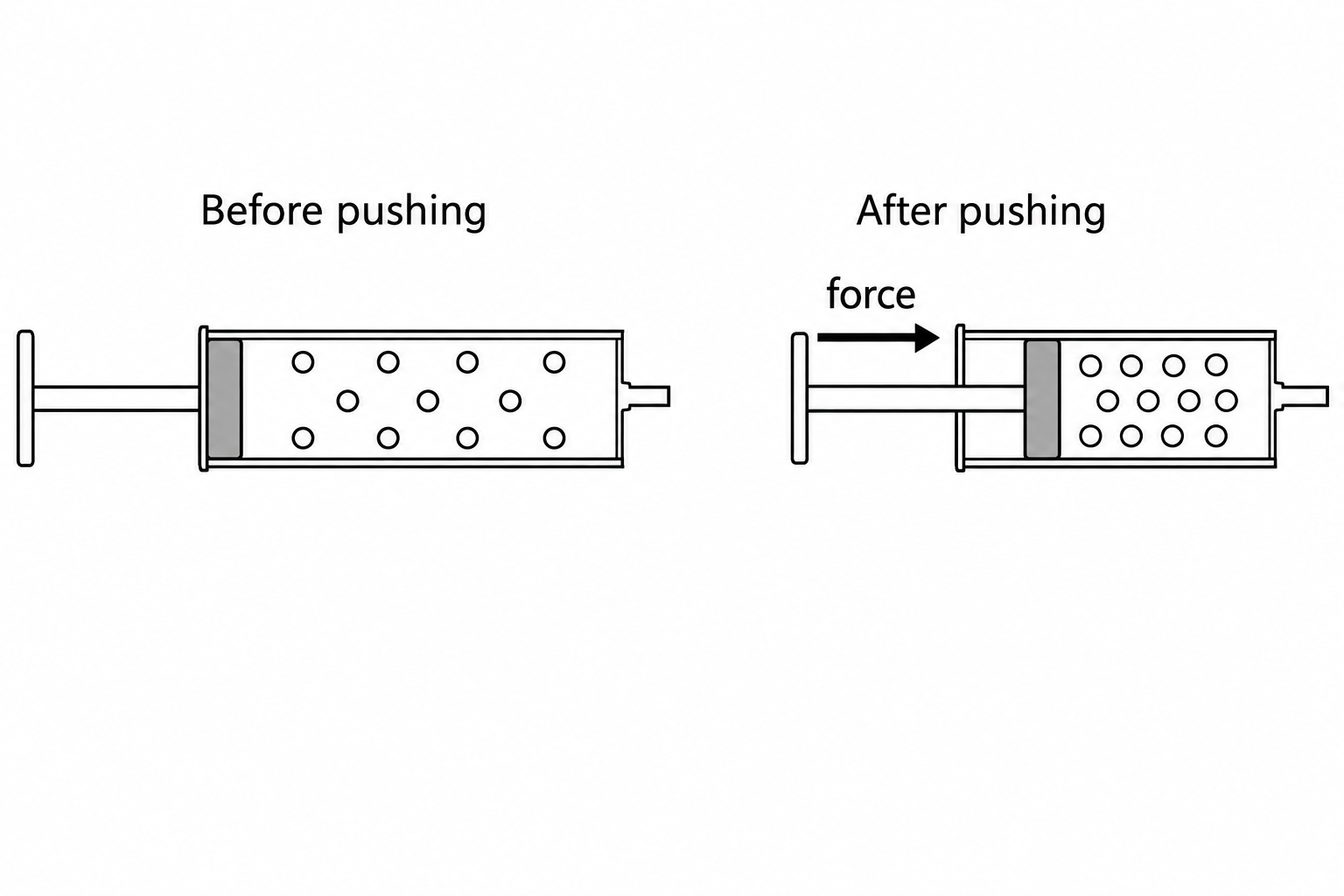
The figure compares a trapped gas before and after the plunger is pushed inward. Why can the volume decrease as shown?
What this assessment covers
Concepts tested
- Properties of solids, liquids, and gases
- Particle movement and arrangement
- Diffusion in gases and liquids
- Thermal expansion and contraction
- Phase changes and condensation
Question Mix
- Medium questions included
Skills you build
- Interpreting particle diagrams
- Explaining particle behavior in different states
- Analyzing real-world phenomena using particle theory
- Comparing diffusion rates in different mediums
- Understanding volume and shape changes in matter
Related assessments
More practice
Other assessments in this subject
