

CHEMISTRY - NET IONIC EQUATIONS
Net Ionic Equations Practice Problems
- 10 questions
- Difficulty: Hard
- Board: CAIE
- Attempt online on the examination portal
Start the 10-question quiz
Free, no sign-up needed. Your score shows instantly.
Here are the first 3 questions. Click “View all questions” to see the complete assessment.
Q1.
Q2.
Excess aqueous sodium hydroxide is added to aqueous aluminium nitrate. A white precipitate initially forms and then dissolves completely. Taking the dissolved aluminium-containing product to be [Al(OH)₄]⁻, which net ionic equation represents the overall change from the original aluminium ions to the final solution?
Q3.
Powdered calcium carbonate is added to excess dilute ethanoic acid. The solid dissolves and a gas is released. In writing the net ionic equation, represent the weak acid predominantly as undissociated molecules. Which equation is correct?
Q4.
Ethanol is heated under reflux with excess acidified potassium dichromate(VI), producing ethanoic acid. Chromium forms Cr³⁺ ions. Which net ionic equation represents the complete oxidation of the ethanol?
Q5.
Potassium iodate(V), KIO₃, reacts with excess potassium iodide in dilute sulfuric acid. Both the iodine in IO₃⁻ and the iodine in I⁻ form I₂. Which net ionic equation represents this reaction?
Q6.
A student mixes 20.0 cm³ of 0.100 mol dm⁻³ lead(II) nitrate with 30.0 cm³ of 0.200 mol dm⁻³ potassium iodide. Assume precipitation is complete. Which option gives both the net ionic equation and the amount of excess reacting ion remaining in solution?
Q7.
Dilute aqueous ammonium carbonate is mixed with sufficient dilute aqueous calcium hydroxide and warmed. Calcium carbonate precipitates, and all the ammonium ions are converted into ammonia gas. Which single net ionic equation includes both changes?
Q8.
Aqueous sodium carbonate is added to aqueous iron(III) nitrate. Instead of iron(III) carbonate, a precipitate of iron(III) hydroxide and carbon dioxide gas form. Which net ionic equation accounts for these observations?
Q9.
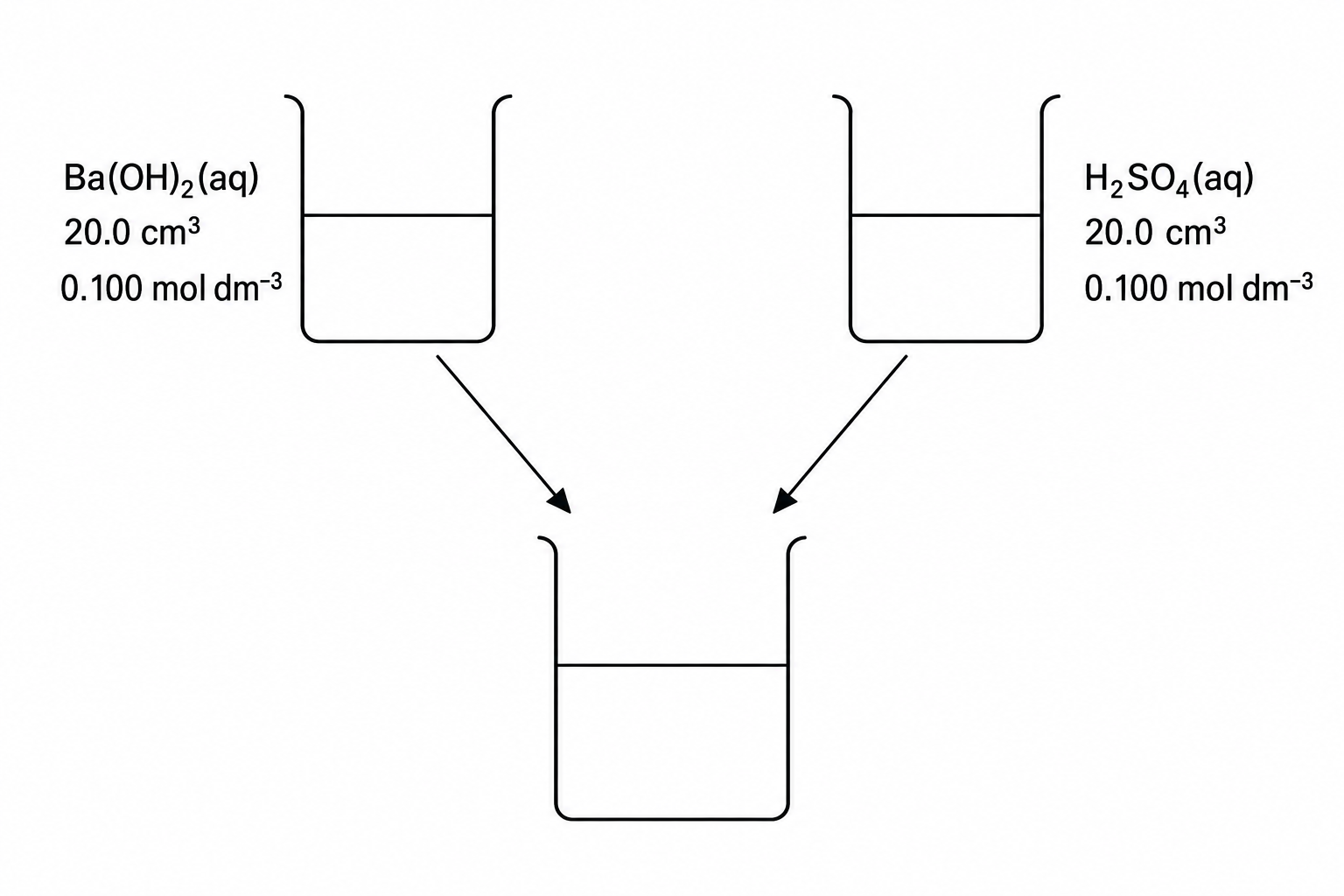
The solutions shown are mixed. Assume that precipitation and neutralisation both go to completion. Which net ionic equation represents the overall reaction, including both the formation of a solid and the formation of water?
Q10.
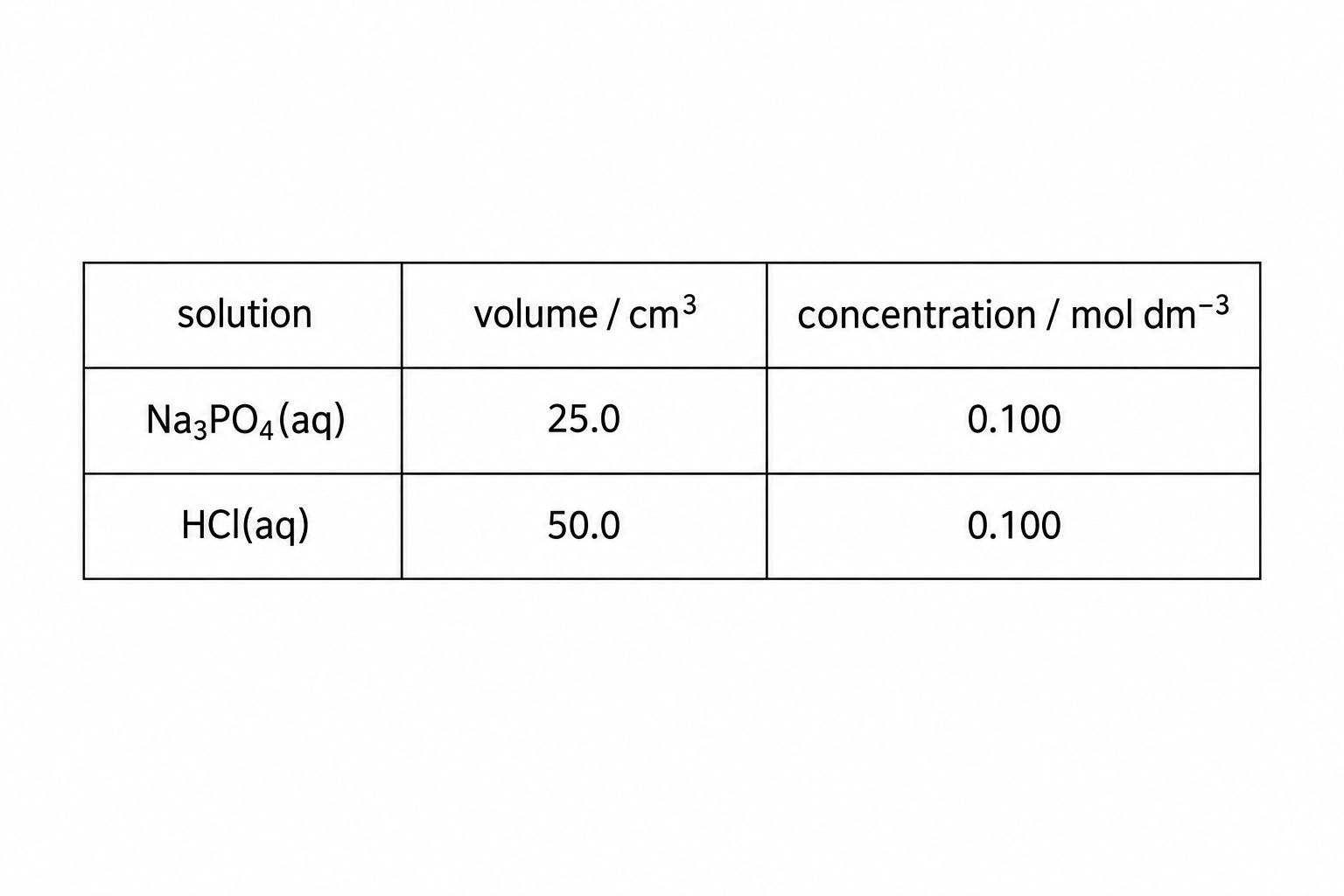
The table shows two solutions that are mixed. Treat successive proton-transfer reactions as complete at their stoichiometric endpoints, and ignore subsequent hydrolysis. Which net ionic equation represents the overall conversion of the phosphate ions using the amounts shown?
What this assessment covers
Concepts Tested
- Net Ionic Equations
Question Mix
- Hard questions included
Skills you build
- Apply
Related assessments
More practice
Other assessments in this subject
