

CHEMISTRY - MOLE CONCEPT
Molar Mass Worksheet
- 10 questions
- Difficulty: Hard
- Board: CAIE
- Attempt online on the examination portal
Start the 10-question quiz
Free, no sign-up needed. Your score shows instantly.
Here are the first 3 questions. Click “View all questions” to see the complete assessment.
Q1.
Q2.
An organic compound has empirical formula C₂H₃O and molar mass 172 g mol⁻¹. What is its molecular formula? Use Aᵣ: H = 1, C = 12, O = 16.
Q3.
A metal forms a carbonate with formula M₂CO₃. The carbonate has molar mass 138 g mol⁻¹. Which metal is M? Use Aᵣ: C = 12, O = 16, Li = 7, Na = 23, K = 39, Rb = 85.5.
Q4.
One mole of calcium hydroxide, Ca(OH)₂, is completely converted into one mole of anhydrous calcium nitrate, Ca(NO₃)₂. By how much does the mass of the calcium-containing substance increase? Use Aᵣ: H = 1, N = 14, O = 16, Ca = 40.
Q5.
A 0.600 dm³ sample of a pure gas has mass 1.60 g at room temperature and pressure. The molar gas volume under these conditions is 24.0 dm³ mol⁻¹. Which formula is consistent with these measurements? Use Aᵣ: H = 1, C = 12, O = 16, S = 32.
Q6.
Two samples contain equal numbers of formula units. One sample is iron(III) oxide, Fe₂O₃, and the other is aluminium oxide, Al₂O₃. What is the ratio of the mass of the iron(III) oxide sample to the mass of the aluminium oxide sample? Use Aᵣ: O = 16, Al = 27, Fe = 56.
Q7.
Equal masses of four pure fertilisers are compared. Which fertiliser supplies the greatest mass of nitrogen? Use Aᵣ: H = 1, C = 12, N = 14, O = 16, S = 32, Ca = 40.
Q8.
A 25.0 g sample contains a salt and an inert impurity. The sample is 80.0% salt by mass and contains 0.125 mol of the salt. What is the molar mass of the salt?
Q9.
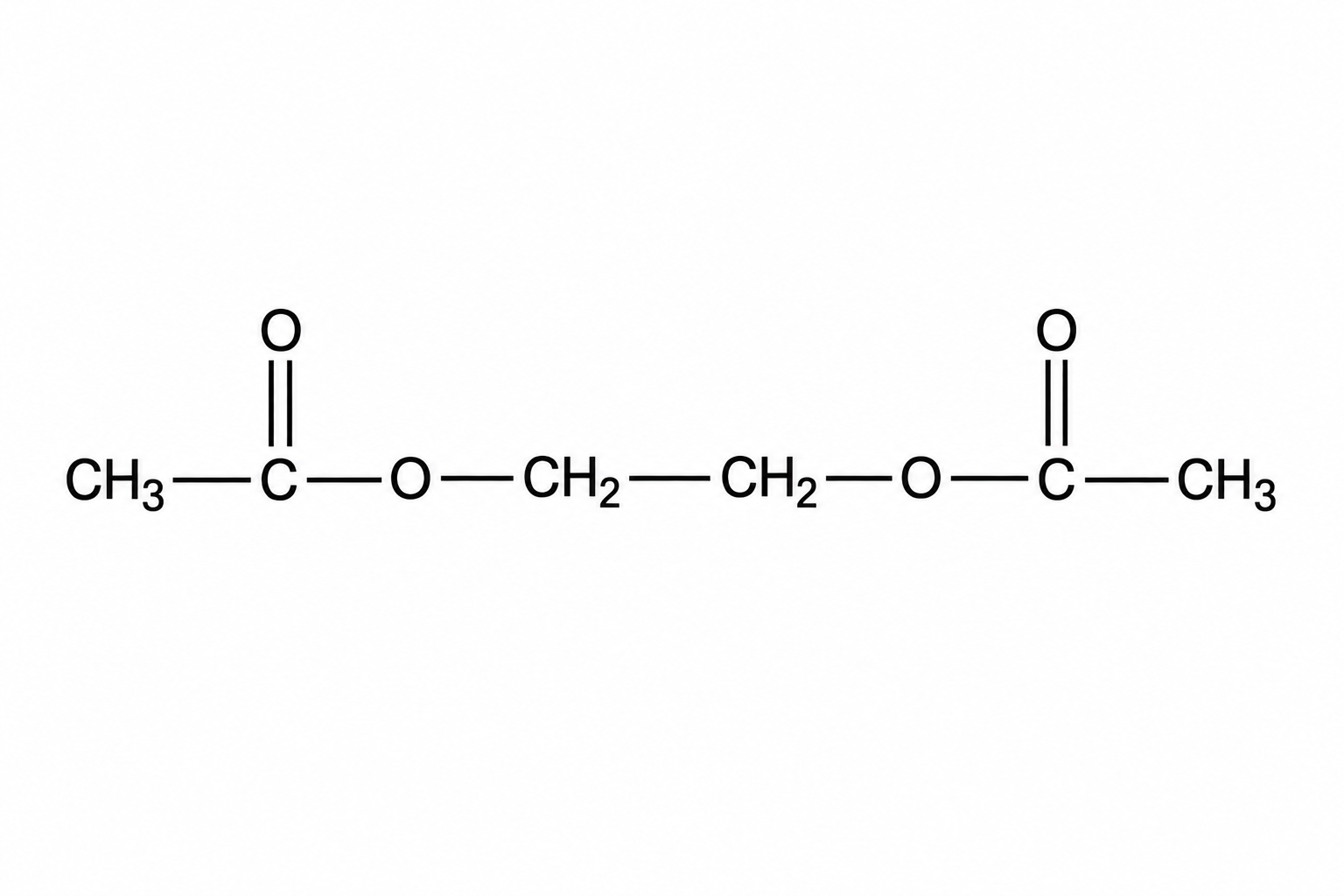
The diagram shows the structural formula of an organic compound. What is its molar mass? Use Aᵣ: H = 1, C = 12, O = 16.
Q10.
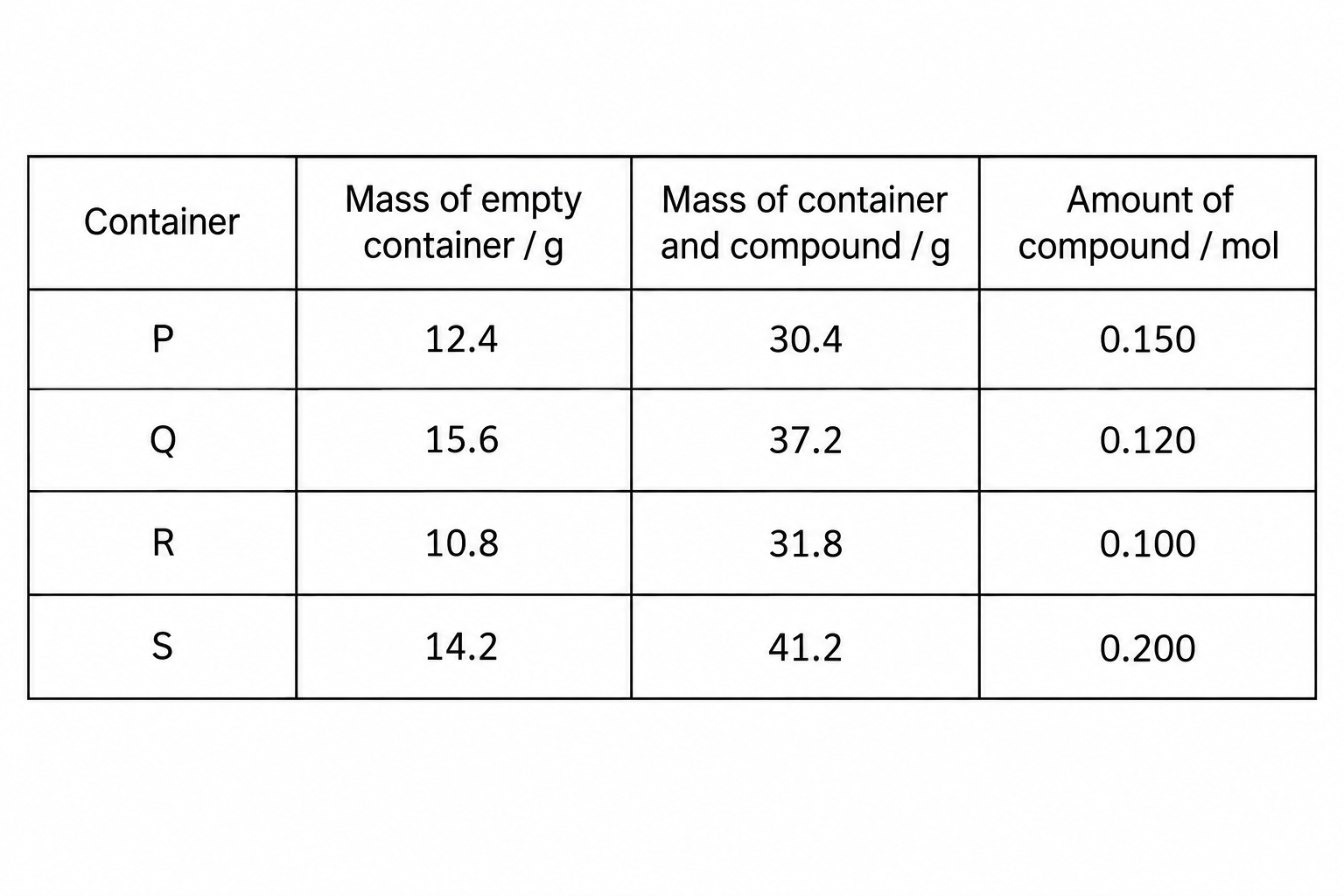
The table gives measurements for four containers, each holding a different pure compound. Which container holds a compound with the same molar mass as glucose, C₆H₁₂O₆? Use Aᵣ: H = 1, C = 12, O = 16.
What this assessment covers
Concepts Tested
- Mole Concept
Question Mix
- Hard questions included
Skills you build
- Apply
Related assessments
More practice
Other assessments in this subject
