

CHEMISTRY - LEWIS STRUCTURES
Lewis Structures Worksheet
- 10 questions
- Describe the formation of covalent bonds in simple molecules, including H2, Cl2, H2O, CH4, NH3 and HCl. Use dot-and-cross diagrams to show the electronic configurations in these and similar molecules
- Difficulty: Hard
- Board: CAIE
- Attempt online on the examination portal
Start the 10-question quiz
Free, no sign-up needed. Your score shows instantly.
Here are the first 3 questions. Click “View all questions” to see the complete assessment.
Q1.
Q2.
An atom X has electronic configuration 2,6. An atom Y has one electron and needs two electrons to fill its shell. A student constructs a dot-and-cross diagram of a neutral molecule containing one X atom. Which arrangement uses every atom's original outer-shell electrons and gives each atom a full outer shell?
Q3.
A methane dot-and-cross model uses dots for carbon's electrons and crosses for hydrogen's electrons. A student adapts it into an ammonia model by removing one hydrogen nucleus and that hydrogen's cross, then replacing the carbon nucleus with a nitrogen nucleus. The dot from the removed bond remains beside the central atom. What further change produces the correct outer-shell diagram of NH₃?
Q4.
One H₂ molecule and one Cl₂ molecule rearrange to form two HCl molecules. In all the dot-and-cross diagrams, hydrogen electrons are crosses and chlorine electrons are dots. Which description of the two product molecules correctly accounts for all the original outer-shell electrons?
Q5.
A complete outer-shell dot-and-cross diagram contains eight electrons in total. The number of electrons in shared pairs is three times the number in unshared pairs. Every hydrogen atom has a full first shell, and the other atom has a full outer shell. Which molecule fits this information?
Q6.
Using a methane dot-and-cross diagram, a student counts eight electrons around carbon and two around each of the four hydrogen atoms. The student adds these counts and claims that sixteen different outer-shell electrons are present. Which correction explains the error?
Q7.
Sulfur has electronic configuration 2,8,6 and forms H₂S with single covalent bonds. A student draws only the outer-shell electrons, using dots for sulfur and crosses for hydrogen. Which description correctly gives both the completed diagram and the electrons omitted from it?
Q8.
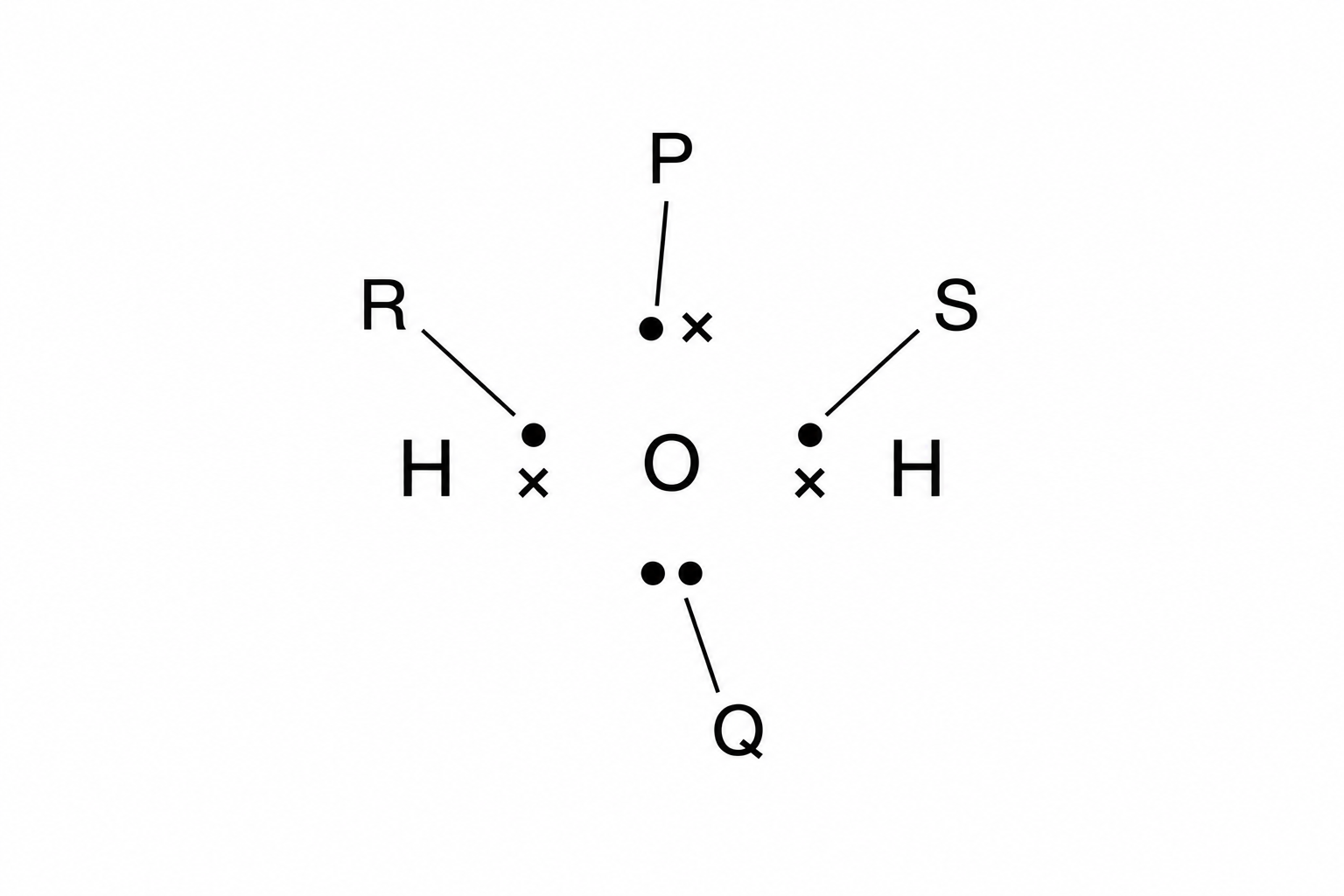
The diagram is a student's attempt to show the outer-shell electrons of H₂O. Dots must represent electrons originally supplied by oxygen, and crosses must represent electrons originally supplied by hydrogen. Each labelled region contains one electron pair. Which single replacement corrects the diagram without changing the number of electrons?
Q9.
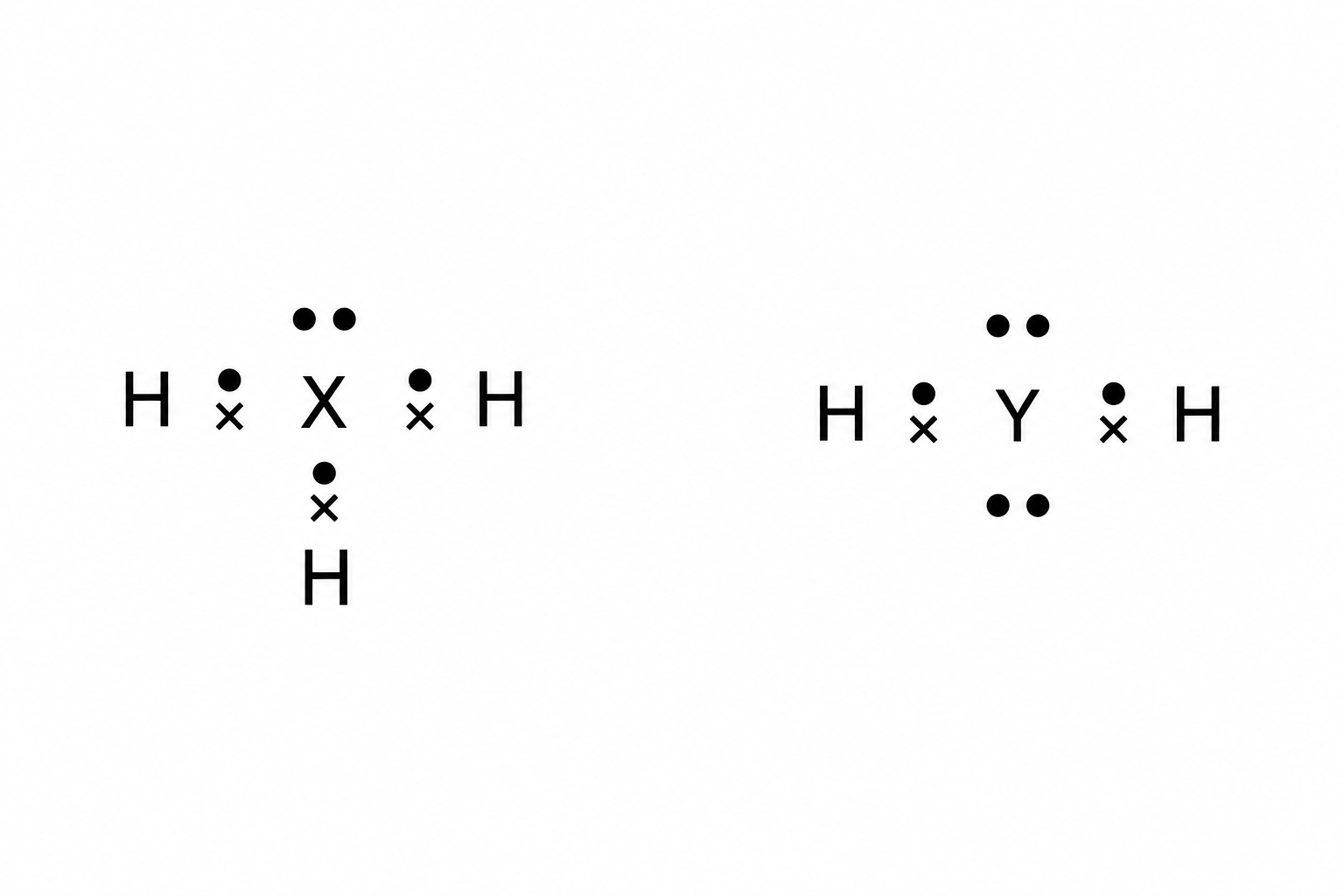
The diagrams show all outer-shell electrons in two neutral molecules. Each central atom, X or Y, has exactly two occupied electron shells. Each hydrogen contributes one cross, and each central atom contributes the dots around it. Which pair gives the atomic numbers of X and Y?
Q10.
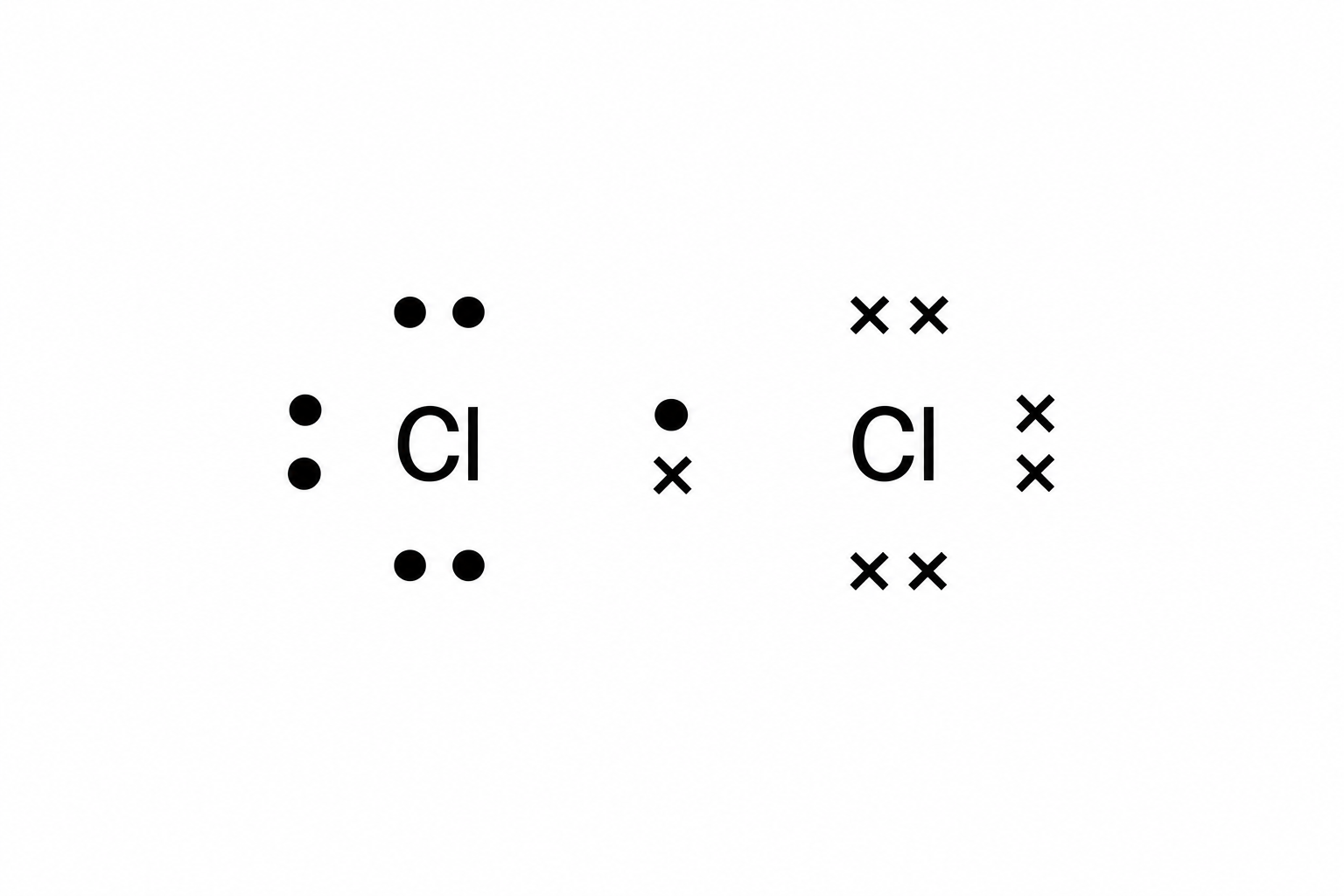
The diagram shows all outer-shell electrons of Cl₂. Dots belong originally to the left chlorine atom and crosses to the right chlorine atom. The molecule separates into two neutral chlorine atoms, with each atom retaining its original electrons. What must happen to the shared pair, and what is the resulting outer-shell electron count on each atom?
What this assessment covers
Concepts Tested
- Lewis Structures
- Describe the formation of covalent bonds in simple molecules, including H2, Cl2, H2O, CH4, NH3 and HCl. Use dot-and-cross diagrams to show the electronic configurations in these and similar molecules
Question Mix
- Hard questions included
Skills you build
- Apply
Related assessments
More practice
Other assessments in this subject
