

CHEMISTRY - ELECTRON CONFIGURATION
Electron Configurations Worksheet
- 10 questions
- Difficulty: Medium
- Board: CAIE
- Attempt online on the examination portal
Start the 10-question quiz
Free, no sign-up needed. Your score shows instantly.
Here are the first 3 questions. Click “View all questions” to see the complete assessment.
Q1.
Q2.
A sulfur atom has the electronic configuration 2,8,6. Which statement correctly describes its electron arrangement when it forms an S²⁻ ion?
Q3.
Lithium has proton number 3 and sodium has proton number 11. Which comparison of their neutral atoms is correct?
Q4.
A calcium atom has the electronic configuration 2,8,8,2. What happens to its occupied electron shells when it forms a Ca²⁺ ion?
Q5.
A student writes the electronic configuration of a neutral nitrogen atom, proton number 7, as 2,4,1. Which change gives the correct ground-state electron arrangement without changing the total number of electrons?
Q6.
An ion of element X has a charge of 2+ and the electronic configuration 2,8. What is the electronic configuration of a neutral atom of X?
Q7.
Potassium and calcium have proton numbers 19 and 20 respectively. How does the electron arrangement of a neutral calcium atom differ from that of a neutral potassium atom?
Q8.
An ion contains 15 protons and has the electronic configuration 2,8,8. Which statement explains its charge?
Q9.
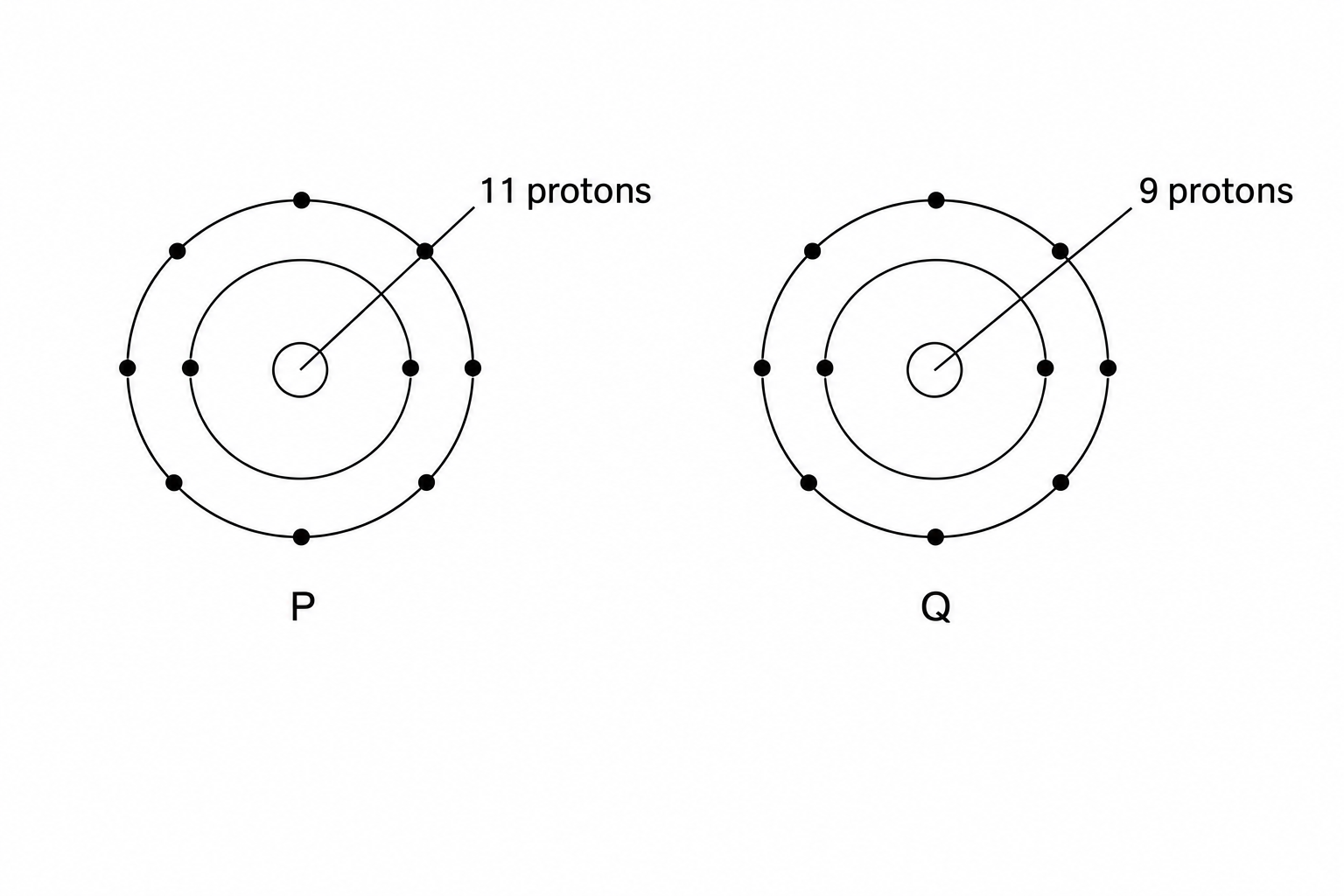
The diagrams show the electron arrangements and proton numbers of two ions. Which statement correctly explains the relationship between them?
Q10.
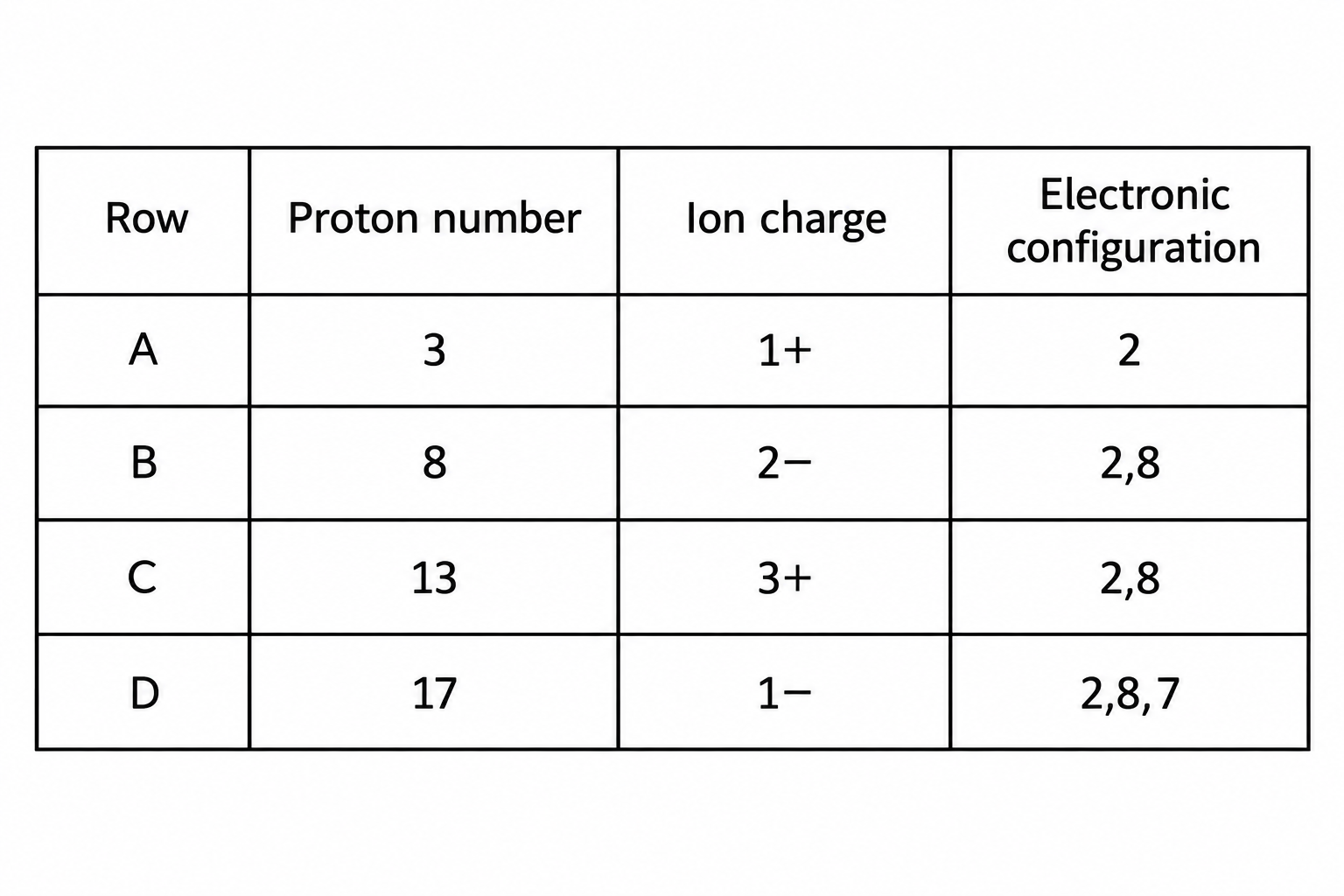
The table gives proposed electronic configurations for four ions. Which row contains an electronic configuration that is inconsistent with the proton number and ion charge?
What this assessment covers
Concepts Tested
- Electron Configuration
Question Mix
- Medium questions included
Skills you build
- Understand
Related assessments
More practice
Other assessments in this subject
