Q1 Question
Points: 1
Choose the correct answer:
An aluminium atom has proton number 13. It forms an Al³⁺ ion by losing electrons. Which electronic configuration represents this ion?
Showing question 1 of 10
Choose the correct answer:
A sulfur atom has the electronic configuration 2,8,6. Which statement correctly describes its electron arrangement when it forms an S²⁻ ion?
Choose the correct answer:
Lithium has proton number 3 and sodium has proton number 11. Which comparison of their neutral atoms is correct?
Choose the correct answer:
A calcium atom has the electronic configuration 2,8,8,2. What happens to its occupied electron shells when it forms a Ca²⁺ ion?
Choose the correct answer:
A student writes the electronic configuration of a neutral nitrogen atom, proton number 7, as 2,4,1. Which change gives the correct ground-state electron arrangement without changing the total number of electrons?
Choose the correct answer:
An ion of element X has a charge of 2+ and the electronic configuration 2,8. What is the electronic configuration of a neutral atom of X?
Choose the correct answer:
Potassium and calcium have proton numbers 19 and 20 respectively. How does the electron arrangement of a neutral calcium atom differ from that of a neutral potassium atom?
Choose the correct answer:
An ion contains 15 protons and has the electronic configuration 2,8,8. Which statement explains its charge?
Choose the correct answer:
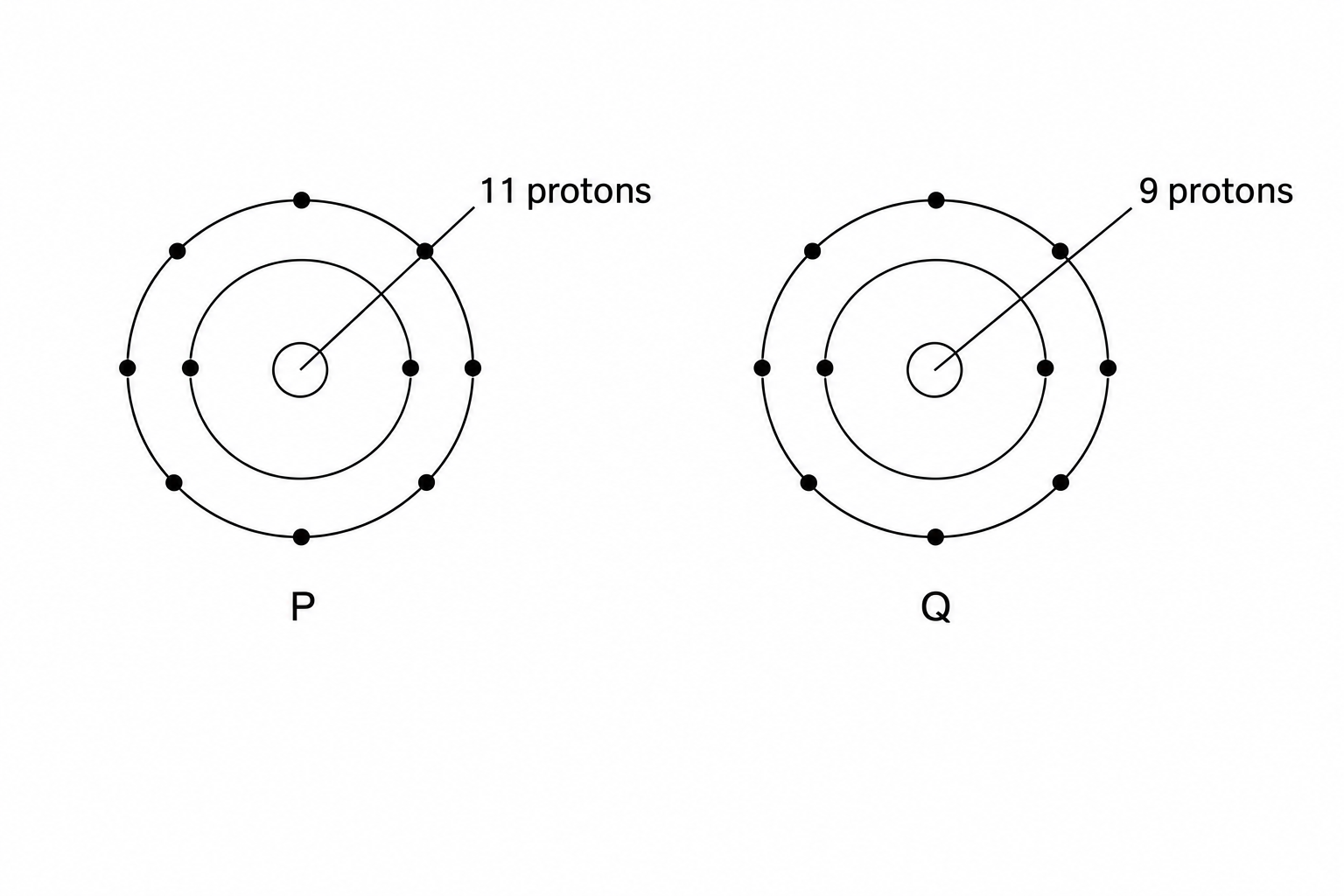
The diagrams show the electron arrangements and proton numbers of two ions. Which statement correctly explains the relationship between them?
Choose the correct answer:
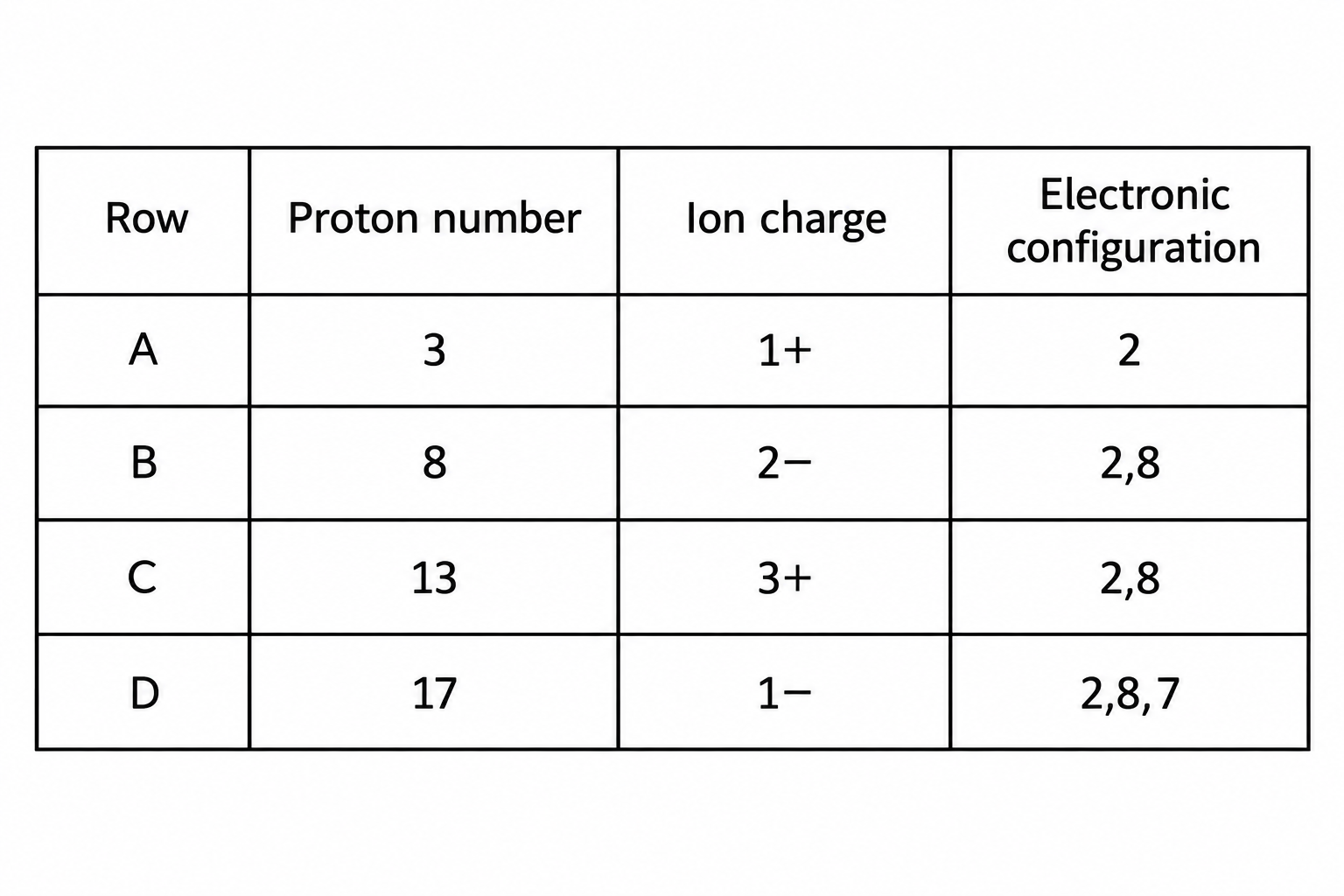
The table gives proposed electronic configurations for four ions. Which row contains an electronic configuration that is inconsistent with the proton number and ion charge?