

MATHEMATICS - RATIONAL NUMBERS
Irrational Numbers Worksheet
- 10 questions
- Understand the difference between rational and irrational numbers.
- Difficulty: Hard
- Board: CAIE
- Attempt online on the examination portal
Start the 10-question quiz
Free, no sign-up needed. Your score shows instantly.
Here are the first 3 questions. Click “View all questions” to see the complete assessment.
Q1.
Q2.
A number is calculated using frac√(72)√(k). Which value of k makes the result rational?
Q3.
An integer code n is accepted only when √(n − 2) is rational and √(n + 7) is irrational. Which code is accepted?
Q4.
A calculator displays 3.31662479 for √(11). Let p = 3.31662479 exactly, and let the exact error be e = √(11) − p. Which statement is correct?
Q5.
A positive number t satisfies t² = 49/100. A student then calculates u = 1/t + 2/7. Which statement gives the exact value and correct classification of u?
Q6.
Two numbers are chosen. Their sum must be irrational, but their product must be rational. Which pair meets both requirements?
Q7.
Which irrational number lies strictly between frac73 and frac52?
Q8.
A student claims that the sum of two different irrational numbers must be irrational. Which calculation is a counterexample to this claim?
Q9.
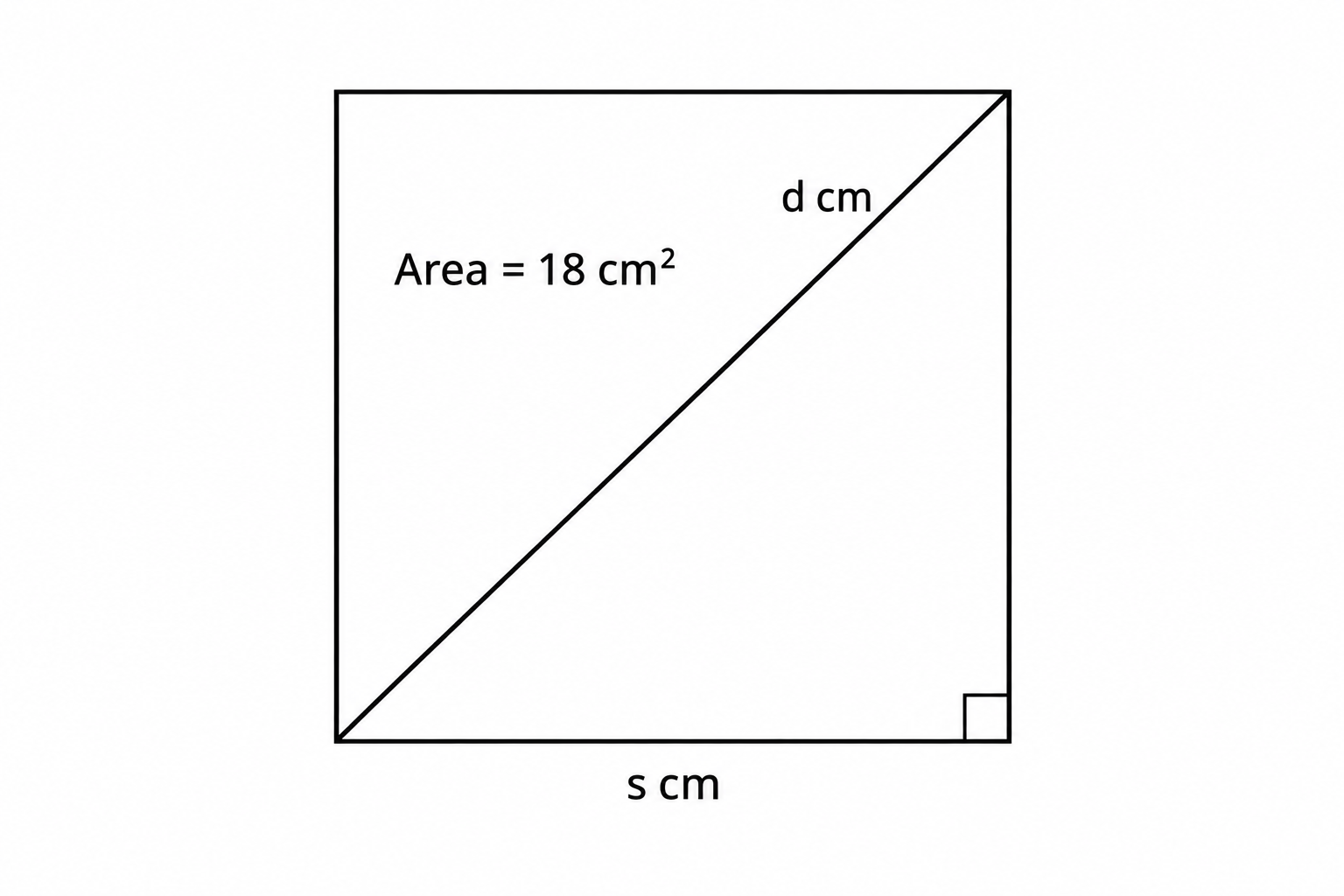
The diagram shows a square with area 18 cm², side length s cm and diagonal length d cm. Which statement correctly classifies s and d?
Q10.
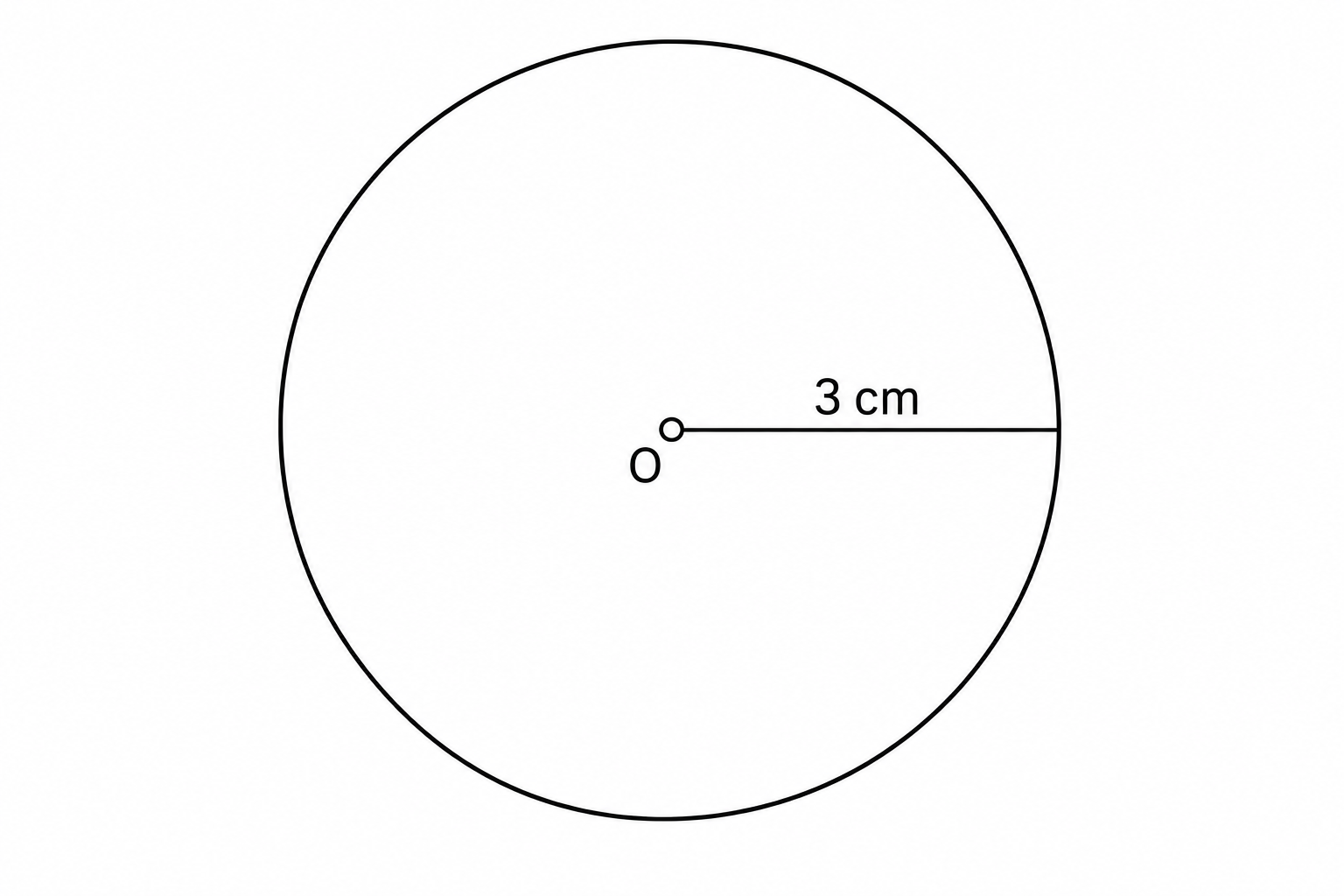
The circle has the radius shown. Let r, C and A be the numerical values of its radius in centimetres, circumference in centimetres and area in square centimetres. Use C = 2π r and A = π r², with π exact. Which expression has a rational value?
What this assessment covers
Concepts Tested
- Rational Numbers
- Understand the difference between rational and irrational numbers.
Question Mix
- Hard questions included
Skills you build
- Apply
Related assessments
More practice
Other assessments in this subject
