

MATHEMATICS - PARALLEL LINES AND TRANSVERSALS
Parallel Lines Worksheet
- Focuses on understanding angles formed by parallel lines and transversals
- Covers key properties of vertically opposite and adjacent angles
- Includes questions on identifying and calculating angle measures
- Easy difficulty
Start the 10-question quiz
Free, no sign-up needed. Your score shows instantly.
Here are the first 3 questions. Click “View all questions” to see the complete assessment.
Q1.
Q2.
Two straight lines intersect. Which statement about vertically opposite angles is correct?
Q3.
A transversal crosses two parallel lines. Two interior angles lie on opposite sides of the transversal. What are these angles called?
Q4.
What is the sum of the co-interior angles formed when a transversal crosses two parallel lines?
Q5.
Two adjacent angles have outer arms that form a straight line. Which property describes these angles?
Q6.
Parallel lines ell and m are crossed by transversal t. One angle is 74^(\)circ. What is the size of the angle in the corresponding position?
Q7.
Which observation can be used to recognise that two lines crossed by a transversal are parallel?
Q8.
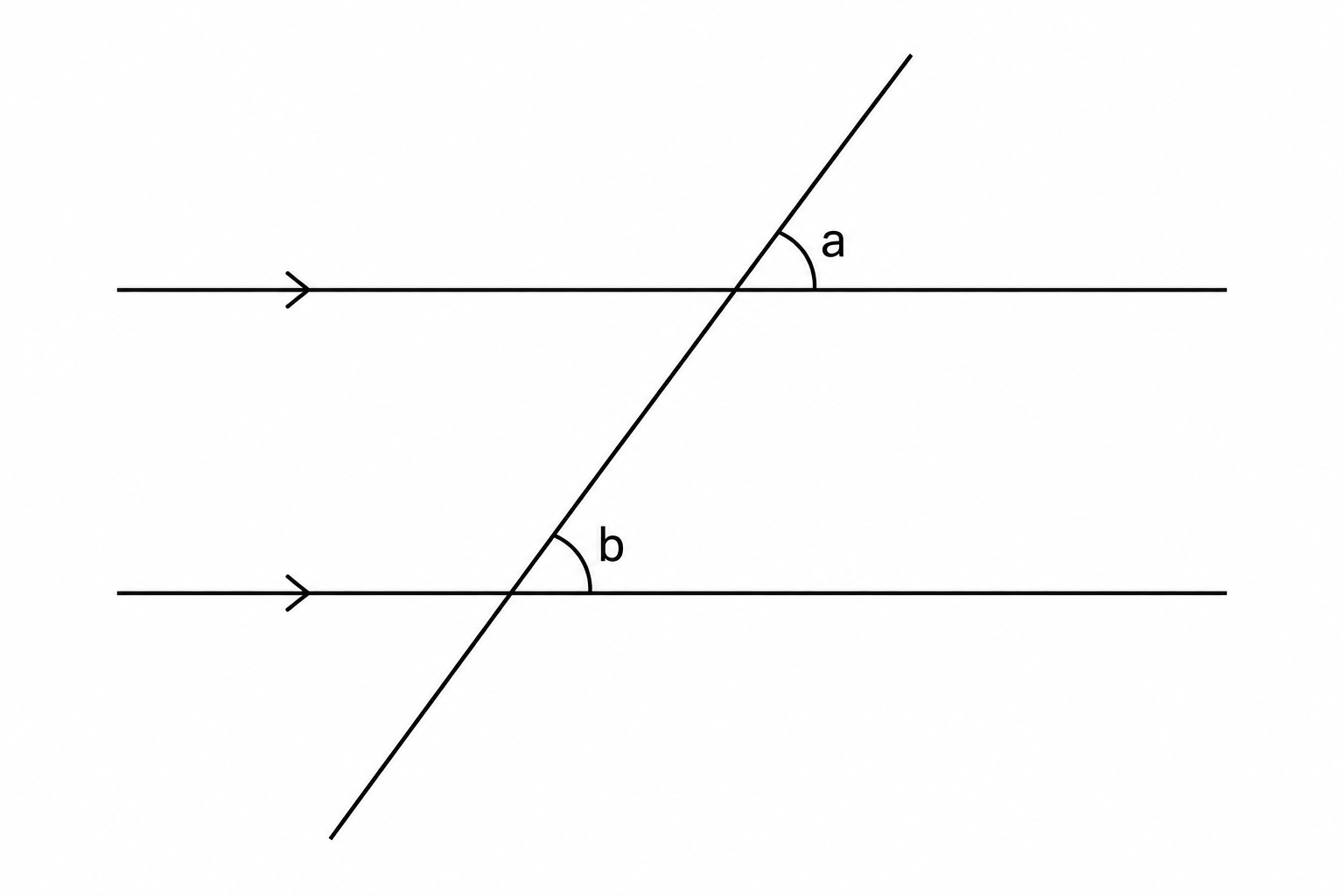
The two horizontal lines in the diagram are parallel. Which term describes ∠ a and ∠ b?
Q9.
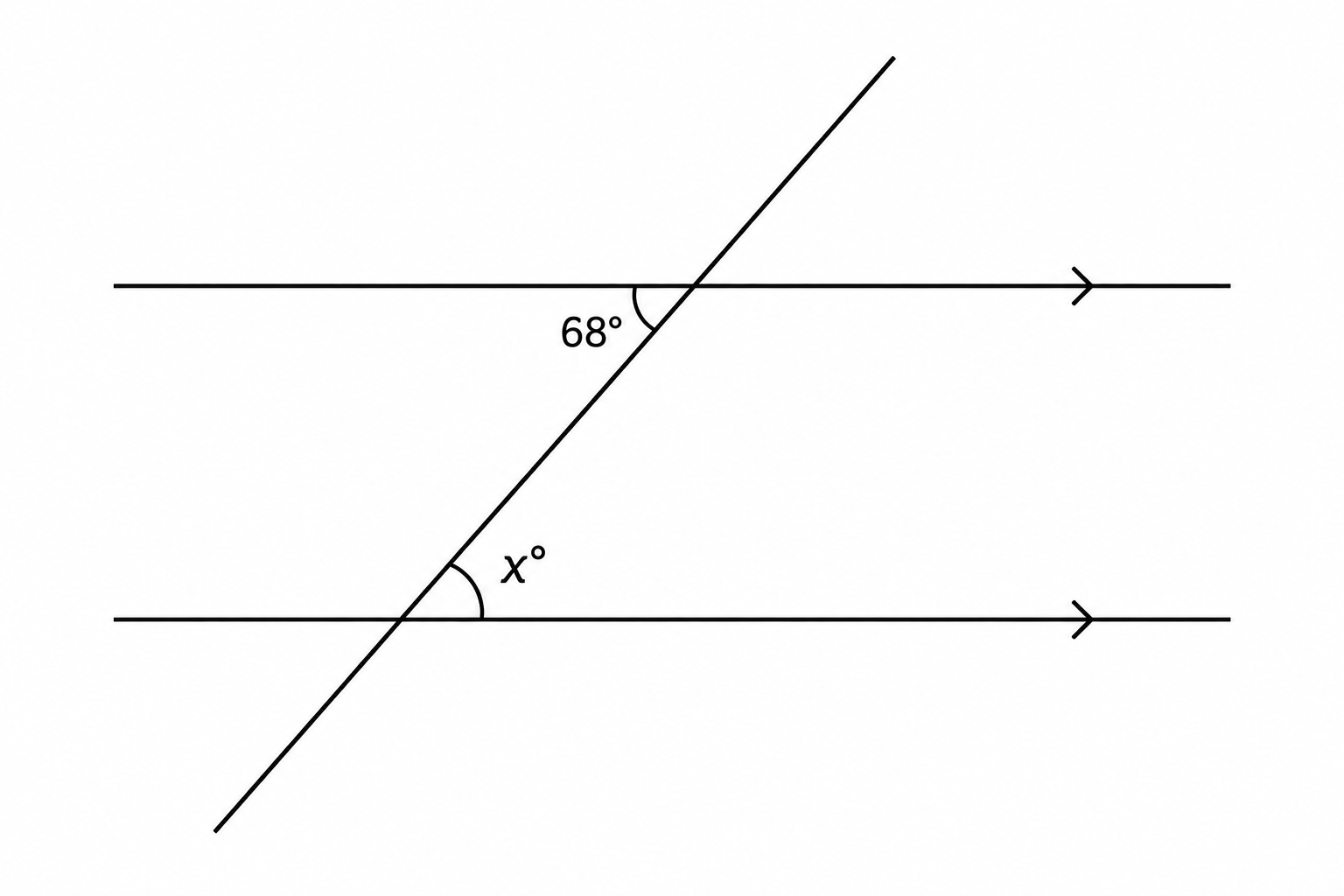
The horizontal lines are parallel. What is the value of x?
Q10.
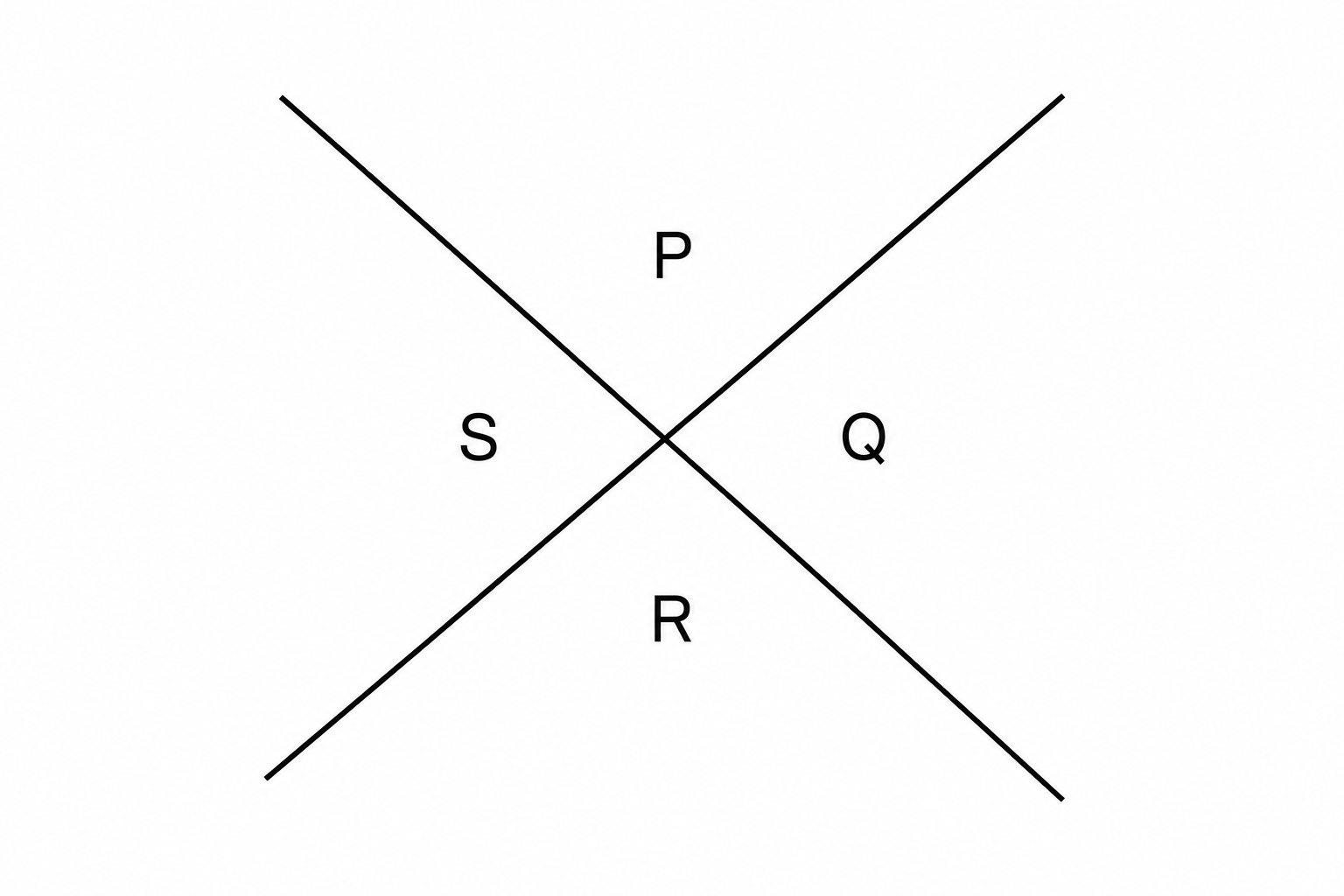
Which pair in the diagram represents vertically opposite angles?
What this assessment covers
Concepts tested
- Angles formed by a transversal crossing parallel lines
- Properties of vertically opposite angles
- Sum of co-interior angles
- Identification of corresponding angles
- Properties of adjacent angles
Question Mix
- Easy questions included
Skills you build
- Identify corresponding and alternate angles
- Apply angle properties to find unknown angles
- Recognize parallel lines using angle relationships
- Calculate angle measures using given properties
- Understand and use geometrical terminology
Related assessments
More practice
Other assessments in this subject
