ECONOMICS - BUDGETING BASICS

Budgeting Basics Worksheet

  • 10 questions
  • implications of PED for decision-making by consumers, workers, producers/firms and government
  • Difficulty: Easy
  • Board: CAIE
  • Attempt online on the examination portal

Here are the first 3 questions. Click “View all questions” to see the complete assessment.

Q1.

A consumer knows that the demand for a product is price elastic. What is the consumer likely to do when its price rises?

  1. A) Ignore the prices of all substitute products
  2. B) Reduce purchases considerably or switch to a substitute
  3. C) Buy considerably more of the product
  4. D) Continue buying exactly the same quantity

Q2.

The demand for a basic necessity is price inelastic. What may happen to a consumer's budget if the price of this necessity rises?

  1. A) The consumer will receive a higher income automatically
  2. B) A smaller share of the budget must be spent on it
  3. C) A larger share of the budget may be spent on it because purchases change little
  4. D) Spending on it will always fall to zero

Q3.

A firm faces price-elastic demand for its product. What is the usual effect on its total revenue if it lowers the price?

  1. A) Total revenue becomes zero
  2. B) Total revenue increases
  3. C) Total revenue decreases
  4. D) Total revenue must remain unchanged

Q4.

A producer faces price-inelastic demand. Which pricing decision is normally associated with an increase in total revenue?

  1. A) Raising the price
  2. B) Keeping the product off the market permanently
  3. C) Giving every product away
  4. D) Reducing the price

Q5.

A government mainly wants to raise revenue from an indirect tax. On which type of product is such a tax generally more suitable?

  1. A) A product supplied free of charge
  2. B) A product with price-inelastic demand
  3. C) A product that no consumer wants
  4. D) A product with perfectly price-elastic demand

Q6.

A government uses a tax to reduce consumption of a product. When is the resulting price rise likely to cause a relatively large fall in quantity demanded?

  1. A) When demand does not respond to price
  2. B) When the product has no price
  3. C) When demand is price elastic
  4. D) When demand is price inelastic

Q7.

A government subsidises a product so that its price falls. For which product is consumption likely to rise by the larger percentage?

  1. A) A product whose price does not change
  2. B) A product with price-elastic demand
  3. C) A product with price-inelastic demand
  4. D) A product that consumers cannot purchase

Q8.

A firm's product has many close substitutes. Which implication should the firm remember when deciding whether to raise its price?

  1. A) The government must pay the firm's higher price
  2. B) Consumers must buy more from the firm
  3. C) Consumers may switch to substitutes, causing sales to fall considerably
  4. D) The number of substitutes will immediately become zero

Q9.

Workers at the firm shown are considering a wage claim that could increase production costs and the product's price. Based on the displayed PED, which risk should the workers remember?
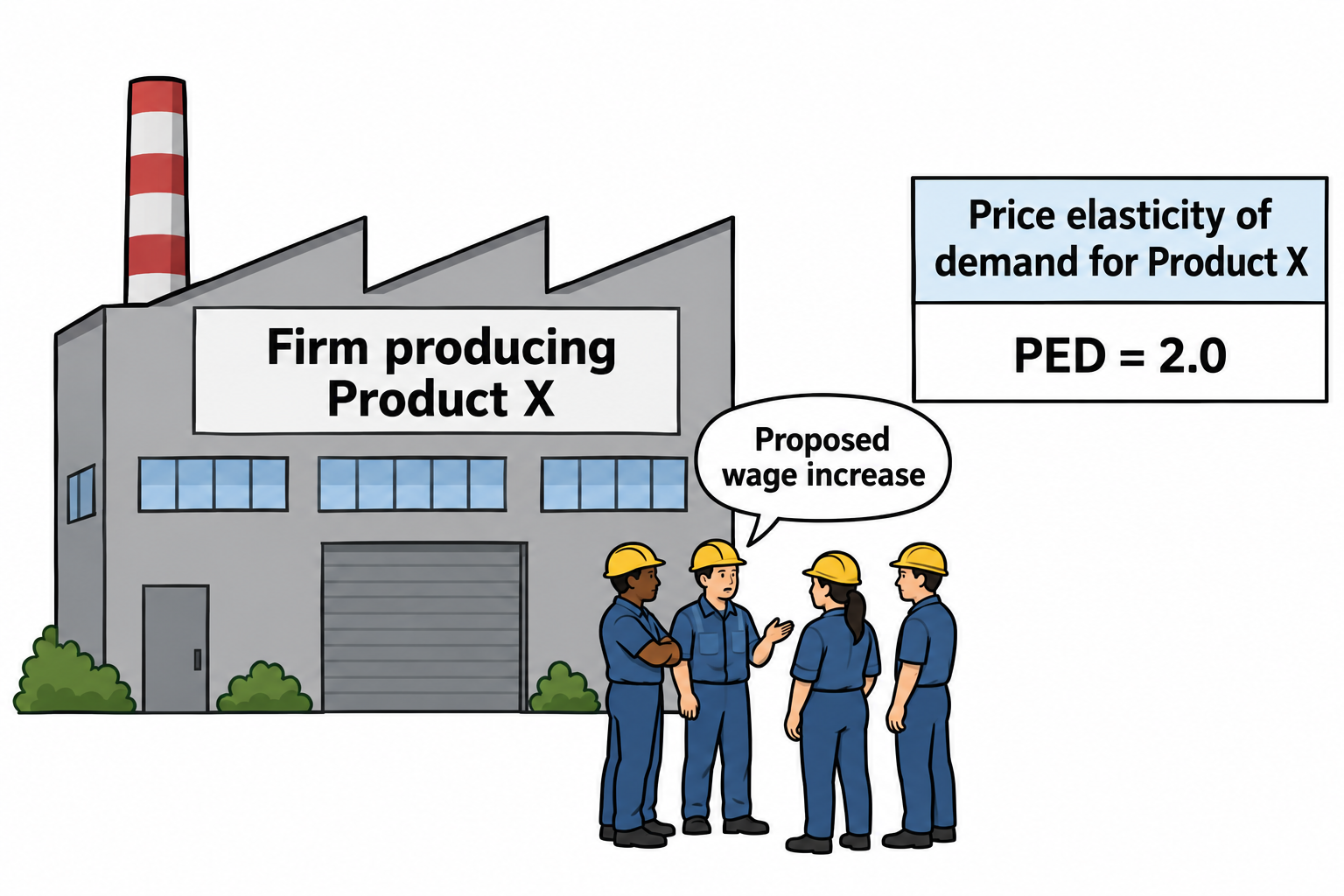
Diagram for question 9: Workers at the firm shown are considering a wage claim that could increase production costs and the…
  1. A) The wage claim will make demand perfectly inelastic
  2. B) Sales will rise considerably because the price is higher
  3. C) Sales may fall considerably, reducing the firm's demand for workers
  4. D) Sales must remain unchanged at every price

Q10.

The government wants to place an indirect tax on one of the two markets shown. Its aim is to raise revenue while causing the smaller fall in sales. Which decision is most suitable?
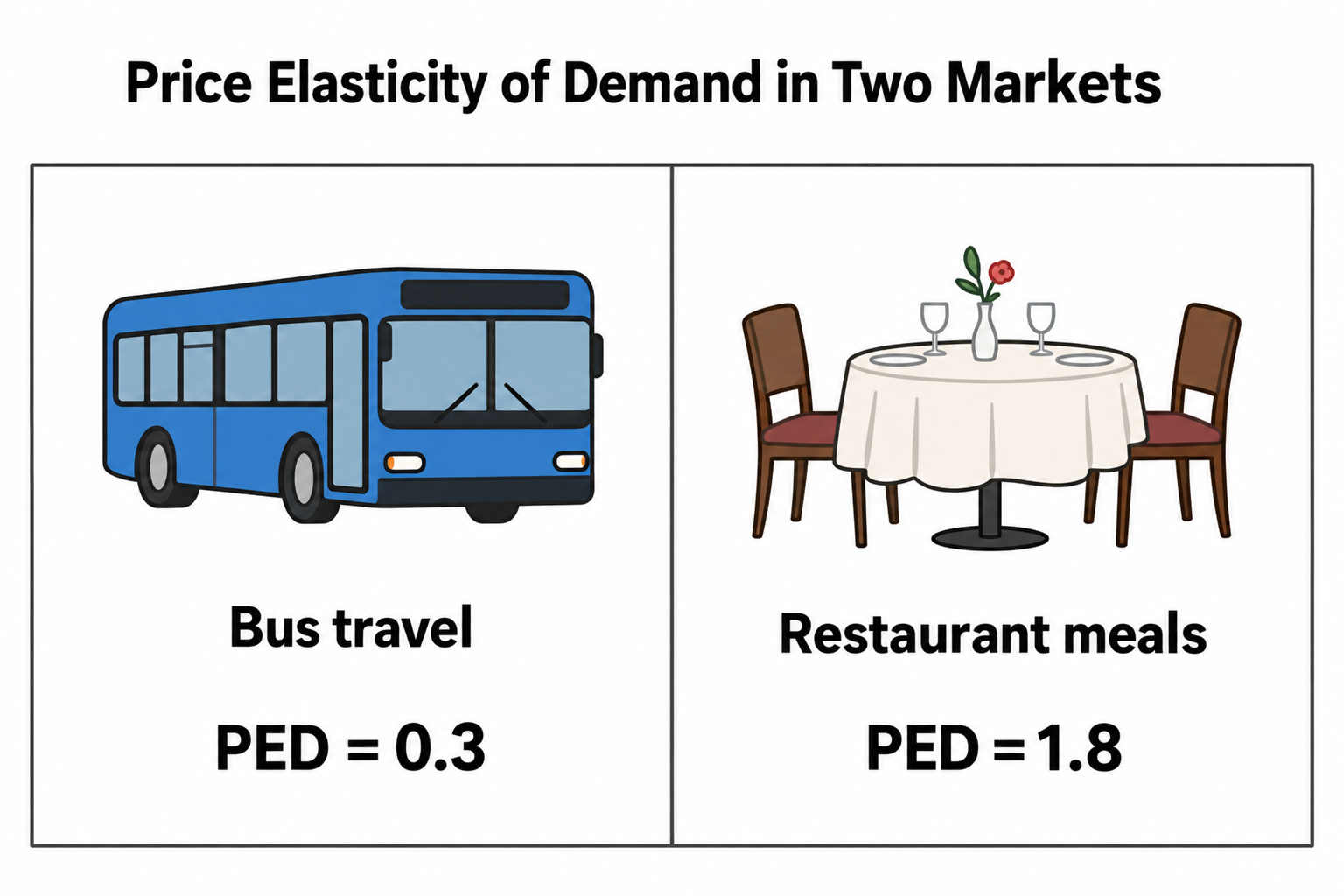
Diagram for question 10: The government wants to place an indirect tax on one of the two markets shown. Its aim is to raise revenue…
  1. A) Tax bus travel because its demand has the lower PED
  2. B) Tax neither market because PED cannot affect tax decisions
  3. C) Tax restaurant meals because consumers respond more strongly to price
  4. D) Tax restaurant meals because their demand has the higher PED

What this assessment covers

Concepts Tested

  • budgeting basics
  • implications of PED for decision-making by consumers, workers, producers/firms and government

Question Mix

  • Easy questions included

Skills you build

  • Remember