Q1 Question
Points: 1
Choose the correct answer:
A consumer knows that the demand for a product is price elastic. What is the consumer likely to do when its price rises?
Showing question 1 of 10
Choose the correct answer:
A consumer knows that the demand for a product is price elastic. What is the consumer likely to do when its price rises?
Choose the correct answer:
The demand for a basic necessity is price inelastic. What may happen to a consumer's budget if the price of this necessity rises?
Choose the correct answer:
A firm faces price-elastic demand for its product. What is the usual effect on its total revenue if it lowers the price?
Choose the correct answer:
A producer faces price-inelastic demand. Which pricing decision is normally associated with an increase in total revenue?
Choose the correct answer:
A government mainly wants to raise revenue from an indirect tax. On which type of product is such a tax generally more suitable?
Choose the correct answer:
A government uses a tax to reduce consumption of a product. When is the resulting price rise likely to cause a relatively large fall in quantity demanded?
Choose the correct answer:
A government subsidises a product so that its price falls. For which product is consumption likely to rise by the larger percentage?
Choose the correct answer:
A firm's product has many close substitutes. Which implication should the firm remember when deciding whether to raise its price?
Choose the correct answer:
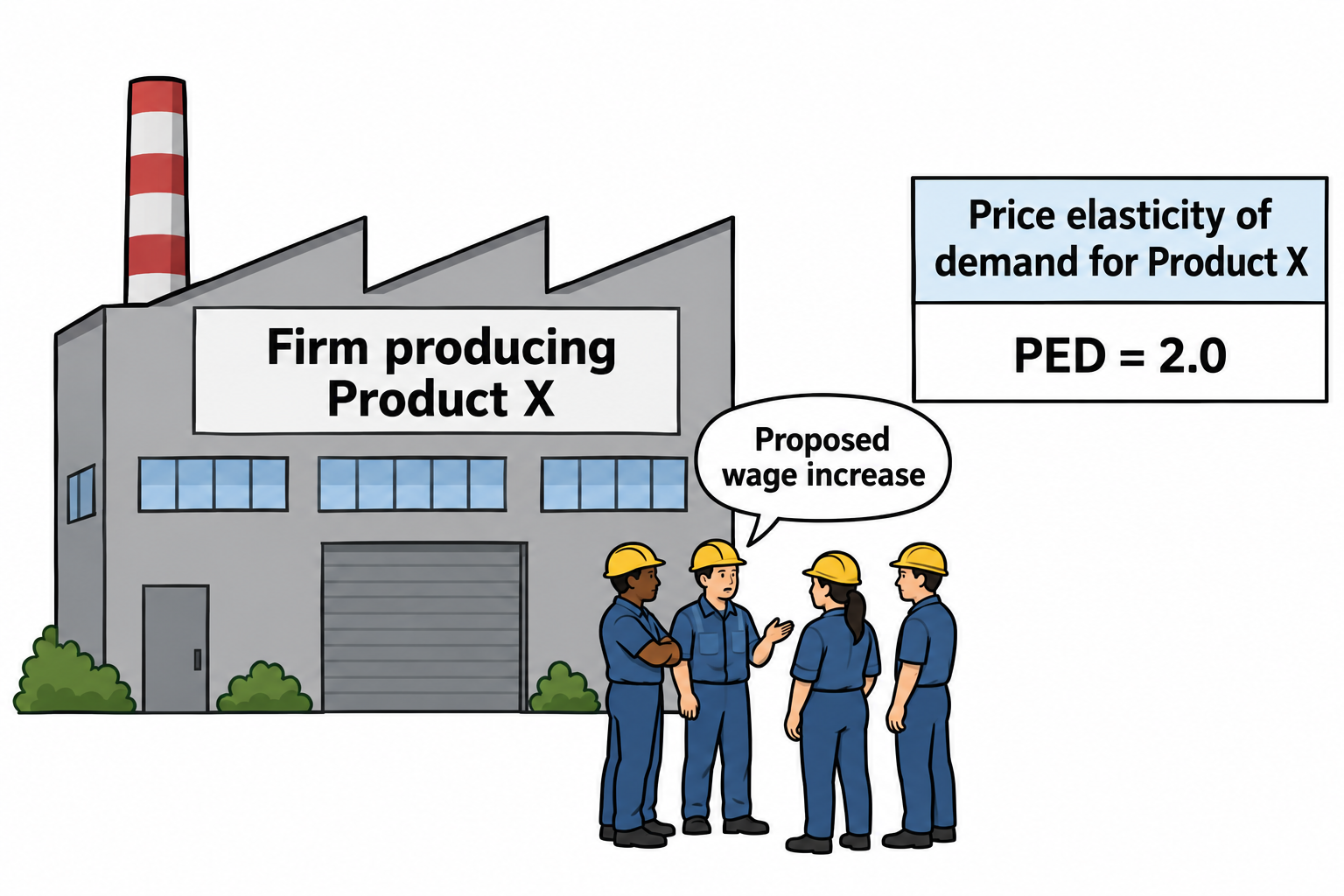
Workers at the firm shown are considering a wage claim that could increase production costs and the product's price. Based on the displayed PED, which risk should the workers remember?
Choose the correct answer:
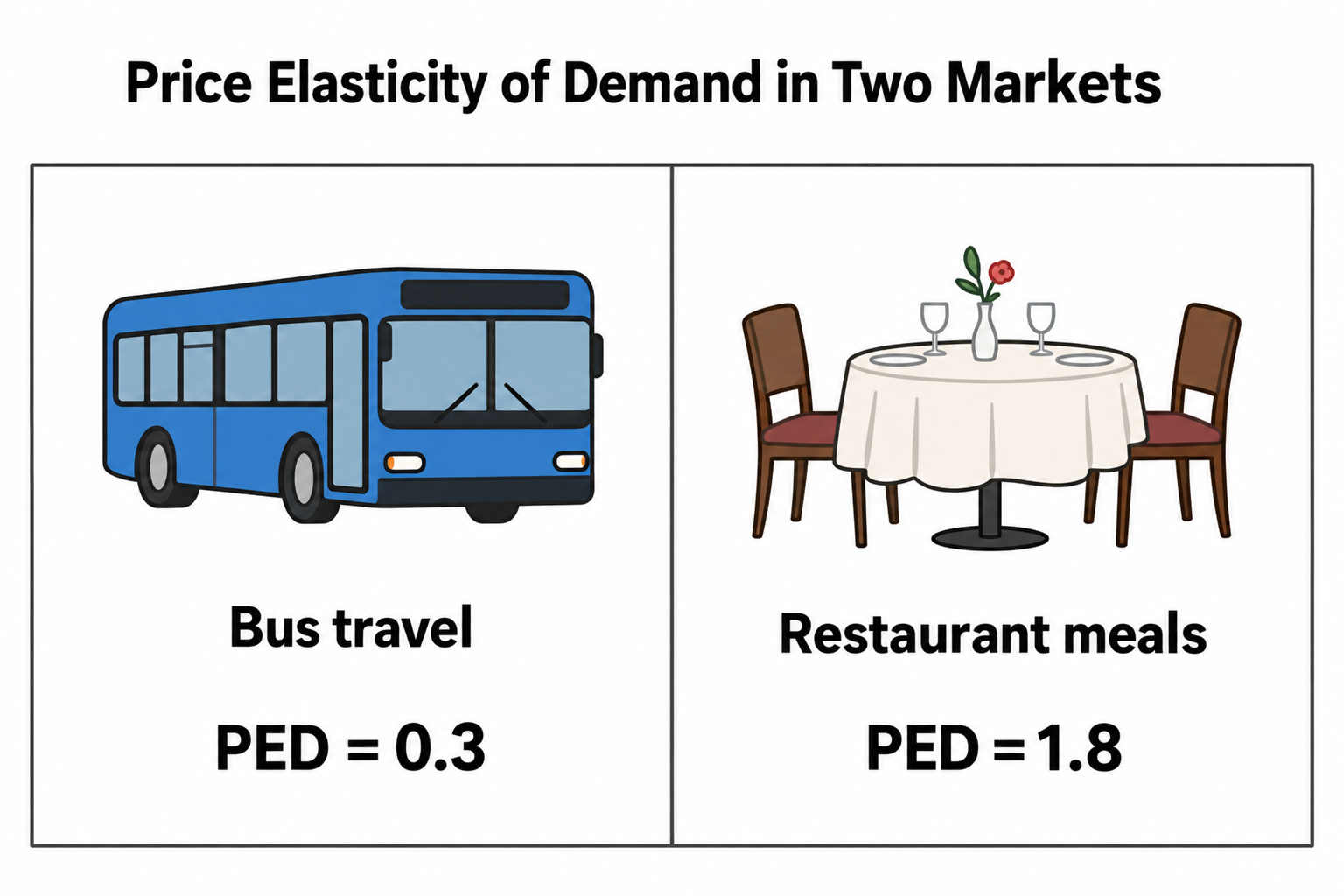
The government wants to place an indirect tax on one of the two markets shown. Its aim is to raise revenue while causing the smaller fall in sales. Which decision is most suitable?