

EARTH & ENVIRONMENTAL SCIENCE - HUMAN IMPACT
Ecological Footprint Quiz
- 10 questions
- Difficulty: Hard
- Board: USCC
- Attempt online on the examination portal
Here are the first 3 questions. Click “View all questions” to see the complete assessment.
Q1.
Q2.
Cedar Town currently has 8,000 residents who each use 90 liters of water per day. Its population is expected to reach 9,200 while per-person use falls to 81 liters per day. Pine Town currently has 6,000 residents who each use 110 liters per day. Its population is expected to reach 6,300 while per-person use falls to 99 liters per day. Which conclusion is supported by the data?
Q3.
A school serves 300 beef meals, 200 chicken meals, and 100 bean meals each week. Producing one beef meal releases 6.0 kilograms of greenhouse gases, one chicken meal releases 2.5 kilograms, and one bean meal releases 1.0 kilogram. Which weekly menu change would reduce emissions the most while serving the same number of meals?
Q4.
Three types of shirts have different freshwater footprints and useful lives. A conventional cotton shirt requires 2,700 liters of water and lasts 60 wears. A recycled-fiber shirt requires 1,000 liters and lasts 40 wears. A low-cost shirt requires 800 liters and lasts 10 wears. A student needs shirts for a total of 120 wears. Which purchasing plan uses the least manufacturing water?
Q5.
A neighborhood wants to replace traditional lawns. Native plant yards use 8,000 liters of irrigation water per year and release 0.5 kilogram of fertilizer into runoff. Traditional lawns use 30,000 liters and release 3 kilograms. Paved yards require no irrigation but greatly increase stormwater runoff. Artificial turf uses 1,000 liters for cleaning but releases plastic particles. Which plan best reduces freshwater use and avoids shifting the ecological impact to another part of the environment?
Q6.
A community center used 6,000 kilowatt-hours of electricity each year for lighting. It replaced its lights with models that use 60% as much electricity per hour. Because the lights were cheaper to operate, the center increased lighting time by 25%. How did this change affect the center's annual electricity footprint?
Q7.
A town must provide 10,000 drink servings at public events. A standard single-use bottle requires 1 resource unit to manufacture and creates one discarded bottle. A recycled single-use bottle requires 0.6 resource unit and is also discarded after one serving. A reusable bottle requires 8 resource units to manufacture, lasts 50 servings, and is discarded after its final use. Which choice minimizes both manufacturing resource use and the number of discarded bottles?
Q8.
Island X has 20,000 residents, an ecological footprint of 5 global hectares per person, and 60,000 global hectares of available biocapacity. Island Y has 35,000 residents, a footprint of 2 global hectares per person, and 80,000 global hectares of biocapacity. Which proposal is best supported by these data?
Q9.
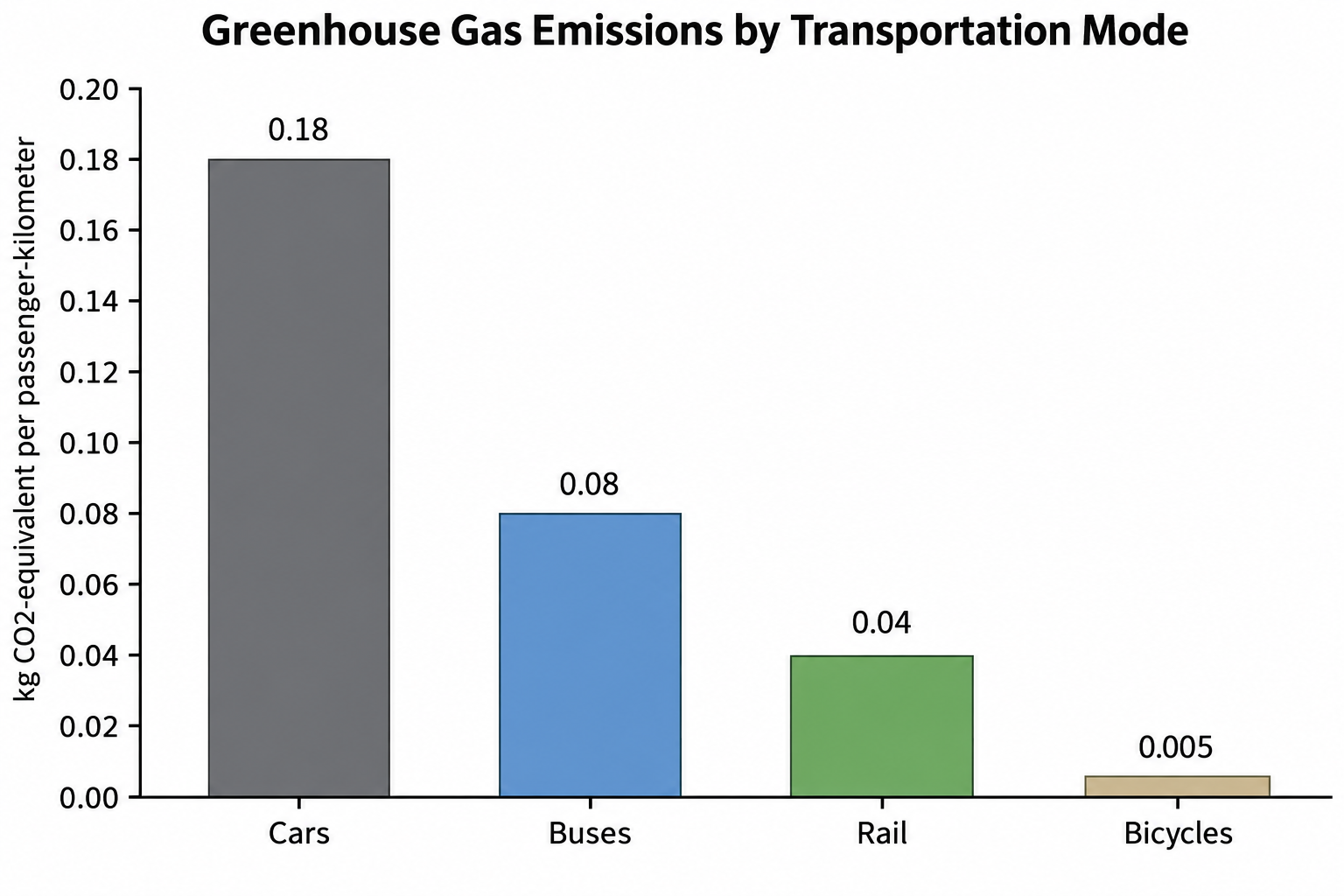
The city can shift 100,000 passenger-kilometers of daily travel from one transportation mode to another. Based on the figure, which shift would produce the greatest decrease in daily greenhouse gas emissions?
Q10.
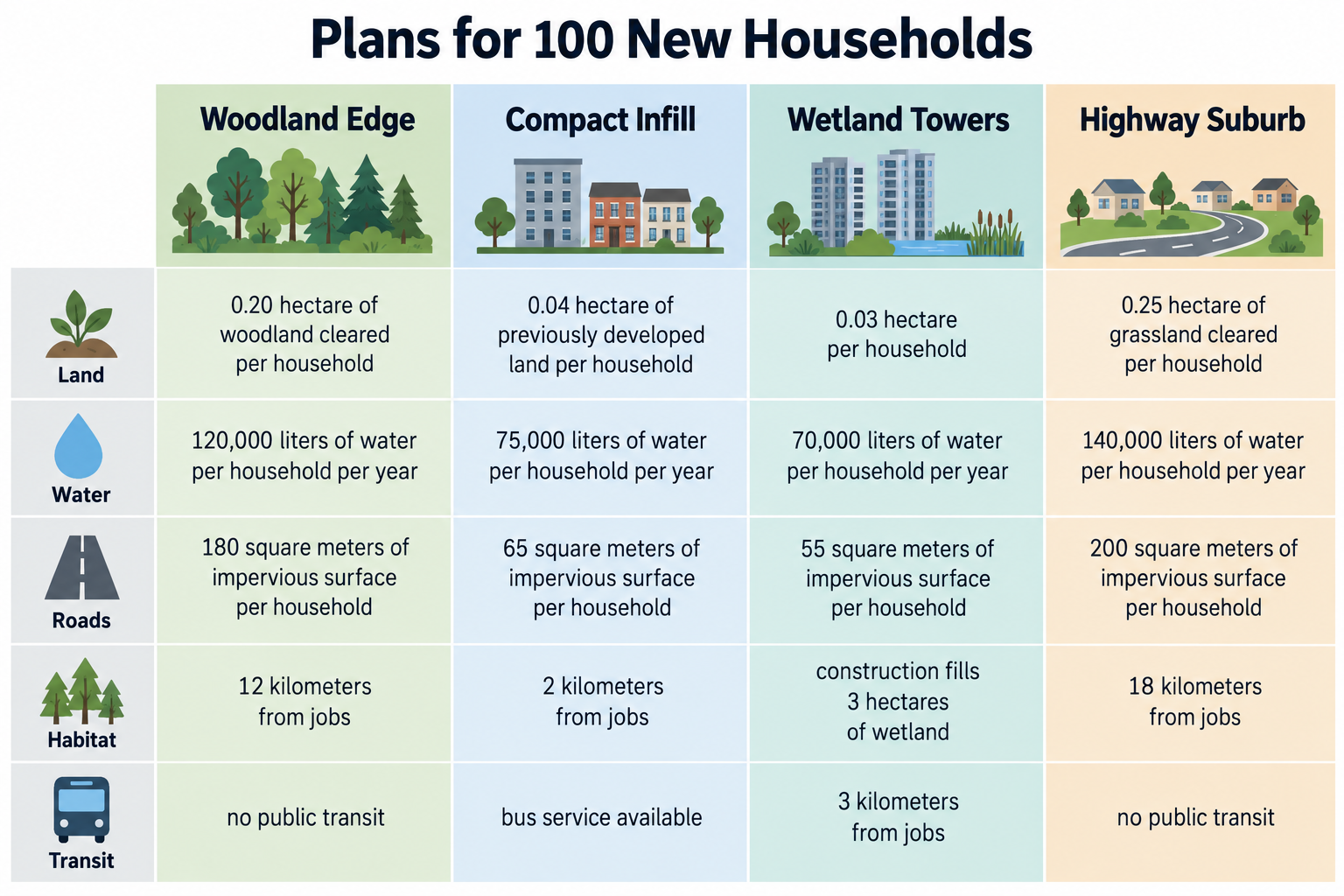
A city must choose a plan that provides housing for 100 new households. Based on the figure, which plan best limits pressure on land, freshwater, and nearby ecosystems?
What this assessment covers
Concepts Tested
- Human Impact
Question Mix
- Hard questions included
Skills you build
- Apply
Related assessments
More practice
Other assessments in this subject
