

CHEMISTRY - MOLECULAR SHAPES

Molecular Geometry Practice Problems

  • 10 questions
  • Difficulty: Medium
  • Board: CAIE
  • Attempt online on the examination portal
Start the 10-question quiz Free, no sign-up needed. Your score shows instantly.

Here are the first 3 questions. Click “View all questions” to see the complete assessment.

Q1.

Which statement explains why a gaseous BF₃ molecule is trigonal planar?

  1. A) The three bonds surround boron at right angles because boron has no lone pairs.
  2. B) Three bonding pairs and one lone pair surround boron, with the lone pair above the plane.
  3. C) Three bonding regions surround boron and arrange themselves as far apart as possible in one plane.
  4. D) Each fluorine atom has three lone pairs, which force the boron atom out of the plane.

Q2.

The H–N–H bond angle in NH₃ is smaller than the H–C–H bond angle in CH₄. Which explanation is correct?

  1. A) Bonding pairs repel more strongly than lone pairs, so the bonds in CH₄ spread further apart.
  2. B) Nitrogen has fewer electron regions than carbon, so its bonds are closer together.
  3. C) The three N–H bonds must lie in one plane, reducing their bond angles.
  4. D) The lone pair on nitrogen repels bonding pairs more strongly than bonding pairs repel one another.

Q3.

A water molecule has four electron pairs around its oxygen atom. Why is its molecular shape described as bent rather than tetrahedral?

  1. A) Only the positions of atoms are used to describe molecular shape, and two electron pairs on oxygen are lone pairs.
  2. B) The two lone pairs on oxygen occupy the same region, leaving three electron regions.
  3. C) The bonding pairs do not repel the lone pairs, so only two electron regions affect the shape.
  4. D) Oxygen forms a double bond to each hydrogen atom, producing a bent arrangement.

Q4.

Gaseous PCl₅ has a trigonal bipyramidal shape. One chlorine atom occupies an axial position. What angles does its P–Cl bond make with the other four P–Cl bonds?

  1. A) Four angles of 109.5°
  2. B) Three angles of 120° and one angle of 180°
  3. C) Three angles of 90° and one angle of 180°
  4. D) Two angles of 90° and two angles of 120°

Q5.

In an SF₆ molecule, how many other S–F bonds are at 90° to any one chosen S–F bond?

  1. A) Two
  2. B) Four
  3. C) Five
  4. D) Three

Q6.

The displayed formula of carbon dioxide is O=C=O. Why does electron-pair repulsion theory predict a linear molecule rather than a tetrahedral molecule?

  1. A) The oxygen atoms attract each other strongly enough to straighten the molecule.
  2. B) Carbon has two lone pairs that hold the oxygen atoms on opposite sides.
  3. C) Each double bond acts as one electron region, giving two regions around carbon.
  4. D) Double bonds do not contribute to repulsion around the central carbon atom.

Q7.

XeF₄ has four bonding pairs and two lone pairs around xenon. The six electron regions have an octahedral arrangement. Which statement correctly explains its molecular shape?

  1. A) The lone pairs occupy adjacent positions, leaving the four fluorine atoms in a tetrahedral arrangement.
  2. B) The lone pairs occupy adjacent positions, leaving the four fluorine atoms in a square plane.
  3. C) The lone pairs occupy opposite positions, leaving the four fluorine atoms in a trigonal pyramidal arrangement.
  4. D) The lone pairs occupy opposite positions, leaving the four fluorine atoms in a square plane.

Q8.

The diagram shows the bonding in an ammonium ion, NH₄⁺. It is not a drawing of its spatial shape. Which statement correctly describes the arrangement around nitrogen?
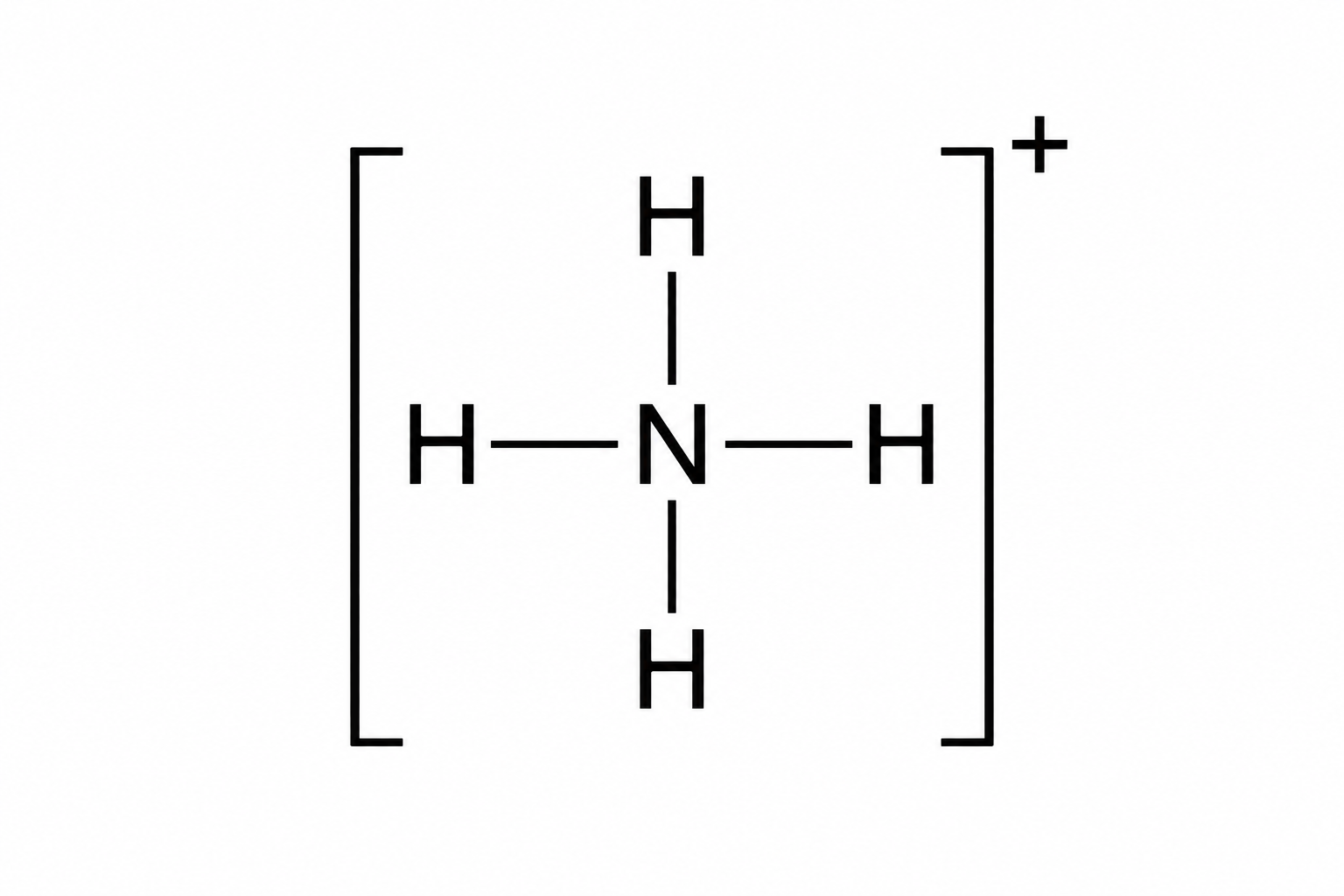
Diagram for question 8: The diagram shows the bonding in an ammonium ion, NH₄⁺. It is not a drawing of its spatial shape. Which…
  1. A) Bent, because only two of the four bonds determine the molecular shape.
  2. B) Square planar, because the four bonds are drawn at right angles.
  3. C) Trigonal pyramidal, because the positive charge represents a lone pair.
  4. D) Tetrahedral, because four bonding regions repel equally and nitrogen has no lone pair.

Q9.

The diagram shows the bonding in ethene. Which statement correctly describes angle θ and the positions of the atoms in an ethene molecule?
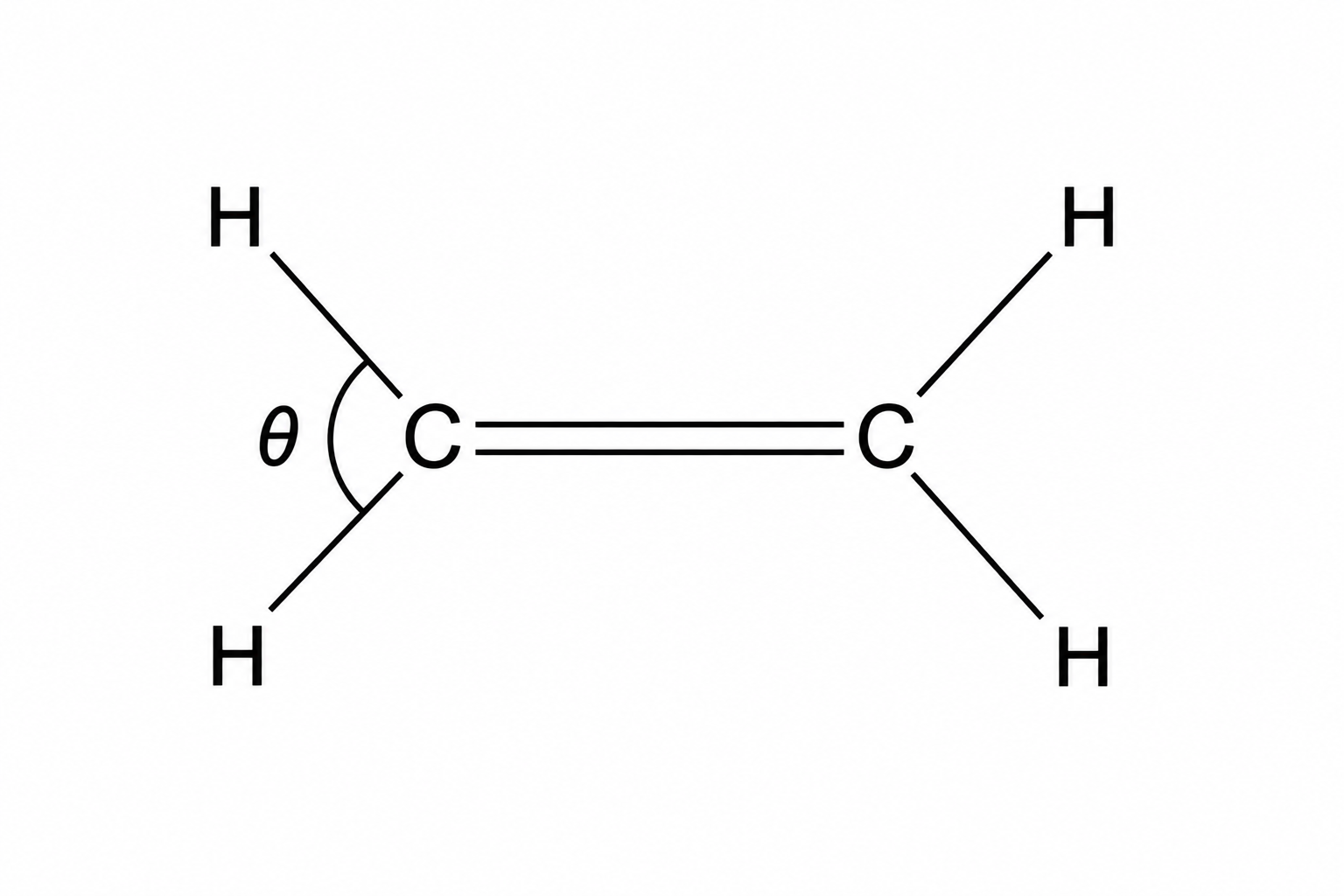
Diagram for question 9: The diagram shows the bonding in ethene. Which statement correctly describes angle θ and the positions of…
  1. A) θ is approximately 120°, and the hydrogen atoms lie alternately above and below the plane of the carbon atoms.
  2. B) θ is approximately 180°, and all six atoms lie on one straight line.
  3. C) θ is approximately 120°, and all six atoms lie in one plane.
  4. D) θ is approximately 109.5°, and all six atoms lie in one plane.

Q10.

The Lewis diagram shows the bonding pairs and lone pairs in SF₄. Which description of its electron-region arrangement and molecular shape is correct?
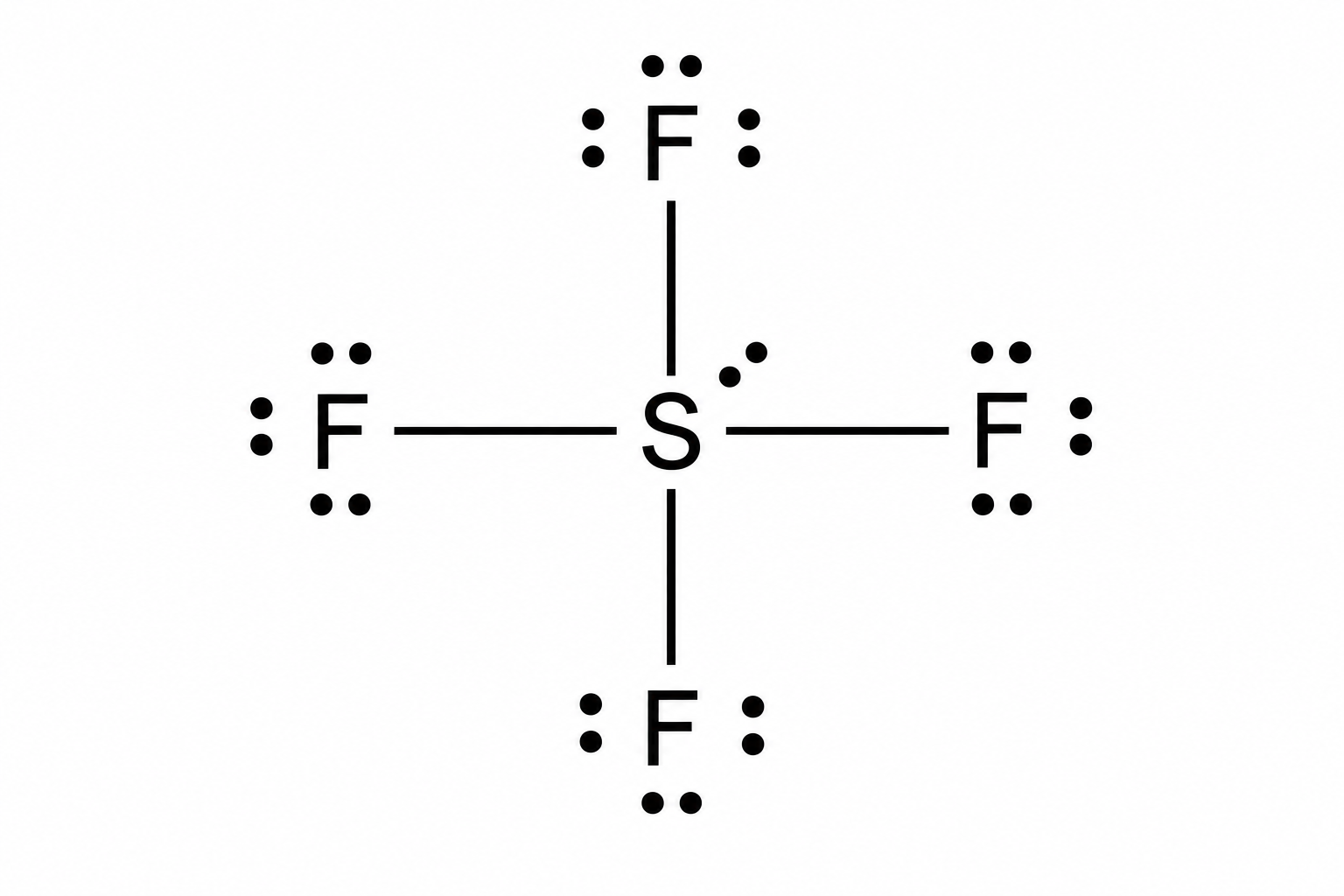
Diagram for question 10: The Lewis diagram shows the bonding pairs and lone pairs in SF₄. Which description of its electron-region…
  1. A) Trigonal bipyramidal electron-region arrangement and seesaw molecular shape
  2. B) Tetrahedral electron-region arrangement and tetrahedral molecular shape
  3. C) Trigonal bipyramidal electron-region arrangement and trigonal pyramidal molecular shape
  4. D) Octahedral electron-region arrangement and square planar molecular shape

What this assessment covers

Concepts Tested

  • Molecular Shapes

Question Mix

  • Medium questions included

Skills you build

  • Understand