Q1 Question
Points: 1
Choose the correct answer:
Which statement explains why a gaseous BF₃ molecule is trigonal planar?
Showing question 1 of 10
Choose the correct answer:
The H–N–H bond angle in NH₃ is smaller than the H–C–H bond angle in CH₄. Which explanation is correct?
Choose the correct answer:
A water molecule has four electron pairs around its oxygen atom. Why is its molecular shape described as bent rather than tetrahedral?
Choose the correct answer:
Gaseous PCl₅ has a trigonal bipyramidal shape. One chlorine atom occupies an axial position. What angles does its P–Cl bond make with the other four P–Cl bonds?
Choose the correct answer:
In an SF₆ molecule, how many other S–F bonds are at 90° to any one chosen S–F bond?
Choose the correct answer:
The displayed formula of carbon dioxide is O=C=O. Why does electron-pair repulsion theory predict a linear molecule rather than a tetrahedral molecule?
Choose the correct answer:
XeF₄ has four bonding pairs and two lone pairs around xenon. The six electron regions have an octahedral arrangement. Which statement correctly explains its molecular shape?
Choose the correct answer:
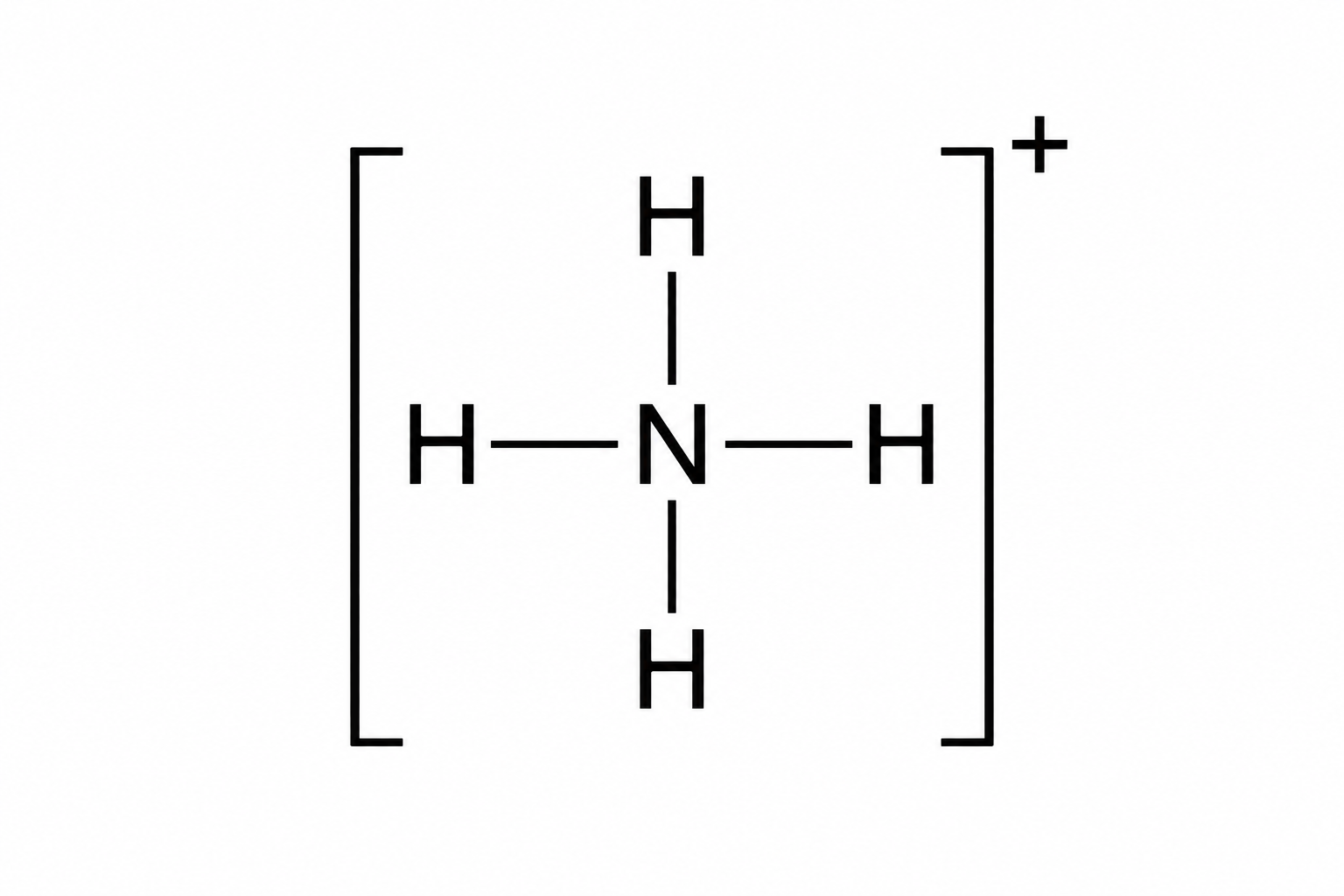
The diagram shows the bonding in an ammonium ion, NH₄⁺. It is not a drawing of its spatial shape. Which statement correctly describes the arrangement around nitrogen?
Choose the correct answer:
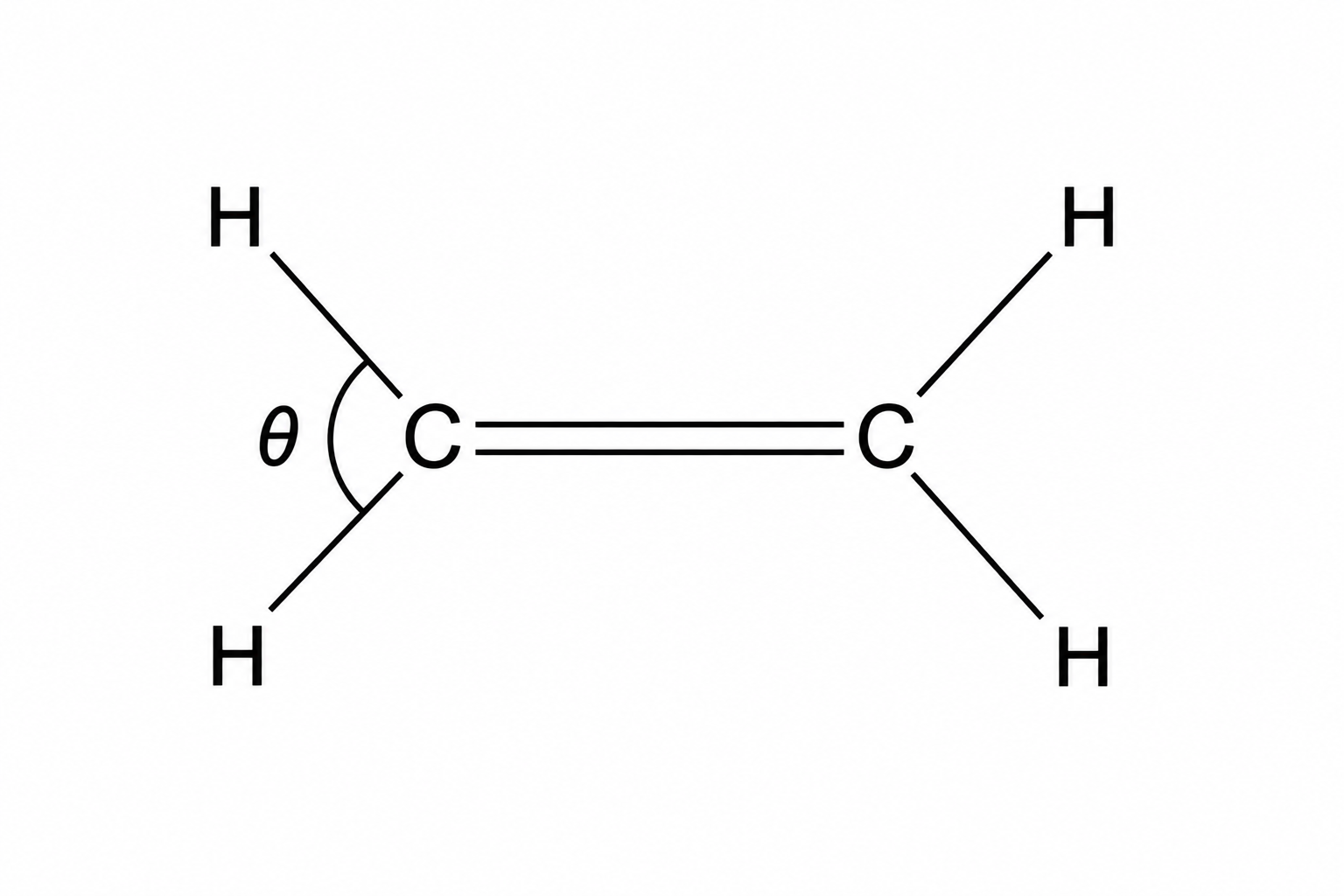
The diagram shows the bonding in ethene. Which statement correctly describes angle θ and the positions of the atoms in an ethene molecule?
Choose the correct answer:
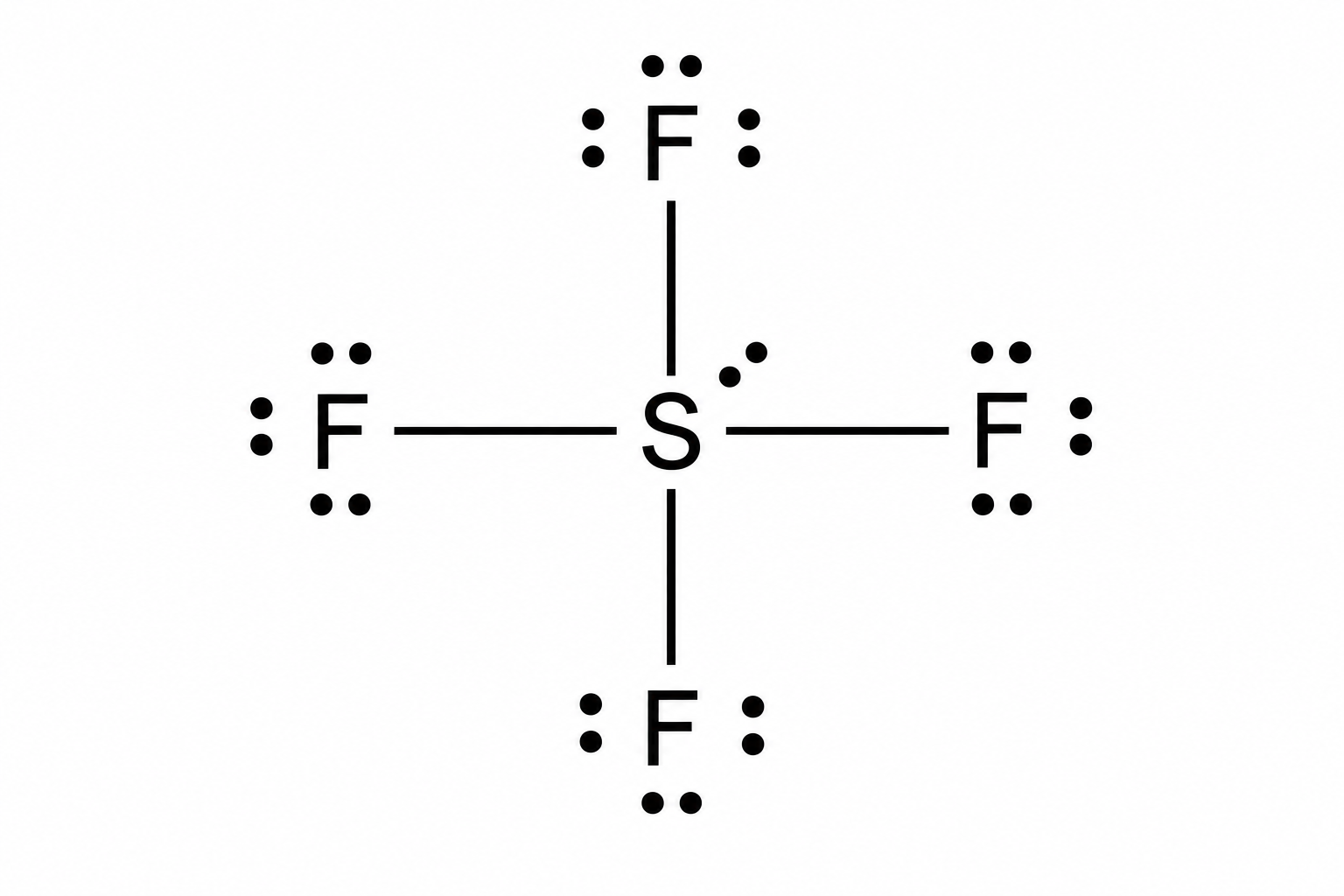
The Lewis diagram shows the bonding pairs and lone pairs in SF₄. Which description of its electron-region arrangement and molecular shape is correct?