

BUSINESS - 5.4 STATEMENT OF FINANCIAL POSITION
Balance Sheet Practice Questions
- Focuses on classifying assets and liabilities on a balance sheet
- Includes scenarios involving current and non-current classifications
- Challenges understanding of financial statement components
- Designed for Grade 9 students with advanced difficulty
Here are the first 3 questions. Click “View all questions” to see the complete assessment.
Q1.
Q2.
At the balance sheet date, a hotel has paid insurance covering the next six months. It has also received a deposit for a conference that will take place in two months. How should these items be classified?
Q3.
A business has a bank loan of $80,000. Under the repayment agreement, $20,000 must be repaid during the next accounting year and the remaining $60,000 is due three years later. How should the loan be shown on the balance sheet?
Q4.
A florist owns a delivery motorcycle, cut flowers ready for sale, cash in the bank and shop fittings. Which pair should both be classified as current assets?
Q5.
A vehicle repair business buys a diagnostic machine for use over five years. Payment to the supplier is due in 90 days. It also buys spare parts to use in customer repairs. Which classification is correct?
Q6.
A business replaces its bank overdraft with a new loan that is repayable in five years. Which change in classification should occur?
Q7.
A property company owns one house that it uses as its administrative office and three houses purchased for resale to customers. How should these properties be classified?
Q8.
At its year end, a manufacturer owes wages payable next week, tax payable in four months, a mortgage due in ten years and a supplier invoice due in 18 months. Which option places the liabilities in the correct groups?
Q9.
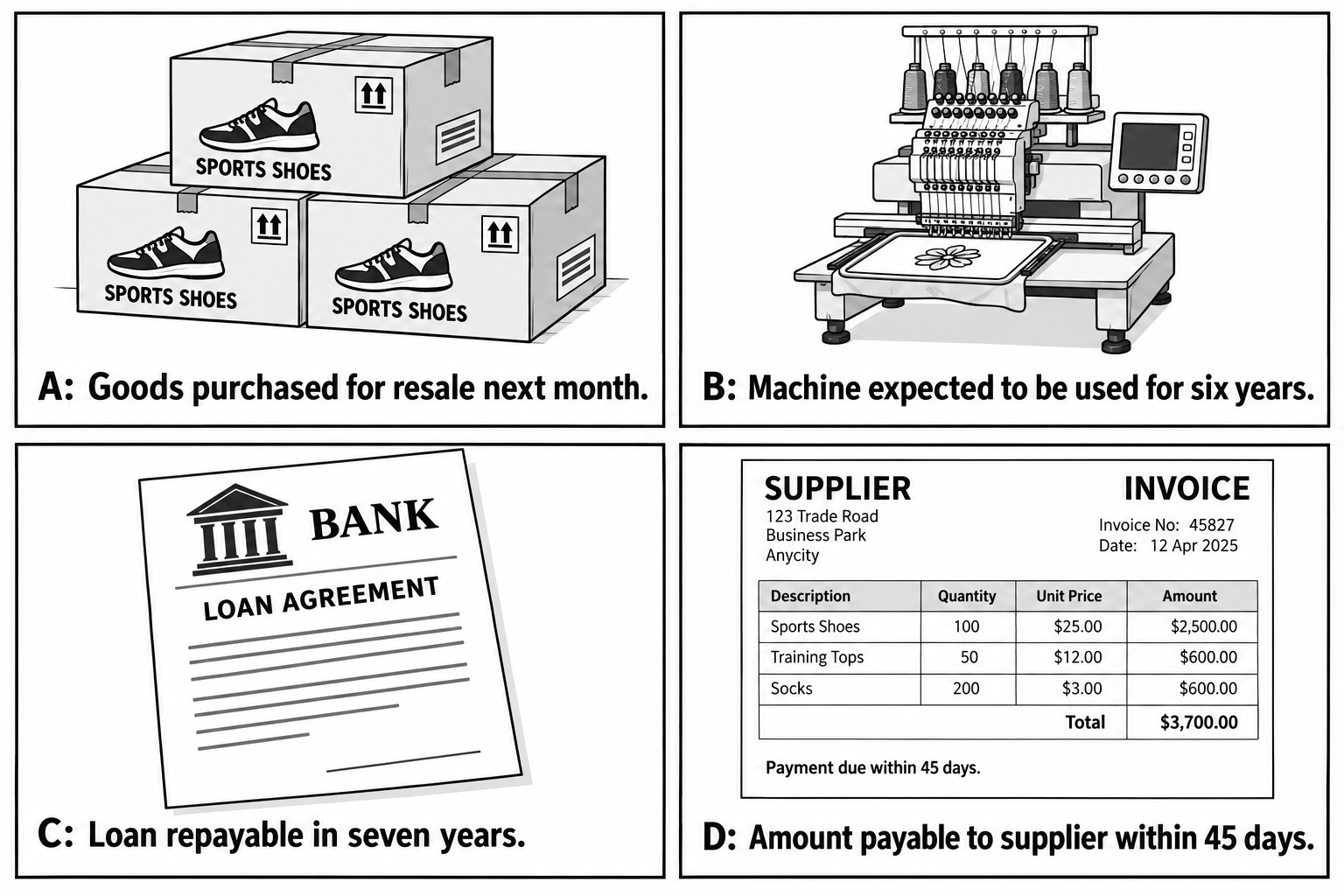
Study the labelled items in the figure. Which option correctly classifies items B and D?
Q10.
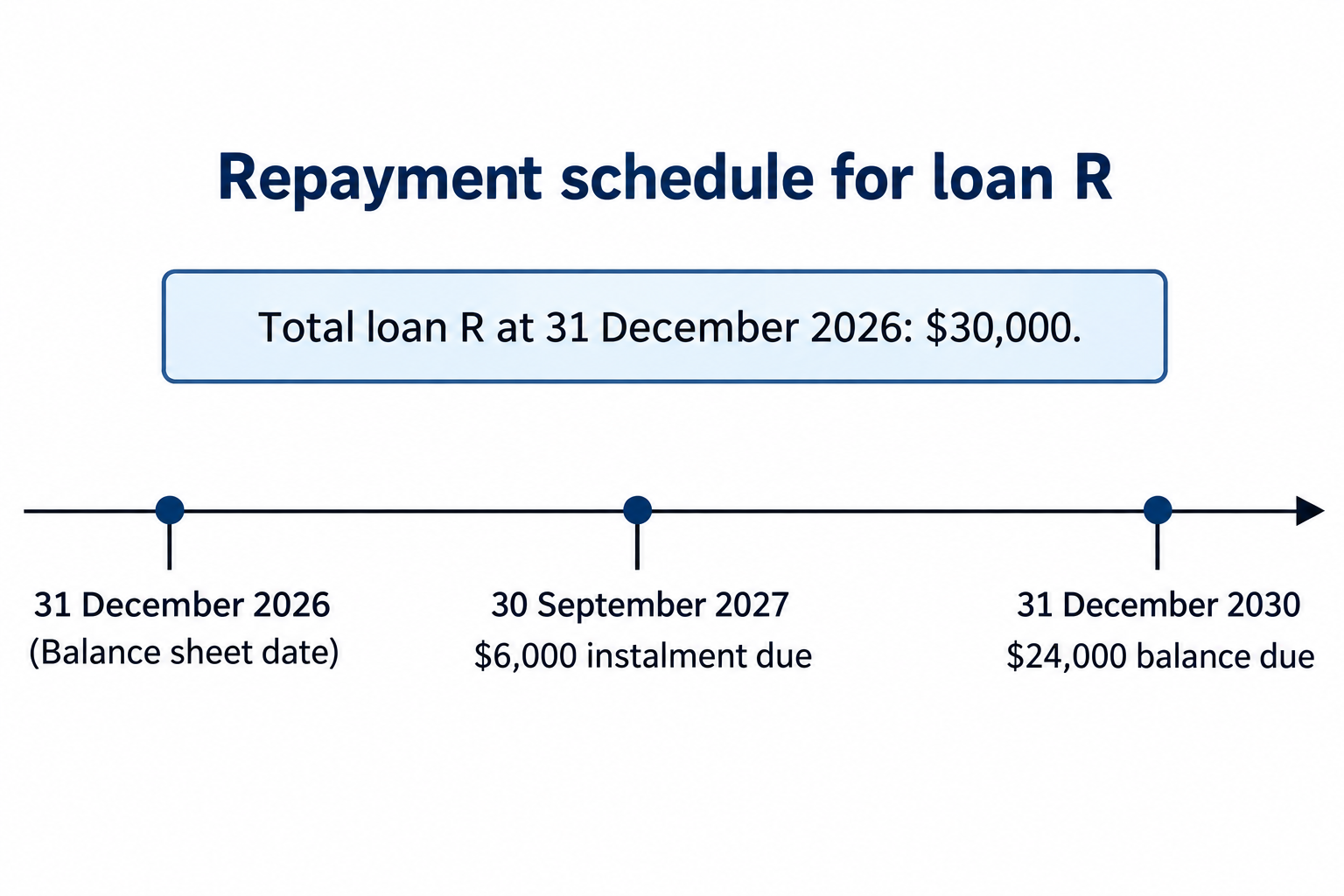
The figure shows the repayment schedule for loan R at the balance sheet date. How should loan R be classified?
What this assessment covers
Concepts tested
- Classification of current and non-current assets
- Classification of current and non-current liabilities
- Understanding of balance sheet structure
- Asset and liability management
- Financial statement interpretation
Question Mix
- Hard questions included
Skills you build
- Classifying financial items accurately
- Analyzing balance sheet scenarios
- Interpreting financial data
- Applying accounting principles
- Evaluating financial positions
Related assessments
More practice
Other assessments in this subject
.png)