

BUSINESS - 5.3.2 INCOME STATEMENTS
Income Statement Practice Questions
- Focuses on understanding and interpreting income statements
- Covers key concepts like gross profit and retained earnings
- Includes practical calculations using real-world business scenarios
- Designed for Grade 9 students with medium difficulty
Here are the first 3 questions. Click “View all questions” to see the complete assessment.
Q1.
Q2.
A wholesaler has revenue of $140,000 and cost of sales of $92,000. What is its gross profit?
Q3.
A business reports gross profit of $64,000 and operating expenses of $47,500. What profit should appear after these expenses are deducted?
Q4.
A retailer's revenue increased this year, but its gross profit decreased. Which explanation is most likely?
Q5.
A company earns a profit of $28,000 and pays $9,000 of this amount to shareholders as dividends. How much profit is retained in the business?
Q6.
Which sequence shows the main income statement items in a logical order?
Q7.
A bookkeeper deducts both cost of sales and office expenses from revenue and labels the result as gross profit. Why is this incorrect?
Q8.
A company reports profit of $36,000 but retains only $21,000. What most likely happened to the remaining $15,000?
Q9.
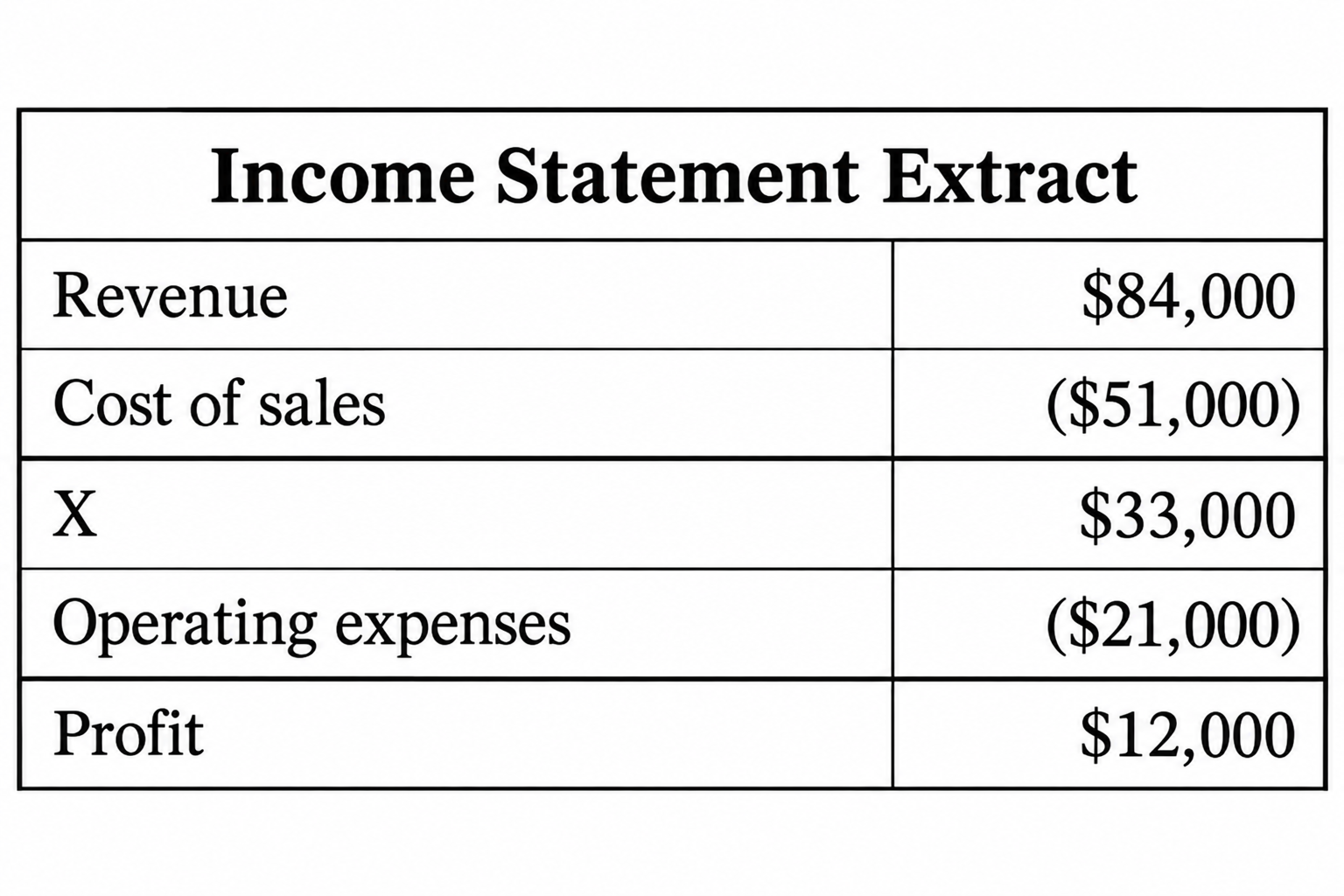
Study the income statement extract in the figure. What should replace the label X?
Q10.
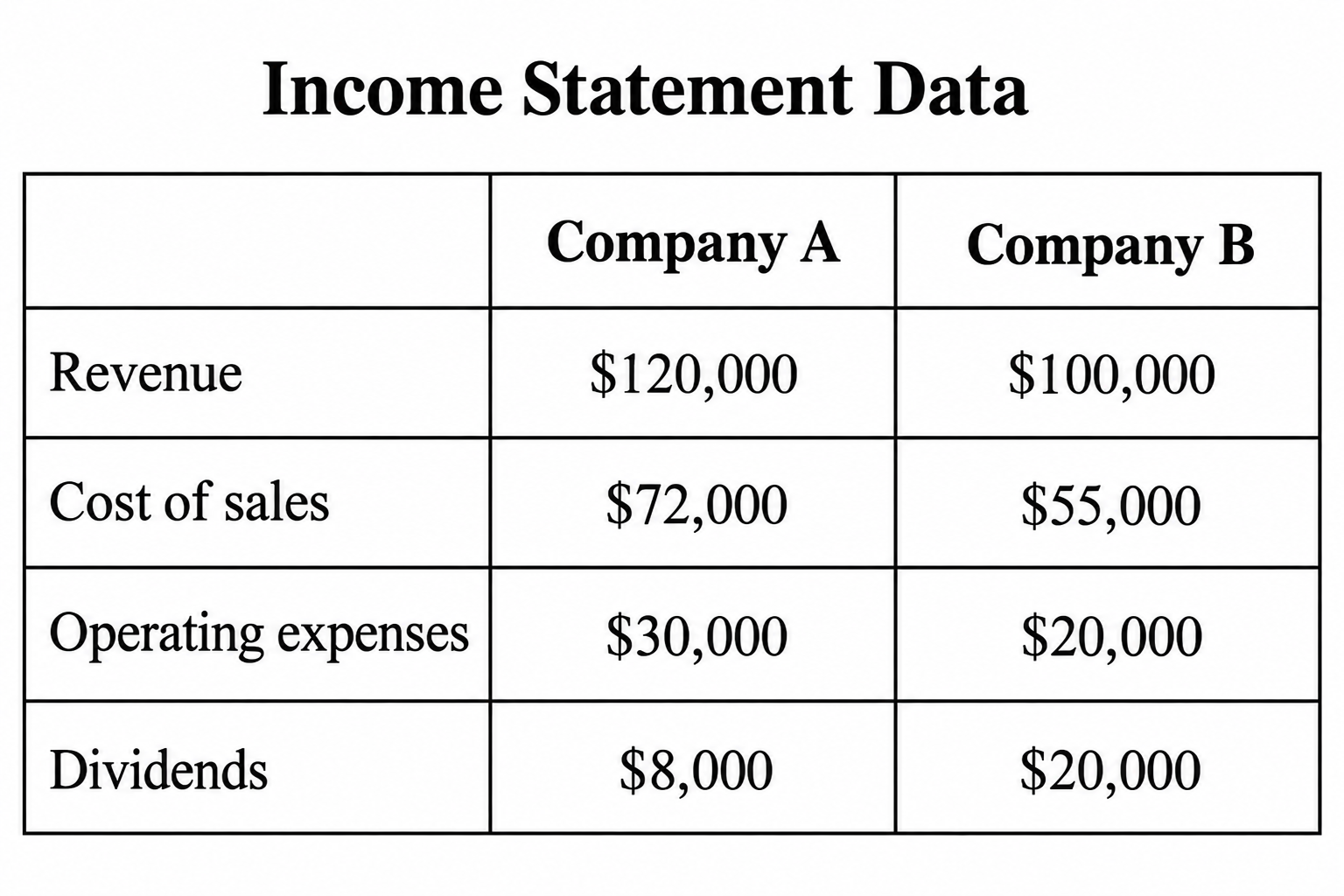
Use the figures shown for Company A and Company B. Which statement is correct?
What this assessment covers
Concepts tested
- Cost of sales and its role in income statements
- Calculation of gross profit from revenue and expenses
- Understanding retained earnings and dividend distribution
- Logical sequence of items in an income statement
- Common errors in financial statement preparation
Question Mix
- Medium questions included
Skills you build
- Interpreting financial data from income statements
- Calculating gross and net profits accurately
- Analyzing changes in financial performance
- Identifying errors in financial reporting
- Understanding financial terminology and concepts
Related assessments
More practice
Other assessments in this subject
.png)