

MATHEMATICS - TWO STEP EQUATIONS
Two Step Equations Worksheet
- Focuses on solving two-step equations involving addition, subtraction, multiplication, and division
- Includes real-world scenarios to apply mathematical concepts
- Designed for Grade 6 students with medium difficulty level
- Emphasizes understanding and forming equations from word problems
Here are the first 3 questions. Click “View all questions” to see the complete assessment.
Q1.
Q2.
The equation 6a − 5 = 31 represents a situation. Which option states the situation correctly and gives the solution?
Q3.
A game awards 4 points for each target hit and a bonus of 7 points. Kai scores 35 points in total. If t is the number of targets hit, which equation and solution are correct?
Q4.
Subtracting 4x from 9 gives 29. Which option correctly represents and solves this statement?
Q5.
A ribbon has an original length of L cm. After 10 cm is removed, the remaining ribbon is cut into 5 equal pieces. Each piece is 6 cm long. Which equation and original length are correct?
Q6.
Lina represents the statement “12 more than 5 times a number z is 47” using 5(z + 12) = 47. Which option gives the correct representation and solution?
Q7.
Which word statement and solution match the equation −3p + 2 = 20?
Q8.
A school buys 8 identical packs containing x pencils each. After 11 pencils are used, 45 pencils remain. Which equation and solution represent this situation?
Q9.
Study the flow diagram. Which option gives the equation represented by the diagram and the value of the input?
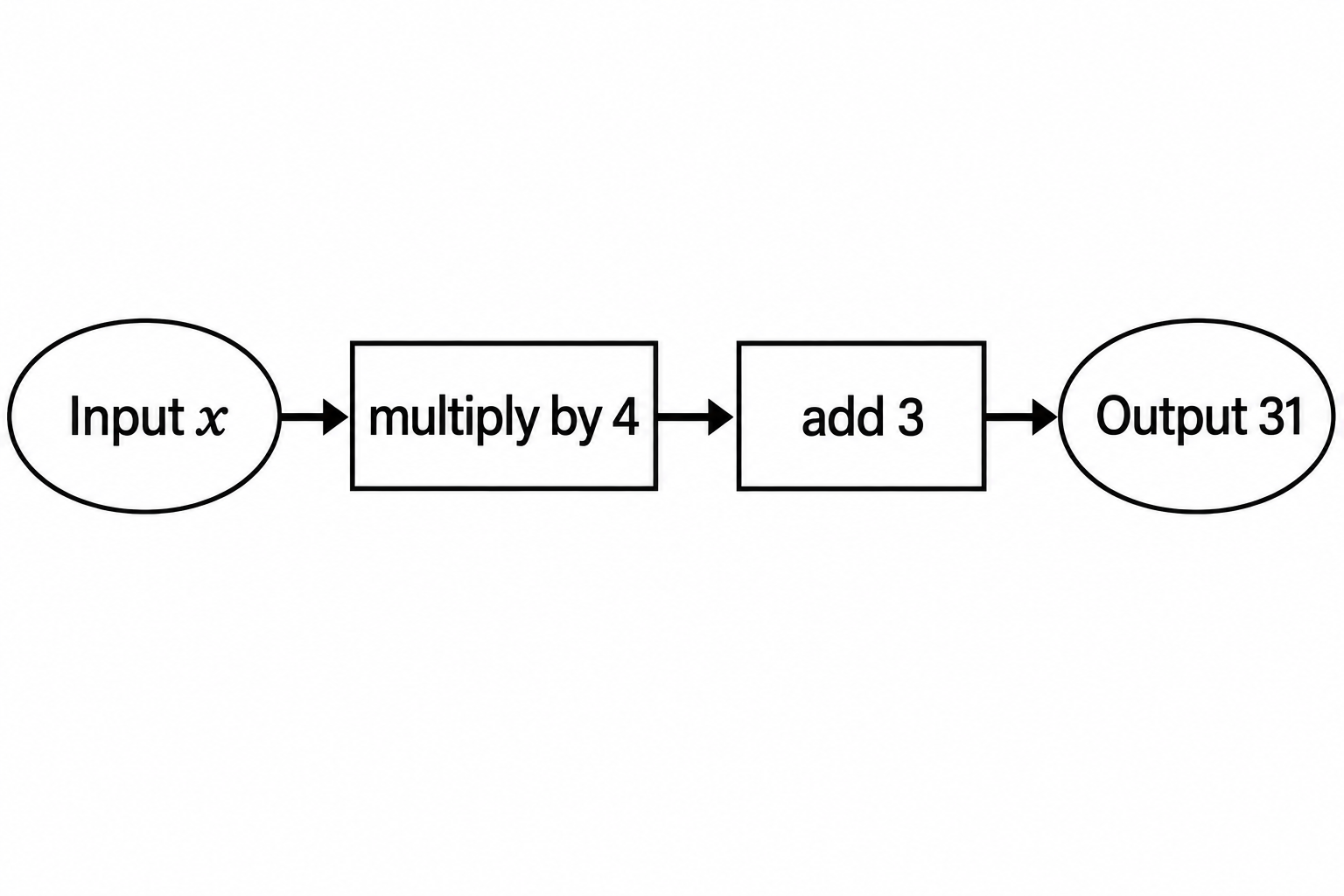
Q10.
The strip diagram represents a total made from equal unknown parts and one extra part. Which option gives the matching equation and the value of the unknown?
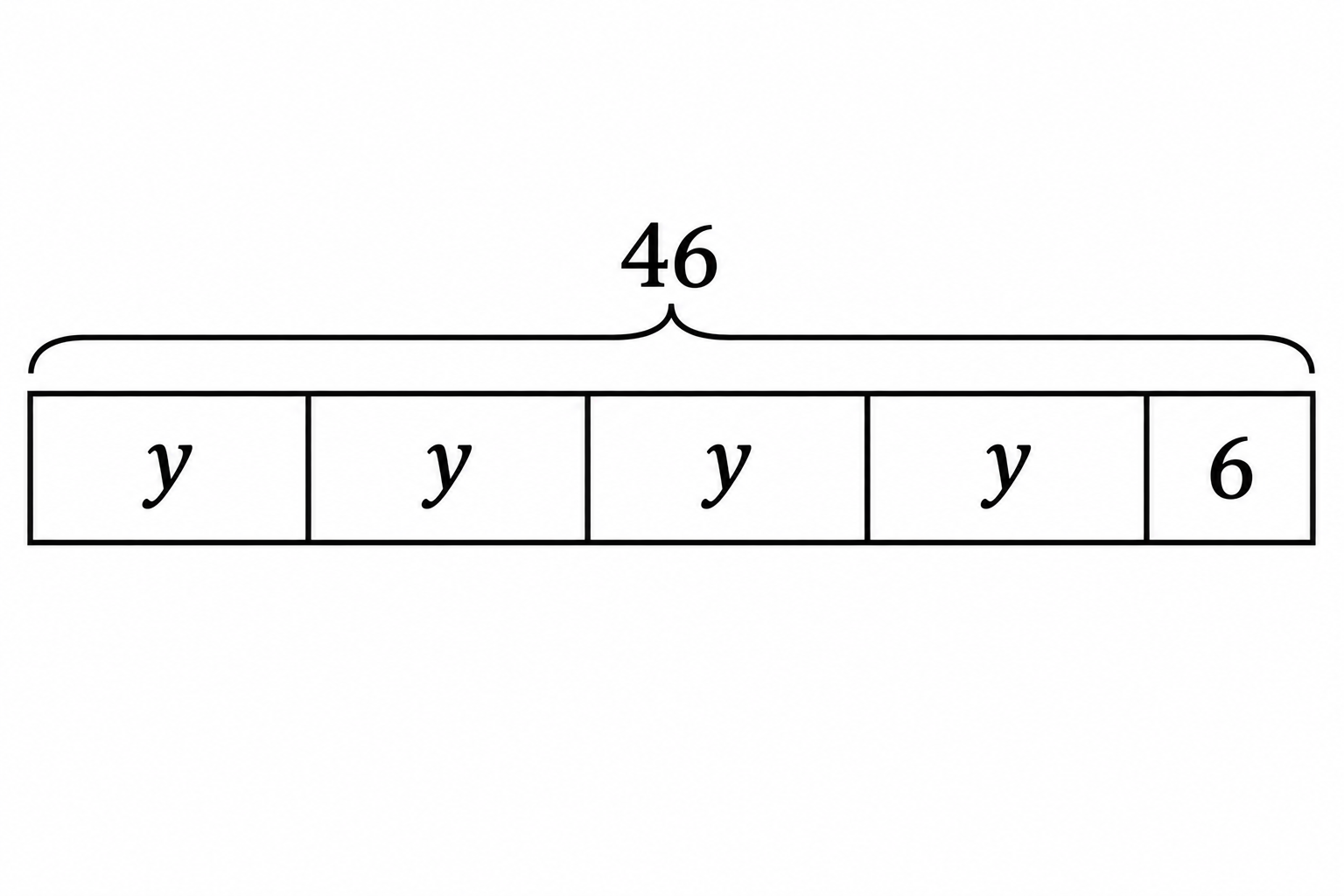
What this assessment covers
Concepts tested
- Two-step equations
- Formulating equations from word problems
- Understanding mathematical operations in equations
- Interpreting flow and strip diagrams
- Solving equations with variables
Question Mix
- Medium questions included
Skills you build
- Translate word problems into mathematical equations
- Solve two-step equations accurately
- Apply mathematical operations to real-life situations
- Interpret diagrams to form equations
- Analyze and solve for unknown variables
Related assessments
More practice
Other assessments in this subject
