

MATHEMATICS - SQUARE AND CUBE ROOTS

Square Roots Worksheet

  • 10 questions
  • Understand the relationship between squares and corresponding square roots, and cubes and corresponding cube roots.
  • Difficulty: Medium
  • Board: CAIE
  • Attempt online on the examination portal
Start the 10-question quiz Free, no sign-up needed. Your score shows instantly.

Here are the first 3 questions. Click “View all questions” to see the complete assessment.

Q1.

Given that 13² = 169, which statement expresses the corresponding square-root relationship?

  1. A) √(169) = 13
  2. B) √(169) = 13²
  3. C) √(169) = 26
  4. D) √(13) = 169

Q2.

Which statement correctly explains why 3√(512) = 8?

  1. A) Because 8 × 8 = 512.
  2. B) Because 8 × 8 × 8 = 512.
  3. C) Because 8 + 8 + 8 = 512.
  4. D) Because 512 ÷ 3 = 8.

Q3.

A learner writes, “√(36) = 18, because finding a square root means dividing by 2.” Which response correctly explains the mistake?

  1. A) The answer should be 12, because a square root means dividing by 3.
  2. B) The answer should be 1296, because 36² = 1296.
  3. C) The answer should be 6, because 6² = 36.
  4. D) The answer should be 72, because a square root means multiplying by 2.

Q4.

Which comparison is correct, with a valid explanation?

  1. A) √(121)>3√(216), because square roots are always greater than cube roots.
  2. B) √(121) = 3√(216), because both roots are whole numbers.
  3. C) √(121)>3√(216), because 11² = 121 and 6³ = 216.
  4. D) √(121)<3√(216), because 121<216.

Q5.

Which statement correctly connects a negative cube with its cube root?

  1. A) 3√( − 125) = − 25, because ( − 5)² = 25.
  2. B) 3√( − 125) = − 5, because ( − 5)³ = − 125.
  3. C) 3√( − 125) has no value, because a cube cannot be negative.
  4. D) 3√( − 125) = 5, because 5³ = 125.

Q6.

Without first calculating 7³, which statement correctly explains the value of 3√(7³)?

  1. A) It is 7, because taking a cube root reverses cubing.
  2. B) It is 49, because taking a cube root removes one factor from the cube.
  3. C) It is 21, because the exponent means multiplying the original number by 3.
  4. D) It is 343, because taking a cube root leaves the cube unchanged.

Q7.

The positive square root of a number is greater than 5 but less than 6. Which could be the number?

  1. A) 36
  2. B) 25
  3. C) 32
  4. D) 49

Q8.

A learner claims, “Every perfect square is also a perfect cube.” Which number disproves this claim?

  1. A) 1
  2. B) 729
  3. C) 64
  4. D) 16

Q9.

The diagram shows a square with its area marked. What is the length of each side?
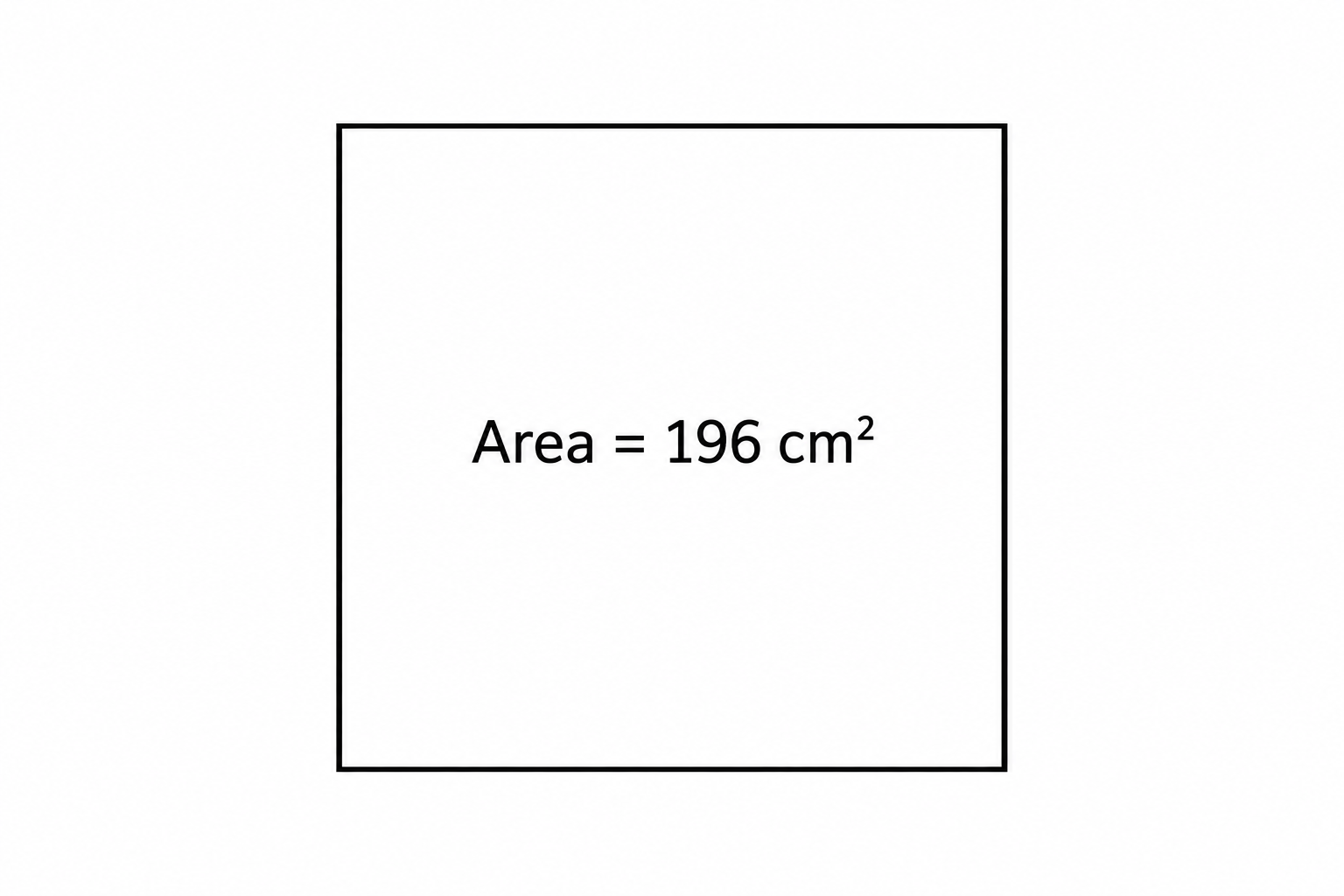
Diagram for question 9: The diagram shows a square with its area marked. What is the length of each side?
  1. A) 28 cm
  2. B) 98 cm
  3. C) 14 cm
  4. D) 7 cm

Q10.

Each row of the table is intended to show the square and cube of the same positive whole number. Only one row is correct. Which row is it?
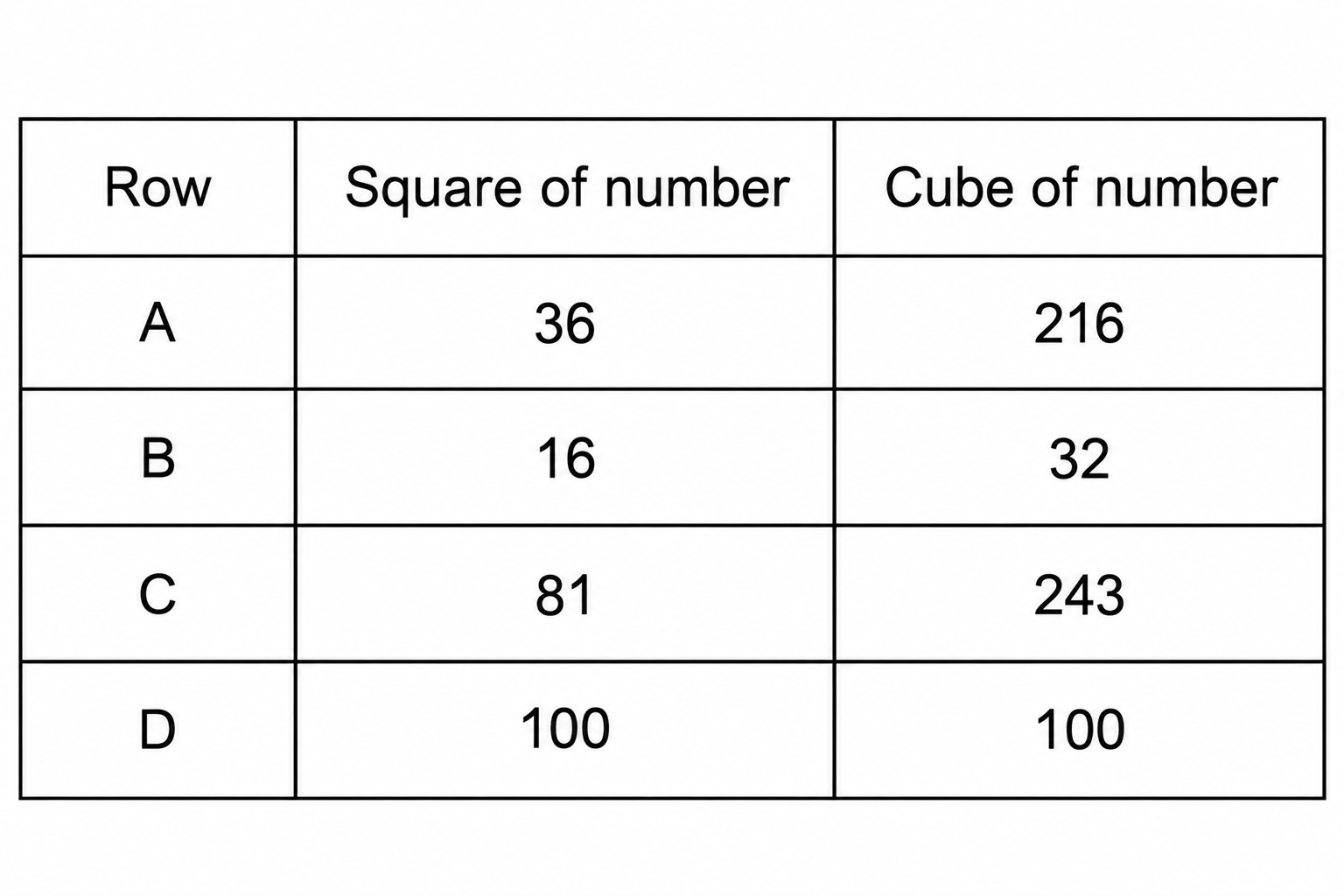
Diagram for question 10: Each row of the table is intended to show the square and cube of the same positive whole number. Only one…
  1. A) Row D
  2. B) Row C
  3. C) Row A
  4. D) Row B

What this assessment covers

Concepts Tested

  • Square and Cube Roots
  • Understand the relationship between squares and corresponding square roots, and cubes and corresponding cube roots.

Question Mix

  • Medium questions included

Skills you build

  • Understand