

MATHEMATICS - SERIES
Geometric Series Practice Problems
- Covers calculation of specific terms in a geometric progression
- Includes finding the sum of terms in geometric sequences
- Applies geometric series concepts to real-world scenarios
- Medium difficulty
Start the 10-question quiz
Free, no sign-up needed. Your score shows instantly.
Here are the first 3 questions. Click “View all questions” to see the complete assessment.
Q1.
Q2.
Which expression gives the nth term of the geometric progression 162,\ 54,\ 18,…?
Q3.
In the geometric progression with first term 3 and common ratio 2, which term has value 96?
Q4.
Find the sum of the first 5 terms of the geometric progression 4,\ 12,\ 36,….
Q5.
A student saves $200 in the first month. Each month, the amount saved is 1.5 times the amount saved in the previous month. How much does the student save altogether during the first 4 months?
Q6.
The third term of a geometric progression is 20, and the sixth term is 160. What is the eighth term?
Q7.
A geometric progression has common ratio 2. The sum of its first 5 terms is 93. What is its seventh term?
Q8.
The sum of the first n terms of the geometric progression 2,\ 6,\ 18,… is 728. Find n.
Q9.
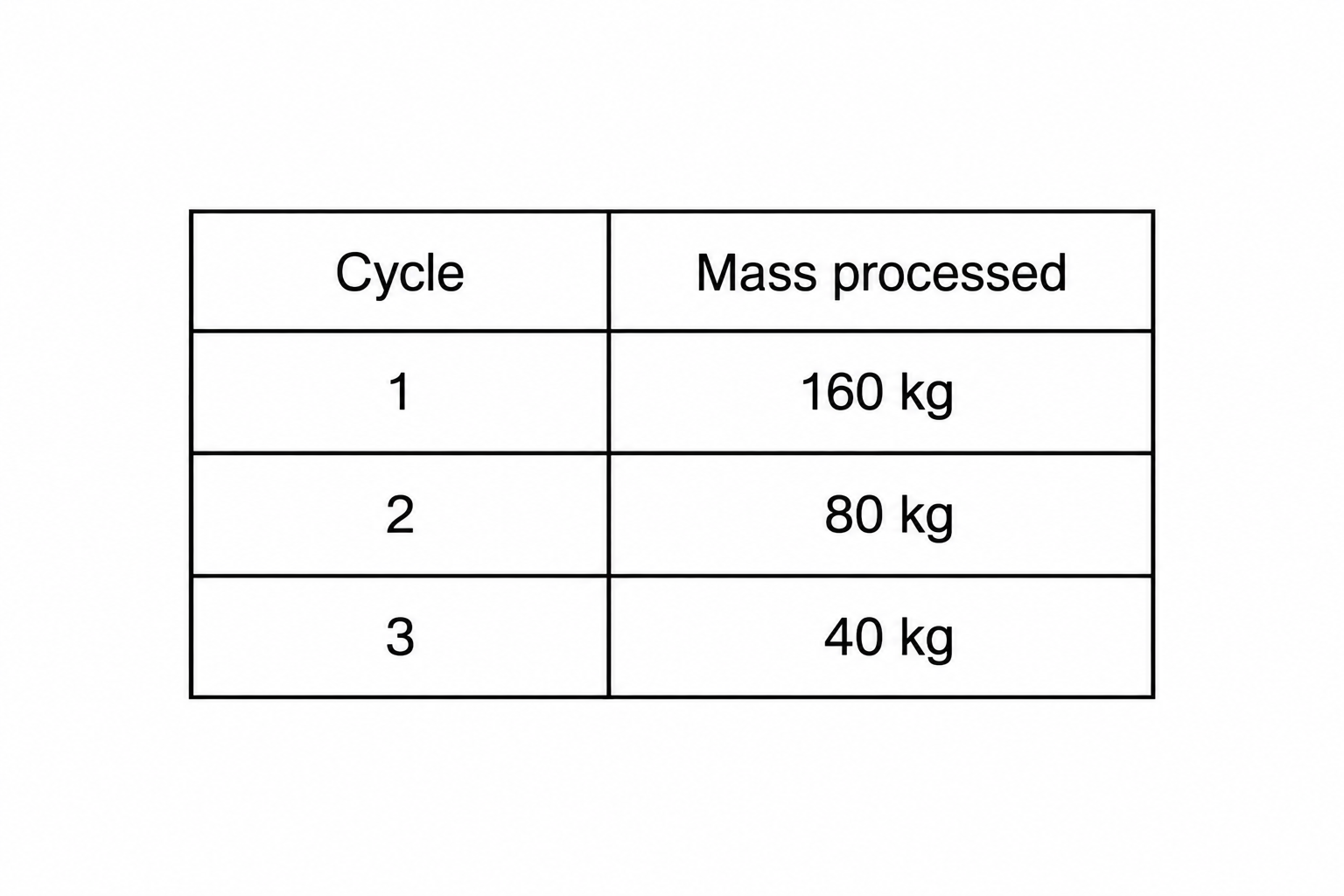
The table shows the mass of material processed in each of the first three cycles of a machine. The masses continue to form a geometric progression. What is the total mass processed during the first 6 cycles?
Q10.
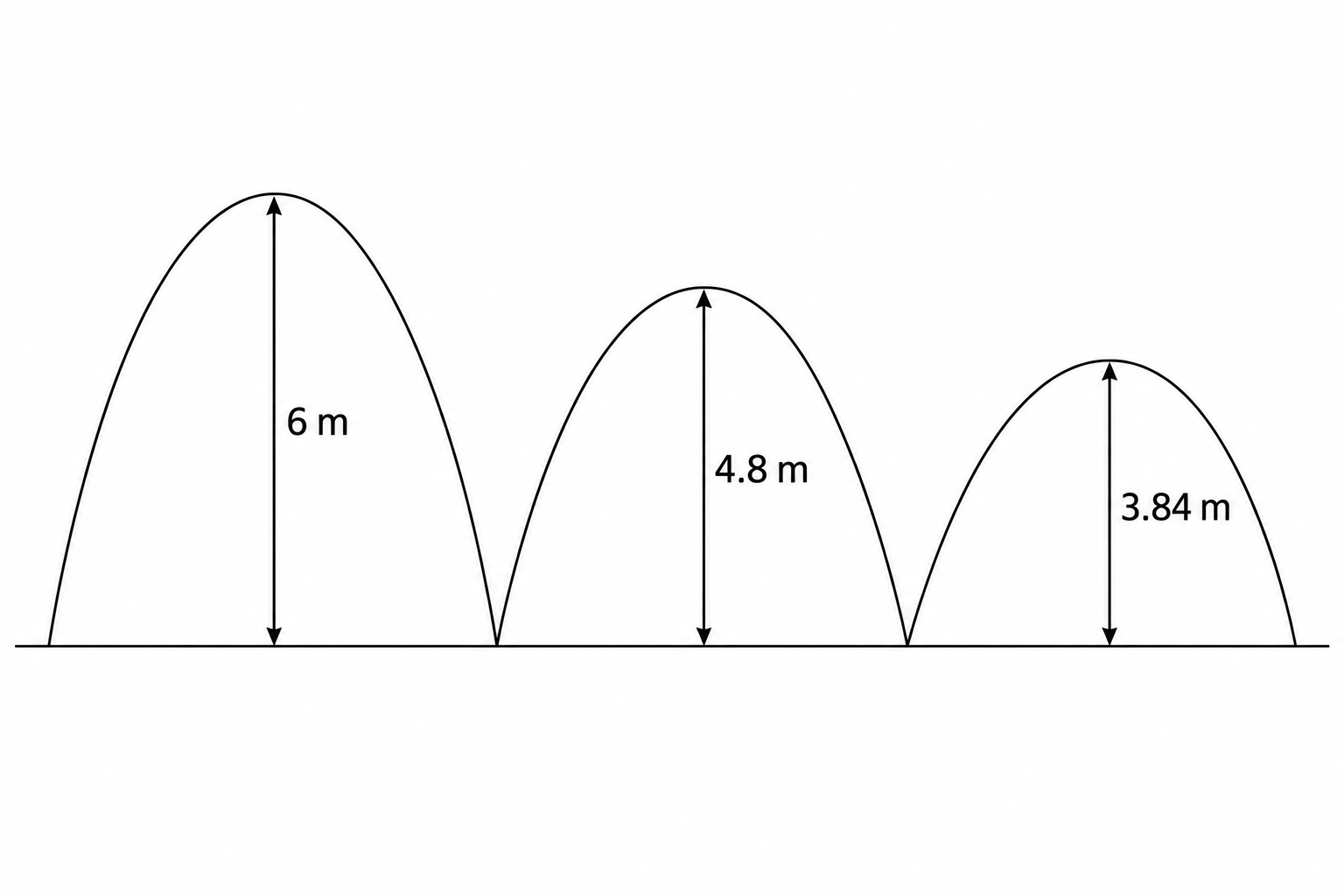
The diagram shows the first three rebound heights of a ball. Each rebound height forms part of the same geometric progression. Find the total vertical distance travelled from the start of the first rebound until the ball returns to the ground after completing the fifth rebound.
What this assessment covers
Concepts tested
- Geometric progression term calculation
- Sum of geometric series
- Common ratio identification
- Real-world applications of geometric series
- Finding specific terms in a sequence
Question Mix
- Medium questions included
Skills you build
- Calculate terms in a geometric sequence
- Determine the sum of a geometric series
- Apply geometric series to solve practical problems
- Identify patterns in sequences
- Use formulas to find unknowns in progressions
Related assessments
More practice
Other assessments in this subject
