

MATHEMATICS - SCIENTIFIC NOTATION
Scientific Notation Practice Problems
- Focuses on converting numbers to and from standard form
- Includes operations with powers of ten
- Challenges understanding of significant figures
- Applies scientific notation to real-world scenarios
Start the 10-question quiz
Free, no sign-up needed. Your score shows instantly.
Here are the first 3 questions. Click “View all questions” to see the complete assessment.
Q1.
Q2.
A machine completes 48 600 000 operations in one cycle. It runs for 300 cycles. How many operations does it complete, written in standard form?
Q3.
Four values are given: A = 6.2 × 10⁻⁵, B = 0.71 × 10⁻⁴, C = 58 × 10⁻⁷ and D = 6.05 × 10⁻⁵. Which value is greatest?
Q4.
Calculate (3.6 × 10⁷ ) (4.5 × 10⁻¹² ). Give the answer in standard form.
Q5.
Calculate frac7.2 × 10⁻⁸2.4 × 10³. Give the answer in standard form.
Q6.
A quantity decreases from 5.03 × 10⁹ to a value that is 7.8 × 10⁷ less. What is the new value in standard form?
Q7.
The equation (4.8 × 10ⁿ ) (2.5 × 10⁻⁶ ) = 1.2 × 10³ is true. What is the value of n?
Q8.
Write 0.0009995 in standard form, correct to 3 significant figures.
Q9.
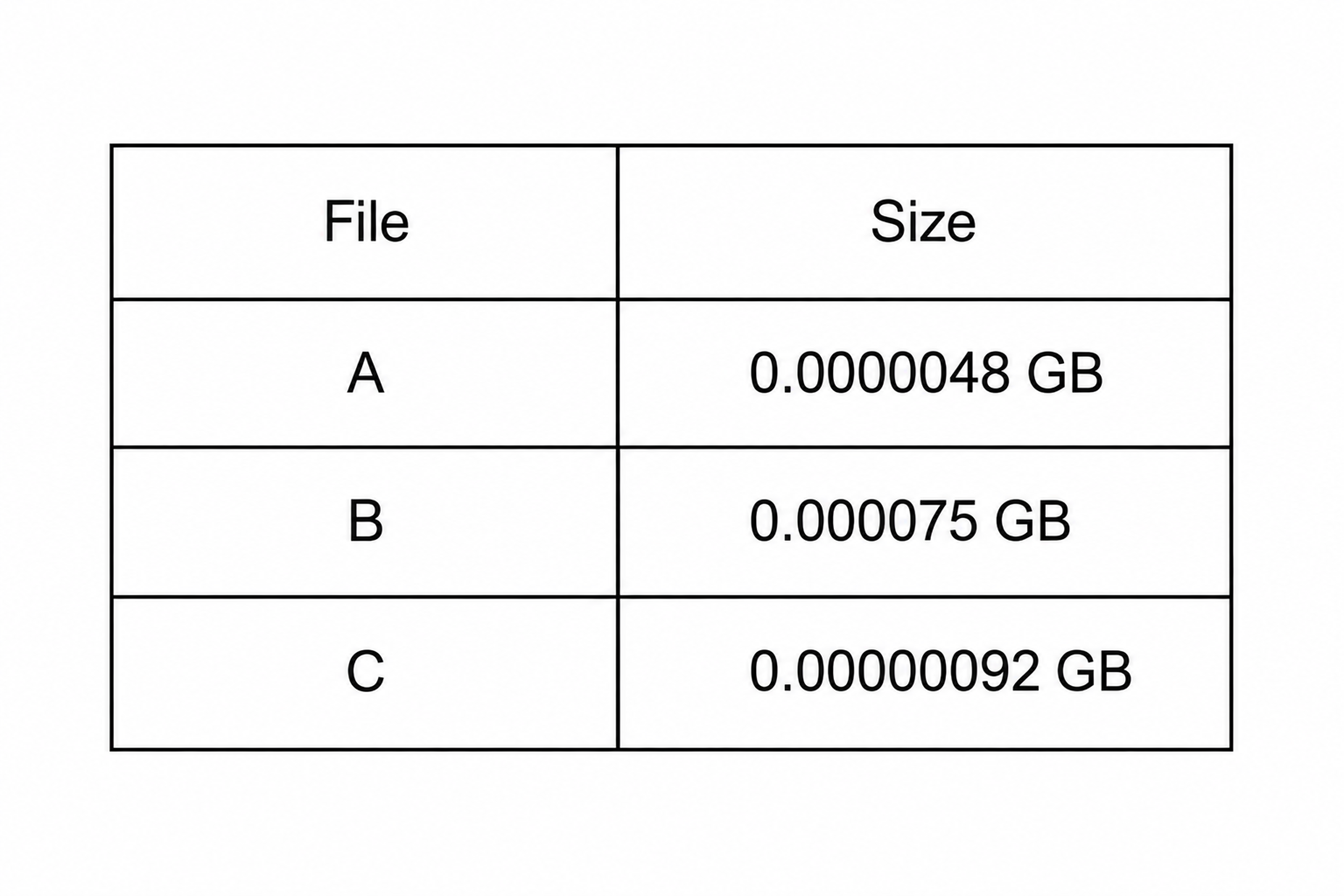
The table shows the sizes of three files. What is their combined size, written in standard form?
Q10.
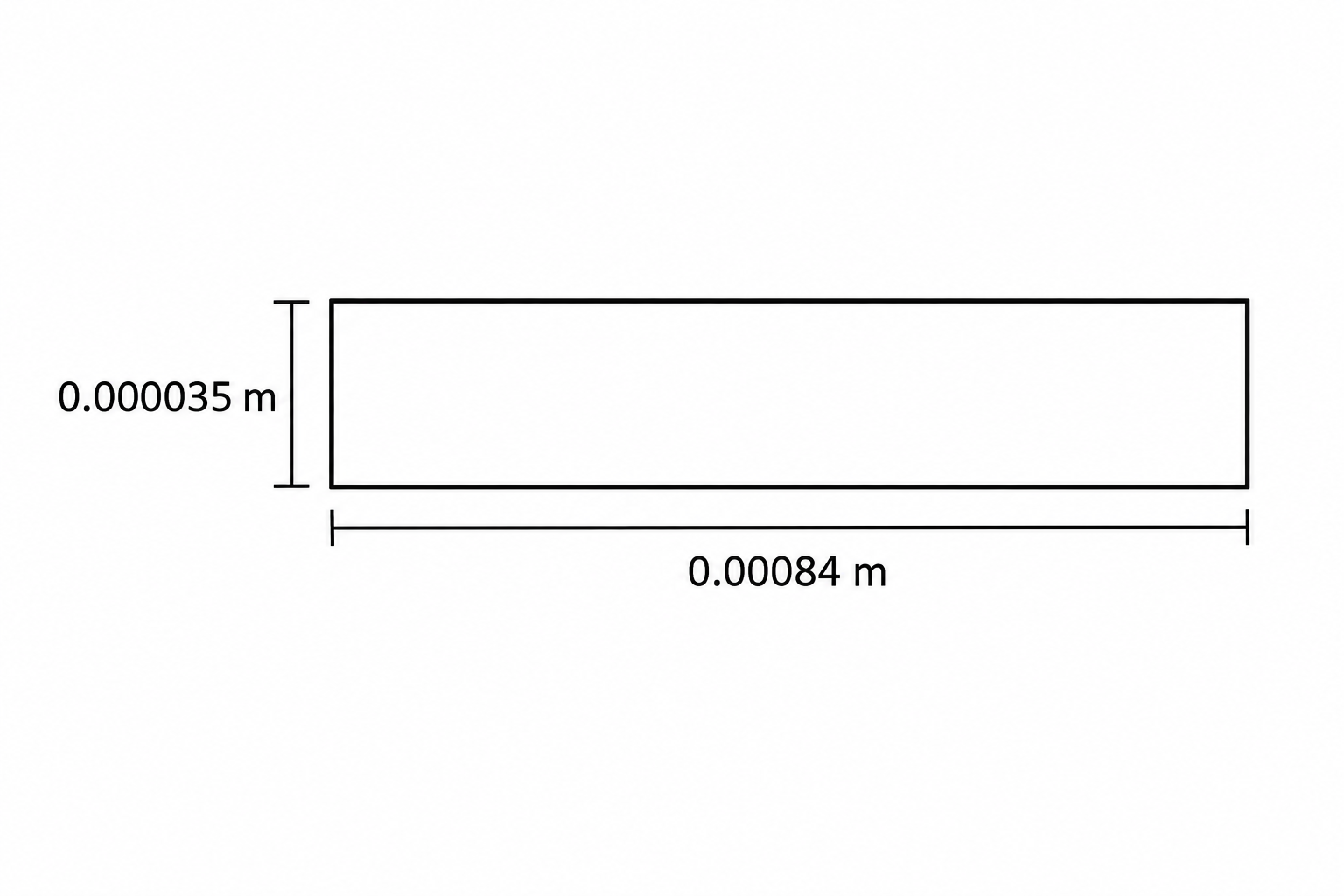
The diagram shows a rectangular microscopic film. What is its area in square metres, written in standard form?
What this assessment covers
Concepts tested
- Scientific notation and standard form
- Multiplication and division with powers of ten
- Comparison of numbers in scientific notation
- Conversion of small and large numbers to standard form
- Use of significant figures in scientific notation
Question Mix
- Hard questions included
Skills you build
- Convert decimal numbers to scientific notation
- Perform calculations using scientific notation
- Compare and order numbers in scientific notation
- Apply scientific notation to solve real-world problems
- Interpret and manipulate powers of ten in calculations
Related assessments
More practice
Other assessments in this subject
