

MATHEMATICS - RADICALS
Rationalizing Denominators Worksheet
- 10 questions
- Understand and use surds, including simplifying expressions.
- Difficulty: Medium
- Board: CAIE
- Attempt online on the examination portal
Start the 10-question quiz
Free, no sign-up needed. Your score shows instantly.
Here are the first 3 questions. Click “View all questions” to see the complete assessment.
Q1.
Q2.
Which expression is equivalent to frac5√(11) + √(6) and has a rational denominator?
Q3.
A student writes frac43 − √(5) = frac4(3 + √(5))9 + 5. Which statement correctly explains the error?
Q4.
Which is the fully simplified form of frac√(18)√(12) with a rational denominator?
Q5.
Which expression is obtained by correctly rationalising the denominator of frac√(3)√(3) + 1?
Q6.
Before rationalising frac1√(8) − √(2), a student simplifies its denominator. Which equivalent expression should the student obtain?
Q7.
A student claims that frac1√(5) − 1 = frac√(5) + 14. Which statement correctly checks this claim?
Q8.
Rationalising the denominators allows the surd terms in frac1√(3) − 1 − frac1√(3) + 1 to cancel. What is the simplified value?
Q9.
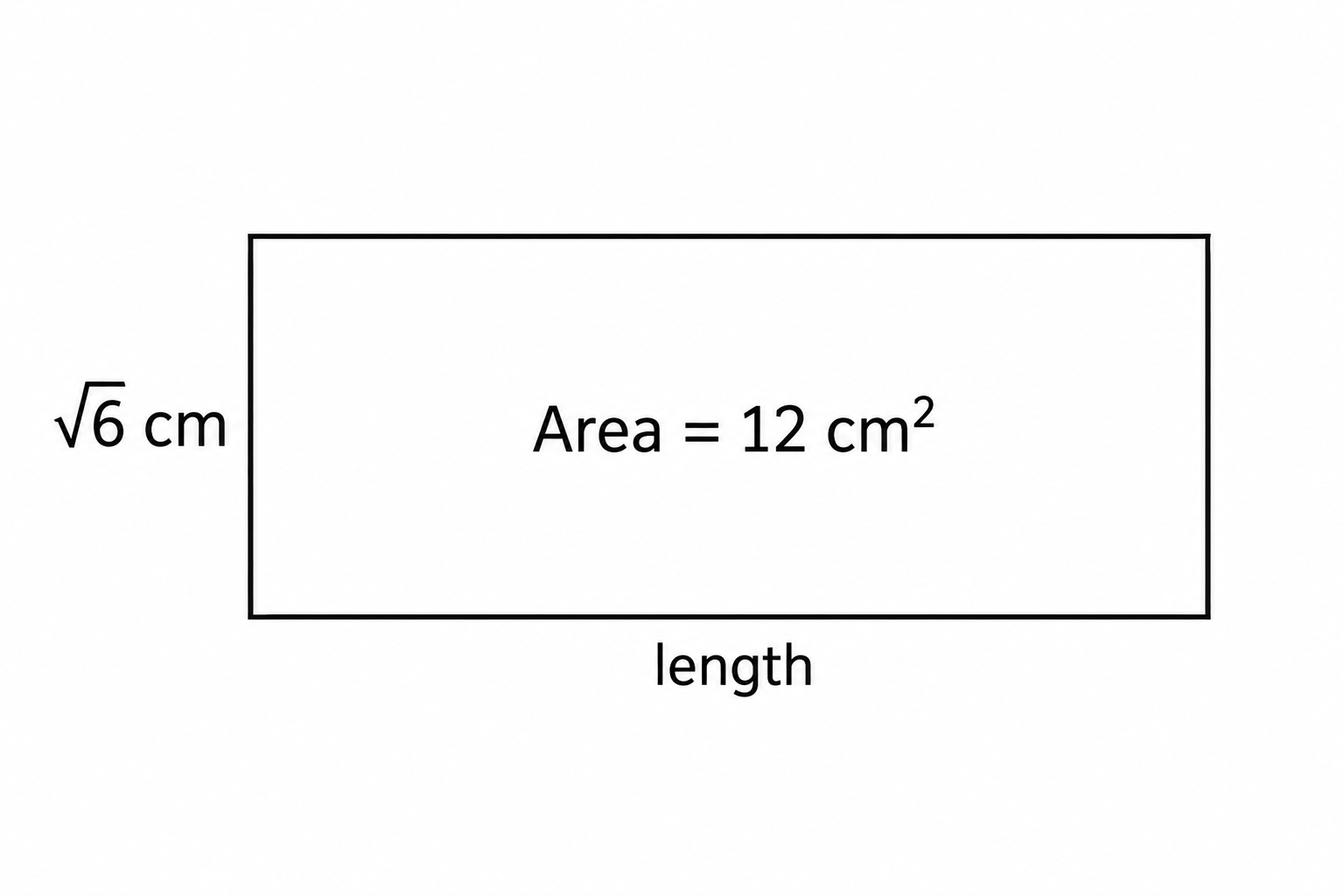
The diagram shows a rectangle with its area and height labelled. Which expression gives its length in simplest surd form?
Q10.
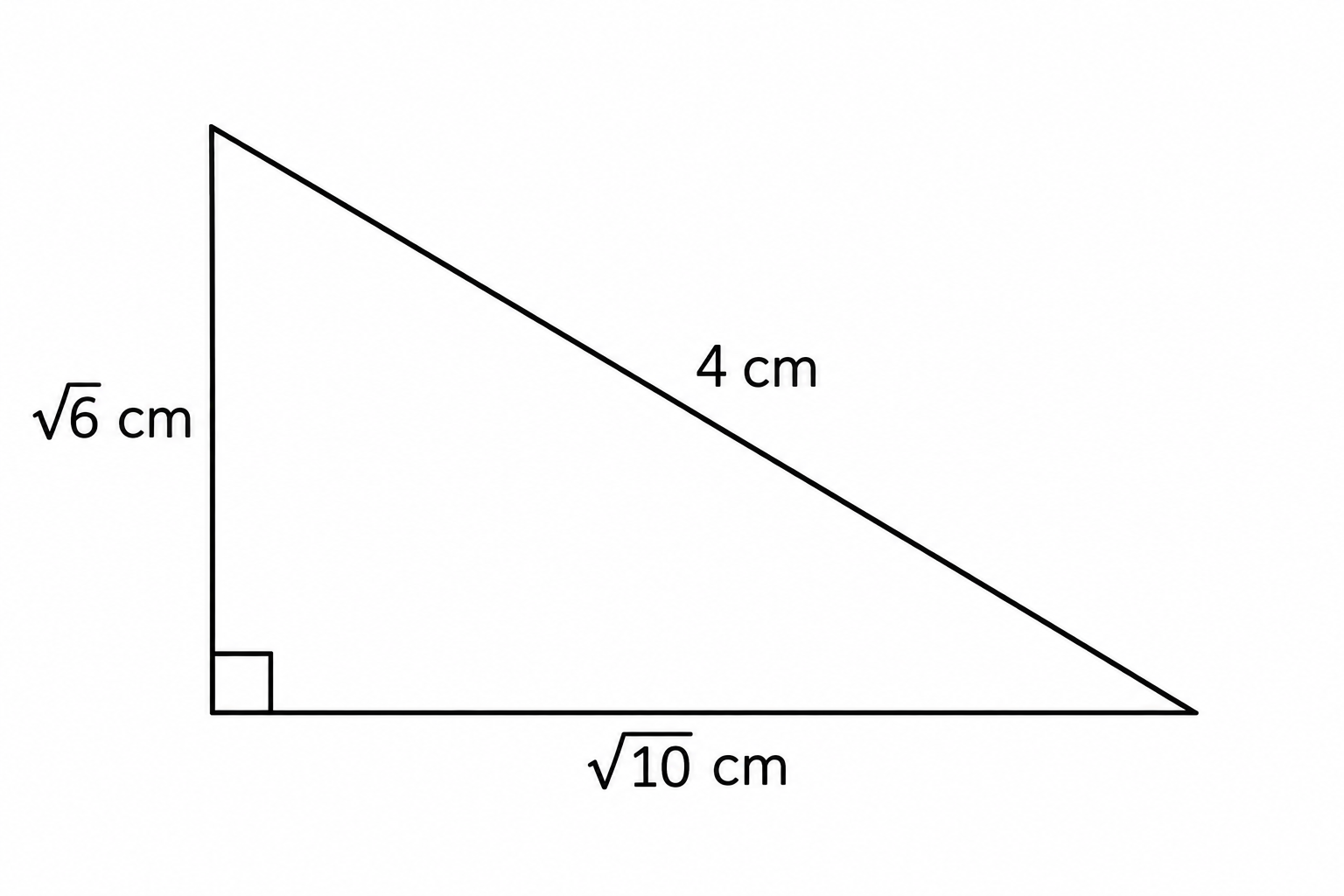
For the triangle shown, which expression gives the length of the shorter perpendicular side divided by the length of the longer perpendicular side, with a rational denominator?
What this assessment covers
Concepts Tested
- Radicals
- Understand and use surds, including simplifying expressions.
Question Mix
- Medium questions included
Skills you build
- Understand
Related assessments
More practice
Other assessments in this topic
