

MATHEMATICS - PYTHAGOREAN THEOREM
Pythagorean Theorem Practice Problems
- 10 questions
- Know and use Pythagoras’ theorem.
- Difficulty: Hard
- Board: CAIE
- Attempt online on the examination portal
Here are the first 3 questions. Click “View all questions” to see the complete assessment.
Q1.
Q2.
A rectangular garden has a diagonal of 26 m and one side of length 10 m. What length of fencing is needed to go once around the garden?
Q3.
An isosceles triangular roof section has two equal sides of 17 cm and a base of 16 cm. What is the area enclosed by the roof section?
Q4.
Two vertical poles stand on level ground with their bases 35 m apart. Their heights are 8 m and 20 m. A cable joins their tops and includes an extra 2 m for fastening. What cable length is required?
Q5.
A taut kite string is 50 m long. The kite is horizontally 14 m from the point directly below the person's hand. The hand is 1.5 m above level ground. How high is the kite above the ground?
Q6.
The diagonal of a square courtyard is √(288) m. What is the area of the courtyard?
Q7.
A rhombus has side length 13 cm. One of its diagonals is 10 cm. The diagonals bisect each other at right angles. What is the area of the rhombus?
Q8.
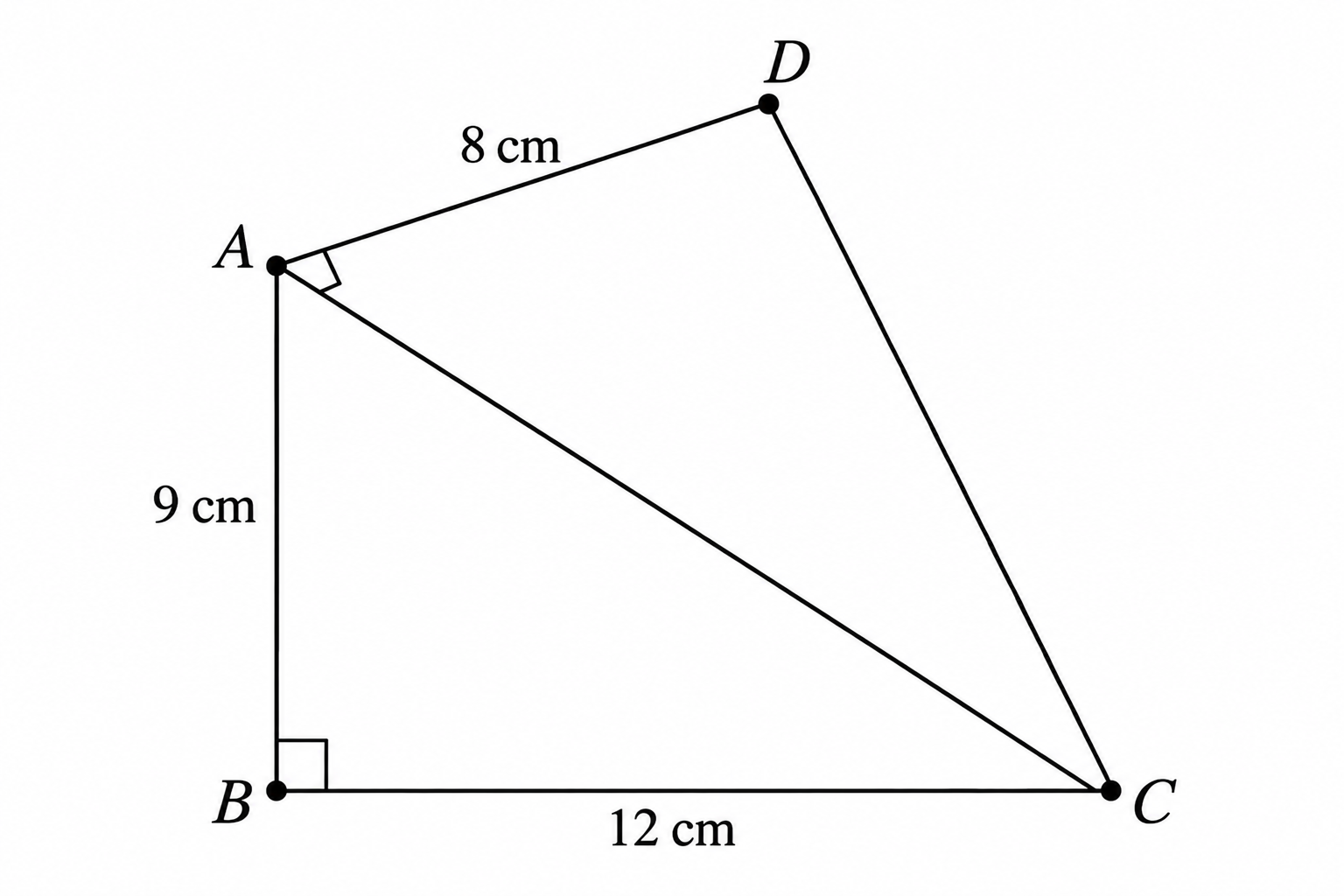
Use the measurements and right-angle marks in the figure to find the perimeter of quadrilateral ABCD.
Q9.
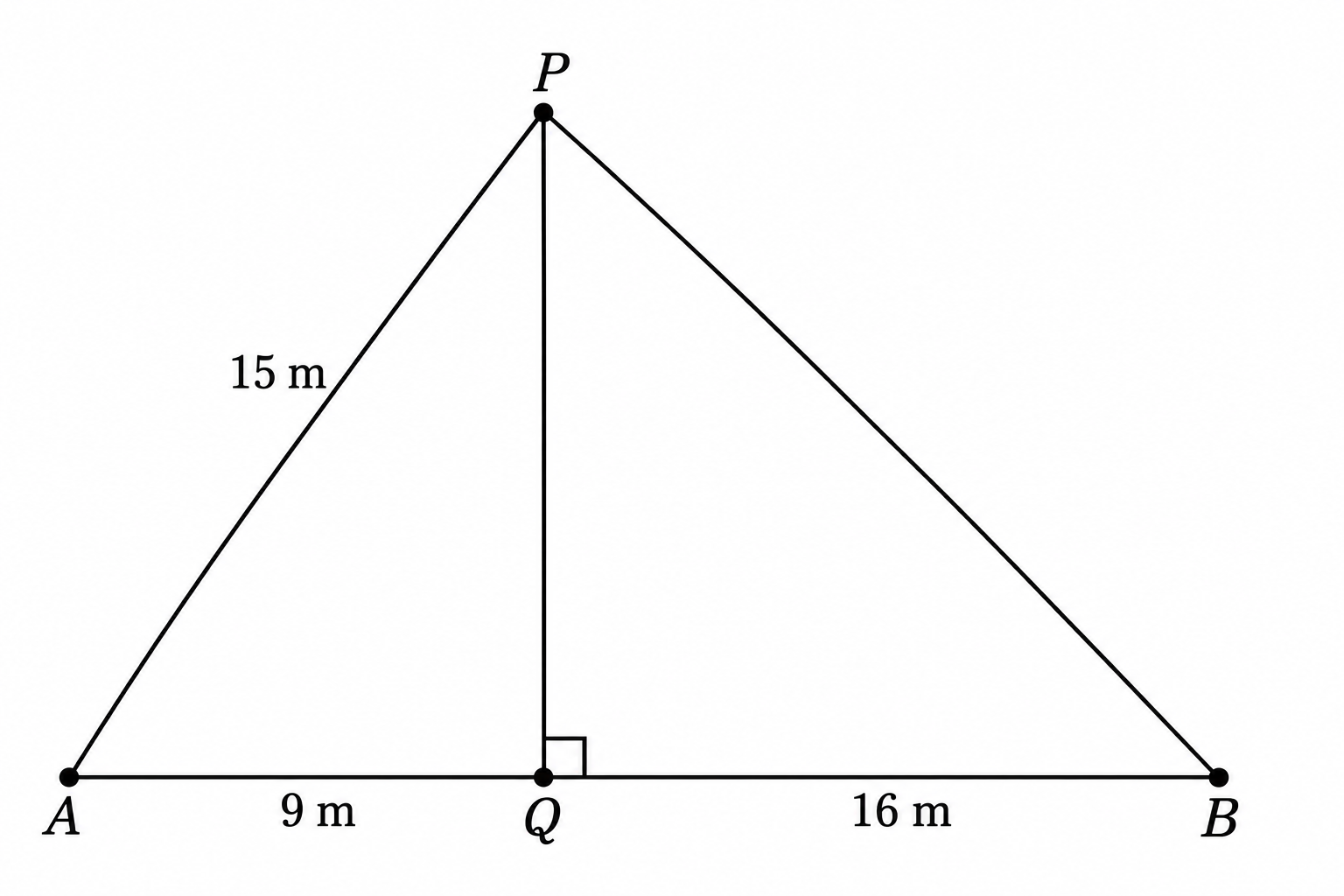
The figure shows a vertical mast supported by two straight wires. What is the combined length of the two wires?
Q10.
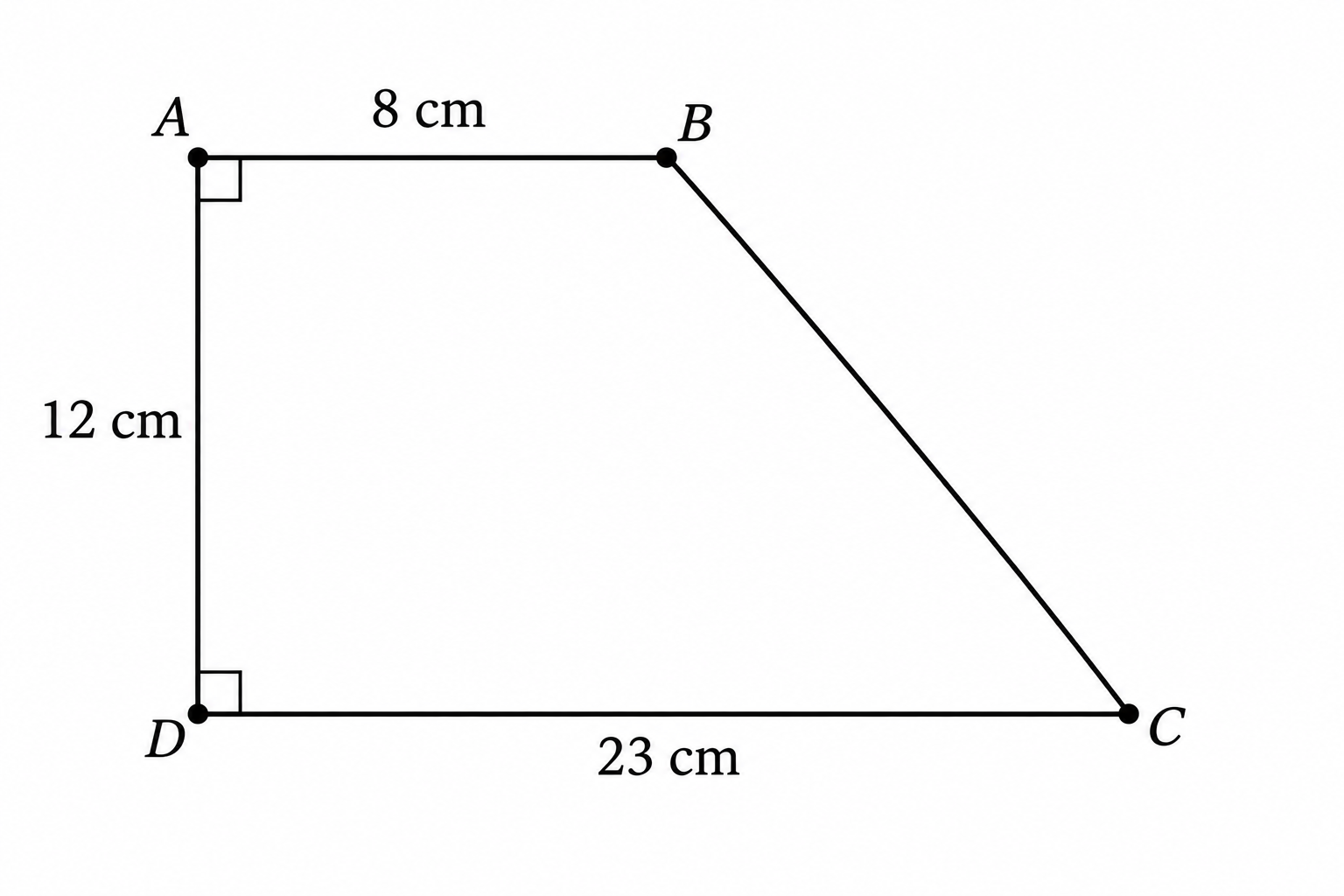
Use the dimensions in the figure to calculate the perimeter of trapezium ABCD.
What this assessment covers
Concepts Tested
- pythagorean theorem
- Know and use Pythagoras’ theorem.
Question Mix
- Hard questions included
Skills you build
- Apply
Related assessments
More practice
Other assessments in this subject
