

MATHEMATICS - ONE-STEP EQUATIONS
Solving One Step Equations Worksheet
- Focuses on solving one-step equations in real-world contexts
- Includes scenarios involving integers, division, and multiplication
- Challenges students with equations involving negative numbers
Start the 10-question quiz
Free, no sign-up needed. Your score shows instantly.
Here are the first 3 questions. Click “View all questions” to see the complete assessment.
Q1.
Q2.
When an integer x is divided by −6, the result is 8. Which equation and solution correctly represent this statement?
Q3.
After a discount of 28 dollars, a jacket costs 119 dollars. If p is the original price in dollars, which equation and solution are correct?
Q4.
Mira chooses an integer n. Subtracting −9 from it gives −14. Which equation represents her calculation, and what integer did she choose?
Q5.
A player's score changes by the same number of points, c, in each of 4 rounds. The total change is −52 points. Which equation and value of c are correct?
Q6.
A library donates 17 books and then has 245 books. If b is the number of books it had before the donation, which equation and solution are correct?
Q7.
A number machine multiplies an input y by −3 and displays 42. Which equation models the machine, and what was the input?
Q8.
A total score change of t points is spread equally over 12 sessions. The change per session is −7 points. Which equation and total score change are correct?
Q9.
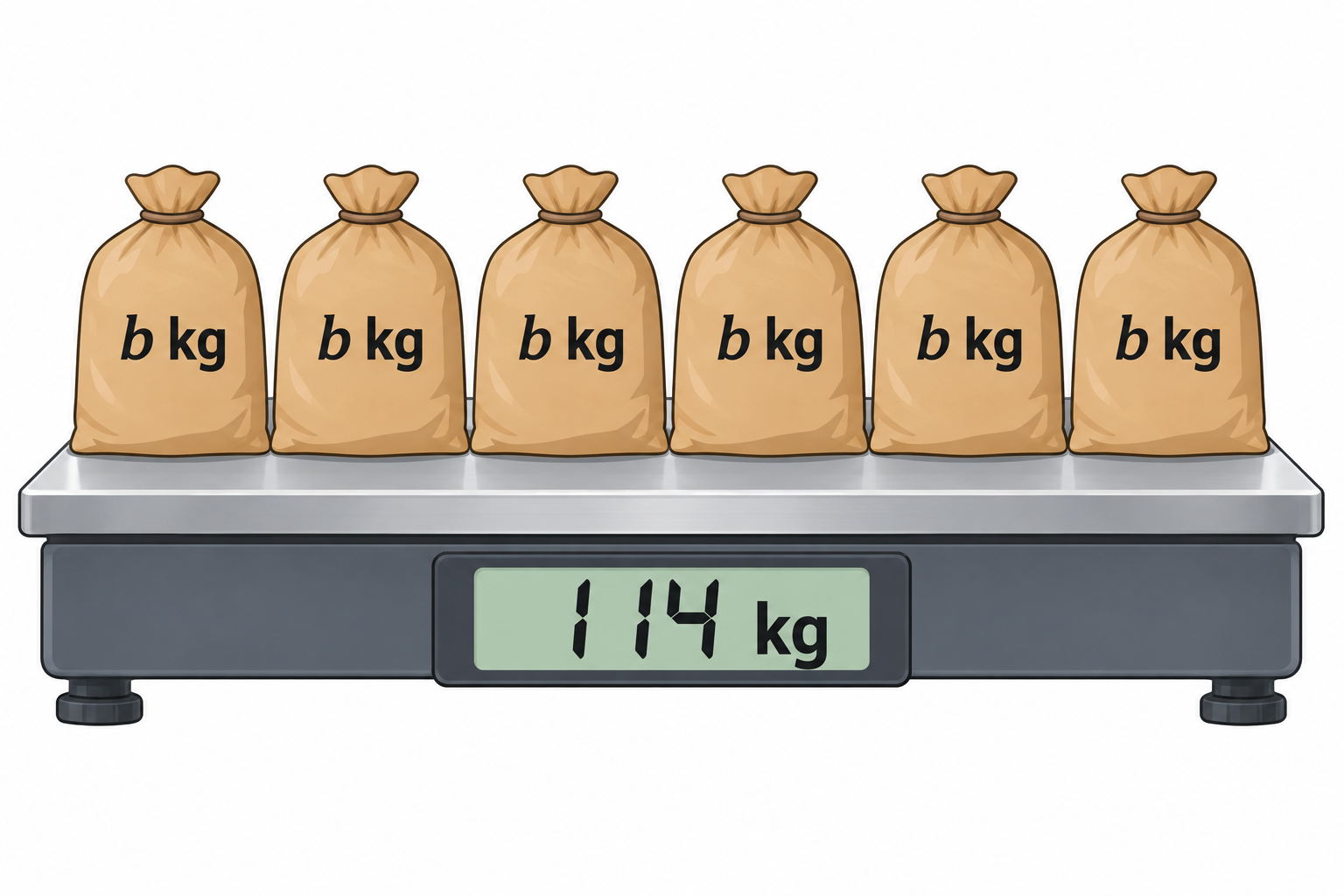
Use the figure to choose the equation that represents the total mass and the mass of each identical bag.
Q10.
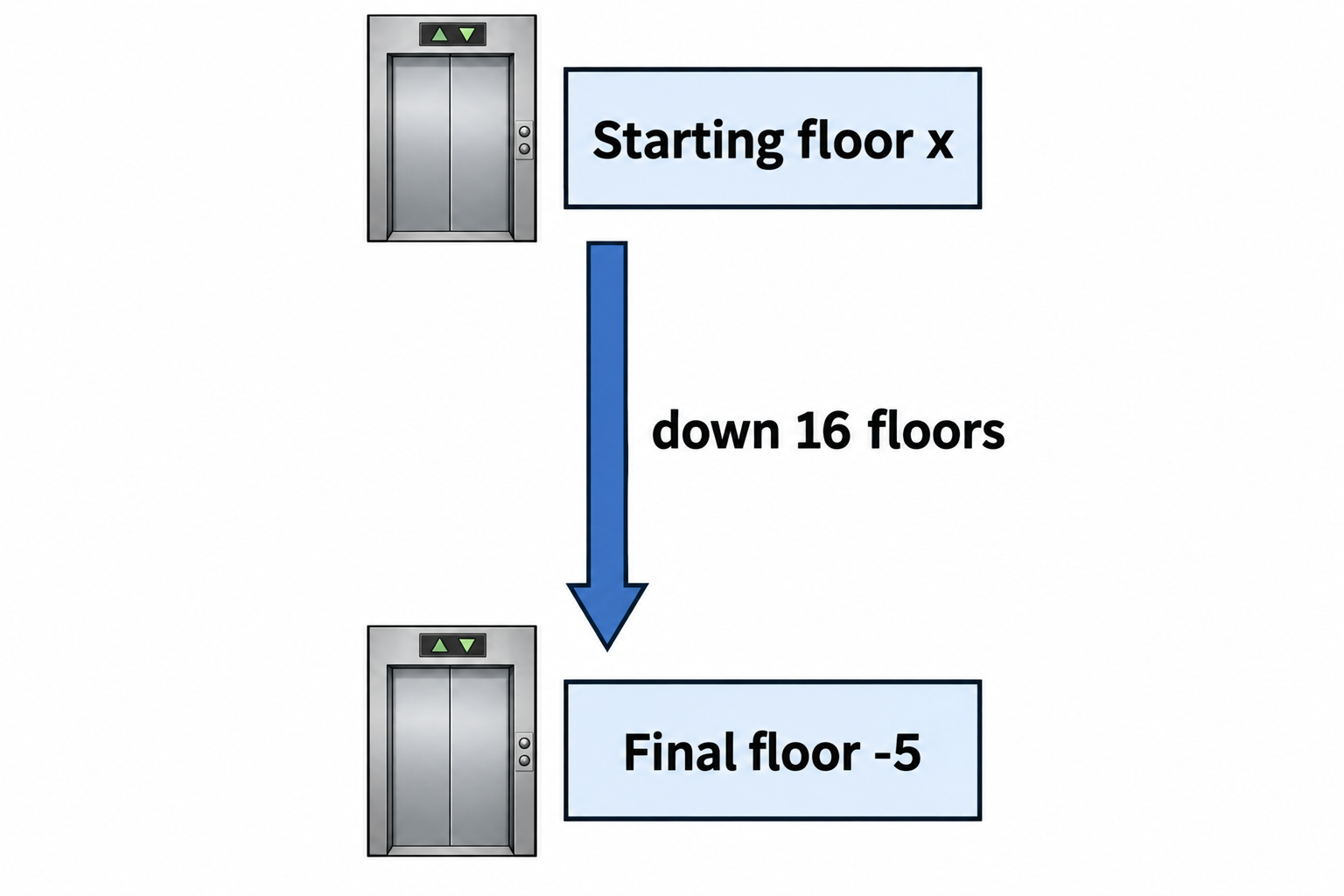
The figure shows an elevator journey. Which equation represents the journey, and what was the starting floor?
What this assessment covers
Concepts tested
- Solving one-step equations
- Understanding and applying negative numbers
- Interpreting real-world mathematical scenarios
- Using equations to represent situations
- Basic arithmetic operations in equations
Question Mix
- Hard questions included
Skills you build
- Solving equations with one variable
- Applying arithmetic operations to solve problems
- Interpreting mathematical statements in context
- Analyzing and solving real-world problems
- Understanding the impact of negative values in equations
Related assessments
More practice
Other assessments in this subject
